Automatic Exchange of Crypto Tax Information Between Countries: What It Means for You
 Jan, 21 2026
Starting in 2026, your crypto transactions could be automatically shared with your home country’s tax authority - even if you traded on a platform based halfway across the world. This isn’t science fiction. It’s the Crypto-Asset Reporting Framework (CARF), a global system being rolled out by 67 countries to close the tax loophole that crypto once enjoyed. If you’ve bought, sold, or traded Bitcoin, Ethereum, or any other digital asset, this change affects you.
How CARF Works: The New Global Tax Network
Before CARF, tax authorities had little visibility into crypto transactions. You could trade on a foreign exchange, earn staking rewards, or swap tokens on a decentralized protocol - and unless you reported it yourself, your government often didn’t know. That’s changing.
CARF forces crypto service providers - like exchanges, wallet platforms, and even some DeFi protocols - to act as tax reporters. They must collect your personal details, track your trades, and send that data to their local tax agency. That agency then shares it automatically with the tax authority in your country of residence. No request. No form. No waiting for an audit.
This system is built on the same backbone as the Common Reporting Standard (CRS), which has been sharing bank account data between countries since 2014. But CARF adds new fields: exact dates of trades, asset types, fiat equivalents, wallet addresses, and even whether you used a non-custodial wallet. The OECD published the technical XML guide in October 2024 so countries can build their systems correctly. If you’re in the EU, you’re already under DAC8 - the local version of CARF - which kicks in on January 1, 2026.
Who Has to Report? It’s Not Just Exchanges
It’s easy to think CARF only applies to Coinbase or Binance. But the rules cover any entity that facilitates crypto transactions for others - called Reporting Crypto-Asset Service Providers (RCASPs). That includes:
- Centralized exchanges (like Kraken, Bitstamp)
- Crypto ATMs
- Peer-to-peer platforms that match buyers and sellers
- Platforms offering staking or lending services
- Some DeFi aggregators that execute trades on your behalf
Even if you’re using a wallet like MetaMask, if you interact with a DeFi protocol that’s classified as an RCASP in your jurisdiction, your activity could be flagged. The framework doesn’t care if the platform is “decentralized” - if it acts as an intermediary, it reports.
And it’s not just one-way. The U.S. IRS will send data on U.S. citizens trading on foreign platforms to those countries. In return, the IRS gets data on Americans trading on U.S. platforms. This reciprocity means there’s no safe haven anymore. If you’re a U.S. person trading on a non-U.S. exchange, that exchange must report you to the IRS. Same for EU residents, Australians, Canadians, and others in participating countries.
What Data Gets Shared? The Details Matter
It’s not just “you bought Bitcoin.” CARF requires detailed transaction records. Here’s what your tax authority will see:
- Your full name, address, tax ID number, and date of birth
- Types of crypto-assets traded (BTC, ETH, SOL, etc.)
- Exact dates and times of each transaction
- Amounts bought, sold, or exchanged
- Fiat currency values at time of trade (in local currency)
- Wallet addresses involved (both sending and receiving)
- Whether the transaction was with a custodial or non-custodial wallet
- Any fees or commissions paid
This level of detail means tax agencies can calculate your capital gains or income with precision. If you sold ETH for USD in January 2026 and made a $12,000 profit, your home country will know - and they’ll expect you to pay tax on it. No more guessing. No more “I forgot.”
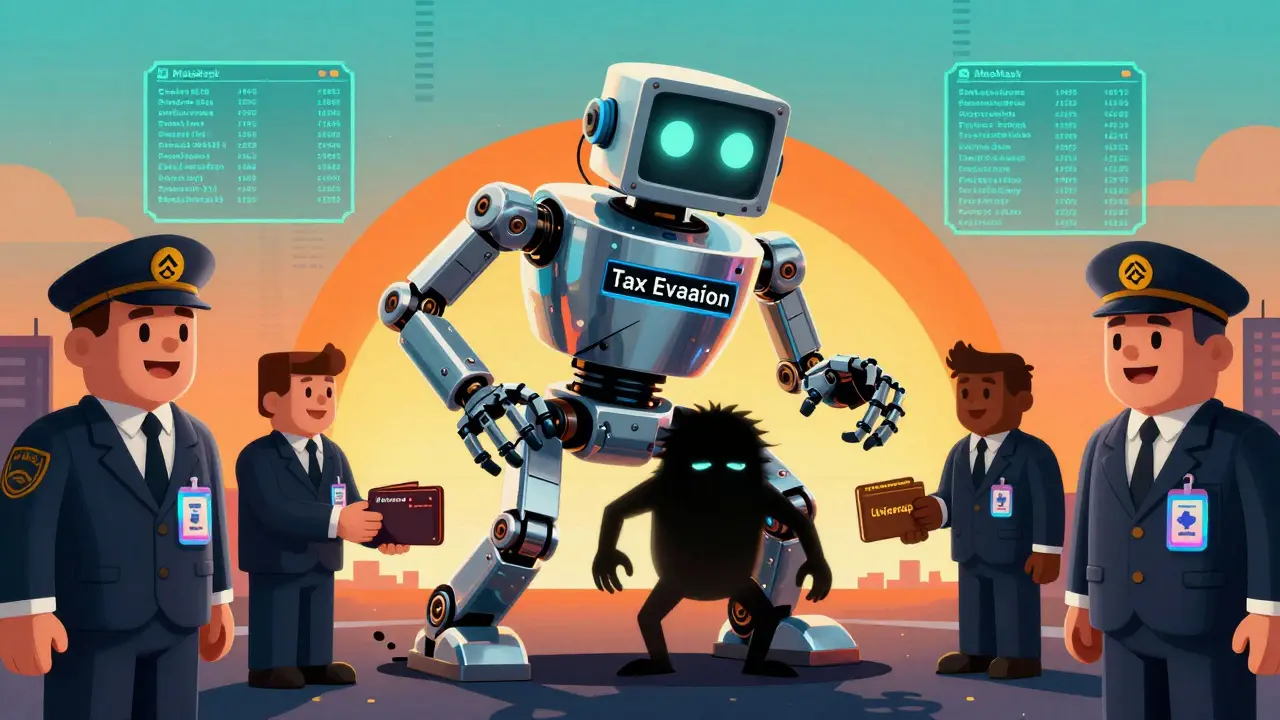
Why Now? The Push for Global Fairness
Why did this happen in 2026? Because crypto went mainstream. In 2023, global crypto trading volume hit $12 trillion. In 2024, over 500 million people held digital assets. Tax authorities saw billions in unreported gains slipping through the cracks.
Before CARF, some countries attracted crypto users by offering zero capital gains tax - becoming unofficial tax havens. But that created unfairness. A person in Germany paying 30% on crypto profits was competing with someone in Portugal or Singapore who paid nothing. CARF levels the playing field. It doesn’t change tax rates - it just ensures everyone pays what their own country says they owe.
The OECD calls it “a major step forward.” The G20 backs it. Even countries that used to resist crypto regulation - like Singapore and Switzerland - are now on board. The only question left is who’s not participating. And right now, that’s a very short list.
What If You Don’t Report? The Risk Just Got Real
Before, the risk of getting caught was low. Now, it’s almost zero.
With CARF, tax agencies no longer need to rely on whistleblowers or random audits. They get your data automatically. If you didn’t report a $50,000 crypto gain last year, and your country receives proof of that sale from a foreign exchange, you’ll get a notice. Not a warning. A demand for back taxes, penalties, and interest.
In the EU, DAC8 violations can trigger fines up to 10% of the unreported amount. In the U.S., failure to report crypto income can lead to civil penalties of 75% of the underpayment - or criminal charges for intentional evasion. Australia’s ATO has already started cross-checking exchange data with taxpayer filings. New Zealand’s IRD is preparing to do the same.
There’s no statute of limitations if you’re hiding income. The clock starts ticking only when you file a return. If you never filed, they can go back 10, 15, even 20 years.

What Should You Do Right Now?
You have two choices: ignore it and risk a massive bill - or get organized now.
Start by gathering all your transaction history. Use a crypto tax tool like Koinly, CoinTracker, or CryptoTaxCalculator. Import your wallet addresses and exchange APIs. Let the software calculate your gains and losses across all platforms. Don’t rely on exchange statements - they often miss transfers between wallets or DeFi activity.
Next, review your past filings. Did you report every sale? Every airdrop? Every staking reward? Many people think only cashing out to fiat counts. It doesn’t. Swapping ETH for SOL is a taxable event. Earning 0.5 BTC in staking? That’s income. You owe tax on it.
Finally, keep records. Save screenshots, transaction IDs, and wallet addresses. If you’re audited, you’ll need proof. And if you’re unsure, talk to a tax professional who understands crypto. Not a general accountant. Someone who’s handled crypto cases before.
The Bigger Picture: Transparency Is Here to Stay
CARF isn’t just about taxes. It’s about trust. Governments want to know who owns what. Financial institutions want to avoid being used for money laundering. Regulators want to prevent crypto from becoming a shadow economy.
For honest users, this is a win. It means crypto is being treated like any other asset - not as a wild west. For the first time, you can hold digital assets with confidence that the system isn’t rigged against you.
For those trying to hide, it’s the end of an era. There’s nowhere left to run. The global tax net has been cast. And it’s already catching.
Do I need to report crypto if I didn’t sell it?
You only owe tax when you trigger a taxable event - like selling, trading, or using crypto to buy goods. Holding crypto without selling isn’t taxable. But CARF will still report your holdings and transactions to your tax authority. They’ll see your activity, even if no tax is due. You still need to keep records in case they ask.
What if I use a non-custodial wallet like MetaMask?
If you only use MetaMask to store crypto and never interact with a platform that acts as an RCASP, your transactions won’t be reported automatically. But if you swap tokens on Uniswap through a wallet connector, or stake on a DeFi platform that’s classified as an RCASP, that platform must report. The system tracks the service provider, not just the wallet.
Is CARF the same as FATCA or CRS?
CARF is the crypto version of CRS. CRS reports bank accounts and traditional investments. CARF adds digital assets. FATCA is a U.S.-specific law targeting Americans abroad. CARF is global and applies to all participating countries, regardless of nationality. If you’re a resident of a CARF country, your crypto data will be shared under CARF, not FATCA.
Will CARF affect DeFi users?
Yes - if you use a DeFi protocol that qualifies as a Reporting Crypto-Asset Service Provider. That includes platforms that match trades, lend assets, or offer staking with pooled liquidity. Simple wallet-to-wallet transfers won’t be reported. But if you interact with a DeFi app that’s regulated as a broker or exchange in your country, they must report your activity. Many DeFi platforms are already preparing for this.
Can I avoid CARF by moving to a non-participating country?
There are only a handful of countries not participating in CARF - and most are small or politically isolated. Even if you move, your home country may still tax you as a resident for up to 10 years after you leave. Plus, if you trade on any major exchange - even in a non-participating country - that exchange may still report you if it’s registered in a CARF country. Avoiding CARF by relocation is extremely difficult and often not worth the legal risk.
What happens if I don’t have a tax ID number?
RCASPs are required to collect your tax ID. If you don’t have one, they may still report you using your name, address, and date of birth - but your tax authority may flag your file as incomplete. This could trigger an audit or request for documentation. In some countries, you can apply for a temporary tax identifier. Don’t wait until you’re flagged - get your ID in order now.