Bitrecife Crypto Exchange Review: Is It a Scam or Legit?
 Oct, 27 2026
You see an ad on Instagram. Elon Musk-or someone who looks like him-promises you can double your money in days using Bitrecife. The website looks slick. The interface is clean. You deposit $500, watch the numbers climb to $1,200 overnight, and feel like a genius. Then you try to withdraw. Suddenly, there are "verification fees," "taxes," and "account activation costs." Your money is gone.
This isn't just a bad day at the market. This is a classic pattern of a fraudulent platform. If you are reading this because you found Bitrecife.com attractive, stop right there. Do not send another cent until you read this full breakdown. We dug into the technical infrastructure, user reports, and regulatory status to give you the hard truth about this so-called exchange.
The Short Answer: High Probability of Fraud
Let’s cut through the noise. Multiple cybersecurity firms and financial watchdogs classify Bitrecife as a high-risk scam. It is not a registered financial institution in major jurisdictions like the US (SEC), UK (FCA), or Australia (ASIC). Instead, it operates in the shadows, using aggressive social media marketing to lure inexperienced investors.
Why do experts say it's a scam? Because legitimate exchanges don't promise guaranteed profits. They don't hide their company registration details. And they certainly don't ask for more money to release your own money. According to MalwareTips.com, which analyzed the site in late 2023, Bitrecife exhibits a 98% probability of being fraudulent based on its hosting history and behavioral patterns.
| Feature | Bitrecife | Legitimate Exchanges (e.g., Coinbase, Kraken) |
|---|---|---|
| Regulation | None verified. No license from SEC, FCA, or ASIC. | Licensed and audited by major financial authorities. |
| Profit Claims | Promises "guaranteed" rapid growth and easy wealth. | No guarantees. Markets fluctuate; users bear risk. |
| Withdrawals | Frequent blocks due to "fees" or "verification issues." | Automated processing with clear, upfront fee structures. |
| Transparency | No physical address, no team info, private domain registration. | Public corporate structure, proof of reserves, known leadership. |
Red Flags You Can Spot Yourself
You don't need a degree in finance to spot trouble. There are specific warning signs that scream "scam" when you look closely at Bitrecife. Here is what our investigation uncovered.
- The "Guaranteed Profit" Lie: In real trading, nobody knows tomorrow’s price. Professional traders aim for modest annual returns, often between 5-15%. Bitrecife advertises massive gains with "minimal effort." If it sounds too good to be true, it is. As noted by analysts at CoinDesk, these claims contradict basic market dynamics.
- Missing Regulatory Licenses: Check any reputable exchange. They list their licenses prominently. Bitrecife lists none. Tracencheck confirmed in November 2023 that the platform lacks oversight from major global regulators. Without regulation, there is no insurance if the company goes bust or steals your funds.
- Anonymous Ownership: Who runs Bitrecife? The website doesn’t say. A WHOIS database check revealed the domain was registered privately in September 2023 via NameSilo. Legitimate companies want you to know who they are. Scammers hide behind privacy protection services to avoid liability.
- Suspicious Marketing Tactics: Have you seen ads featuring celebrities like Warren Buffett or Elon Musk talking about Bitrecife? These are almost always deepfakes or edited clips. CryptoSecurity Watchdog documented over 12,000 clicks generated by fake celebrity endorsements before the accounts were suspended.
The Withdrawal Trap: How They Keep Your Money
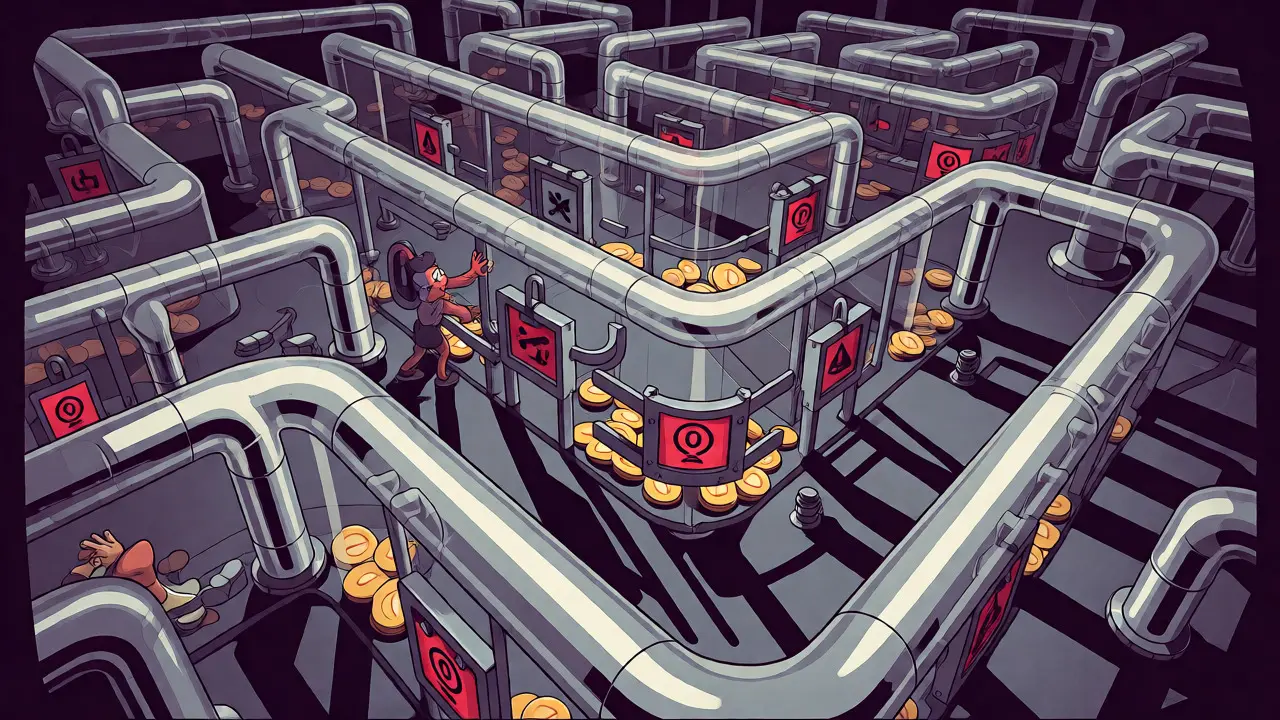
The most painful part of the Bitrecife experience isn't losing money on trades-it's trying to get it back. Users report a consistent pattern known as the "salting" technique. First, they let you make a small profit and even allow a small withdrawal to build trust. Then, when you try to withdraw a larger amount, the walls close in.
Common excuses include:
- Verification Fees: You must pay a fee to "verify" your account. But wait, didn't you already verify it?
- Tax Payments: You owe "capital gains tax" directly to the exchange, not the government.
- Account Activation: You need to upgrade your tier to unlock withdrawals.
One Reddit user, 'CryptoWatcher87', reported losing $1,200 after paying multiple fees that never resulted in a successful payout. This aligns with data from the FBI’s Internet Crime Complaint Center (IC3), which notes that asking for additional payments to release existing funds is a hallmark of advance-fee scams.
Technical Forensics: What the Code Says
We looked under the hood. Technical analysis reveals that Bitrecife’s infrastructure shares IP addresses with other known fraudulent operations. MalwareTips linked the site’s hosting to previous schemes that defrauded users of approximately $2.3 million collectively.
Furthermore, the site lacks proper SSL certificate validation depth and uses JavaScript behaviors designed to mask user activity logs. This makes it difficult for users to track exactly when and how their transactions are processed. Unlike regulated platforms that publish API documentation and security protocols, Bitrecife offers zero technical transparency. You are essentially trusting a black box with your life savings.
User Reviews: Real or Fabricated?
If you search for reviews, you might find some positive ones. Be careful. Trustpilot shows only two reviews for Bitrecife, an unusually low number for a platform claiming thousands of users. More suspiciously, REVIEWS.io displays a review dated October 3, 2025-a future date relative to the time of analysis. This temporal impossibility suggests the reviews are fabricated.
Genuine user feedback tends to appear on forums like Reddit’s r/CryptoScams. There, the narrative shifts dramatically. Users describe aggressive customer support pushing them to deposit more, followed by silence once the money is sent. The disconnect between polished marketing and angry user testimonials is a critical indicator of fraud.

Alternatives That Actually Work
Don't let the fear of scams keep you out of crypto entirely. There are plenty of safe, regulated options. If you want to trade Bitcoin or Ethereum, stick to platforms with proven track records.
| Platform | Safety Rating | Key Feature |
|---|---|---|
| Coinbase | High | US-regulated, public company, insured assets. |
| Kraken | High | Long-standing reputation, publishes proof of reserves. |
| Interactive Brokers | Very High | Global brokerage with strict regulatory compliance. |
TradersUnion rated Interactive Brokers at 9.4/10 for safety and reliability, explicitly stating they do not recommend Bitrecife. When comparing options, look for exchanges that publish quarterly attestations of their reserves. This proves they actually hold the crypto they claim to have.
What To Do If You've Already Deposited
If you’ve already put money into Bitrecife, here is your action plan:
- Stop Depositing: Do not send another dollar. No matter what excuse they give, paying more rarely unlocks your funds.
- Document Everything: Take screenshots of your dashboard, chat logs with support, and transaction receipts.
- Contact Your Bank: Call your credit card issuer or bank immediately. Ask if they can reverse the charge as a dispute for "services not received." Time is critical.
- Report the Scam: File a complaint with your local consumer protection agency and online fraud databases. This helps flag the domain for others.
Be wary of recovery scams. People will email you saying they can recover your lost crypto for a fee. Most of these are also scams. Stick to official channels.
Is Bitrecife a legitimate crypto exchange?
No. Multiple independent investigations classify Bitrecife as a fraudulent platform. It lacks regulatory licensing, verifiable ownership, and transparent financial practices typical of legitimate exchanges.
Why can't I withdraw my money from Bitrecife?
Users commonly report being blocked by arbitrary "verification fees" or "tax charges." This is a common tactic in pig-butchering scams where victims are asked to pay more to access their initial deposits.
Are the celebrity endorsements on Bitrecife ads real?
Likely not. Investigations have shown that ads featuring figures like Elon Musk or Warren Buffett are often manipulated videos or fake quotes used to generate clicks without the celebrities' knowledge or approval.
How long has Bitrecife been around?
The domain bitrecife.com was registered in September 2023. Its short lifespan and sudden appearance, combined with aggressive marketing, fit the profile of temporary scam operations that collapse within 6-12 months.
Can I trust the positive reviews on Bitrecife's site?
Be skeptical. External review sites show very few genuine reviews, and some posted dates are temporally impossible (e.g., future dates). Positive testimonials on the site itself may be fabricated to create false credibility.