Bitrump Crypto Exchange Review: Is It Legit or a Scam?
 May, 4 2026
Have you seen ads for Bitrump popping up on social media? You are not alone. In the fast-moving world of digital assets, new platforms appear daily, promising high returns and easy access to major coins like Bitcoin and Ethereum. But before you deposit even a single dollar, you need to pause. The name "Bitrump" sounds familiar because it combines two massive keywords in the industry: Bitcoin and the political figure Donald Trump. This kind of branding is often designed to catch your eye quickly, but it also raises immediate questions about legitimacy.
Here is the hard truth: there is virtually no credible information about an exchange called Bitrump in major financial databases, regulatory filings, or reputable tech reviews. When a platform lacks a digital footprint beyond aggressive advertising, that is a massive red flag. This article breaks down why you should be extremely cautious, what real security looks like in 2026, and how to spot the difference between a legitimate broker and a potential scam.
The Missing Information Problem
In the crypto world, transparency is everything. Legitimate exchanges operate in the open. They have clear leadership teams, registered office addresses, and public records of their business activities. If you search for Bitrump crypto exchange details, you will likely find silence from authoritative sources. Major industry publications, blockchain explorers, and regulatory bodies do not list Bitrump as an active, compliant entity.
This absence of data is not neutral; it is dangerous. Scammers often create websites that look professional, complete with fake testimonials and manipulated charts showing unrealistic profits. They rely on urgency, telling you that "prices are rising now" so you act without thinking. Without verifiable history, you have no way to know who owns the platform, where your money goes, or if you can actually withdraw your funds.
What Real Security Looks Like in 2026
To understand why Bitrump is suspicious, you need to know what a secure exchange actually does. In 2026, the standard for safety has become much stricter due to past failures and evolving regulations. Let’s look at the gold standards set by established players like Kraken.
Kraken, for example, uses advanced cold storage solutions for the vast majority of user funds. Cold storage means keeping crypto offline, away from internet-connected computers that hackers can target. They also employ physical security measures, including 24/7 surveillance and armed guards for their infrastructure. More importantly, they hold certifications like ISO/IEC 27001:2013 and undergo regular SOC 2 Type 1 examinations. These are independent audits that prove their systems are secure and their processes are sound.
Another critical feature is authentication. Top-tier exchanges use FIDO2 compliant two-factor authentication with Passkeys. This is far more secure than SMS codes, which can be intercepted through SIM-swapping attacks. Many reputable platforms have eliminated phone-based account recovery entirely to prevent unauthorized access. If Bitrump relies solely on email or weak SMS verification, it is failing basic security standards.
The Regulatory Landscape: Why Compliance Matters
The rules around crypto have changed significantly in recent years. In early 2025, the U.S. Securities and Exchange Commission (SEC) created a dedicated crypto task force led by Commissioner Hester Peirce. Their goal was to establish clear lines for registration and disclosure. The SEC also updated accounting rules with SAB 122, replacing the older SAB 121, to help firms handle crypto custody obligations properly.
Legitimate exchanges follow these rules. They register with authorities, disclose their holdings, and accept oversight. Bitrump shows no signs of such compliance. Furthermore, the Department of Justice’s National Cryptocurrency Enforcement Team (NCET) actively investigates fraud in this space. If a platform is operating outside these frameworks, it is either ignoring the law or trying to hide its operations. Both scenarios put your money at risk.
The Office of Foreign Assets Control (OFAC) also applies strict sanctions compliance to digital assets. This means legitimate exchanges must screen users against lists of sanctioned entities. A shady platform like Bitrump likely ignores these checks, making it a potential tool for money laundering. Associating yourself with such a platform can have legal consequences for you, not just financial ones.
Common Red Flags of Crypto Scams
If you are considering using Bitrump, ask yourself these questions. Most scams share common traits:
- Unrealistic Promises: Do they claim you can double your money in days? No legitimate investment offers guaranteed high returns with low risk.
- Pressure to Act: Are pop-ups telling you to deposit immediately? Scammers create artificial urgency to bypass your critical thinking.
- Poor Contact Info: Can you find a real customer support team? Or is it just a chatbot and a generic email address?
- Hidden Fees: Does the website clearly explain withdrawal fees? Scammers often hide costs until you try to get your money out.
- No Social Proof: Are there genuine reviews on independent sites like Trustpilot or Reddit? Fake reviews are easy to buy; real user experiences are harder to fabricate.
Retail investors are disproportionately targeted by these schemes. Research shows that during market crashes, large holders exit early while retail users absorb the losses. This "reverse-wealth effect" transfers money from everyday people to sophisticated operators. Using an unverified platform increases your exposure to this risk dramatically.

Safe Alternatives for Trading Crypto
You do not need to use a risky platform to trade Bitcoin or other cryptocurrencies. There are many established, regulated exchanges that prioritize your safety. Here is a comparison of what you should look for:
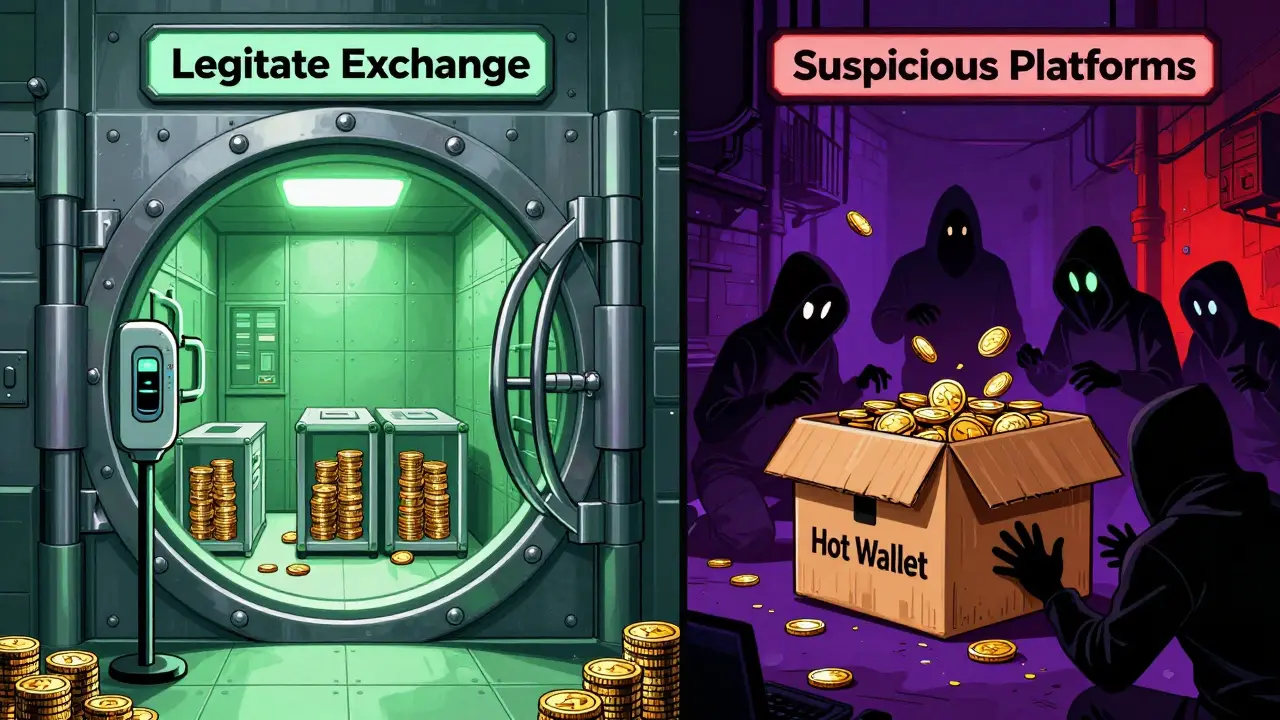
| Feature | Legitimate Exchanges (e.g., Kraken, Coinbase) | Suspicious Platforms (e.g., Bitrump) |
|---|---|---|
| Regulatory Status | Registered with SEC/FCA; transparent licensing | No visible license; offshore or hidden ownership |
| Security Audits | Regular SOC 2, ISO 27001 certifications | No public audit reports |
| Fund Storage | Majority in cold storage; insured custodial options | Unclear storage methods; hot wallets only |
| Authentication | FIDO2 Passkeys, hardware keys supported | SMS-only or weak email verification |
| Reputation | Years of operation; positive independent reviews | New domain; fake testimonials; no history |
Platforms like Coinbase and Binance (in regulated regions) offer robust interfaces, educational resources, and strong security protocols. They may have higher fees than shady brokers, but those fees pay for insurance, compliance, and customer support. That peace of mind is worth every penny.
How to Protect Yourself Online
If you have already interacted with Bitrump, take immediate steps. Change your passwords if you used them elsewhere. Enable two-factor authentication on all your financial accounts. If you deposited money, contact your bank or credit card company immediately to dispute the charge. While getting crypto back is difficult, acting fast improves your chances.
For future trading, always verify an exchange through official channels. Check the SEC’s investor resources, consult the Financial Conduct Authority (if you are in the UK), or look for listings on trusted aggregator sites. Never trust an ad alone. The crypto market is volatile enough without adding the risk of fraud.
Remember, if something feels too good to be true, it probably is. The best strategy is patience and due diligence. Stick to platforms with proven track records, clear regulatory standing, and transparent security practices. Your financial health depends on it.
Is Bitrump a legitimate crypto exchange?
There is no credible evidence that Bitrump is a legitimate exchange. It lacks regulatory licenses, security certifications, and a verifiable corporate history. The absence of information in major industry sources suggests it is likely a fraudulent platform.
Why is the lack of online presence a red flag?
Legitimate businesses operate transparently. They have registered offices, public leadership teams, and user reviews on independent platforms. A missing digital footprint indicates the operators are hiding their identity, which is common in scams.
What security features should I look for in a crypto exchange?
Look for cold storage for funds, ISO 27001 certification, SOC 2 audits, and FIDO2-compliant two-factor authentication. Avoid platforms that rely solely on SMS verification or lack public security reports.
Can I recover money lost to Bitrump?
Recovery is difficult but possible if you act quickly. Contact your bank or credit card issuer to dispute the transaction. Report the scam to local law enforcement and relevant financial regulators like the SEC or FTC.
Are there safer alternatives to Bitrump?
Yes. Established exchanges like Kraken, Coinbase, and Binance offer regulated environments with strong security measures. They provide transparency, insurance options, and responsive customer support.
What is the role of the SEC in crypto regulation?
The SEC enforces securities laws in the crypto space. It requires exchanges to register, disclose risks, and protect investor assets. Platforms ignoring SEC guidelines operate illegally and pose significant risks to users.
How do scammers lure victims?
Scammers use aggressive advertising, fake testimonials, and promises of unrealistic returns. They create urgency to prevent victims from researching the platform thoroughly.
What is cold storage in cryptocurrency?
Cold storage refers to keeping crypto assets offline, away from internet-connected devices. This protects funds from hacking attempts and is a standard practice for reputable exchanges.
Why is FIDO2 authentication important?
FIDO2 provides passwordless, phishing-resistant authentication using biometrics or hardware keys. It is significantly more secure than SMS codes, which can be intercepted by attackers.
What should I do if I suspect my account is compromised?
Immediately change your passwords, enable two-factor authentication, and transfer any remaining funds to a secure wallet. Report the incident to the exchange’s support team and your financial institution.