Blockchain for Philanthropy: Transparency, Speed, and Tax Benefits
 Nov, 9 2026
Imagine sending a donation to a disaster relief fund and watching it arrive in seconds, with zero fees eating into your gift, and being able to trace every cent from your wallet to the final purchase of medical supplies. This isn't science fiction; it's the current reality of blockchain technology applied to philanthropy. While traditional charity often feels like dropping money into a black box, blockchain offers a transparent, immutable ledger that changes how we give, receive, and trust.
| Feature | Traditional Philanthropy | Blockchain Philanthropy |
|---|---|---|
| Transaction Speed | 3-5 business days (wire/ACH) | 1-30 minutes (depending on network) |
| Fees | 2.9% + $0.30 (credit card) or up to 6.35% (international remittance) | 0.1% - 1% (network fees) |
| Transparency | Limited; relies on annual reports | Full traceability; public ledger |
| Tax Efficiency | Deductible at fair market value | Avoid capital gains on appreciated assets |
The End of the Black Box: Radical Transparency
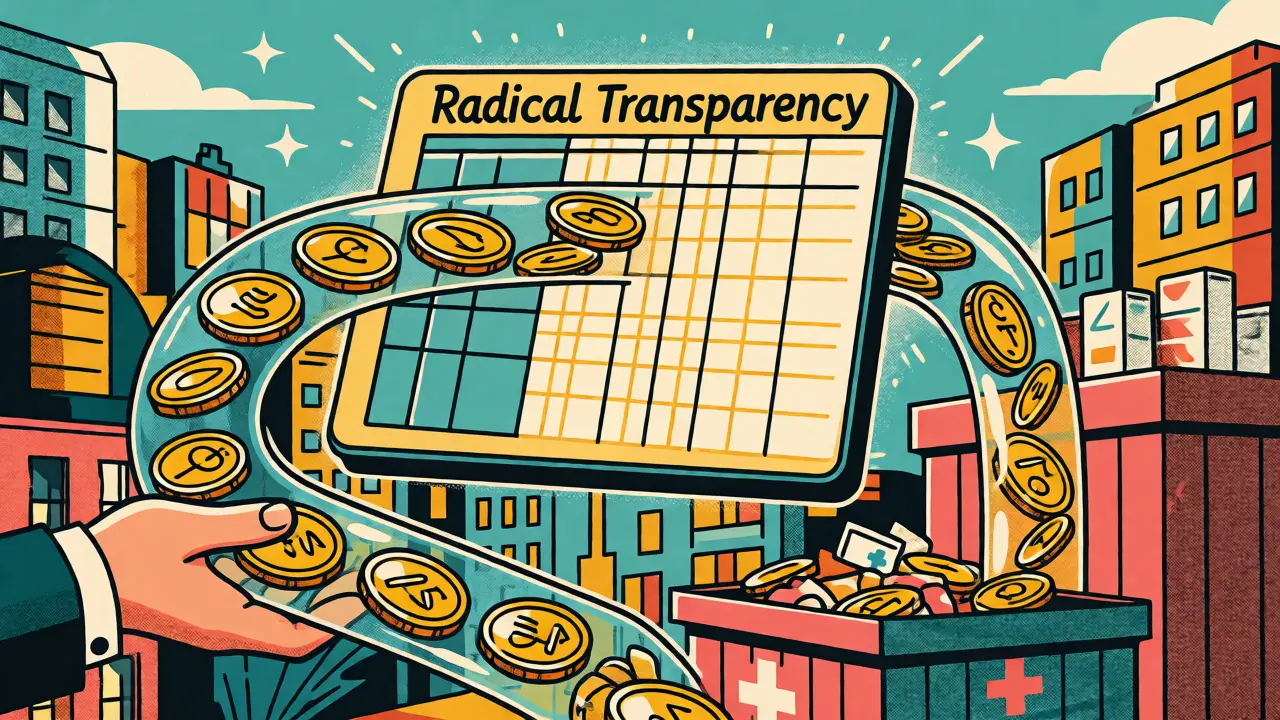
The biggest pain point in charity has always been trust. You give money, but do you know exactly where it went? Did administrative costs eat up half your donation before it reached the field? Blockchain creates an immutable record of transactions that anyone can audit. This is what researchers at IMD Business School call "proof of impact." When a nonprofit uses a distributed ledger, donors can track their contribution from the moment it leaves their wallet until the moment it converts into goods or services. There’s no room for hidden accounting tricks because the history is permanent and visible to all network participants.
This level of visibility forces accountability. If a nonprofit claims they spent $1 million on vaccines, the blockchain shows exactly when those funds moved and to which vendors. It reduces the risk of human error and fraud, making financial reporting more accurate. For donors who are skeptical about overhead ratios, this transparency is a game-changer. It shifts the dynamic from "trust me" to "verify me," empowering supporters to make decisions based on real-time data rather than glossy brochures.
Speed Matters: From Days to Minutes
In emergency situations, speed saves lives. Traditional international wire transfers can take three to five business days to clear, especially if they cross borders or involve currency conversions. During the initial crisis response in Ukraine in 2022, over $100 million in cryptocurrency donations reached humanitarian organizations within hours. Compare that to the weeks it might have taken using traditional banking rails, and the difference is stark.
Blockchain operates 24/7, unlike banks that close on weekends and holidays. A donation sent at 2 AM on a Sunday arrives almost instantly. This immediacy is crucial for disaster relief, where delays in funding can mean delayed food, water, or medical care. The infrastructure supporting this speed includes networks like Bitcoin, Ethereum, and Solana, as well as stablecoins like USDC, which minimize volatility while maintaining transaction speed. Platforms such as The Giving Block facilitate these rapid transfers, allowing nonprofits to access funds when they need them most, not when the bank opens.

Cutting Costs: More Money Goes to the Mission
Let’s talk numbers. Credit card processors typically charge around 2.9% plus 30 cents per transaction. International remittance services can charge upwards of 6.35%. On a $100 donation, that could mean losing $6 or more before the charity sees a dime. Now, consider blockchain. Transaction fees on major networks often range between 0.1% and 1%, depending on network congestion. That means nearly 99% of your donation stays intact.
For large donations, these savings compound significantly. One nonprofit reported saving $36,000 in processing fees on a single $1.2 million Ethereum donation by using blockchain instead of traditional channels. These savings aren't just good for the bottom line; they directly increase the organization's capacity to fulfill its mission. Less money spent on intermediaries means more money spent on programs, staff, and beneficiaries. It’s a simple equation, but one that traditional finance has struggled to solve due to entrenched legacy systems.
Tax Advantages for Donors
Here’s a benefit many donors overlook: taxes. In the United States, the IRS treats cryptocurrency as property. This classification creates a unique opportunity for charitable giving. If you hold Bitcoin that you bought for $5,000 and it’s now worth $25,000, selling it would trigger a capital gains tax on the $20,000 profit. However, if you donate that same Bitcoin directly to a qualified nonprofit, you can deduct the full fair market value ($25,000) on your taxes and avoid paying capital gains tax entirely.
This strategy allows donors to maximize their impact while minimizing their tax liability. It’s particularly attractive for early crypto adopters who have seen significant appreciation in their holdings. According to recent surveys, 63% of crypto donors are "evangelists"-long-time holders looking to pay forward their gains. By leveraging these tax rules, donors effectively stretch their dollars further, enabling larger gifts without increasing their out-of-pocket cost.

Smart Contracts: Automation Meets Charity
Beyond simple transfers, blockchain enables programmable money through smart contracts. Introduced by Ethereum in 2015, smart contracts are self-executing agreements with the terms directly written into code. Imagine a donation fund that automatically releases money only when specific conditions are met. For example, a donor could set up a contract that releases $10,000 to a shelter only after verified receipts show that 500 meals were served.
This automation reduces administrative burden and builds trust. Nonprofits don’t need to spend hours manually reconciling expenses against promises; the code handles it. Furthermore, emerging trends suggest AI integration will enhance this further. Researchers at Cornell University predict that AI systems could monitor global events, detect disasters, and automatically trigger donations from pre-funded smart contracts. We’ve already seen the first AI-led crypto donation in 2024, signaling a future where giving becomes more responsive and efficient.
Challenges and Realities
It’s not all smooth sailing. Volatility remains a concern, though stablecoins have mitigated this for 42% of transactions. Nonprofits also face implementation hurdles. Accounting teams often struggle with valuing crypto donations at the exact moment of receipt for tax documentation. It can take months to establish proper procedures, as noted by tech-savvy nonprofit leaders. Additionally, only 28% of traditional donors are familiar with crypto options, meaning education is still required.
However, the trajectory is clear. With $2.5 billion expected in crypto donations by 2025 and growing institutional adoption, blockchain is moving from niche to mainstream. Gartner predicts that by 2030, 15-20% of major nonprofits will offer blockchain-based giving as a standard option. The key is starting small, using established platforms like The Giving Block or Infinite Giving, and focusing on the tangible benefits: speed, lower fees, and unmatched transparency.
How does blockchain improve transparency in charities?
Blockchain provides an immutable, public ledger where every transaction is recorded permanently. Donors can trace their contributions from initiation to final expenditure, ensuring funds are used as intended and reducing opportunities for mismanagement or fraud.
Are there tax benefits to donating cryptocurrency?
Yes. In the U.S., donating appreciated cryptocurrency directly to a qualified nonprofit allows donors to deduct the full fair market value while avoiding capital gains taxes on the appreciation, maximizing both the donation amount and tax efficiency.
What are the typical fees for crypto donations compared to credit cards?
Crypto transaction fees typically range from 0.1% to 1%, whereas credit card processors charge approximately 2.9% plus $0.30 per transaction. International wire transfers can be even higher, averaging 6.35% in fees.
How fast are blockchain donations processed?
Blockchain transactions usually settle within 1 to 30 minutes, depending on network congestion. This is significantly faster than traditional ACH transfers or international wires, which can take 3 to 5 business days.
Do nonprofits need technical expertise to accept crypto?
Not necessarily. Most nonprofits use third-party processors like The Giving Block or Infinite Giving, which handle the technical complexity, conversion to fiat currency, and tax documentation, requiring only basic website integration skills.