Crypto Adoption in Russia: How Sanctions and Regulation Shape a Digital Financial Revolution
 Dec, 20 2025
More than 20 million Russians - about one in seven adults - now hold cryptocurrency. That’s not a rumor. It’s official data from the Bank of Russia, confirmed in October 2025. These aren’t just speculators gambling on price swings. They’re ordinary people using Bitcoin, Ethereum, and USDT to buy medicine, pay freelancers abroad, send money home to family, and protect savings from inflation and frozen bank accounts. This isn’t a fringe movement. It’s a survival strategy born out of sanctions, banking isolation, and a government that can’t stop it - so it’s trying to control it.
Why Russia Became a Crypto Powerhouse
After Western payment systems like Visa, Mastercard, SWIFT, and PayPal cut off access in 2022, Russia didn’t collapse financially. It adapted. Cryptocurrency became the invisible pipeline keeping its economy alive. Businesses that needed to import software, machinery, or parts from Asia or Turkey couldn’t use traditional banking. So they turned to peer-to-peer crypto trades. Individuals couldn’t receive salaries from foreign clients. So they used USDT stablecoins - pegged to the dollar - to get paid without risking bank freezes. The numbers tell the story. As of March 2025, Russian users held $10.15 billion in crypto across exchange wallets. That’s up 27% from the year before. Bitcoin makes up 62% of those holdings. Ether is second at 22%. The rest? Mostly USDT and USDC. Why stablecoins? Because they don’t swing wildly. They act like digital cash that can cross borders in minutes, not days. Chainalysis ranked Russia #10 globally for crypto adoption in 2025. Not bad for a country under sanctions. What’s surprising? Russia ranks #4 in institutional adoption - meaning businesses, traders, and exporters are using crypto more than average citizens. Meanwhile, retail users are #8. That’s the opposite of Ukraine, where everyday people drive adoption. In Russia, it’s the professionals who are leading the charge.The Legal Gray Zone: You Can Own It, But Not Spend It
Here’s the contradiction: Russia’s 2021 law, “On Digital Financial Assets,” says you can legally own cryptocurrency. But you can’t use it to pay for goods or services. That’s it. No fines. No jail. Just a legal wall between holding crypto and using it like money. That’s why less than 0.5% of Russian businesses accept crypto as payment. Not because people don’t want to. Because the law says they can’t. A tech startup in Novosibirsk might use USDT to pay a developer in India. But if that same startup tries to sell software to a customer in Moscow and takes payment in Bitcoin? That’s a violation. The government doesn’t shut them down immediately - but audits happen. Accounts get frozen. Businesses get scared. The result? A two-tier system. For cross-border trade, crypto is essential. For everyday purchases - groceries, rent, Uber rides - it’s invisible. Russians use cash, bank cards, or digital wallets like Sberbank Online. Crypto is for the edges of the economy, not the center.How People Actually Use Crypto in Russia
Most Russians don’t trade on Binance or Coinbase. Those platforms are blocked. Instead, they use local exchanges like BitPrepay, EXMO, and Kuna.io - platforms that survived sanctions by operating inside Russia’s legal gray zone. To sign up, you need a passport and a selfie. Verification takes 3-5 days. Once approved, you can buy crypto with rubles via bank transfer or P2P deals. Peer-to-peer trading is huge. Someone in St. Petersburg might post an ad: “I’ll give you 1 BTC for 3.2 million rubles.” A buyer in Rostov finds them, sends the rubles via Sberbank, and gets the Bitcoin in their wallet. No middleman. No bank approval needed. It’s fast. It’s anonymous. And it’s how most Russians get their crypto. The benefits? Speed and cost. Sending $5,000 to a contractor in Vietnam via traditional wire takes 3-5 business days and costs 4% in fees. With USDT? Done in 15 minutes. Fee? 0.3%. A small software company in Kazan reported a 40% drop in transaction costs after switching to crypto payments for overseas clients. But there’s risk. In March 2025, the Bank of Russia ran a compliance sweep. Nearly 30% of users reported their exchange accounts frozen for weeks. One user lost a $3,000 opportunity because he couldn’t trade during the freeze. Another said his account was locked because he received a payment from a “suspicious wallet” - even though the sender was his cousin in Armenia.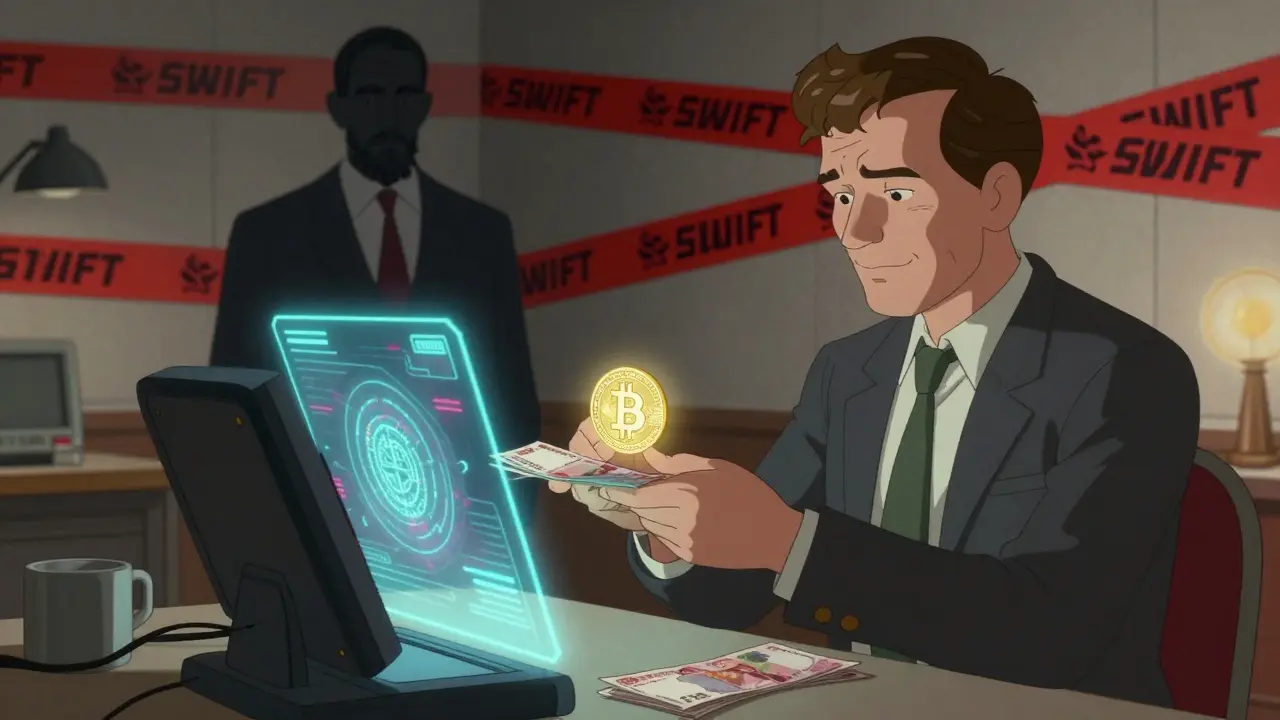
Why DeFi Is Still Rare in Russia
You’d think with all this crypto activity, Russia would be a DeFi powerhouse. It’s not. Chainalysis ranked Russia #52 globally for DeFi value received. Why? Because DeFi requires open access to platforms like Uniswap, Aave, or Compound - all blocked by Russian internet filters. Even if you use a VPN, Russian banks won’t let you link your account to them. And without bank integration, DeFi is out of reach for most. There are local DeFi-like platforms, but they’re unregulated. No insurance. No legal recourse. If a smart contract fails, you lose everything. So most Russians stick to simple buys and sells. They want stability, not complexity.The Government’s Shift: From Blockade to Control
For years, the Bank of Russia called crypto a “financial threat.” Now, Deputy Finance Minister Ivan Chebeskov says, “Crypto is a reality we must address.” That’s a huge change. In October 2025, the central bank announced it will soon allow banks to handle cryptocurrency transactions - but only under strict capital and reserve rules. Think of it like this: the government isn’t legalizing crypto. It’s bringing it inside the system. Banks will act as gatekeepers. You’ll still need to go through them to buy or sell. And they’ll report everything to regulators. Why the change? Because the government is losing control. With 20 million users, crypto is too big to ignore. If it stays outside the system, it becomes a tool for evasion - not just for sanctions, but for tax avoidance and money laundering. By bringing crypto under bank supervision, Russia can track flows, collect taxes, and maybe even create its own digital ruble that competes with Bitcoin and USDT. A major survey is planned for January-February 2026. The central bank wants to know how much crypto people are lending, borrowing, and storing. That data will shape new laws - possibly by late 2026.Who’s Using Crypto in Russia?
It’s not random. The typical Russian crypto user is a man between 25 and 44, living in a big city like Moscow, St. Petersburg, or Novosibirsk. He’s likely tech-savvy, works in IT, export, or freelancing, and has been burned by the banking system. He’s not a trader. He’s a pragmatist. Urban users make up 89% of the total. Rural areas? Barely any. Why? Because rural Russians don’t have access to reliable internet, crypto exchanges, or the kind of international income that makes crypto useful. It’s a city phenomenon. Women are underrepresented - only 28% of users. That’s not because they don’t want to. It’s because the tech and finance sectors in Russia are still male-dominated. And crypto adoption follows those networks.
What’s Next for Crypto in Russia?
By the end of 2026, experts predict 23.5 million Russians - nearly 16% of the population - will be using crypto. Growth will come from younger users, more cross-border business, and possibly a government-backed crypto wallet tied to the digital ruble. But risks remain. The U.S. Treasury has signaled it will keep targeting Russian crypto infrastructure. If a major local exchange gets sanctioned like Garantex did in 2022, it could trigger panic. Market volatility could wipe out savings. And if the government imposes heavy taxes or mandatory reporting, many users might go underground. The real question isn’t whether Russians will keep using crypto. They already are. The question is: will Russia turn crypto into a tool of state control - or will it remain a lifeline for people outside the system?Getting Started in Russia: What You Need to Know
If you’re in Russia and want to start using crypto:- Choose a local exchange: BitPrepay, EXMO, or Kuna.io are the most reliable.
- Complete identity verification - expect 3-5 days.
- Use P2P for buying/selling - it’s safer and more accessible than direct bank links.
- Store your crypto in a hardware wallet (like Ledger or Trezor) if holding more than a few thousand dollars.
- Never use a centralized exchange as your long-term wallet - they can freeze your funds anytime.
- Stay updated on regulatory changes. The rules shift every few months.