Egyptian Grand Mufti Declares Bitcoin Haram: What the Fatwa Means for Muslims and Crypto
 Mar, 17 2026
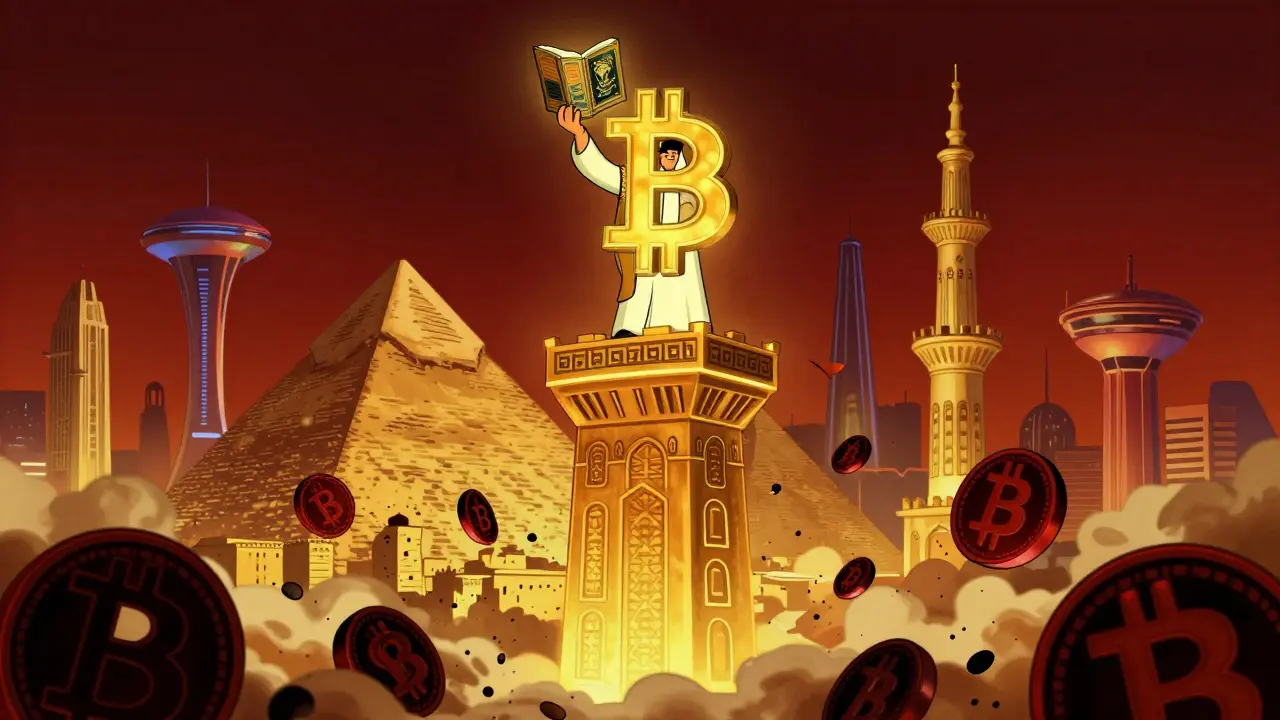
The year was 2017. Bitcoin had just hit nearly $20,000. People were quitting jobs to mine. Startups were raising millions. And then, from Cairo, came a clear, unshakable message: Bitcoin is haram.
Dr. Shawky Ibrahim Allam, Egypt’s Grand Mufti and head of Dar al-Ifta - the country’s top Islamic legal authority - issued a fatwa that didn’t just question cryptocurrency. It banned it. Fully. Completely. No gray area. No exceptions. Not for trading. Not for mining. Not even for accepting it as payment. For millions of Muslims who follow Egypt’s religious guidance, this wasn’t a suggestion. It was a rule.
Why Did Egypt Say No?
The fatwa didn’t come out of nowhere. It was built on three pillars: uncertainty, lack of control, and danger.
First, gharar - Islamic law’s prohibition against excessive uncertainty. Bitcoin, the fatwa argued, has no physical form. No government backs it. No central bank regulates it. Its value jumps overnight. One day it’s $1,000. The next, $15,000. Then $3,000. That kind of wild swing? That’s not money. That’s gambling. And gambling is haram.
Second, there’s no oversight. In Islamic finance, every transaction needs transparency. Who’s paying? Who’s receiving? What’s the value? Bitcoin’s anonymous, decentralized nature makes that impossible. The fatwa called it a system that “cannot be exchanged in a tangible way.” That’s not just inconvenient - it’s a red flag under Sharia.
Third, and maybe most damning: Bitcoin was being used by terrorists.
The fatwa specifically named ISIS, drug cartels, and money launderers as users of cryptocurrency. In 2017, that wasn’t just fearmongering. It was real. Bitcoin had been used in ransomware attacks, darknet marketplaces, and terrorist fundraising. For Egypt’s religious leaders, this wasn’t about economics. It was about national security. If a currency can’t be tracked, it can’t be stopped. And if it helps evil, it’s evil.
What Exactly Is Banned?
The fatwa didn’t just say “don’t buy Bitcoin.” It said: Don’t do anything with it.
- Buying or selling Bitcoin? Forbidden.
- Trading it for Ethereum, Litecoin, or any other coin? Forbidden.
- Mining Bitcoin with your computer? Forbidden.
- Accepting Bitcoin as payment for your goods or services? Forbidden.
- Investing in crypto exchanges or wallets? Forbidden.
- Even subscribing to crypto newsletters or services? Forbidden.
There’s no loophole. No “if you pay zakat” exception. No “if you hold it long-term” workaround. The fatwa is blanket. Absolute. If you’re following Egypt’s guidance, you don’t touch crypto at all.
How Does This Compare to Other Muslim Countries?
Egypt isn’t alone - but it’s the strictest.
Syria’s Islamic Council also banned Bitcoin around the same time. Some scholars in Indonesia and Malaysia leaned toward caution, calling crypto “disliked” (makruh) but not outright forbidden.
But then there are voices that say the opposite.
Mufti Faraz Adam, a leading Islamic finance expert in the U.S., argues that Bitcoin can be halal - if treated right. He says: “Classical scholars didn’t ban things because they were new. They banned them because they caused harm. If Bitcoin functions as money, then it should be treated like money.”
Adam’s position? If you own Bitcoin, pay zakat on it. Track its value. Use it responsibly. Don’t gamble. Don’t use it for illegal stuff. Then, it’s okay.
That’s the divide. Egypt says: “It’s dangerous and unregulated - so no.” Adam says: “It’s a tool. It can be used right or wrong. The problem isn’t Bitcoin - it’s how people use it.”

What About Central Bank Digital Currencies (CBDCs)?
Now that countries like China, Nigeria, and Saudi Arabia are launching their own digital currencies, the question gets even sharper.
Is a government-backed digital dollar or riyal still haram if it’s controlled by a central bank? The Egyptian fatwa doesn’t say. But its logic suggests yes - because it bans “any and all uses of cryptocurrency,” not just Bitcoin.
That’s a problem. Because CBDCs solve the very issues Egypt complained about: they’re regulated. They’re traceable. They’re backed by a state. Yet the fatwa doesn’t make that distinction. It lumps all digital currencies together. That’s why many scholars say the ruling is outdated.
What’s the Real Impact?
Over 100 million Muslims live in Egypt. Millions more look to Dar al-Ifta for guidance across Africa and the Middle East.
So what happens on the ground?
Most Egyptian Muslims don’t trade crypto. Not because they’re tech-averse - but because they’re religiously cautious. Banks don’t offer crypto services. Apps don’t support it. Even crypto ATMs are rare.
But outside Egypt? The story’s different.
In Turkey, Indonesia, and Nigeria - countries with huge Muslim populations - crypto adoption is growing fast. People use it to send money home, protect savings from inflation, or start businesses. Many of them follow scholars like Mufti Adam, who say crypto can be halal if managed properly.
This creates a real conflict. Two Muslim communities. Two rulings. One religion. And no clear answer.

Is the Fatwa Still in Effect?
Yes. As of March 2026, there’s been no revision. No update. No softening.
Egypt’s Dar al-Ifta hasn’t issued a single statement changing its stance. Even as regulated exchanges like Binance and Kraken now comply with AML rules, even as Bitcoin ETFs launch in the U.S., even as blockchain tech gets used for humanitarian aid in war zones - Egypt holds firm.
Why? Because the fatwa isn’t just about Bitcoin. It’s about control. About authority. About preserving a system where money is tied to tangible value, regulated by trusted institutions, and free from hidden risks.
For Egypt, crypto isn’t just un-Islamic. It’s a threat to the entire financial order.
What Should Muslims Do?
If you live in Egypt - or follow the Grand Mufti’s rulings - the answer is simple: avoid crypto entirely.
If you live elsewhere - and you’re unsure - here’s what to ask:
- Does my local Islamic authority have a stance?
- Am I using this as an investment or as a tool?
- Am I paying zakat on my holdings?
- Am I using it to avoid taxes or fund illegal activity?
There’s no one-size-fits-all answer. But there is one truth: religion doesn’t ban technology. It bans harm. And that’s where the debate still lives.