EU to Ban Monero and Zcash by 2027: What Privacy Coin Holders Need to Know
 Jan, 17 2026
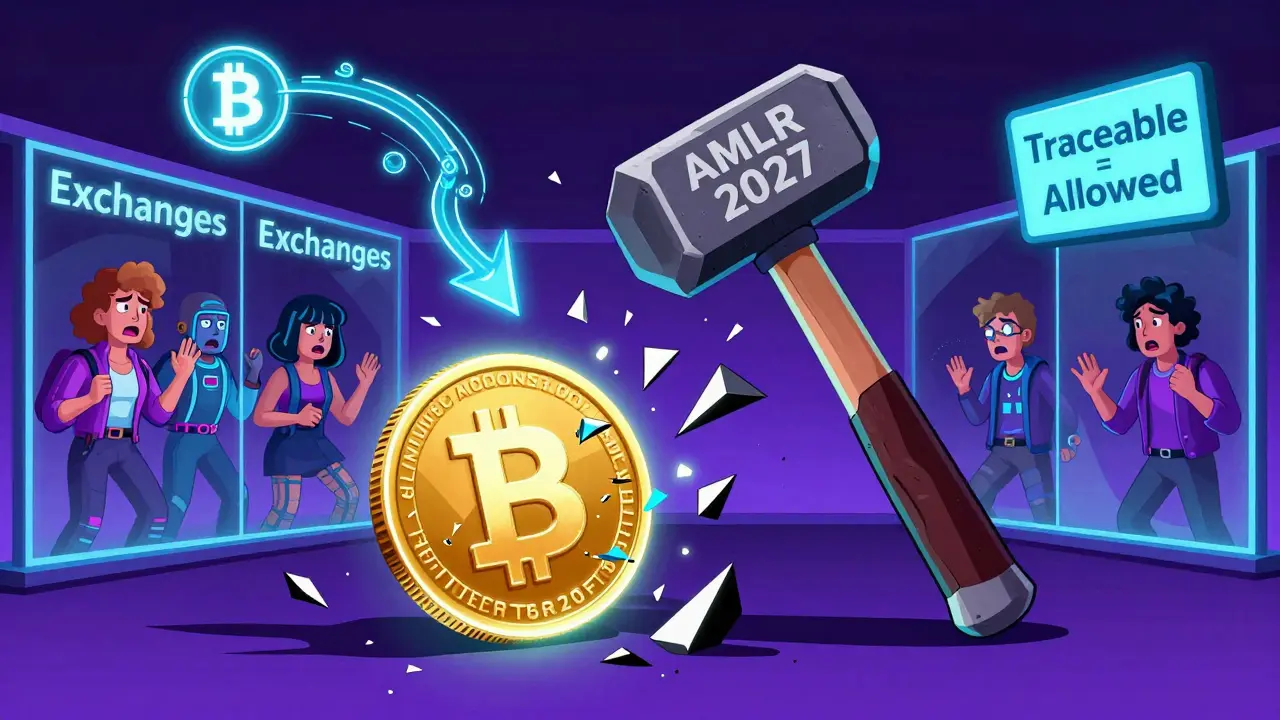
By July 1, 2027, you won’t be able to trade Monero or Zcash on any exchange based in the European Union. It’s not a rumor. It’s not a proposal. It’s law. The EU’s new Anti-Money Laundering Regulation (AMLR), adopted in May 2024, makes it illegal for crypto service providers to handle privacy coins. That means no Binance EU, no Kraken EU, no Bitpanda - none of them can support Monero (XMR) or Zcash (ZEC) anymore. And it’s not just about trading. It’s about holding, transferring, even receiving payments in these coins through any EU-regulated platform.
Why the EU Is Banning Privacy Coins
The EU isn’t targeting Monero and Zcash because they’re popular. They’re banning them because they work too well at hiding transactions. Monero uses ring signatures and stealth addresses to scramble sender, receiver, and amount data so not even blockchain explorers can trace them. Zcash offers shielded transactions powered by zero-knowledge proofs - meaning you can send value without revealing who sent it, who received it, or how much was sent. To regulators, that’s not privacy. It’s a blind spot in the financial system. The European Commission calls it a "clear and present risk" for money laundering and terrorist financing. They point to real cases: ransomware gangs using Monero to avoid detection, darknet markets relying on Zcash for untraceable payments. In 2023, Europol reported that over 12% of illicit crypto transactions involved privacy coins, despite them making up less than 2% of total crypto volume. That’s a disproportionate risk, and the EU decided to cut it at the root. This isn’t about punishing users. It’s about closing the door for bad actors. The regulation doesn’t ban individuals from owning privacy coins. It bans institutions - exchanges, wallets, payment processors - from touching them. That’s a key distinction. If you already hold Monero in a non-EU wallet, you’re not breaking the law. But if you try to cash out on Coinbase EU, they’ll block you. Period.How the Ban Works: Article 79 and the AMLR
The legal hammer is Article 79 of Regulation 2024/1624. It says: "No crypto-asset service provider shall maintain accounts or facilitate transactions involving crypto-assets designed to obscure the origin, identity, or destination of funds." That’s it. No gray area. No loopholes. Privacy coins are explicitly named in internal EU documents as falling under this rule. The regulation doesn’t just say "no anonymous transactions" - it bans entire coin types that are built to be anonymous. That’s why Bitcoin, Ethereum, and even Solana are fine. Their transaction histories are public. You can track every coin movement. Privacy coins? Not even possible. Crypto-asset service providers (CASPs) must now verify every user’s identity under the EU’s "Travel Rule" - which kicks in for transfers over €1,000. That means every time someone sends or receives crypto, the sender’s name, address, and ID number must be passed along. Monero and Zcash can’t comply with that. They physically can’t. So they’re out. The enforcement body? AMLA - the new Anti-Money Laundering Authority. Starting in 2026, AMLA will monitor the top 40 crypto firms in the EU. If you’re handling more than €50 million in crypto a year, you’re on their radar. Fines for non-compliance can hit up to 5% of global revenue. That’s enough to make any exchange shut down privacy coin support fast.What Happens to Your Monero and Zcash?
If you own Monero or Zcash today, you’re not required to sell. But you’re going to feel the squeeze. EU-based exchanges will delist them by June 30, 2027. Wallets like Ledger or Trezor will still let you store them - because they’re non-custodial. But you won’t be able to buy more on EU platforms. You won’t be able to convert them to EUR or USD through regulated channels. You won’t be able to pay a vendor in Berlin with Zcash if they use a standard payment processor. Your options? Three:- Keep them in a self-custody wallet and wait. If the ban lifts (unlikely), you still have them.
- Sell them before July 2027 on a non-EU exchange like Binance (offshore), Bybit, or KuCoin. Then move the funds to EUR or USD.
- Use a decentralized exchange (DEX) like ThorChain or Osmosis to swap them for Bitcoin or Ethereum without KYC. But this is risky - you’re dealing with unregulated tech, and you could lose funds if something goes wrong.

Will Other Countries Follow?
The EU is the first major economy to outright ban privacy coins. But it won’t be the last. The UK is already reviewing similar rules. Australia’s AML/CTF Act is being updated to include explicit prohibitions. Japan’s Financial Services Agency has signaled it’s watching closely. The U.S. hasn’t moved yet - but the Treasury Department’s 2025 Crypto Compliance Report called privacy coins "a significant threat to financial integrity." The EU’s model is simple: if you can’t trace it, you can’t touch it. That’s becoming the global standard. Countries that want to attract institutional crypto investors - banks, hedge funds, pension funds - need to prove they’re "AML-compliant." Privacy coins don’t fit that mold. Some argue this will push privacy coin activity underground - to peer-to-peer markets, over-the-counter brokers, or crypto ATMs in non-regulated zones. That’s already happening. But those channels are dangerous, unregulated, and offer zero consumer protection. If you get scammed buying Monero from a stranger in a park, there’s no recourse.What About Decentralized Wallets and Non-Custodial Solutions?
Yes, you can still hold Monero or Zcash in a non-custodial wallet like Cake Wallet or ZecWallet. You can even send them to someone in Canada or Singapore. The ban only restricts regulated entities. It doesn’t outlaw the coins themselves. But here’s the catch: you can’t easily convert them into fiat without going through a regulated gateway. If you’re in Germany and want to buy a car with Monero, you’ll find almost no merchants accept it. Even if they do, they’ll have to convert it to EUR through a non-EU exchange - which means higher fees, longer delays, and more risk. The practical effect? Privacy coins are becoming unusable in everyday life within the EU. They’re turning from currency into speculative assets - like digital gold, but without the liquidity.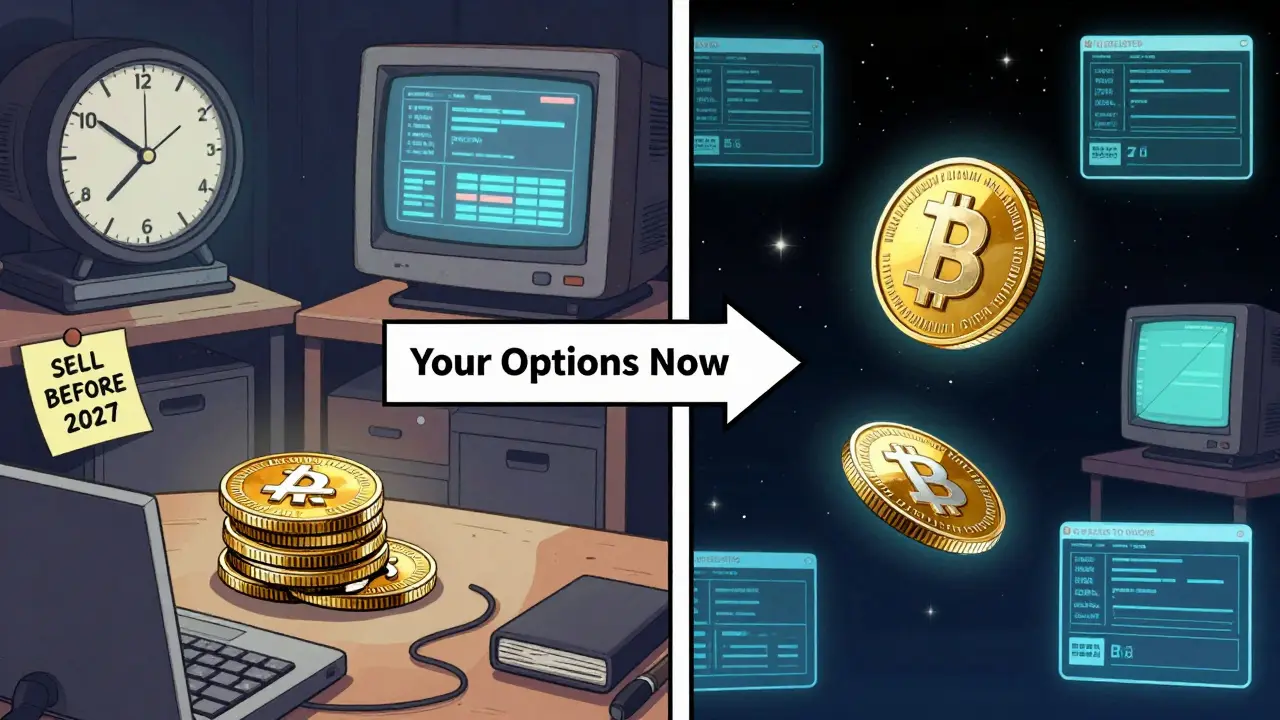
Market Impact and Price Reactions
Since the law passed in May 2024, Monero’s price has dropped nearly 40% from its peak, and Zcash has lost over 30%. Why? Because the EU represents about 30% of global crypto trading volume. Losing that market is a huge blow. Some traders are betting the ban will backfire - that it will drive more users to privacy coins out of principle. But that’s a minority view. Most institutional investors are already moving away. The largest crypto funds in Europe have already exited their Monero and Zcash positions. The market is pricing in the ban. The real losers? Small exchanges that relied on privacy coin trading fees. Some have shut down. Others are relocating to Malta, Gibraltar, or Dubai - places with looser rules. But that’s not a long-term solution. As global standards tighten, even those jurisdictions may eventually follow the EU’s lead.What’s Next After 2027?
After July 1, 2027, the EU will have one of the cleanest crypto environments in the world - for transparency. All transactions will be traceable. All users will be known. All institutions will be accountable. Privacy advocates say this is the end of financial freedom. They argue that everyone deserves the right to private transactions - even if they’re not criminals. But regulators counter that financial systems can’t function if they can’t see where money flows. It’s a clash of values: privacy vs. security. For now, the EU has chosen security. And the world is watching.If you hold Monero or Zcash, act before 2027. Don’t wait for the deadline. The window to cash out cleanly is closing. Once it’s gone, you’ll be stuck with coins no one in Europe will take - and no legal way to turn them into real money.
Can I still own Monero or Zcash after the EU ban?
Yes. The EU ban only stops regulated companies - exchanges, wallets, payment processors - from handling privacy coins. You can still hold Monero or Zcash in your own non-custodial wallet. But you won’t be able to trade them on any EU-based platform after July 1, 2027. You also won’t be able to easily convert them to euros or dollars through legal channels.
Will the EU ban affect Bitcoin and Ethereum?
No. Bitcoin and Ethereum are fully traceable. Every transaction is visible on the public blockchain. That’s why they’re not affected. The ban targets only coins designed to hide transaction details - like Monero and Zcash. Transparent coins are welcome under the new rules.
Can I use a decentralized exchange (DEX) to trade privacy coins in the EU?
Technically, yes - but it’s risky. DEXs like ThorChain or Osmosis don’t require KYC, so you could swap Monero for Bitcoin without breaking the law. But DEXs aren’t regulated. If something goes wrong - a smart contract bug, a hack, a scam - you have no recourse. Also, if you later try to cash out to euros through a regulated exchange, they’ll ask where your Bitcoin came from. If you can’t prove it wasn’t from Monero, you could face scrutiny.
What happens if I ignore the ban and keep using Monero on an EU exchange?
You won’t be able to. Exchanges are legally required to block access to privacy coins. If you try to deposit Monero, the platform will reject it. If you try to withdraw, they’ll freeze your account. The EU has created a strict compliance system. Exchanges face fines up to 5% of global revenue if they break the rules. They won’t risk it.
Is there any chance the EU will reverse this ban?
Almost certainly not. The law was passed in May 2024 and is already being implemented. Public consultations ended in 2025. The European Crypto Initiative confirmed the core ban is final. Even if technical details are still being worked out, the prohibition on privacy coins is locked in. This is not a temporary measure - it’s a permanent shift in EU crypto policy.