FATF Greylist Countries: Crypto Implications and Restrictions
 Jan, 25 2026
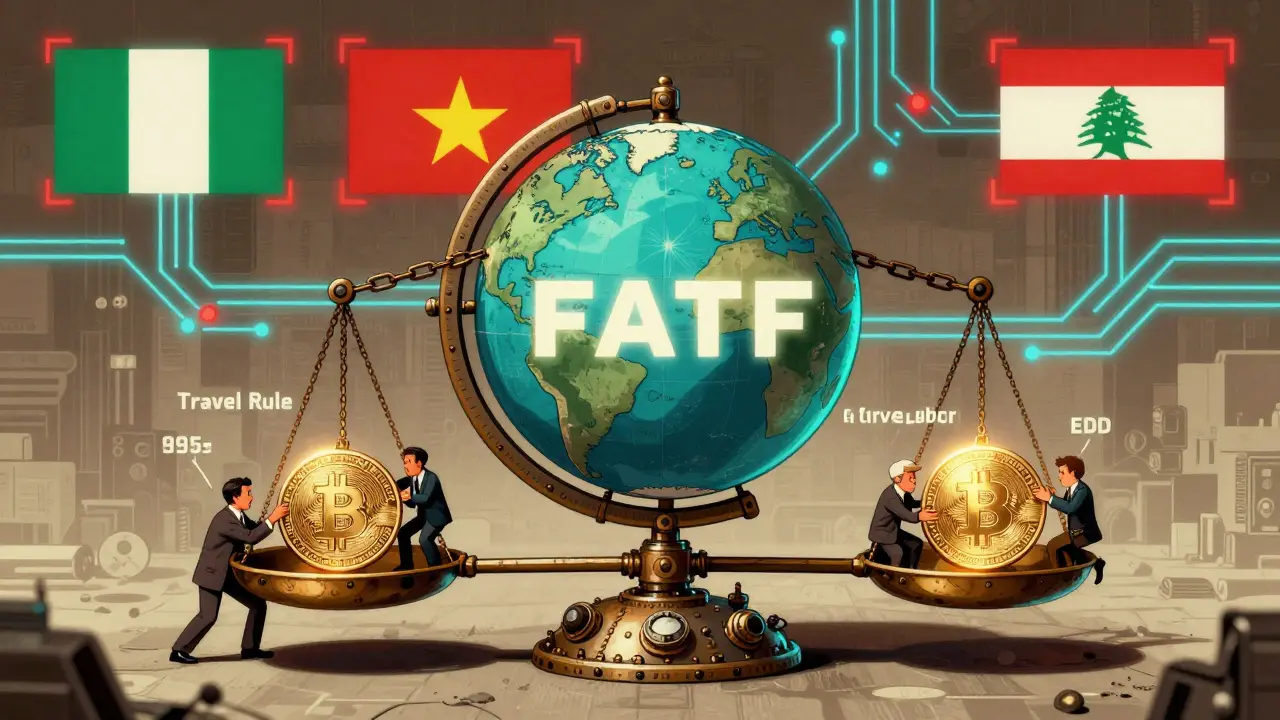
When a country lands on the FATF greylist, it doesn’t just mean bad press-it means banks freeze accounts, crypto exchanges cut off access, and businesses struggle to move money across borders. As of June 2025, 24 countries are on the Financial Action Task Force’s 'Jurisdictions Under Increased Monitoring' list. That includes Nigeria, South Africa, Vietnam, Lebanon, and even Bolivia and the UK Virgin Islands, which were added just months ago. For anyone working with cryptocurrency, this isn’t a footnote-it’s a live risk that can shut down your operations overnight.
What the FATF Greylist Actually Means
The FATF isn’t a police force. It’s a global standard-setter. When it puts a country on the greylist, it’s saying: ‘We’ve identified serious gaps in your anti-money laundering and counter-terrorism financing systems, and you have 12 to 18 months to fix them.’ It’s not a punishment-it’s a warning with teeth. Countries on the list aren’t banned. But banks, payment processors, and crypto exchanges treat them like red zones. Why? Because if they don’t ramp up checks, they risk being fined or cut off from the global financial system themselves. That’s why you’ll see platforms like Binance, Kraken, or Coinbase block deposits from greylist countries-even if the user is legitimate. It’s not about distrust in individuals. It’s about protecting their own licenses.How Crypto Gets Hit the Hardest
Traditional banking has rules, paperwork, and physical branches. Crypto? It moves fast, anonymously, and across borders. That makes it both a tool for financial inclusion and a magnet for abuse. The FATF knows this. That’s why its 2019 guidance on Virtual Asset Service Providers (VASPs) forced exchanges to start collecting and sharing sender/receiver data-something called the “Travel Rule.” For greylist countries, this rule becomes a wall. If you’re sending crypto from Nigeria to Germany, your exchange must verify your identity, your source of funds, and the recipient’s details. If any part is missing, the transaction gets flagged or blocked. Some platforms even freeze entire wallets linked to IP addresses or phone numbers tied to greylist regions. And it’s not just about transfers. Mining operations, DeFi protocols, and NFT marketplaces that serve users from these countries are now under scrutiny. A single transaction linked to a sanctioned entity can trigger a regulatory investigation-not just in the user’s country, but in the exchange’s home jurisdiction too.The Real-World Impact: From Nigeria to Vietnam
In Nigeria, where over 30% of adults own crypto, the 2024 greylisting caused a 40% drop in cross-border crypto inflows within six months. Local exchanges had to shut down their USD on-ramps. People turned to peer-to-peer platforms like Paxful and LocalBitcoins, but even those are now under pressure. Some users report being locked out of accounts after using a VPN to mask their location. Vietnam, also on the list since 2023, saw its largest exchange, VinX, halt fiat-to-crypto trading for local users. The government responded by launching its own digital currency pilot-but it’s tightly controlled. Meanwhile, informal crypto trading surged through Telegram groups and WhatsApp networks, bypassing regulated channels entirely. In Lebanon, where the banking system collapsed in 2020, crypto became a lifeline. But with greylisting, international payment processors like Stripe and PayPal cut off Lebanese businesses. Crypto remittances dropped 65% in 2024, forcing families to rely on physical cash couriers or unregulated crypto bridges.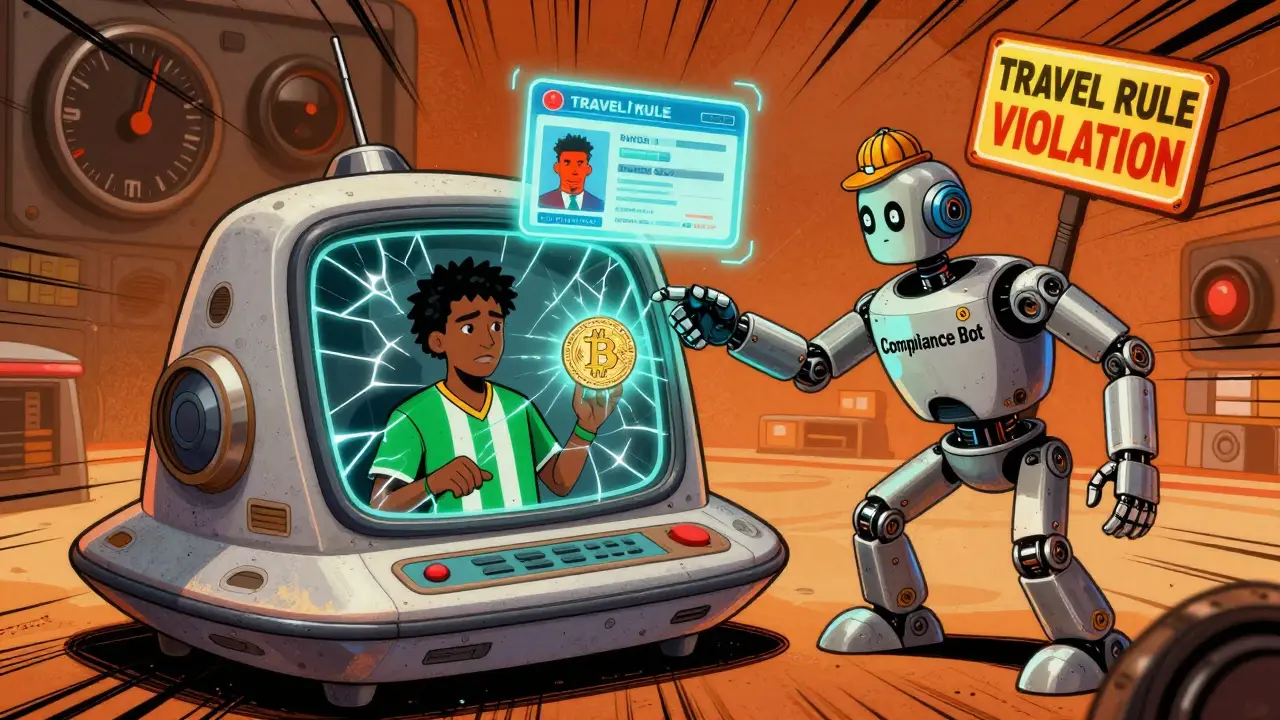
Blacklist vs. Greylist: The Difference That Matters
Don’t confuse the greylist with the blacklist. The blacklist-currently North Korea, Iran, and Myanmar-is a full financial embargo. No bank, no exchange, no wallet provider can legally process transactions involving these countries without risking massive fines or criminal charges. North Korea is known to use crypto to fund its weapons program. The UN estimates it stole over $2 billion in crypto between 2017 and 2024. Iran, under sanctions, uses crypto to bypass oil payment restrictions and fund proxy groups. Myanmar’s junta uses digital assets to launder money from illegal timber and drug sales. Greylist countries? They’re trying. But their systems are weak. That’s why compliance teams treat them like high-risk zones-not because they’re evil, but because they’re unpredictable.Why Corruption Is the Hidden Driver
There’s a direct link between corruption and FATF greylisting. Countries where public officials take bribes to ignore financial crimes are five times more likely to be listed. South Africa’s 2024 inclusion wasn’t about poor laws-it was about enforcement. Only 3% of financial crime cases lead to prosecution. In Nigeria, fewer than 1 in 50 suspicious transaction reports result in action. This isn’t just a legal problem. It’s a trust problem. International partners don’t believe these countries can-or will-act. Even if a country passes perfect laws on paper, if no one enforces them, FATF won’t remove it.What Crypto Businesses Must Do Now
If you run a crypto exchange, wallet service, or even a DeFi protocol, you have three choices:- Block users from greylist countries outright
- Apply enhanced due diligence (EDD) to every transaction from those regions
- Accept the risk and risk your license
- Collecting government-issued ID and proof of address for every user from a greylist country
- Verifying the source of funds-bank statements, pay stubs, even utility bills
- Monitoring transaction patterns for signs of layering or structuring
- Updating compliance software automatically when FATF releases new lists

The Unintended Consequence: Crypto Moves Underground
Here’s the irony: FATF restrictions don’t stop crypto use in greylist countries-they push it further underground. In Venezuela, where the government officially banned crypto in 2021, peer-to-peer trading now happens through encrypted apps and local meetups. In Syria, where banks are destroyed, crypto is the only way to receive remittances from relatives abroad. In Yemen, where the war has wiped out infrastructure, Bitcoin is used to buy food and medicine via decentralized marketplaces. These aren’t criminals. They’re ordinary people trying to survive. But because they’re using crypto outside regulated channels, they’re invisible to regulators-and vulnerable to scams, hacks, and fraud.What’s Next? The Travel Rule and CBDCs
The next big shift will be the global rollout of the FATF Travel Rule for DeFi and non-custodial wallets. Right now, most DeFi protocols don’t collect user data. That’s a problem. FATF is pushing for new standards that require protocols to identify users even in decentralized environments. At the same time, countries like China, Nigeria, and Vietnam are launching their own Central Bank Digital Currencies (CBDCs). These aren’t meant to replace crypto-they’re meant to control it. A CBDC can be programmed to block transactions to greylist countries automatically. That means even if you use crypto, your digital dollar or digital naira might refuse to send money to Nigeria. The future isn’t about banning crypto. It’s about embedding compliance into every layer of the system.Final Reality Check
FATF greylisting isn’t about stopping crypto. It’s about making sure crypto doesn’t become a tool for criminals to move money undetected. But the cost is high: access, innovation, and financial freedom for millions in developing economies. The solution isn’t to ignore the rules. It’s to fix the systems behind them. Better law enforcement. Less corruption. Stronger institutions. Until then, crypto businesses will keep walking a tightrope-between compliance and inclusion, between risk and opportunity.If you’re a user from a greylist country, your options are limited-but not gone. Stick to regulated platforms. Keep records. Avoid mixing funds. And know that the system is rigged against you-not because you’re bad, but because your country’s institutions still haven’t caught up.
And if you’re building a crypto product? Don’t treat FATF as a hurdle. Treat it as a requirement. Because in 2026, the companies that survive won’t be the ones that dodge regulation. They’ll be the ones that build it in from day one.