How Exchange Tokens Gain Value: A Complete Guide to Token Economics
 Apr, 1 2026
Have you ever wondered why some cryptocurrencies hold their value better than others, even when the rest of the market crashes? You are likely looking at exchange tokens. Unlike standard coins like Bitcoin or Ethereum, these tokens are built by specific companies to run their platforms. Their value doesn't just come from speculation. Instead, it comes from how the platform uses the token to save money, generate profits, or give power to holders.
Understanding this difference is crucial for anyone holding digital assets. If you treat an exchange token like a simple store of value, you might miss out on its real utility. When you hold these tokens, you aren't just betting on price; you are holding a tool that interacts with the platform directly. This changes the game entirely.
Key Takeaways
Exchange Tokens derive value from three main pillars: utility within the ecosystem, mechanisms that reduce supply, and direct revenue sharing. They function differently from speculative altcoins because their demand is often tied to actual trading volume and platform growth rather than hype alone.- Fee Discounts: Holding tokens often lowers your trading costs significantly on the exchange.
- Deflationary Pressure: Many platforms buy back tokens from the open market and permanently destroy them, reducing supply.
- Staking Yields: Locking up tokens can earn you passive income or voting power on future projects.
- Network Effects: As the exchange grows more popular, the token becomes more useful and scarce.
The Foundation: Protocol Service vs. Token Architecture
To understand Token Value, you need to see the exchange as a product. A product has two parts. First, there is the actual service-the software you use to trade. Second, there is the digital ticket (the token) that grants access to special benefits. If the software is bad, nobody wants the ticket. If the software is great but the ticket offers nothing, people will ignore it.
Take Binance Coin (BNB) as a prime example. It succeeded because the underlying exchange was reliable, fast, and had deep liquidity. Users needed the token to pay for services on that platform. Without the quality of the exchange, the token would have been worthless paper. This relationship is the bedrock of valuation. You are valuing the platform's health through the token.
Sometimes, tokens are non-productive. Think of them like a voucher for a discount. Other times, they are productive, acting almost like stocks that generate cash flow. Most modern exchange tokens mix both traits. They give you discounts today and potential dividends tomorrow.
Lowering Your Costs Through Discount Mechanisms
The most immediate reason people buy exchange tokens is to save money. Exchanges charge fees every time you buy or sell crypto. These fees can eat into your profits. To compete, platforms offer a discount if you pay those fees using their native token instead of another currency.
This creates a direct economic incentive. If you trade $10,000 worth of Bitcoin and the fee is 0.1%, you pay $10. If you use the exchange token, that fee might drop to 0.07%. Over thousands of trades, these savings add up to thousands of dollars. For high-volume traders, this isn't just a bonus; it is a cost-cutting strategy.
Futures Contracts often offer even higher discounts. On platforms like Gate.io, users holding their GT token can access reduced rates on spot and contract trading simultaneously. This forces users to calculate whether buying the token is cheaper than paying full price on a standard transaction. It turns the token into a wallet management tool rather than just an asset.
Capturing Value with Staking and Yield
Merely holding a token isn't always enough. You need incentives to keep it in your wallet rather than selling it quickly. This is where staking comes in. Staking locks your tokens in the system so they aren't sold on the open market. This reduces the circulating supply, which mathematically increases scarcity.
In return for locking your funds, the protocol pays you interest. It works like a bank CD, but automated. Some protocols, like SushiSwap distribute a portion of their trading fees directly to stakers. This means you profit from the platform's success even if you don't place a single trade yourself.
This mechanism also serves a governance purpose. Protocols like MakerDAO require users to stake tokens to vote on decisions. By keeping your tokens staked, you get more say in the direction of the platform. It aligns the interests of the holder with the long-term health of the company. You stop worrying about short-term price swings because your priority shifts to keeping the yield flowing.
The Deflationary Engine: Buybacks and Burns
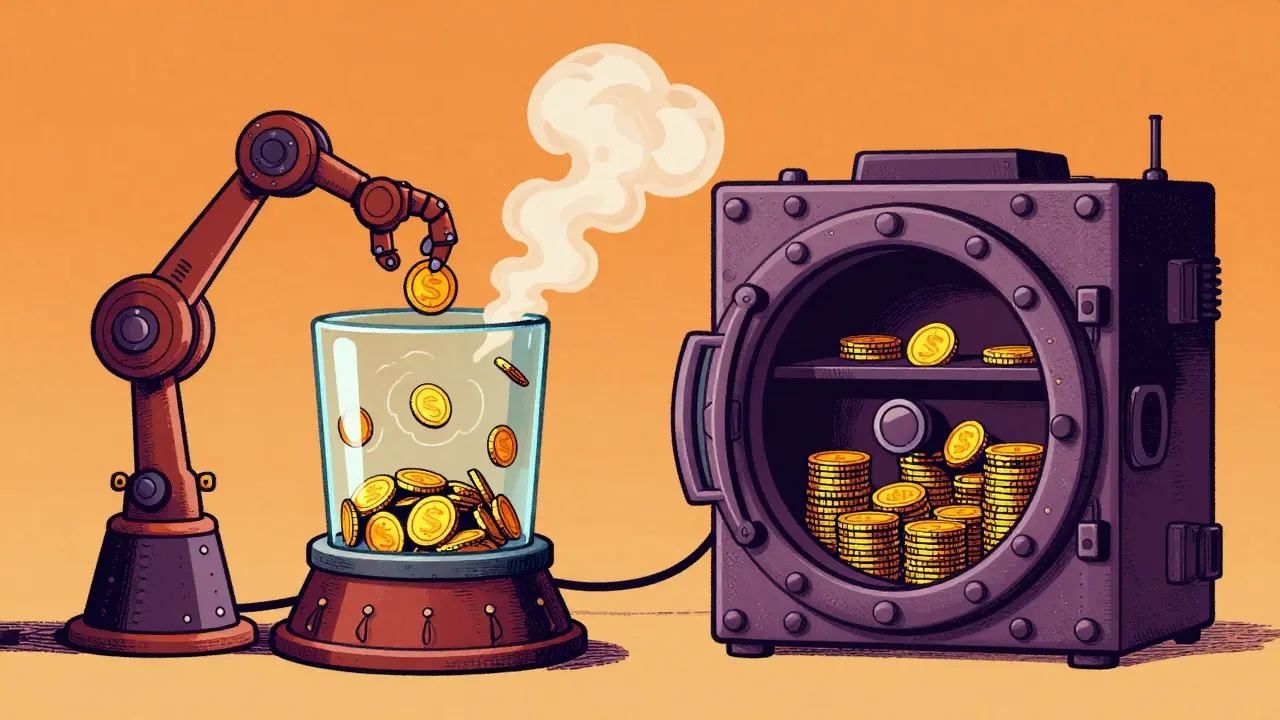
One of the most powerful ways an exchange token gains value is by destroying it. This sounds counter-intuitive-why would a company remove its own equity?-but it works on basic supply and demand economics. If the demand stays the same but the supply drops, the price must rise to balance the equation.
Exchanges set aside a percentage of their monthly profits to buy their own tokens on the open market. Once they buy them, they send those tokens to a "dead address" where no one can touch them. This process is called a burn. Because these tokens are gone forever, the remaining tokens represent a larger slice of the platform's overall value.
Mechanism Impact on Price User Benefit Fee Discounts Increases Demand Lower Trading Costs Token Burns Reduces Supply Potential Capital Appreciation Staking Rewards Locks Circulating Supply Passive Income Generation
Consistency matters here. If an exchange burns tokens every quarter like clockwork, the market learns to expect it. Buyers step in anticipating the next reduction in supply, creating upward pressure on the price. It signals financial health. A company willing to spend its own profits to reduce supply believes in its own long-term profitability.

Governance and Priority Access
Ownership implies power. In traditional finance, stockholders vote on board members. In crypto, token holders often vote on protocol changes. More importantly, tokens grant you VIP status for new opportunities.
When an exchange launches a new coin (an Initial Exchange Offering or Launchpad), they rarely give everyone equal access. They prioritize token holders. You might get the chance to buy a brand new project token early, often at a lower entry point than the general public. This access alone can be worth significant money. If you hold enough exchange tokens, you secure a spot in the line.
Furthermore, governance rights mean you help shape the features you use. You can vote on which new trading pairs list, what security upgrades to implement, or how to allocate community funds. This transforms you from a customer into a partner. You have skin in the game, making you more likely to advocate for the platform publicly.
Network Effects and Platform Growth
All these mechanisms feed into a single loop: network effects. As more people join the exchange to trade, the volume goes up. Higher volume means more fees for the exchange. More fees mean more money for buybacks and rewards. Better rewards attract more stakers and traders. This cycle creates momentum.
Think of it like a shopping mall. The more shops there are, the more shoppers come. The more shoppers come, the more shops want to join. The value of being inside the mall (the token) rises with the crowd. However, this requires continuous productivity. The platform must improve its tech, add new pairs, and reduce downtime.
If a competitor builds a faster engine or charges lower fees, users migrate. That breaks the cycle. This is why monitoring platform adoption metrics is vital. User base growth is a leading indicator of token value. You are betting on the number of eyes watching the charts, not just the chart itself.
Risks and Considerations
While the mechanisms are sound, risks remain. Centralized exchanges control these tokens. If regulators crack down, the platform could freeze assets or change terms. Decentralized alternatives aim to mitigate this, but they come with their own technical complexities. Always consider the regulatory environment of your region.
Volatility remains high. Even with burn mechanisms, external market sentiment drives prices heavily. Don't treat these tokens as risk-free savings accounts. Use them for their utility, manage your portfolio accordingly, and diversify across different types of assets to hedge against platform-specific failures.
What makes an exchange token valuable?
Value comes from utility (discounts), scarcity (burns), and revenue share (staking). The health of the parent platform directly impacts the token price.
Is it safe to hold exchange tokens?
Risk varies. Centralized tokens rely on the company's solvency. Decentralized tokens rely on code security. Diversification reduces exposure to any single platform failure.
How do token burns work?
Platforms buy tokens from the market and send them to an unusable address. This permanently removes them, increasing scarcity for remaining holders.
Can I make passive income with these tokens?
Yes, many platforms offer staking programs where you lock tokens to earn weekly or monthly yields paid in tokens or stablecoins.
Are all exchange tokens the same?
No. Some are centralized utilities, some are governance tokens, and some are hybrids. Check the whitepaper to see if the value model includes profit sharing or just discounts.