How Iran Uses Bitcoin Mining to Bypass Sanctions
 Mar, 24 2026
Iran isn't mining Bitcoin because it's trendy. It's doing it because it has no other choice. After the U.S. pulled out of the nuclear deal in 2018, Iran was cut off from the global banking system. Wire transfers froze. Oil sales got harder to track. Dollars vanished from its coffers. And that’s when the country turned to something no sanction can fully block: Bitcoin mining.
Today, Iran runs one of the largest Bitcoin mining operations on Earth. It accounts for about 4.5% of the entire world’s mining power - more than Russia, and close behind the U.S. and Kazakhstan. That’s not an accident. It’s policy. The Iranian government didn’t just tolerate mining - it built it into the backbone of its sanctions survival strategy.
How It Started: From Blackout to Bitcoin
In 2018, Iranian factories were shutting down. Power cuts hit major cities. The economy was collapsing. But the country had one thing no one could take away: cheap electricity. Iran sits on massive natural gas reserves. It produces more power than it needs - especially in remote provinces like Kerman and Khuzestan. So when Bitcoin mining became possible, the regime saw a way to turn wasted energy into hard currency.
At first, it was messy. Individuals set up rigs in garages. But by 2020, the government stepped in. It legalized crypto mining. It created licensing systems. It gave state-backed mining farms access to electricity at nearly zero cost. And it didn’t just allow it - it encouraged it. A think tank directly tied to the president’s office published reports calling Bitcoin a "national asset." That’s not something you say unless you want it to grow.
The Infrastructure: Mining on Military Land
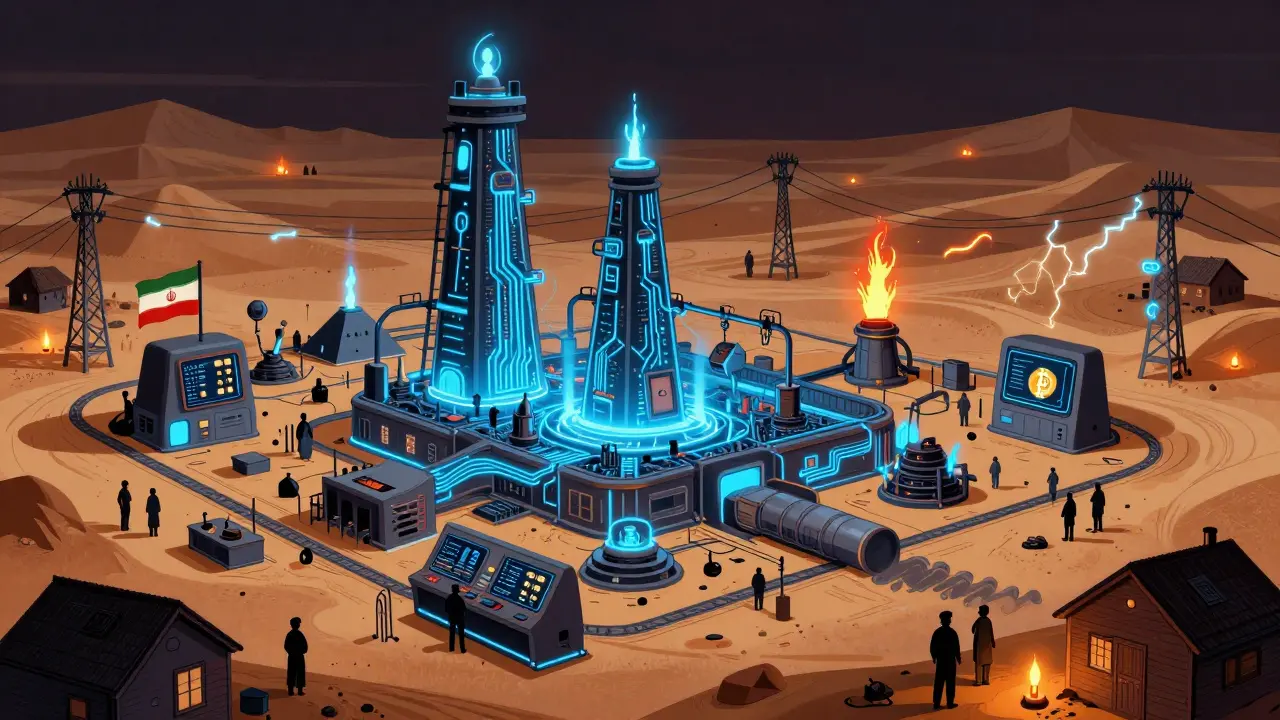
The biggest mining farms aren’t in tech parks. They’re on military bases. One facility in Rafsanjan, Kerman province, uses 175 megawatts of power - enough to light a small city. It’s run by a joint venture between the Islamic Revolutionary Guard Corps (IRGC) and Chinese investors. These aren’t small-time operators. These are state-run operations with direct access to power lines, political protection, and zero oversight.
Miners don’t pay electricity bills. They don’t even get invoices. The power is simply routed to them. In the U.S., miners pay $0.05 per kWh. In Iran? Close to zero. That’s why Iranian miners can turn a profit even when Bitcoin prices dip. Their cost structure is built on subsidies, not efficiency.
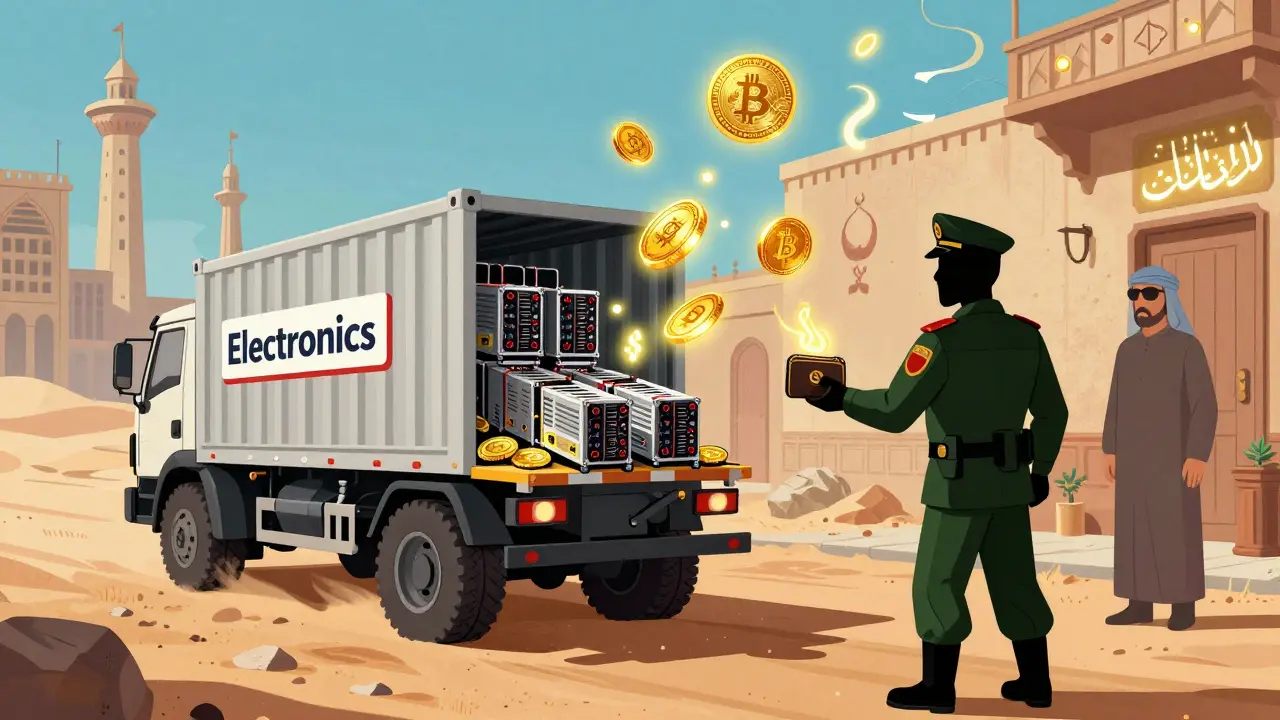
The equipment? Mostly Chinese ASIC miners, smuggled in through third countries. Sanctions block direct sales, but they can’t stop a truck crossing the border with a container full of mining rigs. These machines run 24/7, cooling systems humming, hash rates climbing. The IRGC doesn’t just mine Bitcoin - it mines dollars. Every Bitcoin mined becomes a way to buy medicine, food, or machinery from abroad without touching a bank.
The Money Flow: $4.18 Billion in One Year
In 2024, $4.18 billion in cryptocurrency flowed out of Iran. That’s up 70% from the year before. That’s not small change. That’s more than the value of Iran’s entire non-oil exports to some countries.
How? Iranian miners get paid in Bitcoin. They sell it on exchanges - sometimes through Iranian-run platforms like IranCoin or Shaparak, sometimes through international ones like Binance. Chainalysis and TRM Labs have traced millions of transactions back to Iranian wallets. And it’s not just miners. The government itself started using crypto to pay for imports. In August 2023, Iran made its first official import purchase using cryptocurrency: $10 million worth of medical equipment.
It’s not perfect. Bitcoin’s price swings. Converting crypto into usable goods takes time. But it works better than the alternatives. Traditional banks? Blocked. SWIFT? Cut off. The petro? A failed experiment. Bitcoin? Unstoppable.
Why It’s Different from Venezuela or North Korea
Venezuela tried to solve its crisis with the Petro - a government-backed coin that no one trusted. North Korea hacked exchanges and stole crypto. Iran does neither. It doesn’t create fake coins. It doesn’t steal. It mines legitimately. It follows the Bitcoin protocol. It doesn’t break the blockchain - it breaks the sanctions.
That’s why it’s so hard to stop. You can’t shut down a decentralized network. You can’t block a miner that’s hidden inside a power plant in the desert. You can’t sanction a machine that’s running on gas the government already produces.
Even when the U.S. sanctions Iranian mining firms or exchanges, it doesn’t matter much. The miners just move to another facility. The exchanges shift to new domains. The wallets change addresses. The system is designed to be resilient - not because it’s clever, but because it’s necessary.
The Hidden Costs: Power Outages and Public Anger
But there’s a cost. Iranians pay for this strategy - literally.
Every kilowatt used to mine Bitcoin is a kilowatt not used to charge a refrigerator, run a hospital ventilator, or heat a home in winter. In 2024, nationwide blackouts hit 12 major cities. Citizens took to social media, posting videos of dark streets while mining farms kept running. The government’s response? Blame the U.S. sanctions. Not the mining.
Meanwhile, ordinary Iranians can’t access crypto easily. The licenses go to IRGC-linked companies. The profits go to military foundations. The energy goes to state facilities. The average person? Still waiting for electricity. And still waiting for medicine.
Global Fallout: Who’s at Risk?
Iran’s mining isn’t just a local issue. It’s a global one.
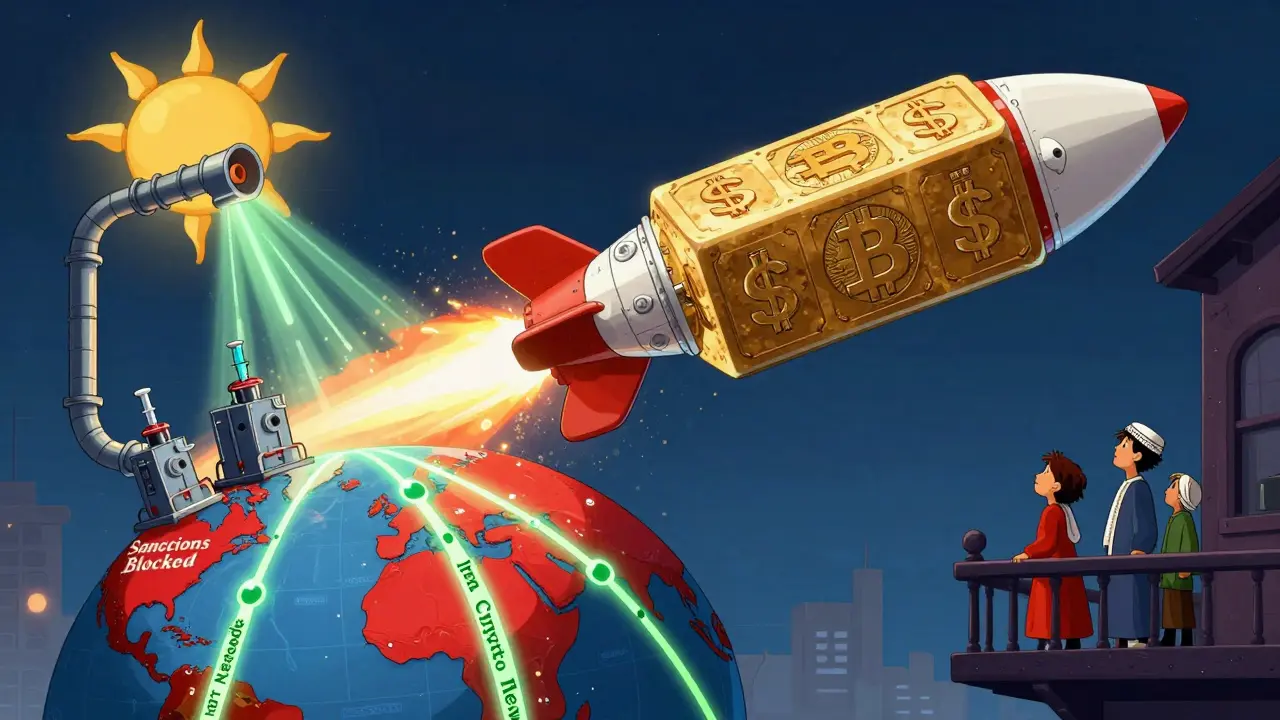
Every Bitcoin mined in Iran becomes part of the global network. That means every transaction - even one between two U.S. users - could, in theory, involve a fee paid to an Iranian miner. Financial institutions are terrified. Elliptic, a blockchain analytics firm, warns that any crypto transaction has a 4.5% chance of being linked to Iran. That’s not a small risk for banks that face billions in fines for sanctions violations.
Exchanges like Binance have been forced to block Iranian IPs. But miners use VPNs. They use proxy nodes. They route traffic through Turkey, Azerbaijan, or the UAE. The system is designed to be invisible.
And it’s working. Iran now has formal cryptocurrency cooperation agreements with Russia. It’s negotiating deals with European countries. It’s building a parallel financial system - one that doesn’t need the dollar, doesn’t need SWIFT, and doesn’t need permission.
What’s Next? More Mining, More Risk
The Iranian government has announced plans to increase mining capacity by 50% over the next two years. New facilities are being built in Bushehr and Khuzestan. They’re using surplus gas power. They’re connecting to renewable projects. They’re preparing for a future where sanctions never lift.
Will the U.S. or EU ever shut it down? Probably not. Not completely. You can’t sanction a machine that runs on gas you can’t control. You can’t stop a miner that’s hidden behind a military base. You can’t block a network that doesn’t need a bank.
Iran’s Bitcoin mining isn’t a loophole. It’s a rewrite of the rules. It shows that in a world of digital money, old sanctions are losing their power. The real question isn’t whether Iran can keep mining. It’s whether the rest of the world is ready to live with it.