How the FATF Blacklist Changes Crypto Use in Iran
 Apr, 19 2026
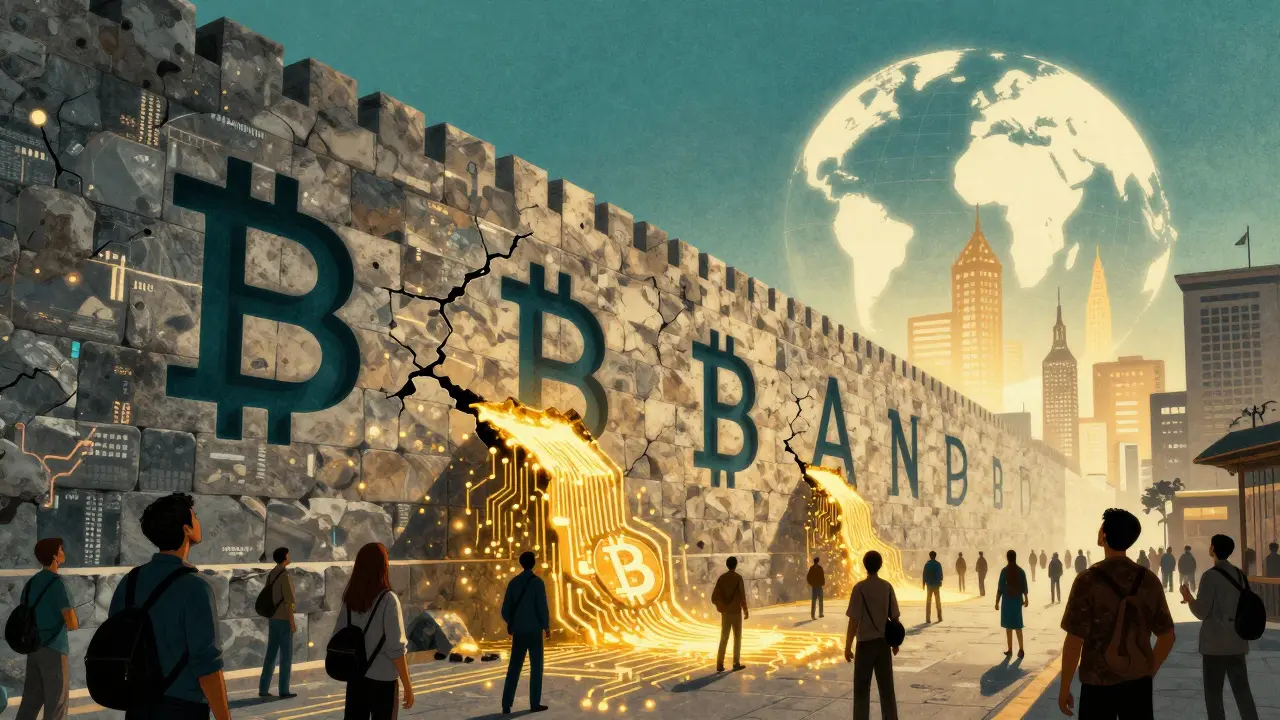
Imagine waking up to find that almost every bank in the world has stopped taking your calls. For people in Iran, this isn't a nightmare-it's daily life. When the Financial Action Task Force is an international watchdog that sets global standards to prevent money laundering and terror financing, its word carries immense weight. By placing Iran on its "Call for Action" blacklist, the FATF essentially told the global financial system to treat Iranian transactions as high-risk or block them entirely. But instead of stopping the flow of money, this move has pushed millions of people toward a digital lifeline: cryptocurrency.
| Metric | Value / Impact | Source/Context |
|---|---|---|
| Total Crypto Volume (Sanctioned States) | $15.8 Billion (2024) | Chainalysis |
| Iran's Share of Sanctioned Volume | $9.2 Billion (58%) | Chainalysis |
| Adult Population Using Crypto | ~42% (18.7 Million users) | Statista 2025 |
| Account Freeze Rate on Global CEXs | 33% | Nobitex Survey |
The Financial Wall and the Digital Escape
The FATF blacklist isn't just a label; it's a trigger for "countermeasures." In plain English, it means international banks must perform extreme due diligence on any Iranian entity. This has effectively killed off traditional banking. World Bank data shows that Iran's correspondent banking relationships dropped from 28 in 2018 to just 3 by 2025. When you can't use SWIFT to pay a supplier or receive money from family abroad, you look for a way around the wall.
This is where Bitcoin comes in. Because it doesn't rely on a central authority, it's the perfect tool for anyone facing financial exclusion. In 2024, Bitcoin accounted for 78% of all transactions in sanctioned jurisdictions. For many Iranians, crypto has shifted from a speculative investment to a necessary utility for survival and business.
The Risky Game of Exchange Hopping
Iranian users generally fall into two camps: those using domestic exchanges and those venturing into the global market. Domestic platforms like Nobitex or Wallex are easier to access, but they operate under "halal blockchain" frameworks that often restrict cross-border transfers. This forces users toward global giants like Binance or Bybit.
Here is the problem: global exchanges must follow the FATF "Travel Rule," which requires them to collect and share sender and receiver information. This creates a dangerous paradox. If a user provides their real Iranian ID to pass KYC (Know Your Customer) checks, the exchange might freeze their account to avoid FATF penalties. If they use fake info, they risk losing their funds during a routine audit. We've seen this play out in real time; one user on Reddit reported losing $8,200 after just three small transactions because they tripped a compliance alarm.
Moving Money Under the Radar
To avoid the "black hole" of frozen accounts, Iranian users have become experts in stealth. There is a massive shift toward non-custodial wallets-apps like Trust Wallet and Exodus where the user holds their own private keys. Roughly 92% of Iranian crypto transactions now happen through these mobile wallets.
There's also a strategic trend in transaction sizing. Users are increasingly splitting their transfers into amounts under $1,500. Why? Because larger sums trigger automatic red flags in monitoring software used by global banks and exchanges. It's a game of cat and mouse, where users fragment their capital to stay below the detection threshold.

The Rise of P2P and Decentralized Alternatives
When centralized exchanges (CEXs) become too risky, people turn to Peer-to-Peer (P2P) networks and Decentralized Exchanges (DEXs). These systems remove the middleman, making it harder for a single entity to freeze an account. For example, PancakeSwap is a popular choice, although it comes with its own headaches, such as 15% slippage due to liquidity issues.
P2P trading is the most reliable path, but it's expensive. Users often pay a 15-20% premium to move funds into neighboring countries like Turkey. Some are even experimenting with "atomic swaps"-a way to trade one coin for another without an exchange-to move Bitcoin across borders in minutes without any identity checks.
The Government's Response: Halal Stablecoins
Iran isn't just watching from the sidelines. The Central Bank of Iran recently piloted a "Halal Stablecoin" (HSC) pegged to gold. Over 4 million people jumped on this in the first month, moving about $280 million. While this helps internally, it's essentially a digital island. Because of the FATF blacklist, this stablecoin can't easily connect to global liquidity pools, meaning it doesn't actually solve the problem of international trade.

Is the Blacklist Actually Working?
There is a fierce debate among experts about whether these restrictions do any good. The FATF argues that pressure forces countries to fix their AML (Anti-Money Laundering) laws. Iran has made some moves, like conditionally approving the Convention for Suppression of the Financing of Terrorism in 2025. However, the FATF remains unimpressed, keeping the "Call for Action" active.
Critics, including sanctions experts, argue that the blacklist has backfired. By cutting off the traditional banking system, the FATF has accidentally accelerated the adoption of censorship-resistant tech. Instead of making the financial system more transparent, it has pushed activity into the shadows of the blockchain, where it's even harder to track.
Why does the FATF blacklist affect crypto users in Iran?
The blacklist forces global financial institutions to apply "enhanced due diligence" or block transactions involving Iran. Since crypto exchanges often rely on traditional banks for fiat on-ramps and off-ramps, they freeze Iranian accounts to avoid risking their own regulatory standing with the FATF.
Which cryptocurrencies are most popular in Iran?
Bitcoin is the dominant choice, making up about 78% of sanctioned jurisdiction transactions due to its lack of a central authority. Ethereum follows at 14%, and privacy-focused coins like Monero are used by a smaller percentage (around 5%) for maximum anonymity.
What is the risk of using a global exchange like Binance for Iranians?
The biggest risk is account freezing. Approximately 33% of Iranian users on global exchanges have reported frozen funds. This usually happens when a user's IP address or KYC data triggers a compliance alert related to FATF's Travel Rule.
How do Iranians bypass these restrictions?
Users rely heavily on non-custodial wallets (like Trust Wallet), P2P trading, and decentralized exchanges (DEXs). They also use anti-surveillance apps and VPNs to hide their location and keep transaction amounts small (typically under $1,500) to avoid detection.
Will the FATF ever remove Iran from the blacklist?
It depends on Iran's willingness to fully implement the FATF action plan, including ratifying the Palermo and Terrorist Financing Conventions. While some progress has been made, the FATF has not yet signaled a move toward the "gray list," meaning restrictions are likely to persist through 2026.
What to do if you're navigating these waters
If you are managing assets in this environment, the most important rule is avoid centralization. Relying on a single global exchange is a gamble with your capital. Instead, focus on mastering non-custodial wallets and diversifying your exit ramps. Be wary of "unvetted" tools and community-made scripts that claim to bypass firewalls, as many have been linked to security compromises. In a landscape where the rules change every time the FATF releases a public statement, flexibility and privacy are your only real safeguards.