Is Crypto Regulated in Nigeria? Here's What You Need to Know in 2026
 Feb, 3 2026
For years, Nigeria’s relationship with cryptocurrency was full of contradictions. Banks blocked transactions. Accounts got frozen. People still traded-millions of them-using peer-to-peer apps, WhatsApp groups, and cash deals. The government didn’t stop them, but it didn’t help them either. That changed in 2025. Today, crypto is officially regulated in Nigeria, and the rules are clear, strict, and actively enforced.
What Changed in 2025?
The big shift came with the Investments and Securities Act (ISA) 2025, signed into law by President Bola Ahmed Tinubu in March. This wasn’t just a tweak-it replaced the 2007 law that had no mention of digital assets. For the first time, cryptocurrencies like Bitcoin, Ethereum, and even NFTs used for investment are legally recognized as securities. That means they’re no longer in legal gray zones. They’re under the supervision of the Securities and Exchange Commission (SEC), Nigeria’s main financial market regulator.Before this, the Central Bank of Nigeria (CBN) had banned banks from handling crypto transactions in 2021. That caused chaos. People couldn’t deposit or withdraw funds legally. Many lost access to their money. But in December 2023, the CBN reversed course. It released the Virtual Asset Service Provider (VASP) Guidelines, telling banks they could now open accounts for licensed crypto firms. That move alone unlocked billions in activity.
Between July 2024 and June 2025, Nigeria received $92.1 billion in crypto value-more than any other African country and nearly double South Africa’s volume. You can’t ignore a market that big. Regulation wasn’t optional anymore. It was necessary.
Who Can Operate? The Licensing Rules
You can’t just set up a crypto exchange in Nigeria and start taking deposits. The SEC requires all businesses handling crypto-exchanges, wallets, staking platforms, even NFT marketplaces selling investment tokens-to get licensed. There are three main requirements:- Local presence: You must be registered as a Nigerian company with a physical office in the country.
- Management: At least one senior executive must be a Nigerian citizen or resident.
- Capital: You need to show you have enough money to cover losses and stay solvent-paid-up capital requirements vary by business type.
On top of that, you must get a fidelity bond (like insurance against fraud) and submit to regular audits. The SEC also requires strict KYC (Know Your Customer) and AML (Anti-Money Laundering) systems. Every user must be verified with ID, proof of address, and transaction history.
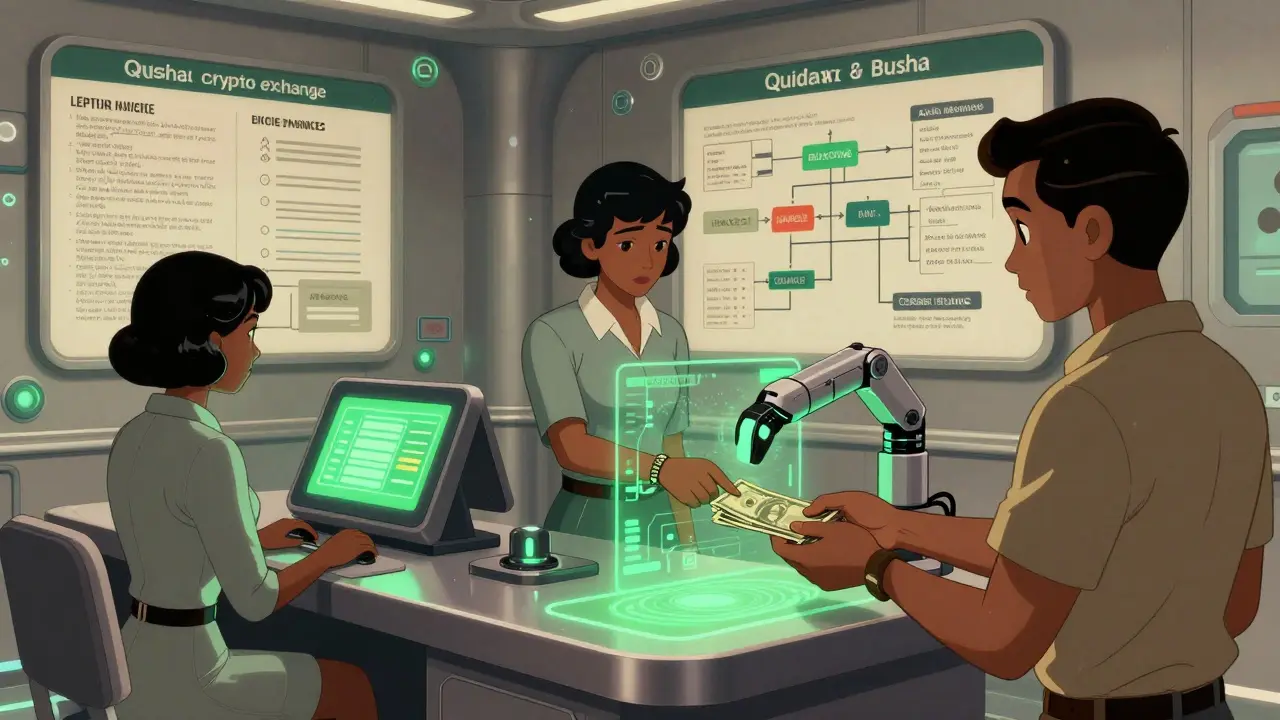
By late 2024, the SEC had granted provisional licenses to two local platforms: Quidax and Busha. Dozens more are in the application queue. The vetting process is slow-some companies have waited over a year. That’s intentional. The SEC is trying to weed out fly-by-night operators before they can harm users.
Who’s Watching? The Multi-Agency System
Nigeria didn’t just hand regulation to one agency. It built a team. The SEC handles everything related to trading, token sales, and investment products. The CBN oversees payments, bank connections, and currency flows. The Economic and Financial Crimes Commission (EFCC) investigates fraud. The Nigerian Financial Intelligence Unit (NFIU) tracks suspicious transactions. And the National Anti-Money Laundering Act was updated in 2025 to include virtual assets.This sounds like a nightmare for compliance-but it’s actually a strength. If a platform is laundering money, regulators can pull telecom records, freeze bank accounts, and shut down operations fast. In 2025, the EFCC shut down three unlicensed crypto platforms that were running Ponzi schemes. They traced transactions through mobile money apps and arrested operators.
Not all NFTs are regulated, though. If you’re buying a digital artwork for fun, not as an investment, you’re not covered by these rules. But if someone sells you an NFT promising royalties or profit-sharing, it’s treated like a security. The line is clear: investment = regulated.
Taxes Are Now Part of the Rules
In June 2025, Nigeria passed the National Tax Administration Act (NTAA) 2025. It goes live in 2026. This law makes crypto taxes official. Every time you sell Bitcoin for Naira, trade one coin for another, or earn staking rewards-you owe tax.VASPs are required to report all user transactions to the Federal Inland Revenue Service (FIRS). If you’re a trader, you’ll need to keep records. If you’re a business, you must file quarterly. Failure to comply? Penalties start at ₦10 million ($6,693) for the first month, plus ₦1 million ($669) for every month after. The SEC can suspend or revoke your license if you don’t pay.
Many users are worried about this. Some say they’ll go back to cash deals. But the system is designed to make that harder. Banks now monitor for crypto-related transfers. Mobile money apps flag unusual patterns. The government isn’t trying to stop crypto-it’s trying to bring it into the light.
What Do Users Really Think?
Nigerians are still among the top crypto adopters in the world. Surveys show over 30 million adults have used crypto at least once. But opinions are split.Some users celebrate the clarity. “Before, I didn’t know if my money was safe,” says Tolu, a Lagos-based trader. “Now I know if I use Quidax, my funds are protected. If they fail, there’s a process to get help.”
Others are nervous. “They’re watching everything,” says Chidi, a student in Abuja. “I used to send crypto to my cousin in Ghana without telling anyone. Now I worry if the government will track me.”
The biggest complaint? Cost. Getting licensed is expensive. Many small operators can’t afford the capital requirements or legal fees. That’s good for safety-but it also means fewer choices for users. The market is now dominated by two big players and a handful of foreign exchanges that don’t have Nigerian offices.
What’s Next?
The SEC expects to issue 50+ licenses by the end of 2026. More platforms are coming. The government is also working with other African nations on regional crypto standards. Nigeria isn’t just setting rules for itself-it’s trying to become the fintech hub for West Africa.There are still challenges. The licensing process is slow. Tax reporting is confusing. And not everyone trusts the government to use its new powers responsibly.
But one thing is certain: Nigeria is no longer a wild west for crypto. It’s a regulated market-with rules, oversight, and consequences. If you’re using crypto here, you’re playing by the new system. And that system is here to stay.