Pakistan Crypto Regulation Transformation: 2025 Pivot to Legalization
 Mar, 23 2026
For years, Pakistan’s relationship with cryptocurrency was defined by silence and suspicion. In 2018, the State Bank of Pakistan (SBP) issued a blanket advisory banning banks from handling crypto transactions. It wasn’t a law, but it felt like one. People still traded Bitcoin and Ethereum - millions of them - but they did it in the shadows, using peer-to-peer apps, foreign exchanges, and cash-based networks. The $21 billion crypto market in Pakistan wasn’t going away. It just got harder to track, tax, or regulate. Then, in 2025, everything changed.
The 2025 Breakthrough: From Ban to Legal Framework
On July 8, 2025, President Asif Ali Zardari signed the Virtual Assets Bill 2025 a landmark ordinance that formally legalized cryptocurrency ownership and transfer in Pakistan. This wasn’t a soft shift. It was a complete reversal. The SBP, which had spent seven years warning against crypto, now publicly backed the move. Acting Deputy Governor Dr. Inayat Hussain told the Senate Standing Committee that the 2018 advisory would be withdrawn - but only after a new regulator took over. The new authority? The Pakistan Virtual Asset Regulatory Authority (PVARA) an independent body created to license, monitor, and enforce rules for all virtual asset service providers. PVARA didn’t just appear overnight. It was built from the ground up. A technical committee formed in June 2025 included top officials from the Finance Ministry, SBP, Securities and Exchange Commission of Pakistan (SECP), and the Ministries of Law and IT. Their job? Draft rules that could actually work in Pakistan’s unique economic environment.What’s Legal - and What’s Not
Here’s the catch: Pakistan didn’t go full crypto. It didn’t let you buy coffee with Bitcoin or trade Dogecoin on local apps. The law is precise - and restrictive.- You can hold crypto. Owning Bitcoin, Ethereum, or any other digital asset is now legal. No more fear of bank account freezes.
- You can transfer crypto. Sending crypto between wallets, even across borders, is permitted - as long as it’s reported.
- You cannot use crypto for payments. No retail store, online shop, or service provider can accept Bitcoin or Ethereum as payment. This rule is absolute.
- Altcoin trading is blocked. Only major cryptocurrencies like Bitcoin and Ethereum are recognized. Newer tokens, memecoins, and DeFi projects are excluded from the legal framework.
- Central Bank Digital Currency (CBDC) is the priority. The Digital Pakistani Rupee (Digital PKR) a state-controlled digital currency designed to replace cash and streamline government payments is being piloted. Unlike decentralized crypto, the Digital PKR will be fully monitored, traceable, and controlled by the SBP.
This isn’t adoption - it’s containment. Pakistan isn’t trying to become the next El Salvador or Dubai. It’s trying to bring a $21 billion underground economy into the light, without losing control over its monetary system.
Why This Model? Control Over Innovation
Look at how other countries handle crypto. India taxes every trade but allows exchanges. The UAE welcomes crypto firms with tax holidays and licenses. China bans private crypto but runs its own digital currency. Pakistan’s approach is closest to China’s - but with one key difference: it lets people keep what they already own. The government’s reasoning is clear: crypto isn’t the problem - unregulated money flow is. Pakistan’s economy relies heavily on remittances. Over $30 billion flows in each year from overseas workers. Right now, many send money through informal channels like hawala because banks are slow and expensive. PVARA’s first major project? Building regulated crypto-based remittance corridors. Imagine sending money from Saudi Arabia to Lahore using a licensed crypto platform - faster, cheaper, and fully tracked. The Digital PKR is another piece of this puzzle. It’s not meant to compete with Bitcoin. It’s meant to replace physical cash in government payments, subsidies, and welfare programs. Think of it as digital rupees that can’t be counterfeited, can’t be hoarded, and can’t be lost.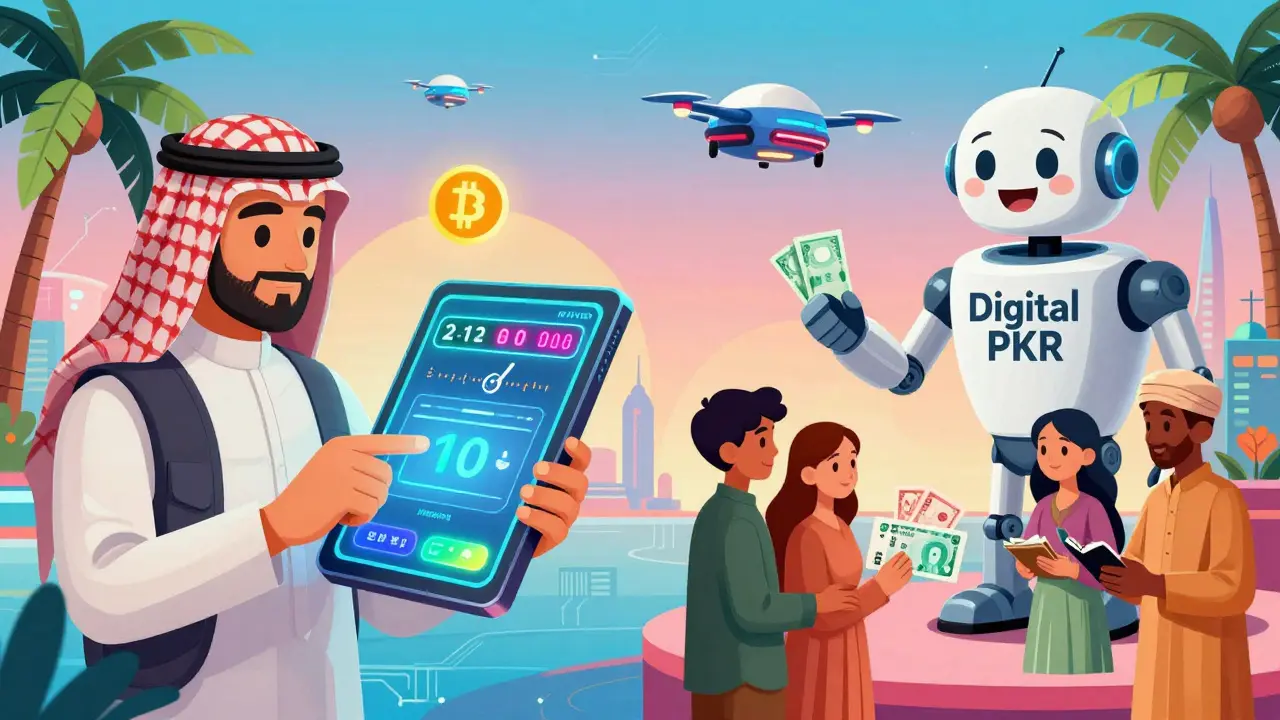
Who’s Behind the Scenes?
PVARA’s leadership isn’t being filled by retired bankers. Senators made it clear: they need young experts who understand blockchain, not just balance sheets. The authority is actively recruiting developers, cybersecurity specialists, and data analysts with crypto experience. Licensing for Virtual Asset Service Providers (VASPs) - like exchanges, wallet providers, and remittance platforms - began in October 2025. To get licensed, companies must prove they have:- Strong Anti-Money Laundering (AML) systems
- Real-time transaction monitoring
- Customer identity verification (KYC)
- Secure cold storage for digital assets
- Compliance officers trained in international standards
That’s not cheap. Many small crypto businesses in Pakistan won’t survive the transition. But for the ones that do, this is a golden opportunity. Legal recognition means access to banking, insurance, and foreign investment.
How It Compares to Neighbors
Pakistan’s model stands out in South Asia:| Country | Legal to Own? | Legal to Trade? | Use for Payments? | CBDC? |
|---|---|---|---|---|
| Pakistan | Yes | Restricted (major coins only) | No | Yes (Digital PKR) |
| India | Yes | Yes (with 30% tax) | Yes (limited) | Under development |
| Bangladesh | No | No | No | No |
| Sri Lanka | Yes | Yes | No | No |
| UAE (for comparison) | Yes | Yes | Yes | Testing |
Pakistan’s rules are tighter than India’s and far more restrictive than the UAE’s. But unlike Bangladesh, it’s not pretending crypto doesn’t exist. It’s trying to manage it.
Real-World Impact: Stories from the Ground
In Lahore, a 28-year-old software engineer named Arif started trading Bitcoin in 2020. He never used a bank. He used local P2P traders and kept his coins in a hardware wallet. When the law changed, he was relieved - but not excited. "I can finally sleep at night," he said. "But I still can’t pay my rent with Bitcoin. What’s the point?" In Karachi, a remittance company called SendPak started testing a crypto-based service with workers in Saudi Arabia. Instead of waiting 5 days for a bank transfer, they now use a licensed crypto platform. The transfer takes 12 minutes. Fees? 1.5% - half of what banks charge. "This is the real win," says the CEO. "Not trading. Not speculation. Sending money home." Meanwhile, the Digital PKR pilot is being tested in three cities. The government is distributing small digital allowances to teachers and public workers. No cash. No app. Just a digital wallet linked to their national ID. Early results show faster payments and fewer errors.What Comes Next?
The framework is in place. But implementation is just beginning. PVARA is still hiring. The Digital PKR rollout is slow. Compliance costs are high. And many users are frustrated. The big question: Will Pakistan eventually open up? Or will this remain a tightly controlled experiment? Most experts agree: this is Phase One. The government isn’t done. Once PVARA proves it can track money flows and prevent fraud, pressure will grow to allow more - maybe even retail payments. But for now, the message is clear: crypto is legal, but only if the state says so.Is cryptocurrency legal in Pakistan as of 2026?
Yes, cryptocurrency is legal to hold and transfer in Pakistan as of 2026. The Virtual Assets Bill 2025 removed the 2018 banking ban. However, you cannot use crypto for payments, and only major coins like Bitcoin and Ethereum are recognized. Altcoins and decentralized trading remain restricted.
Can I use Bitcoin to pay for goods in Pakistan?
No. The Virtual Assets Bill 2025 explicitly prohibits using any cryptocurrency - including Bitcoin and Ethereum - for retail payments, online purchases, or commercial transactions. This rule is strictly enforced by PVARA.
What is the Digital Pakistani Rupee (Digital PKR)?
The Digital Pakistani Rupee is Pakistan’s official Central Bank Digital Currency (CBDC), developed by the State Bank of Pakistan. Unlike Bitcoin, it is fully controlled by the government, traceable, and designed for government payments, welfare disbursements, and remittances. It is not a cryptocurrency and does not operate on blockchain.
Do I need a license to trade crypto in Pakistan?
If you operate a business that facilitates crypto transactions - such as an exchange, wallet service, or remittance platform - you must obtain a license from PVARA. Individual users buying and holding crypto for personal use do not need a license, but must comply with reporting rules if transactions exceed thresholds set by PVARA.
Why did Pakistan ban crypto in 2018 and now allow it?
In 2018, the State Bank banned crypto because it feared loss of monetary control, money laundering, and capital flight. By 2025, the government realized the ban wasn’t working - millions were still trading, and the economy was losing tax revenue. Legalization with strict oversight was seen as the only way to bring the $21 billion underground market into the formal economy.
How does Pakistan’s crypto law compare to India’s?
India allows full trading of cryptocurrencies but taxes them at 30% and adds a 1% TDS on every transaction. Pakistan bans trading of altcoins and prohibits crypto payments entirely. India focuses on taxation; Pakistan focuses on control. India’s approach is more open; Pakistan’s is more restrictive but aims for deeper oversight.