PolkaWar (PWAR) Airdrop Details: What Happened and Why It Matters
 Feb, 27 2026
Back in 2022, PolkaWar (PWAR) ran a CoinMarketCap airdrop that promised free tokens to users who signed up. At the time, it looked like a simple way to get in on a new blockchain game. But what happened after that free token drop tells a much bigger story about how most crypto airdrops really work - and why so many people lose money chasing them.
What Was the PolkaWar Airdrop?
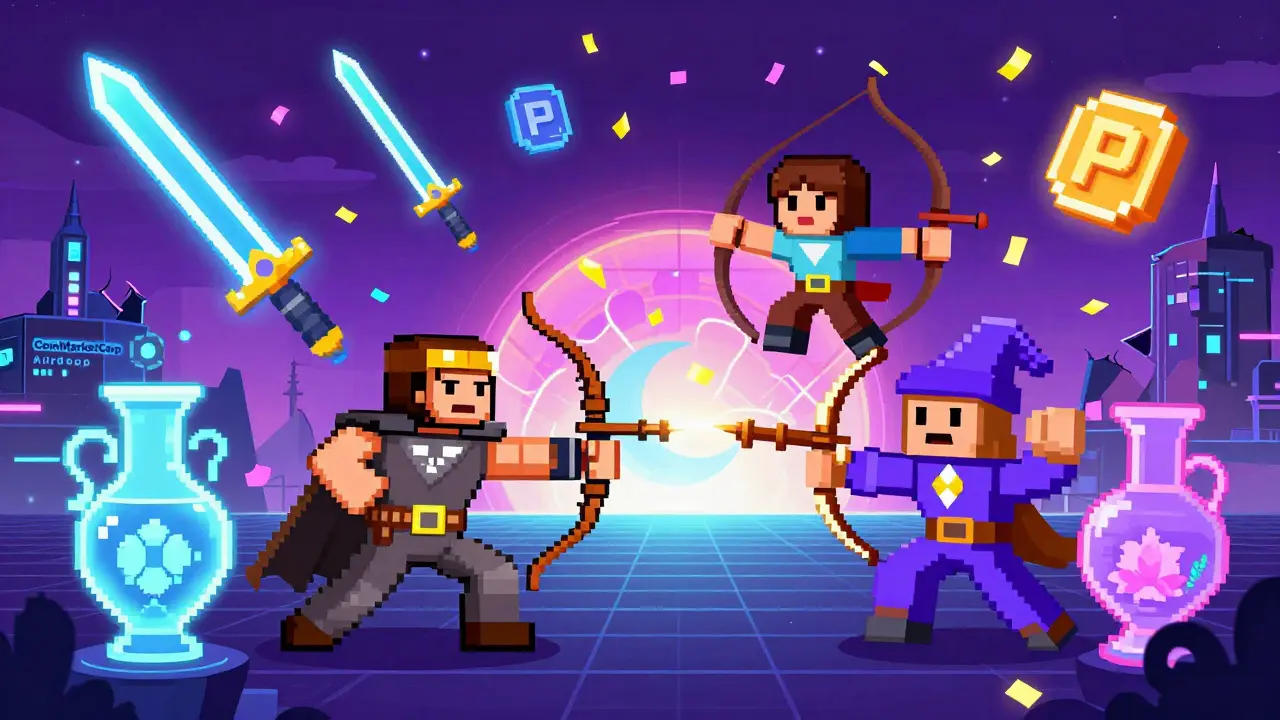
The PolkaWar airdrop wasn’t a surprise giveaway. It was a structured campaign by CoinMarketCap to promote new projects to its user base. The total value of the airdrop was $30,000. Each eligible participant could win up to 75 PWAR tokens. That might not sound like much, but back then, PWAR was trading around $0.30. So 75 tokens = $22.50. For just signing up and completing a few basic tasks, that felt like free money. PolkaWar wasn’t just another token. It was a cross-chain NFT fighting game. Players chose between three character types - Warrior, Archer, and Magician - and equipped them with weapons like swords, bows, guns, and magic vases. The game had two modes: solo battles and arena fights. You could level up your characters, trade gear on the built-in NFT marketplace, and even order real-world replicas of your digital weapons through PolkaWar Logistics. It sounded like a real play-to-earn experience.Why Did PolkaWar Need an Airdrop?
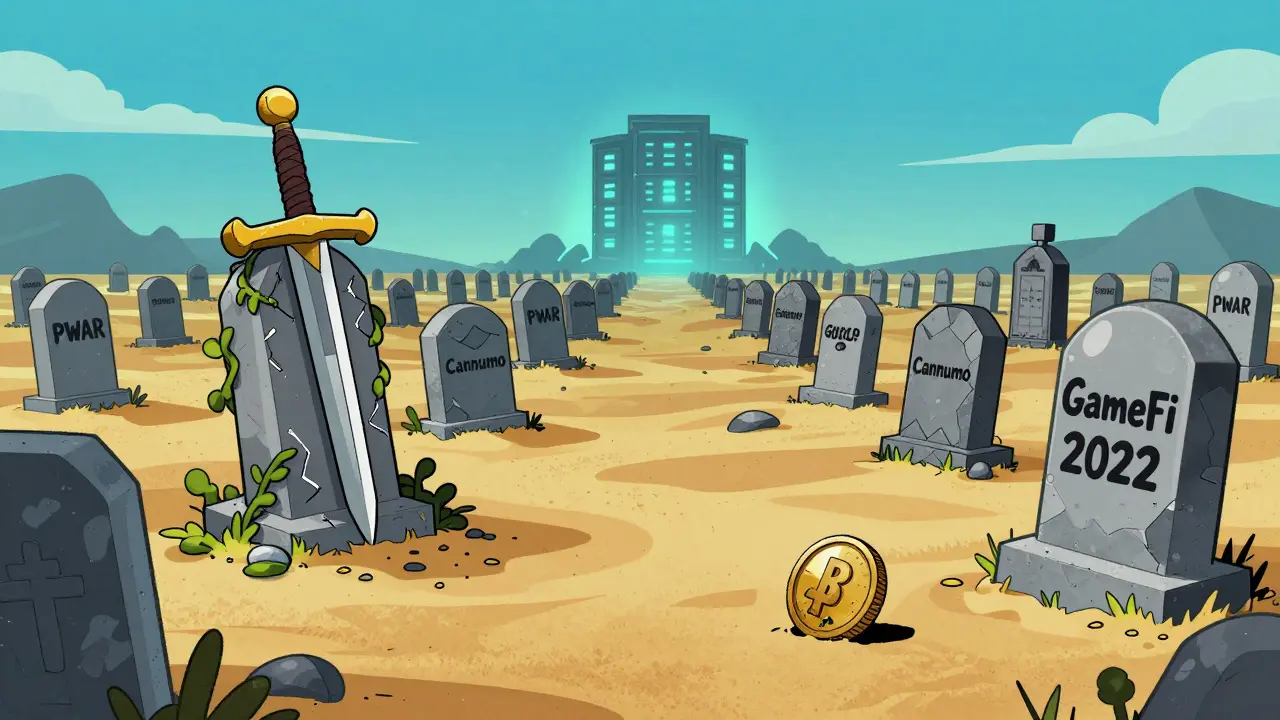
The game launched on Binance Smart Chain (BSC) because it was cheap and fast. But BSC alone wasn’t enough to build a community. PolkaWar needed users - and fast. Airdrops were the go-to strategy for GameFi projects in 2021 and 2022. They were cheap, easy to promote, and worked well for grabbing attention. CoinMarketCap was one of the biggest platforms for these campaigns. With millions of users checking prices daily, it was the perfect place to drop tokens. PolkaWar wasn’t alone. Cannumo, other obscure gaming tokens, and dozens of similar projects ran the same play. The goal wasn’t to build a loyal player base. It was to spike trading volume, create hype, and hope the price stuck.What Happened to the PWAR Token Price?
Here’s where things got ugly. At its peak, PWAR hit $1.1996. That was the dream. But by February 2026, it was trading at $0.00204. That’s a drop of over 99%. The token’s market cap, which briefly touched $100 million, now sits below $170,000. Daily trading volume? Sometimes under $20,000. That’s not a game with players. That’s a ghost town. Why? Because the airdrop didn’t create players - it created speculators. People took the free tokens, dumped them on exchanges as soon as they could, and moved on. There was no real gameplay economy. No strong community. No updates. No new features. The NFT marketplace? Barely used. The physical replica service? Vanished from the website. The tokenomics didn’t help either. With 82.82 million PWAR tokens in circulation out of a max supply of 100 million, there was no scarcity. No burn mechanism. No staking rewards. Just a flood of tokens hitting the market - many from early investors and team wallets that never locked their holdings.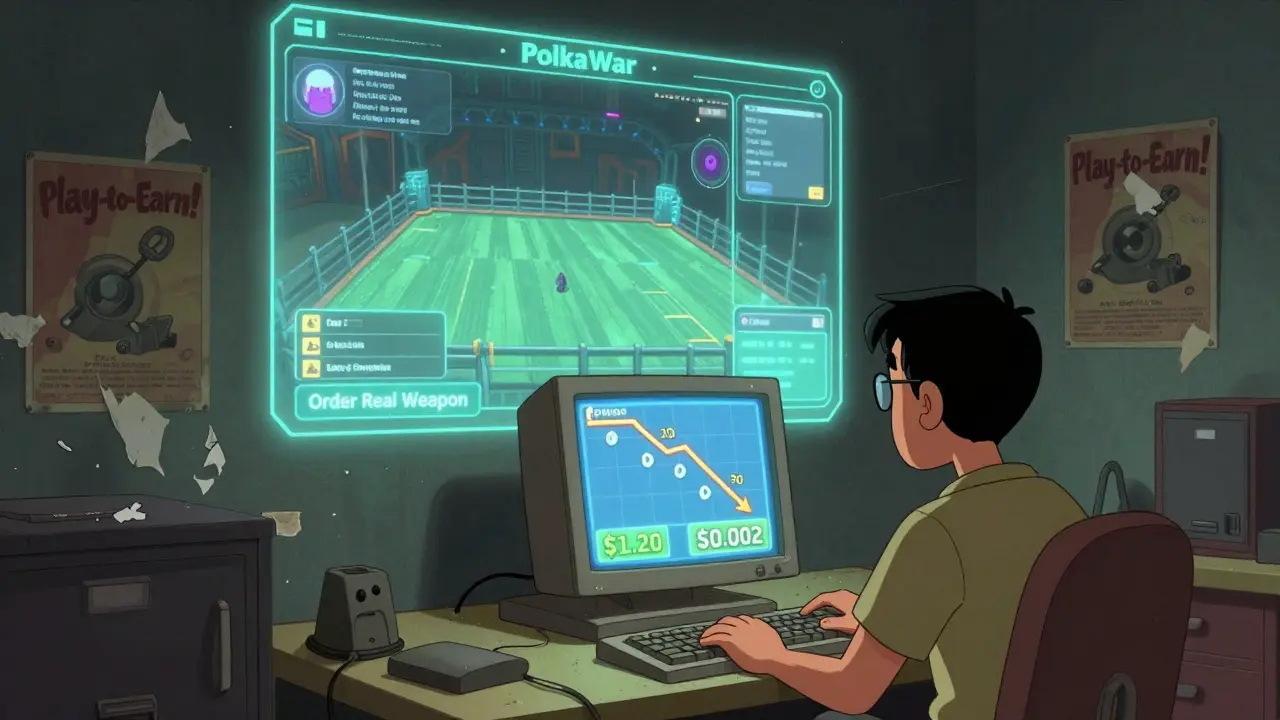
Was the Airdrop a Scam?
Not technically. The airdrop was real. People got their tokens. CoinMarketCap delivered. PolkaWar built the game - at least on paper. But it was a classic case of hype over substance. The project sold a vision: a cross-chain NFT fighting game with real-world rewards. But it never delivered the experience. No major updates since 2023. No marketing. No player growth. The website looks like it hasn’t been touched in years. The Discord server is quiet. The Twitter account hasn’t posted in months. This isn’t fraud. It’s neglect. And it’s the fate of most airdropped tokens.What Should You Do If You Still Hold PWAR?
If you got PWAR in the airdrop and still have it:- Check the wallet balance. If you have less than 100 tokens, the value is under $0.20. It’s not worth the gas fee to sell.
- Don’t chase the price. PWAR has lost 99% of its value. It’s not coming back. No recovery is likely.
- Don’t invest more. No new development means no upside. This is a dead project.
- Consider selling if you can. If you can sell for even $0.001 per token, you’re recovering 50% of your “investment.” It’s not a win, but it’s better than holding.