Privacy Coins Banned on Australian Crypto Exchanges: What You Need to Know
 Dec, 12 2025
Privacy Coin Availability Checker for Australia
If you own Monero, Zcash, or Dash in Australia, you can still hold them. But if you try to trade them on any major Australian crypto exchange, you’ll hit a wall. Since early 2025, every licensed exchange in Australia has removed privacy coins from their platforms. It’s not a law that says you can’t own them. It’s a rule that says exchanges can’t let you trade them. And that makes all the difference.
Why Australia Banned Privacy Coins on Exchanges
The reason isn’t about banning privacy itself. It’s about compliance. Australian regulators-mainly AUSTRAC and ASIC-require exchanges to know exactly who is sending and receiving money. Privacy coins like Monero use ring signatures and stealth addresses to hide transaction details. That means no one can trace who sent what, when, or to whom. For banks and financial institutions, that’s a red flag. For regulators, it’s a dealbreaker. AUSTRAC’s Anti-Money Laundering and Counter-Terrorism Financing Act requires digital currency exchanges to monitor every transaction. If they can’t see the sender, receiver, or amount, they can’t meet the law. That’s why exchanges like Independent Digital Assets Exchange (IDAX) say 78% of their institutional clients pushed for the removal of privacy coins. Big investors don’t want the risk of being caught in a regulatory crackdown. It’s not just Australia. Binance pulled Monero and Zcash from its European and U.S. platforms in February 2025. Kraken removed them from Canada in March. Poloniex delisted Monero globally in April after pressure from the U.S. Treasury. Japan banned them outright in 2018. South Korea’s top five exchanges followed in early 2025. The EU will ban them completely by July 2027. Australia didn’t invent this-it’s just keeping up.What Privacy Coins Actually Do
Most cryptocurrencies, like Bitcoin, are pseudo-anonymous. You can’t see someone’s name, but you can trace every transaction on the public ledger. Privacy coins change that. Monero uses ring signatures to mix your transaction with others, making it impossible to tell which one is yours. Stealth addresses generate a unique one-time address for each payment, so no one can link your transactions. Zcash uses zero-knowledge proofs to prove a transaction is valid without revealing any details. These features are great if you want to protect your financial privacy. But they’re a nightmare for regulators trying to track illegal activity. The U.S. Internal Revenue Service even offered $625,000 in bounties to anyone who could break Monero’s privacy. That’s how hard it is to trace. Exchanges don’t have the tech to comply. Even if they wanted to, they can’t. No crypto exchange in the world has built a system that can monitor Monero transactions without breaking its core privacy. So the only option is to remove them.Can You Still Own Privacy Coins in Australia?
Yes. There’s no law saying Australians can’t hold Monero, Zcash, or Dash. You can buy them overseas, store them in your own wallet, and even send them to someone else. But you can’t trade them on CoinSpot, Swyftx, Independent Reserve, or any other Australian exchange that’s licensed by AUSTRAC. That creates a strange situation. You’re legally allowed to own them-but the only practical way to get them has been shut down. Most people bought privacy coins through exchanges. Now, those doors are closed.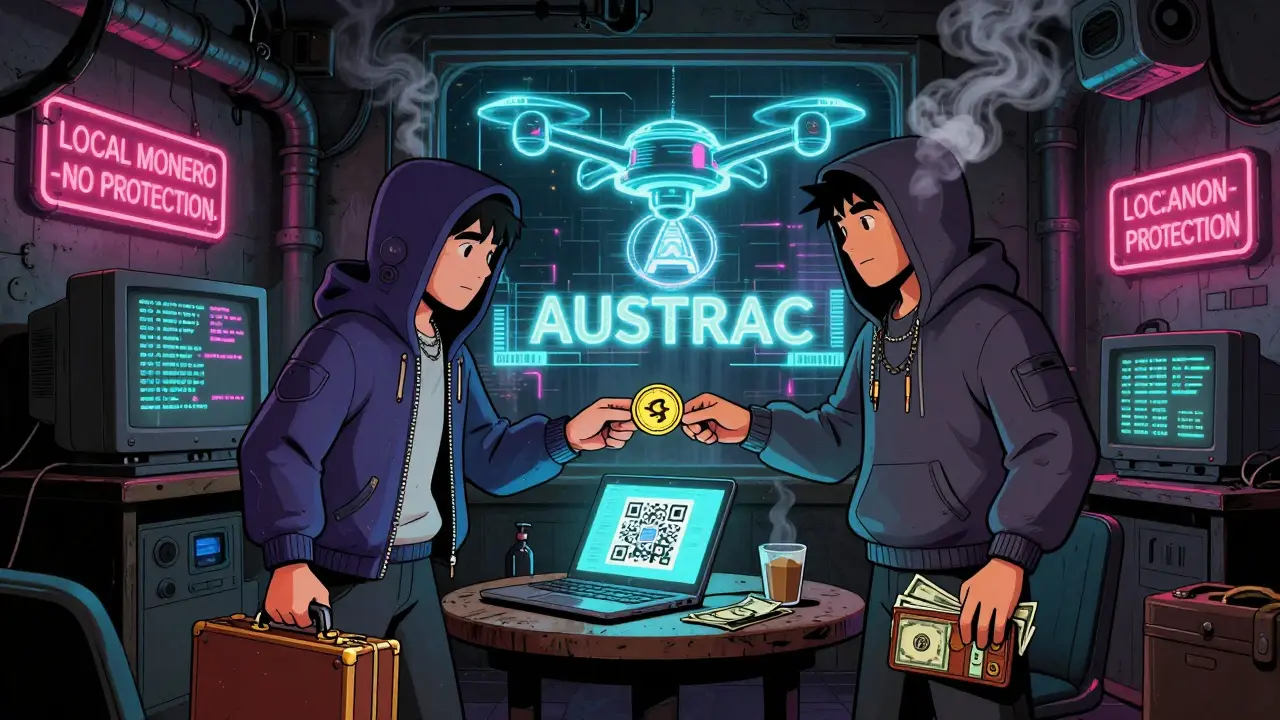
Where Can Australians Buy Privacy Coins Now?
The only real option left is peer-to-peer (P2P) markets. Platforms like LocalMonero have seen a 19% spike in activity since exchanges dropped privacy coins. But P2P trading comes with big risks. You’re dealing with strangers. There’s no buyer protection. No chargebacks. No recourse if someone scams you. Prices can swing wildly because there’s no deep market. And if you’re trading in person or via bank transfer, you could accidentally trigger AML flags. Some Australians turn to offshore exchanges like KuCoin or Binance (outside regulated regions). But those platforms don’t offer Australian dollar deposits, don’t comply with local consumer laws, and aren’t covered by Australian financial dispute systems. If something goes wrong, you’re on your own.What’s Changing in March 2026?
Right now, the ban is enforced through compliance pressure. Exchanges removed privacy coins because they didn’t want to risk losing their license. But starting March 31, 2026, AUSTRAC will expand its rules to cover all digital asset service providers-including wallet providers, custodians, and even some DeFi platforms. That means the current informal ban will become a formal regulatory requirement. This change will make it even harder for any new player to enter the market with privacy coins. Even if a startup tried to build a compliant privacy coin exchange, they’d be blocked by the law. There’s no technical workaround that meets AUSTRAC’s standards.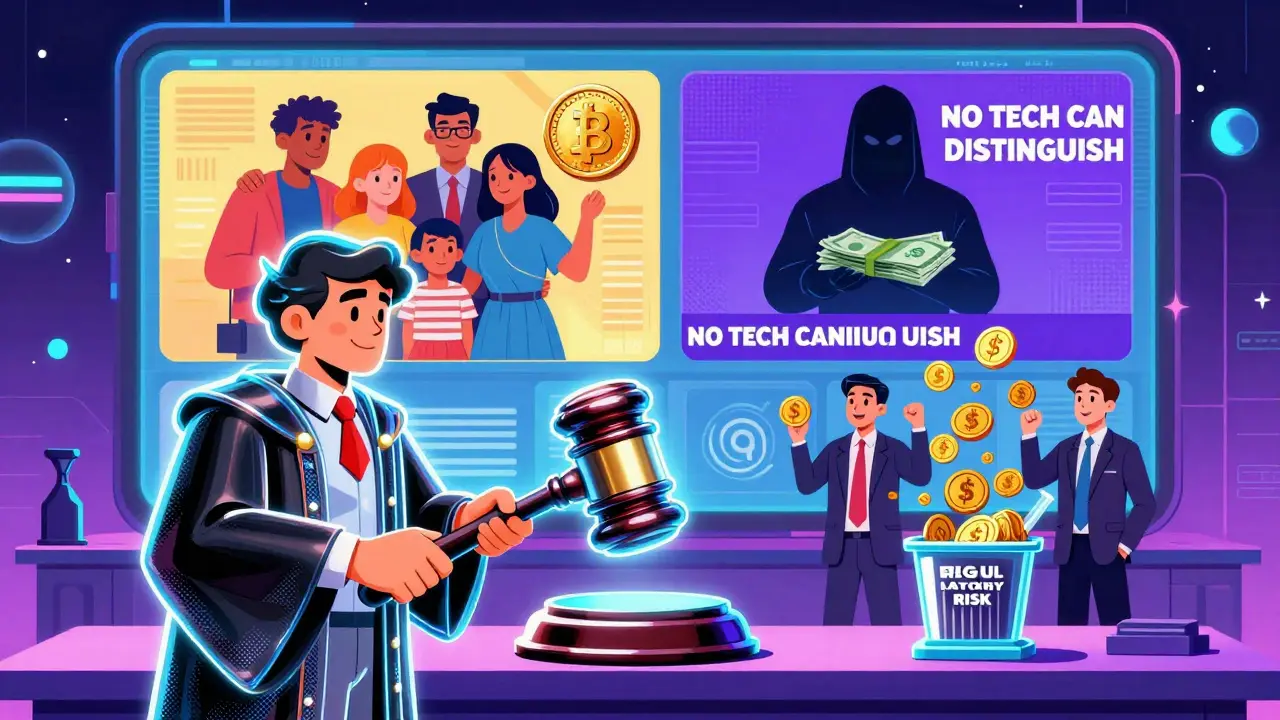
How This Affects Regular Users
For most people, this doesn’t change much. If you’re holding Bitcoin or Ethereum, you won’t notice a thing. But for privacy-focused users, it’s frustrating. Many see this as an attack on financial freedom. Reddit threads and crypto forums are full of complaints: “Why can’t I choose to be private?” “This is just surveillance by another name.” But there’s another side. Institutional investors-banks, hedge funds, super funds-welcome the ban. They don’t want to touch assets that regulators can’t track. Removing privacy coins made it easier for them to enter the Australian crypto market. Some analysts say institutional adoption grew faster after the delistings because the regulatory risk dropped.How Other Countries Compare
Australia’s approach is middle-ground. Japan and Dubai banned privacy coins outright. Switzerland and Liechtenstein still allow them, but only if exchanges follow strict KYC and AML rules. But even there, most big exchanges have voluntarily removed them because global pressure is too strong. The truth is, no major global exchange still offers Monero or Zcash on its main platform. Even Huobi and Bittrex, which used to support them, pulled the plug. Australia didn’t lead the charge-it followed. And now, with the March 2026 update, it’s locking the door.What’s Next for Privacy Coins?
Some developers are trying to build “compliant privacy.” Imagine a coin that hides transaction amounts but still reveals sender and receiver to regulators under court order. That’s the holy grail. But it’s also a contradiction. If regulators can see your identity, it’s not real privacy. For now, privacy coins in Australia exist in a legal gray zone: owned but not traded. The technology hasn’t changed. The demand hasn’t disappeared. But the ecosystem has. The only way forward is either a radical technological breakthrough-or a regulatory shift. Until then, Australians who want privacy coins will have to go off the grid. And that’s not something most people are ready for.Can I still buy Monero in Australia?
You can’t buy Monero on any licensed Australian crypto exchange like Swyftx or CoinSpot. But you can still buy it through peer-to-peer platforms like LocalMonero or from international exchanges that don’t serve Australian users. Just be aware: these methods carry higher risks, no consumer protection, and potential legal gray areas.
Is it illegal to own privacy coins in Australia?
No, it’s not illegal to own Monero, Zcash, or Dash in Australia. The ban only applies to licensed exchanges. You can hold them in your personal wallet, receive them as payment, or transfer them to someone else. But you can’t trade them on regulated platforms.
Why did exchanges remove privacy coins if they’re not banned by law?
Exchanges must comply with AUSTRAC’s Anti-Money Laundering rules, which require them to track every transaction. Privacy coins like Monero make this impossible because they hide sender, receiver, and amount. To avoid losing their license, exchanges removed these coins-no law needed.
Will Australia ban privacy coins completely like Japan?
Australia hasn’t banned ownership, and there’s no sign it will. The focus is on regulating exchanges, not individuals. The March 2026 update will formalize the current restrictions but won’t make owning privacy coins illegal. That’s different from Japan’s outright ban.
Can I use a VPN to trade privacy coins on offshore exchanges?
Technically yes, but it’s risky. Offshore exchanges don’t offer Australian dollar support, aren’t regulated here, and won’t protect you if something goes wrong. You also risk violating AUSTRAC’s rules if you’re using an unregistered service. Most financial advisors warn against it.
Are privacy coins used mostly for illegal activity?
No. Studies show less than 1% of Monero transactions are linked to crime. Most users want privacy for personal reasons-protecting business transactions, avoiding surveillance, or safeguarding financial data. But regulators don’t distinguish between good and bad use. They see the risk, not the intent.
What happens if I trade privacy coins on an unlicensed platform?
You won’t be arrested. But if AUSTRAC finds out you’re using an unregistered service, you could be flagged for suspicious activity. If you’re sending large amounts, you might trigger a report. And if the platform gets shut down, you could lose your funds with no legal recourse.
Is there any chance privacy coins will return to Australian exchanges?
Only if privacy coins change their technology to allow regulated monitoring-without breaking their core privacy. So far, no such solution exists. Until then, the ban is likely permanent. Exchanges won’t risk their licenses for a niche asset with low trading volume.