Social Tokens for Communities: Ownership, Governance, and Value
 May, 19 2026
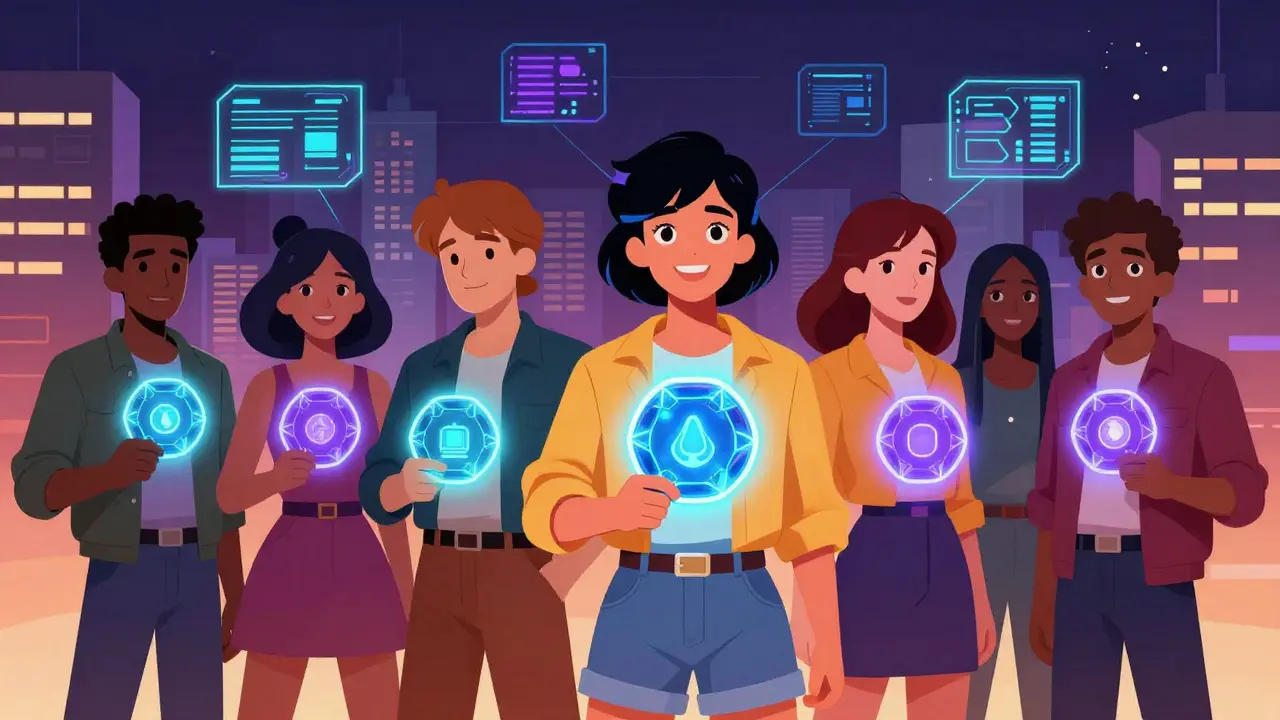
Imagine a community where your participation actually pays off. Not just with karma points or a shiny badge that sits useless in your profile settings, but with real ownership. That is the promise of Social Tokens, which are digital assets issued by creators or communities to enable shared ownership and value alignment among members. Unlike traditional loyalty programs that lock you into a single platform’s ecosystem, these tokens live on the blockchain. They give you a stake in the community’s success. You help build it, you own part of it, and you benefit when it grows.
This shift changes everything about how online groups operate. It moves us from passive consumption to active investment. When you hold a social token, you aren’t just a user; you are a stakeholder. This article breaks down exactly how this works, why it matters for community building, and what it means for the future of digital interaction.
What Are Social Tokens?
To understand the benefits, we first need to define what we are dealing with. A social token is a cryptocurrency tied specifically to a person, a brand, or a group. Linda Xie, a prominent figure in the crypto space who co-founded Scalar Capital, defined them clearly in her 2021 guide. She noted that these tokens derive their value from social capital rather than traditional financial metrics like revenue or profit margins.
There are three main types:
- Personal Tokens: Issued by an individual creator. Holding these might give you access to private chats or early content drops.
- Community Tokens: Issued by a group. These often represent a share in the community’s treasury or decision-making power.
- Creator Tokens: Similar to personal tokens but often structured around intellectual property or specific creative outputs.
The key difference here is portability. If you buy a subscription on Patreon, that relationship lives entirely within Patreon’s database. If Patreon shuts down or bans you, you lose everything. With social tokens built on blockchains like Ethereum, Polygon, or Solana, the asset exists independently. You control it via your wallet. No central server can revoke your ownership without your private keys.
Shared Ownership and Value Alignment
The biggest psychological shift social tokens introduce is shared ownership. In traditional models, platforms extract value from users through ads or data selling. Users get nothing back but free service. Social tokens flip this script. They allow communities to capture and distribute value internally.
Linda Xie pointed out that "shared ownership of social tokens among community members contributes to long-term value alignment." What does that mean in practice? It means everyone wants the same thing: for the community to succeed. When the community grows, the token often appreciates in value. Early supporters see their investment grow. Creators see a more loyal, engaged base because those members have skin in the game.
Look at the Friends With Benefits (FWB) community. By September 2021, their community treasury had grown to over $10 million. Token holders didn’t just watch this happen; they governed how that money was spent. This creates a feedback loop. Members contribute work, ideas, and connections because they know the rewards-both financial and social-are distributed fairly based on their contribution.
Incentivized Engagement Over Passive Scrolling
Engagement is the lifeblood of any community, but keeping it high is hard. Traditional platforms rely on dopamine hits from likes and comments. Social tokens use economic incentives. Sidecar AI analyzed this dynamic in 2021, noting that tokens can be given in exchange for contributions, whether that’s writing content, managing events, or developing code.
Consider BanklessDAO. After distributing its BANK token to contributors, they saw a 300% increase in active contributors within six months. Why? Because the token represented a tangible reward for labor. It wasn’t just praise; it was an asset. This model turns casual lurkers into active builders. You aren’t just scrolling; you’re earning. And since the token supply is often fixed or has a predictable emission schedule, scarcity drives value up as demand increases.

Tiered Access and Exclusive Benefits
Access provisioning is one of the most immediate uses for social tokens. Instead of flat monthly subscriptions, communities can create tiered access models based on token holdings. Smart contracts handle the verification automatically. If you hold the required amount, you get in. No manual checks, no admin bottlenecks.
| Feature | Traditional Subscription | Social Token Model |
|---|---|---|
| Verification | Manual or platform-dependent | Automated via smart contract |
| Portability | Locked to platform | Portable across wallets/apps |
| Resale Value | None | Can be sold on secondary markets |
| Revenue Share | Platform takes majority | Creator/Community retains majority |
For example, the Whale (WHALE) token community offered virtual art exhibitions to holders of 10+ tokens and physical art pieces to those holding 100+. This tiered approach increased community retention by 65%. Another professional association used token-gated Zoom webinars, reducing unauthorized access by 100% while boosting paid membership by 40%. The token acts as a verifiable proof of commitment. It signals that you’ve invested in the community, not just clicked a button.
Decentralized Governance
Governance is where social tokens truly shine. Most online communities are run by a small team of admins. Decisions are top-down. Social tokens enable decentralized decision-making. Holders can vote on proposals, allocate treasury funds, and set community standards.
Coinbase’s educational resources highlight that social tokens often double as governance tokens. In the FWB community, token holders voted on 42 proposals in 2021 alone. Participation rates averaged 35%, which is massive compared to the 5-15% typical in traditional community voting. Systems like quadratic voting ensure that wealth doesn’t completely dominate decisions, allowing smaller holders to still have a voice.
This structure reimagines leadership. It’s not about who has the loudest voice or the most followers. It’s about who holds the stake. Gitcoin used this model to distribute $1.3 million to public goods projects based on community voting patterns. This level of transparency and democratic control builds trust. Members feel heard. They feel powerful.
Economic Sustainability and Monetization
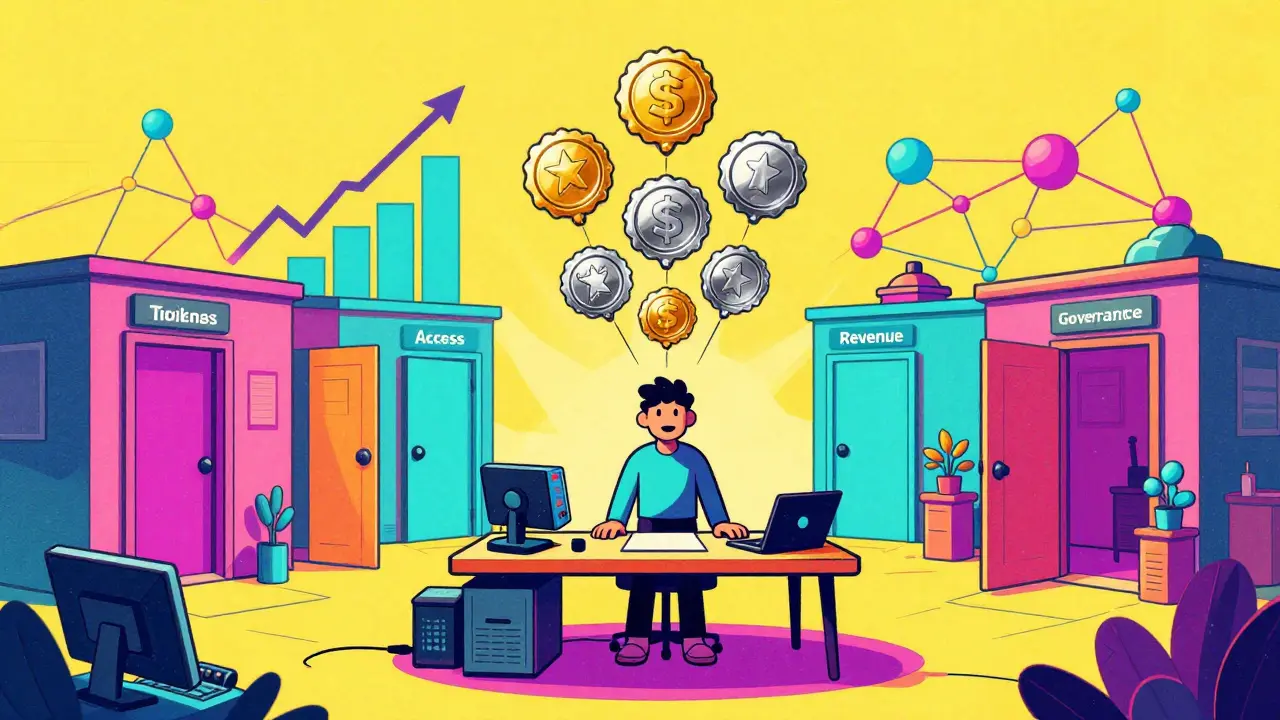
Monetizing a community is notoriously difficult. Ads annoy users. Subscriptions churn quickly. Social tokens offer a new revenue stream. Creators can sell tokens directly, earn royalties on secondary sales, and use tokens to pay collaborators.
Mighty Networks documented cases where creators launched tiered tokens-Platinum, Gold, Silver-each offering different benefits. One mid-tier influencer generated $120,000 in initial sales. More importantly, the resale market creates ongoing value. Platforms like Tensor can automatically send 5-10% of secondary sales back to the creator. This means you get paid every time someone flips your token.
Additionally, tokens can serve as compensation. A fitness community paid trainers 70% in community tokens and 30% in fiat currency. This reduced cash expenses by 45% while increasing trainer retention by 60%. The trainers were motivated because if the community grew, their token holdings grew. It aligns incentives perfectly.
Network Effects and Discovery
Social tokens also solve the discovery problem. How do you find your people? Traditional algorithms prioritize engagement, often showing you controversial or addictive content. Token-based social graphs prioritize alignment. Platforms like RabbitHole created NFT badges that signaled specific skills. Holding certain tokens connected you to relevant communities automatically.
Collab.Land processed over 5 million token-based access verifications monthly by late 2022. This infrastructure allows communities to interoperate. If you’re trusted in one community, that reputation can translate to another. It creates a self-reinforcing cycle. Participation generates credentials. Credentials unlock opportunities. Opportunities drive further participation.
Challenges and Considerations
It’s not all smooth sailing. Volatility is a major risk. Token prices can crash, hurting morale. Regulatory uncertainty looms, especially regarding securities laws. Technical barriers remain too. Managing a wallet and understanding gas fees isn’t easy for everyone. Successful communities address these by educating members, using stablecoins for treasury stability, and building user-friendly interfaces.
Despite these hurdles, the trajectory is clear. Social tokens represent a fundamental shift in how we organize online. They replace extraction with distribution. They replace passivity with ownership. For creators and communities ready to build something lasting, they offer tools that simply didn’t exist five years ago.
Are social tokens legal?
The legality depends on jurisdiction and how the token is structured. If a token promises profits or returns, it may be classified as a security. Community-focused tokens that grant access or governance rights generally face less scrutiny, but creators should consult legal experts to ensure compliance with local regulations.
How do I buy social tokens?
You typically need a crypto wallet like MetaMask. Then, you visit the platform issuing the token, such as Roll or Tensor, connect your wallet, and purchase the tokens using cryptocurrency like ETH or SOL. Some platforms also allow credit card purchases.
Can social tokens lose value?
Yes. Like any asset, their value is driven by supply and demand. If interest in the community wanes, the token price can drop. However, the utility-access, governance, and community belonging-often remains even if the market price fluctuates.
What is the difference between a social token and a meme coin?
Meme coins are usually speculative assets with no inherent utility beyond trading. Social tokens are designed to provide specific benefits like access, governance, or revenue sharing within a specific community. Their value is tied to the strength and activity of that community.
Do I need technical skills to manage social tokens?
Basic familiarity with crypto wallets helps, but many platforms are becoming more user-friendly. For community managers, understanding tokenomics and smart contract basics is beneficial, but you don’t need to be a developer to launch a successful social token campaign.