DAO Voting Systems: How Decentralized Governance Really Works
When you hear DAO voting systems, a method for groups to make decisions using blockchain tokens instead of traditional boards or CEOs. Also known as decentralized governance, it’s the backbone of projects that claim to be run by their users—not investors or founders. This isn’t theory. It’s how people vote on whether to spend millions in a treasury, change a protocol, or shut down a failed project—all without asking a CEO for permission.
DAO voting systems rely on three things: DAO tokens, digital assets that give you voting power proportional to how many you hold, smart contract voting, code that automatically counts votes and enforces outcomes without human interference, and a clear blockchain voting, a transparent, tamper-proof record of every vote cast on a public ledger. If any of these break, the whole system crumbles. Tokens get concentrated in a few wallets. Votes get ignored because the interface is broken. Or worse—people forget to vote, and a tiny group makes all the calls.
Some DAOs work like a startup board: only big holders get to vote. Others try to be fully democratic, giving every token holder one vote, no matter how many they own. But here’s the catch: low participation kills legitimacy. If only 5% of token holders vote, that’s not democracy—it’s a loophole. That’s why some DAOs now offer rewards just for voting, or lock tokens to earn voting weight over time. It’s not perfect, but it’s trying.
You’ll see this play out in the posts below. Some are about failed DAOs where votes were ignored. Others show how real communities used voting to save projects from collapse. There are guides on how to actually cast your first vote, and warnings about fake DAOs that look real but are just scams with a voting interface. You’ll read about platforms that made voting simple, and others that buried the option so deep you’d need a PhD to find it. This isn’t about crypto hype. It’s about who really controls the money, the code, and the future of these networks. And if you hold tokens, you have a say—whether you use it or not.
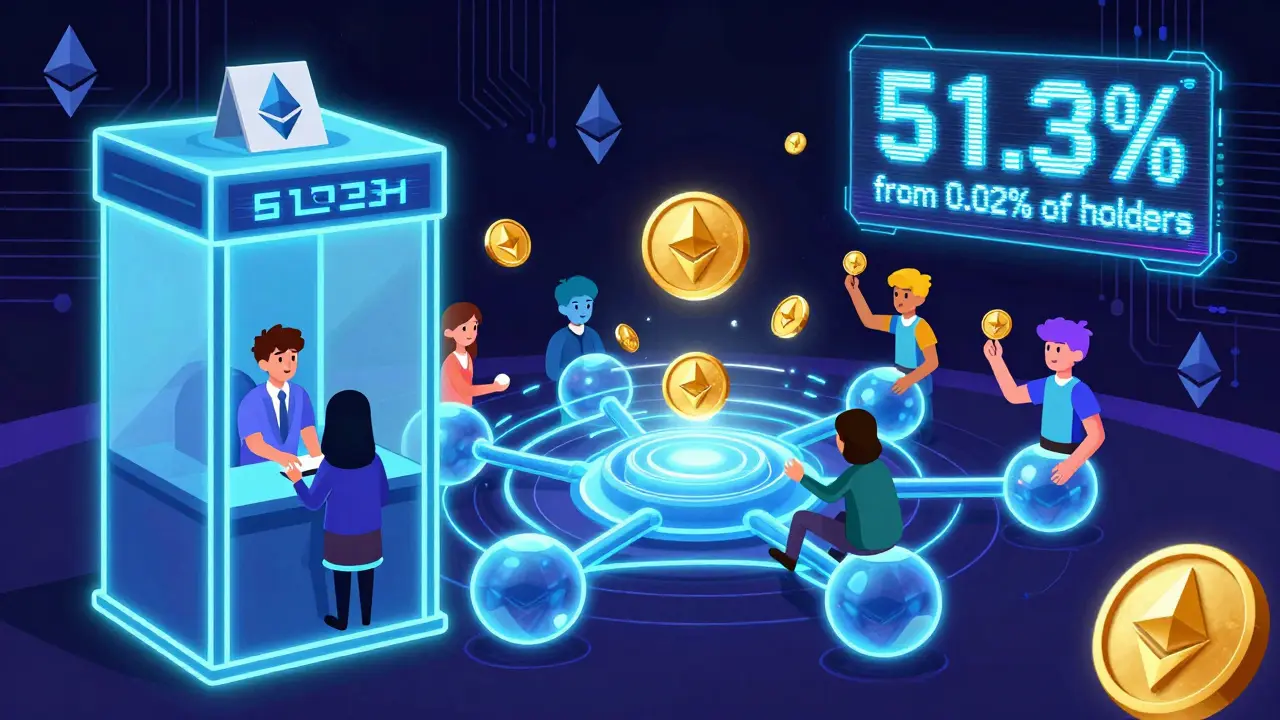
Governance token systems let token holders vote on blockchain protocol changes, but most use flawed models that favor wealthy holders. Learn how token-based, quadratic, liquid, and other voting mechanisms work-and what’s being done to fix them.
More