Failed Crypto Exchange: What Happens When Exchanges Collapse and How to Avoid Them
When a failed crypto exchange, a platform that once let users trade digital assets but suddenly vanished without warning or refund. Also known as a crypto exchange shutdown, it leaves users with empty wallets and no recourse. This isn’t rare. It’s routine. In 2021, BEPSwap—once the first DEX on Binance Smart Chain—disappeared overnight. No updates. No emails. No app. Just silence. And in 2025, Let’sBit, a Latin American platform promoted as reliable, became a ghost site. No trading. No support. No trace. These aren’t outliers. They’re symptoms of a system where trust is assumed, not earned.
What causes a crypto exchange shutdown, the abrupt and often unexplained closure of a trading platform, usually due to fraud, poor security, or regulatory pressure. Also known as a dead crypto exchange, it often follows years of ignored red flags.? It’s rarely one thing. It’s a mix of weak security, hidden ownership, and zero transparency. Some exchanges don’t hold user funds in cold storage. Others fake trading volume to look active. A few even run inside the same company that issues their token—creating a loop where money flows out, not in. When regulators step in, like in India with FIU compliance failures, or when users realize their funds are gone, the whole thing collapses. And when it does, you don’t get a refund. You don’t get a lawsuit win. You get a blog post like this one, years later, explaining why you lost everything.
The exchange security, the set of practices and technologies a crypto platform uses to protect user assets from hacks, insider theft, and operational failure. Also known as crypto platform risk, it’s the only thing that separates survival from disappearance. isn’t about flashy marketing or celebrity endorsements. It’s about whether the exchange publishes proof of reserves. Whether it uses multi-sig wallets. Whether its code is audited by third parties—not just a friend’s cousin’s startup. You don’t need to be a coder to check this. You just need to ask: Can I withdraw my coins right now? Is there a public ledger showing they hold what they claim? If the answer is no, you’re already at risk. The exchanges that survive are the boring ones. The ones with long histories, clear teams, and zero hype. The ones that don’t promise you moonshots—just safe trades.
What you’ll find below isn’t just a list of broken platforms. It’s a catalog of lessons. From the Iranian users who turned to crypto because their banks failed, to the Myanmar traders whose bank accounts got shut down overnight, to the airdrop scams that promised free tokens but vanished before launch—these stories all connect to the same truth: if you don’t understand how an exchange works, you’re not trading. You’re gambling. And in crypto, gambling without a safety net doesn’t end in a win. It ends in silence.
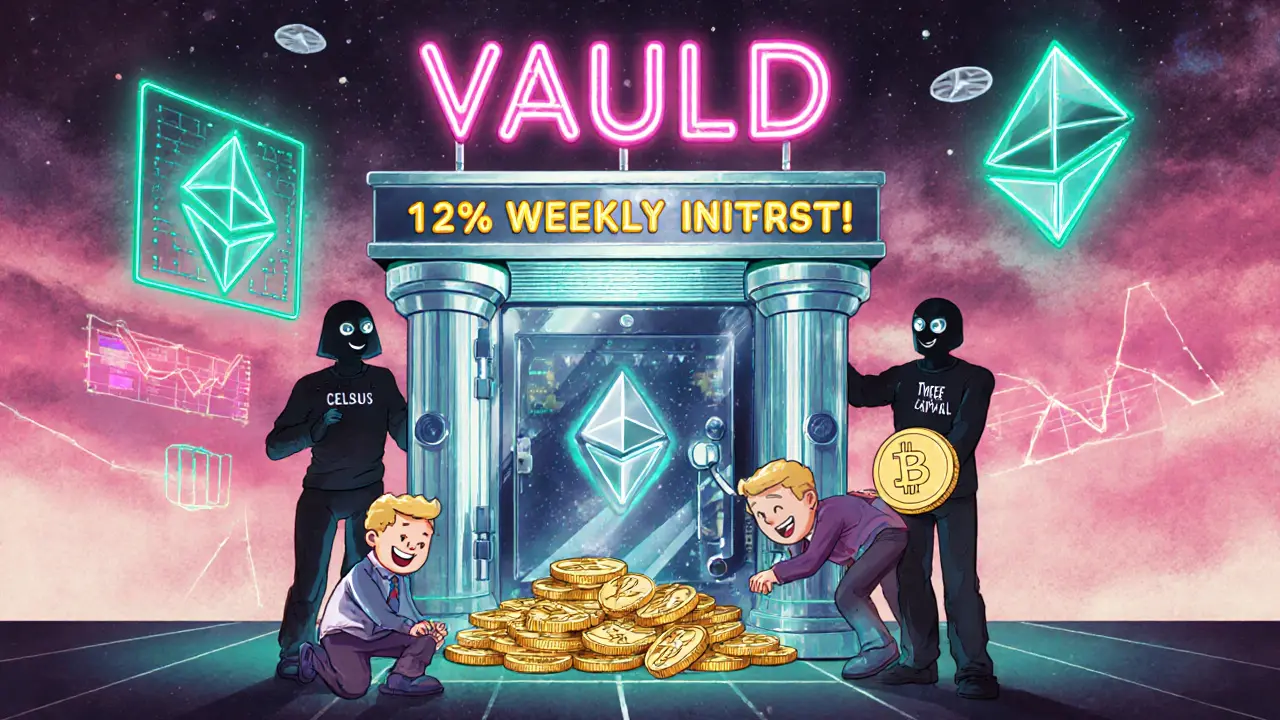
Vauld crypto exchange promised high yields and easy trading but collapsed in 2022, leaving users with frozen funds. Learn why it failed, what happened to your money, and how to avoid similar platforms.
More