Gasless Transactions: What They Are and Why They Matter in Crypto
When you send crypto, you usually pay a fee called gas, the cost to process a transaction on a blockchain like Ethereum. This fee goes to miners or validators who keep the network running. But what if you didn’t need to pay it at all? That’s where gasless transactions, a system that lets users send crypto or interact with dApps without covering the network fee themselves. Also known as MetaTransactions, this approach shifts the cost to someone else—usually the app developer or a third-party relayer.
Gasless transactions aren’t magic. They rely on wallet abstraction, a design that separates user accounts from the underlying blockchain protocol. This lets apps handle the technical heavy lifting. For example, a game might pay the gas fee so you can claim an NFT without needing ETH in your wallet. Or a DeFi platform might cover fees to get you to try staking. It’s not just about convenience—it’s about removing one of the biggest barriers for new users. If you’ve ever walked away from a crypto app because you didn’t have enough ETH to pay gas, gasless transactions were built for you.
These systems are already in use across real projects. Some airdrops, like the OneRare First Harvest or the FEAR Play2Earn NFT campaign, relied on gasless claims to make participation easier. Even exchanges like Biconomy have built their mobile apps around this idea, letting users swap tokens without worrying about gas. But it’s not perfect. Some gasless systems require trust in the relayer, and not all blockchains support them equally. Still, as more apps aim for mass adoption, gasless becomes less of a feature and more of a requirement.
Behind the scenes, gasless transactions connect to bigger ideas like blockchain scalability, the challenge of making networks faster and cheaper for everyone. If every user had to pay gas, adoption would stall. By removing that friction, developers can build experiences that feel more like regular apps—no crypto knowledge needed. That’s why you’ll see gasless systems popping up in NFT marketplaces, gaming platforms, and even social apps trying to bring Web3 to mainstream users.
What you’ll find in the posts below are real examples of how gasless transactions are used—or misused—in the wild. Some projects made them work beautifully. Others used them as a gimmick to lure users into dead-end apps. You’ll also see how gasless claims tied into airdrops, token launches, and failed games. This isn’t theory. It’s what’s happening right now, and knowing how it works helps you avoid scams and spot real opportunities.
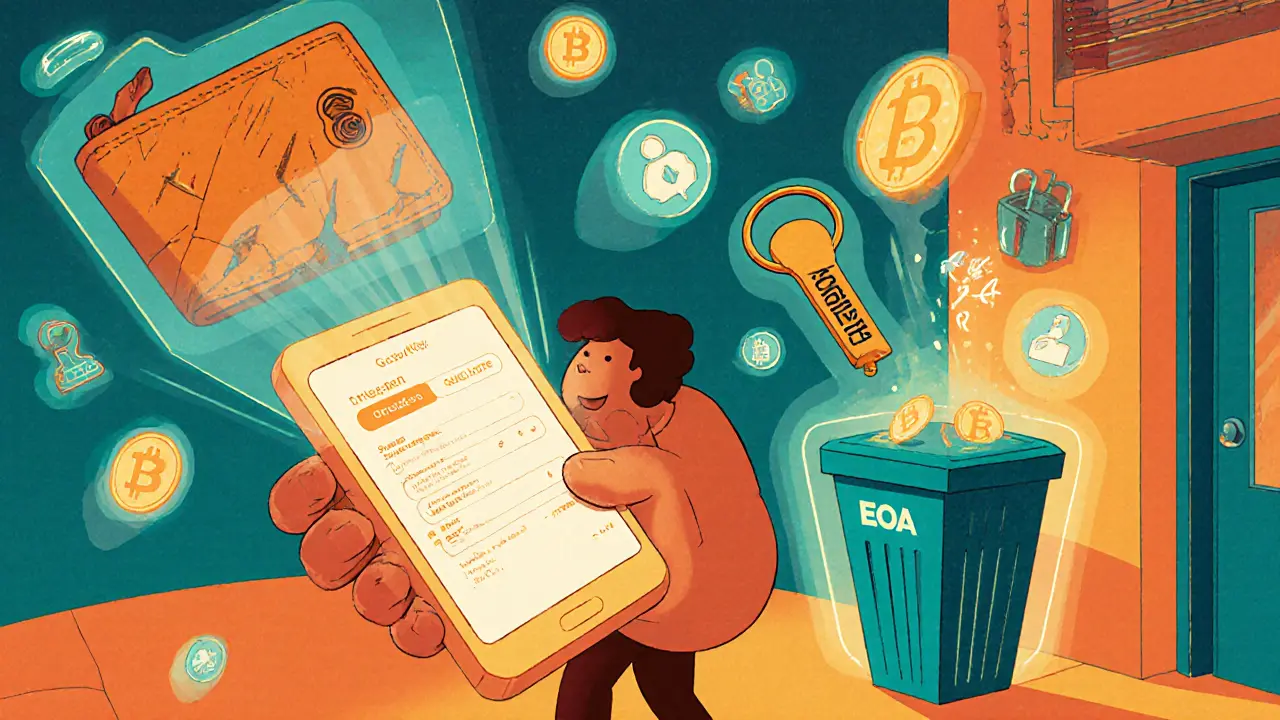
Account abstraction replaces fragile private key wallets with smart, programmable wallets that offer gasless transactions, social recovery, and multi-signature security-making blockchain accessible to everyone.
More