Governance Token Voting: How Crypto Communities Make Decisions
When you hold a governance token, a digital asset that gives you the right to vote on changes to a blockchain project. Also known as DAO token, it’s not just a store of value—it’s your ballot in a decentralized system where no CEO makes the final call. This isn’t theory. It’s how Uniswap, Aave, and Compound actually update their protocols. If you own these tokens, you vote on fee structures, treasury spending, upgrades—even whether the project should shut down. No middleman. No approval from a board. Just code, votes, and outcomes.
But here’s the catch: not all votes are equal. Big holders with millions of tokens can swing decisions, while small holders often get ignored. Some projects try to fix this with quadratic voting or delegation systems, but most still favor whales. And when votes fail? Projects stall. Treasury funds get locked. Developers quit. You’ve seen it happen with failed DAOs where 80% of voters didn’t show up, and a tiny group pushed through a risky change nobody wanted. Governance token voting only works if people care enough to vote—and if the system is designed to stop abuse.
It’s not just about voting. It’s about DAO governance, the structure behind how decentralized organizations run without traditional leadership. That includes how proposals are submitted, how long voting lasts, what majority is needed, and who can even vote. Some systems let you delegate your vote to someone else—like a trusted community member—so you don’t have to track every proposal. Others lock your tokens for a period to prove you’re in it for the long haul. And then there’s the real-world side: token holder rights, the legal gray zone around whether voting power equals ownership or just access. In most cases, you don’t own the code, the team, or the revenue. You just get a say. That’s fine—until the project turns into a scam and your vote means nothing.
What you’ll find below are real stories of governance in action. Some projects used voting to fix broken systems. Others used it to push through shady deals. You’ll see how Bit2Me tried to reward voters with airdrops, how StarSharks collapsed after voters lost interest, and how Bybit’s exchange rules quietly override on-chain votes. This isn’t about idealism. It’s about power, incentives, and what happens when you put control in the hands of people who might not even know how to use it.
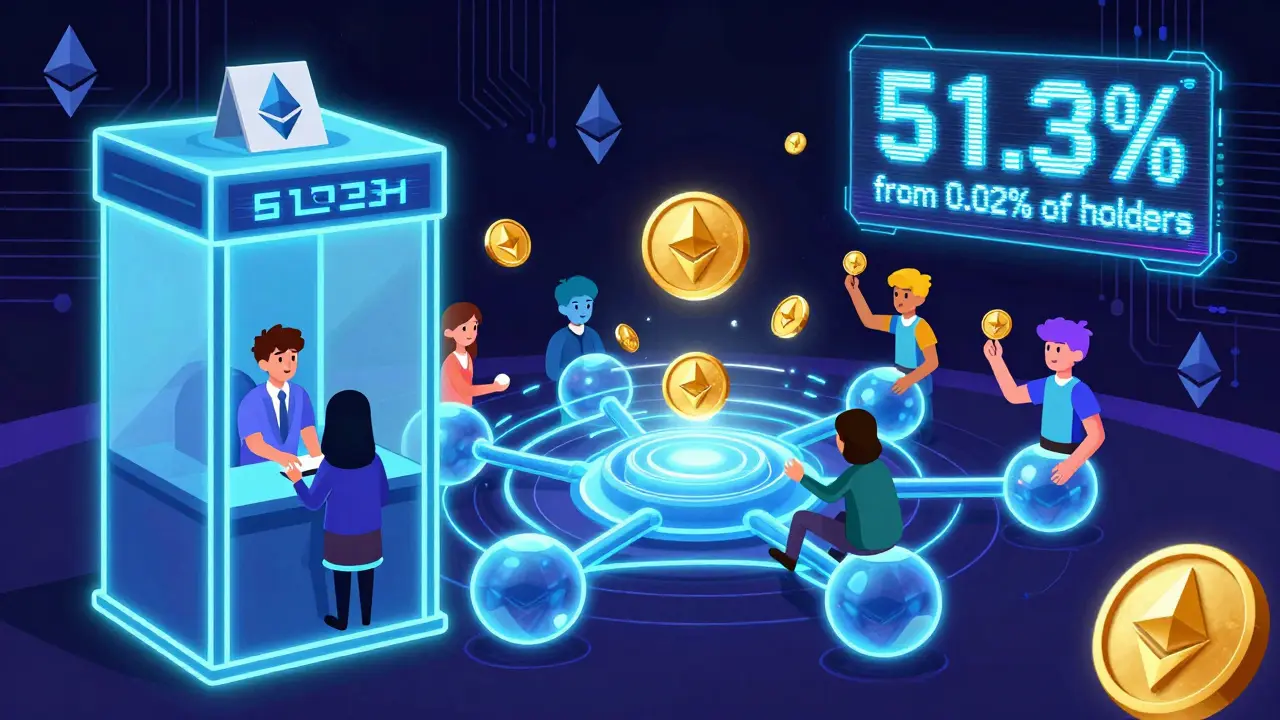
Governance token systems let token holders vote on blockchain protocol changes, but most use flawed models that favor wealthy holders. Learn how token-based, quadratic, liquid, and other voting mechanisms work-and what’s being done to fix them.
More