Let'sBit shutdown: What happened and why it matters for crypto users
When Let'sBit, a crypto exchange that promised fast trades and low fees but vanished without notice in 2024 disappeared, it wasn’t just another website going offline. It was a real-world example of how easily users can lose access to their funds when exchanges lack transparency, regulation, or real accountability. Let'sBit wasn’t a giant like Binance or Coinbase—it was a small platform targeting new traders with flashy ads and fake testimonials. But its collapse followed the same script as BEPSwap, the first DEX on Binance Smart Chain that vanished in 2021 with no warning, and FEAR Play2Earn, an NFT airdrop that promised rewards but never launched a game. These aren’t outliers. They’re symptoms of a crypto ecosystem still full of low-effort projects that vanish once they collect enough money.
What makes Let'sBit’s shutdown dangerous isn’t just that it disappeared—it’s that users had no way to recover their assets. No customer support, no public statement, no refund process. This is the same pattern seen in exchanges banned in India for failing FIU compliance, or in Myanmar where trading crypto leads to bank account closures. The difference? Let'sBit didn’t get shut down by regulators—it just gave up. And that’s more common than you think. Many small exchanges operate like pop-up shops: they build a website, run a marketing campaign, collect deposits, and then quietly disappear before anyone notices. The Vital Network (VITAL), a crypto project with zero trading volume and a market cap under $1,000, followed the same path. No one called it a scam. It just stopped existing.
So what should you do? First, never put money into an exchange that doesn’t clearly list its legal registration, team members, or audit history. Second, avoid platforms that rely on hype, not hardware—like those promising free NFTs or guaranteed returns. Third, keep your funds in self-custody whenever possible. You don’t need a third party to trade. Tools like Uniswap, a decentralized exchange that lets you swap tokens without trusting a company, give you control. If an exchange vanishes, your crypto stays safe in your wallet. Let'sBit’s shutdown isn’t just a cautionary tale—it’s a reminder that in crypto, you’re either your own bank, or you’re trusting someone who might not show up tomorrow.
Below, you’ll find real case studies of crypto projects that vanished, scams that looked real, and exchanges that failed users. Each one teaches you how to spot the warning signs before it’s too late.
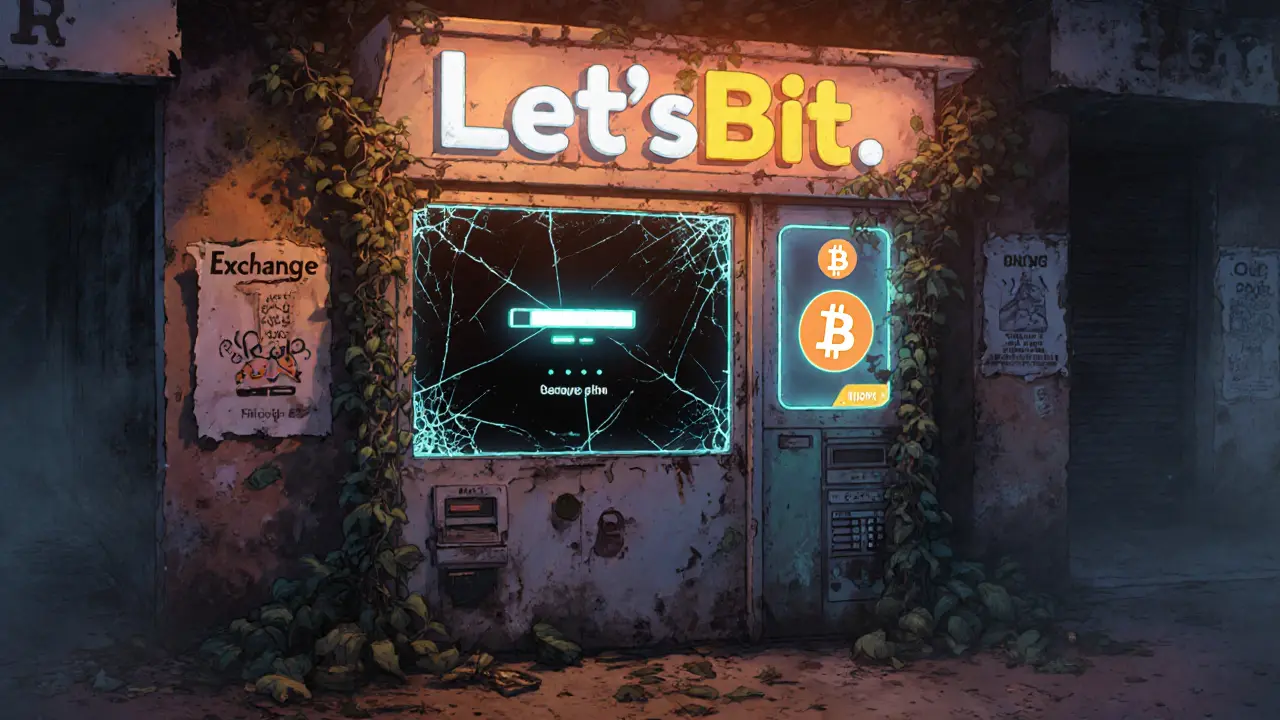
Let'sBit was once promoted as a Latin American crypto exchange, but as of 2025, it's completely inactive. No trading, no support, no app. Don't risk your funds - use proven alternatives like Ripio or Bitso instead.
More