Self-Sovereign Identity: Own Your Digital Identity Without Middlemen
When you log into a website, sign up for an exchange, or claim an airdrop, you’re giving away pieces of yourself—your email, phone number, ID documents, even your behavior—to companies that don’t have to protect it. Self-sovereign identity, a system where you own and control your digital identity without relying on centralized authorities. Also known as decentralized identity, it flips the script: instead of proving who you are to a company, you prove it directly using your own encrypted keys. This isn’t theory. It’s the backbone of next-gen wallets, private airdrops, and secure blockchain interactions.
Think of your digital identity like a physical wallet. Right now, you hand over your driver’s license every time you want to open a bank account. With decentralized identity, a system that uses blockchain and cryptographic proofs to verify identity without storing personal data on servers, you carry only what you need—like a digital passport you can show without revealing your birthdate or address. Blockchain identity, a type of digital identity anchored to a public blockchain where users hold their credentials in secure wallets makes this possible. You don’t need a government or a tech giant to validate you. Your wallet does. And tools like account abstraction, a smart contract-based wallet system that replaces fragile private keys with customizable security rules are making it easier than ever to manage without losing control.
Why does this matter for crypto? Because every time you trade on an exchange, join a DAO, or claim an NFT airdrop, you’re tied to a digital trail. If that exchange gets hacked—or shut down like Let’sBit or BEPSwap—you lose access. But with self-sovereign identity, your credentials stay with you. No one can freeze them. No one can delete them. You’re not a customer. You’re the owner. That’s why projects like OneRare and Unbound Finance are starting to explore identity-based rewards: if you prove you’re real without handing over your SSN, you get access. And if you’re in India, Myanmar, or Portugal, where regulations are shifting fast, this isn’t just convenient—it’s survival.
What you’ll find here aren’t just articles about identity. They’re real-world case studies: how account abstraction makes wallets safer, why dead projects like Vital Network failed because they didn’t trust users with their own data, and how NFT ownership verification ties into your right to control your digital footprint. This is the quiet revolution behind every secure crypto interaction. You’re not just trading tokens—you’re reclaiming your digital self.
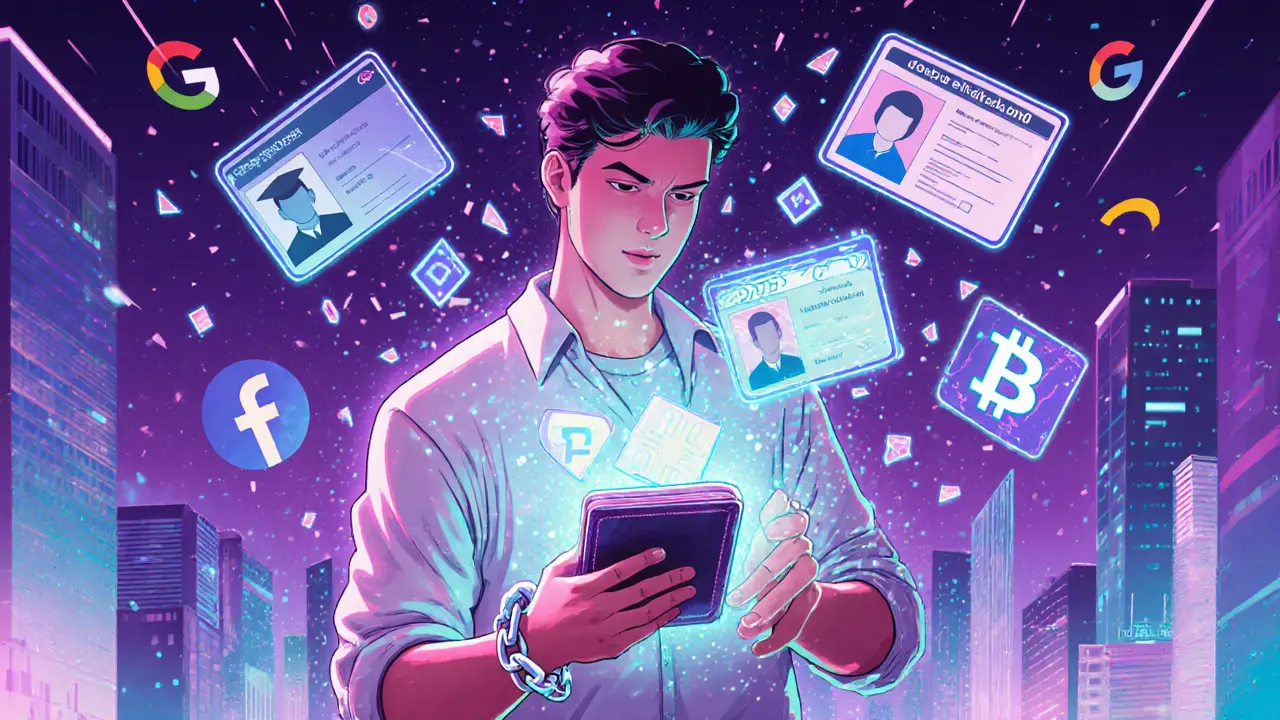
Self-sovereign identity on blockchain lets you own and control your digital identity without relying on corporations. Learn how DIDs, verifiable credentials, and blockchain work together to give you privacy, security, and real control over your data.
More