StarSharks tokenomics: How the game's economy really works and what it means for players
When you hear StarSharks tokenomics, the economic system behind the StarSharks play-to-earn game that ties Shark NFTs, $SSS tokens, and in-game rewards into a single loop. Also known as crypto game economy, it's not just about earning tokens—it's about understanding how scarcity, utility, and player behavior shape real value in a blockchain game. Most players think StarSharks is just another NFT game where you click, earn, and cash out. But the real story is deeper: every Shark NFT you own has a role in the economy, and every $SSS token you hold is tied to actions that keep the whole system running.
The core of StarSharks tokenomics is built on three things: Shark NFTs, unique digital creatures with different rarity tiers that determine your earning potential and access to game modes, $SSS tokens, the in-game currency used for upgrades, breeding, and staking, and staking rewards, the mechanism that locks up tokens to reduce supply and reward long-term players. These aren’t separate features—they’re connected. If you breed a rare Shark, you spend $SSS. That $SSS gets burned or redistributed, which affects token supply. Lower supply, higher demand. Simple math, but most players never track it.
What makes StarSharks different from other crypto games is that its economy was designed to survive beyond hype. Unlike meme tokens that crash when the community leaves, StarSharks ties rewards to actual gameplay: racing, battling, and exploring. Your NFT isn’t just a picture—it’s a tool. And if you don’t use it, you don’t earn. The system punishes passive holding. That’s why some players quit after a few months: they didn’t realize earning wasn’t automatic. Others who studied the tokenomics stayed, learned when to stake, when to sell, and how to upgrade their Sharks for maximum return. This isn’t luck. It’s strategy.
You’ll find posts here that break down exactly how $SSS distribution works, what happens when new Sharks are minted, and why the game’s burn rate matters more than its price chart. You’ll see real examples of players who turned small NFTs into steady income—and others who lost everything by ignoring the rules. There’s no magic formula. Just clear logic. And if you understand how the pieces fit together, you’re not just playing a game—you’re managing a small digital economy.
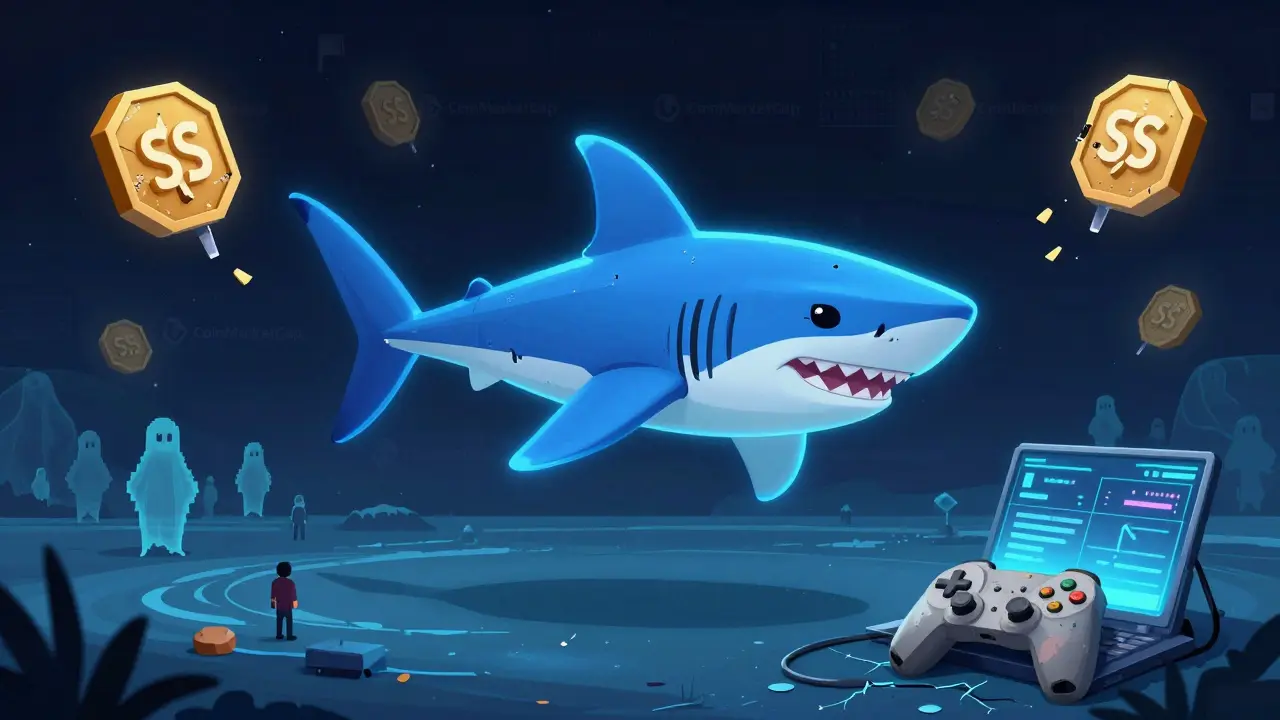
StarSharks (SSS) had no official airdrop with CoinMarketCap. The project collapsed after a 99.66% price drop, with no active development, zero liquidity, and abandoned gameplay. What's left? A dead token and fading NFTs.
More