Traditional Blockchain Accounts: What They Are and Why They Still Matter
When you hold crypto, you’re not storing it in a bank—you’re holding a traditional blockchain account, a cryptographic pair of public and private keys that prove ownership on a public ledger. Also known as wallet addresses, these accounts don’t have passwords or customer service—you control everything, or you lose everything. There’s no reset button. No recovery email. If you lose your private key, your coins are gone forever. That’s the trade-off for true ownership.
These accounts work because of public key cryptography, a system where one key encrypts data and another decrypts it. Your public key is your crypto address—everyone can see it, send you money, and verify your transactions. Your private key is the only thing that lets you spend it. No middleman. No bank. Just math. This is why self-custody, the practice of holding your own keys instead of trusting an exchange is so important. If you keep your crypto on Binance or Coinbase, you don’t actually own the account—you own a ledger entry in their database. Real ownership means you hold the keys.
Most of the posts here deal with what happens when things go wrong: exchanges vanish, airdrops disappear, or governments shut down accounts. But behind every one of those stories is a traditional blockchain account that either got compromised, ignored, or misunderstood. Whether it’s verifying NFT ownership on Etherscan, avoiding scams on dead projects like BEPSwap, or understanding why Myanmar bans crypto entirely, it all comes down to who controls the keys. If you don’t understand how these accounts work, you’re not trading crypto—you’re gambling with someone else’s system.
There’s no magic here. No AI. No secret algorithm. Just two strings of letters and numbers—one public, one private. Yet millions lose money because they treat it like a password they can guess or a username they can recover. The posts below show real cases: failed airdrops, dead exchanges, regulatory crackdowns—all rooted in how people handle or misunderstand these basic accounts. You’ll see what happens when someone forgets their key, trusts a scammer with their seed phrase, or assumes an exchange is safe. You’ll also learn how to check ownership, spot fake claims, and protect yourself. This isn’t theory. It’s what’s happening right now.
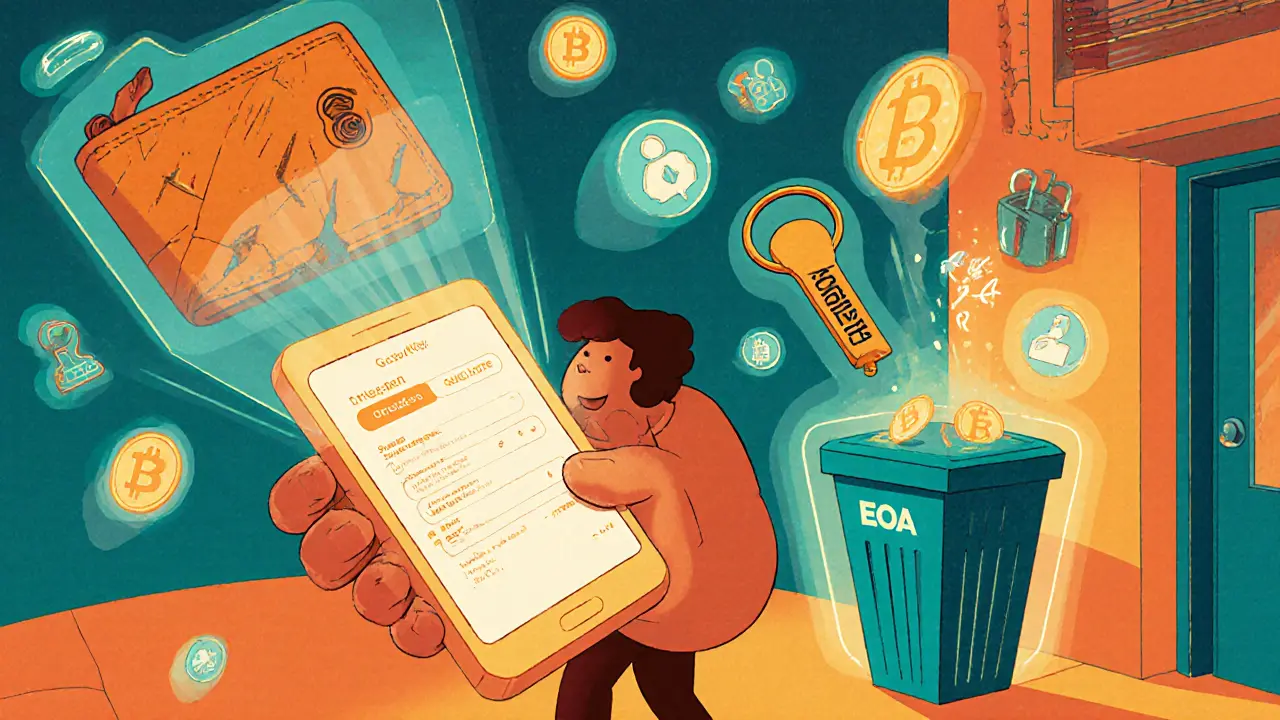
Account abstraction replaces fragile private key wallets with smart, programmable wallets that offer gasless transactions, social recovery, and multi-signature security-making blockchain accessible to everyone.
More