USDT Illegal in Myanmar: What Really Happened and Why It Matters
When USDT, a stablecoin pegged to the U.S. dollar and widely used for cross-border transfers became the go-to currency for underground transactions in Myanmar, regulators didn’t just crack down—they shut it down. In early 2022, Myanmar’s Central Bank declared USDT illegal after evidence showed it was being used to fund armed groups, launder drug money, and bypass international sanctions. This wasn’t a rumor. It was a formal ban backed by intercepted wire transfers, seized wallets, and witness testimony from former exchange operators.
What made USDT so attractive to criminals in Myanmar? It’s fast, anonymous, and doesn’t need a bank. Unlike traditional banking, which requires ID and leaves a paper trail, USDT moves across borders in seconds through wallets controlled by private keys. Criminals bought it on peer-to-peer platforms like LocalBitcoins and Paxful, then used it to pay mercenaries, buy weapons, and move cash out of the country. The government’s response was brutal: they froze bank accounts linked to crypto, raided homes where crypto mining rigs were found, and arrested anyone caught holding more than $500 in USDT. By mid-2023, even legitimate users—like farmers selling crops to Thai buyers—found themselves unable to receive payments because banks refused to touch any transaction with crypto traces.
This wasn’t just about crime. It was about control. Myanmar’s military junta has always feared losing power over money. When people started using USDT to send remittances from Thailand back home, bypassing state-run currency controls, it became a threat to their authority. The regime didn’t care if it hurt ordinary people—they cared that people could move money without permission. So they made crypto illegal, not because it was inherently bad, but because it couldn’t be monitored. The result? A black market for crypto hardware, VPNs, and burner wallets exploded. People still use USDT—but now they do it in the dark, with extreme risk.
And here’s the twist: the ban didn’t kill crypto in Myanmar. It made it smarter. Today, users trade USDT through encrypted Telegram groups, barter it for gold or rice, and use it in offline peer-to-peer swaps. Some even use it to pay for medical supplies smuggled across the border. The government may have outlawed it, but they haven’t stopped it. The real lesson? When you ban a tool people need, you don’t eliminate the problem—you just push it underground.
What you’ll find below are real stories from people caught in the middle—traders who lost everything, developers who built workarounds, and investigators who tracked the money. These aren’t hypotheticals. These are cases where someone’s life changed because of a single transaction in USDT. Some of these posts expose scams pretending to be legal exchanges. Others show how local communities adapted. And one even reveals how a Myanmar farmer used USDT to save his family after the banks froze his account. This isn’t about crypto theory. It’s about survival, control, and what happens when money becomes a weapon.
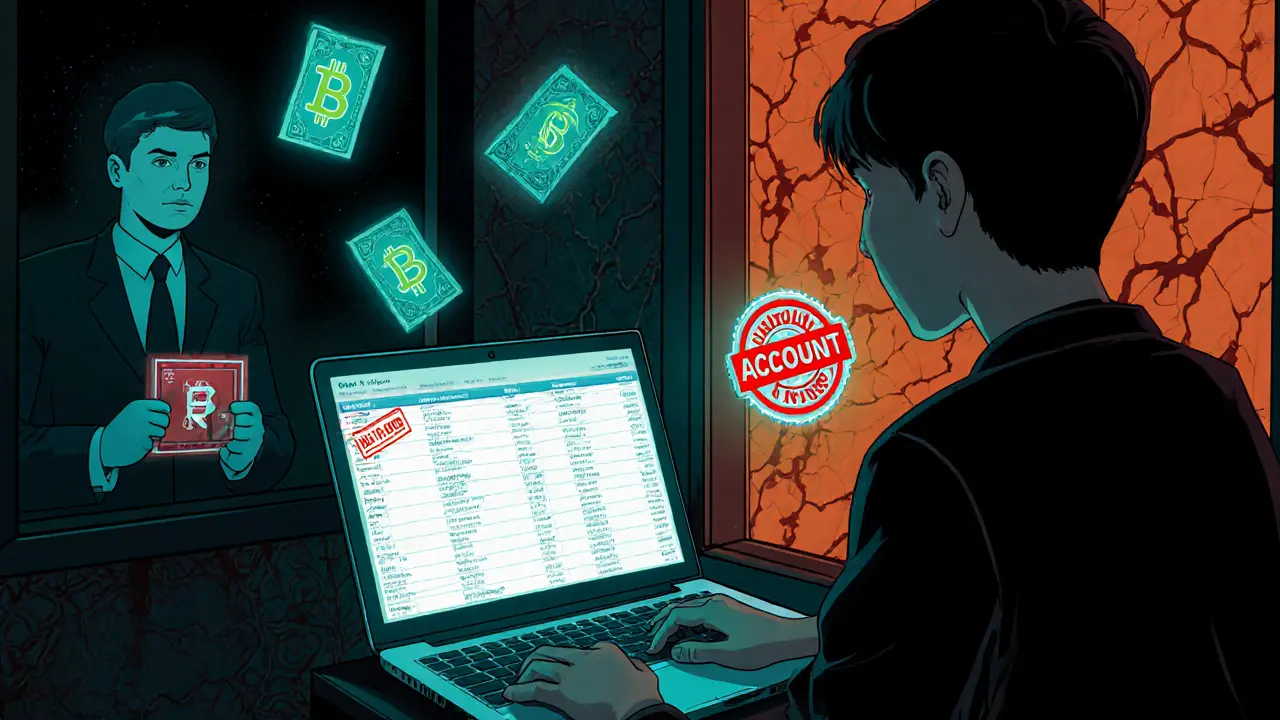
Myanmar enforces strict crypto bans with immediate bank account closures, fines, and jail time. USDT, Bitcoin, and other digital currencies are illegal, and enforcement is intensifying as the government prepares to launch its own digital currency.
More