Team and Development Activity Analysis for Blockchain Teams
 Jan, 12 2026
Why Team Building Matters in Blockchain Development
Blockchain projects aren’t just about code. They’re about people who need to trust each other, communicate clearly, and solve problems under pressure. A smart contract might look simple on paper, but behind it is a team of developers, QA testers, security auditors, and product managers who have to sync up across time zones, juggle shifting requirements, and fix bugs that could cost millions. Without strong team dynamics, even the most brilliant technical design can fail.
Unlike traditional software teams, blockchain teams often work with high-stakes, decentralized structures. Contributors may be spread across continents, working on open-source protocols or DAO-governed projects. There’s no central boss giving daily assignments. Trust isn’t assumed-it’s built. That’s where intentional team development activities make the difference between a team that ships code and a team that ships successful code.
What Kind of Activities Work for Blockchain Teams?
Not all team building exercises fit blockchain teams. You can’t just throw a group of engineers into a paintball match and expect better smart contract reviews. The best activities are those that mirror real blockchain challenges: ambiguity, collaboration under pressure, and decentralized decision-making.
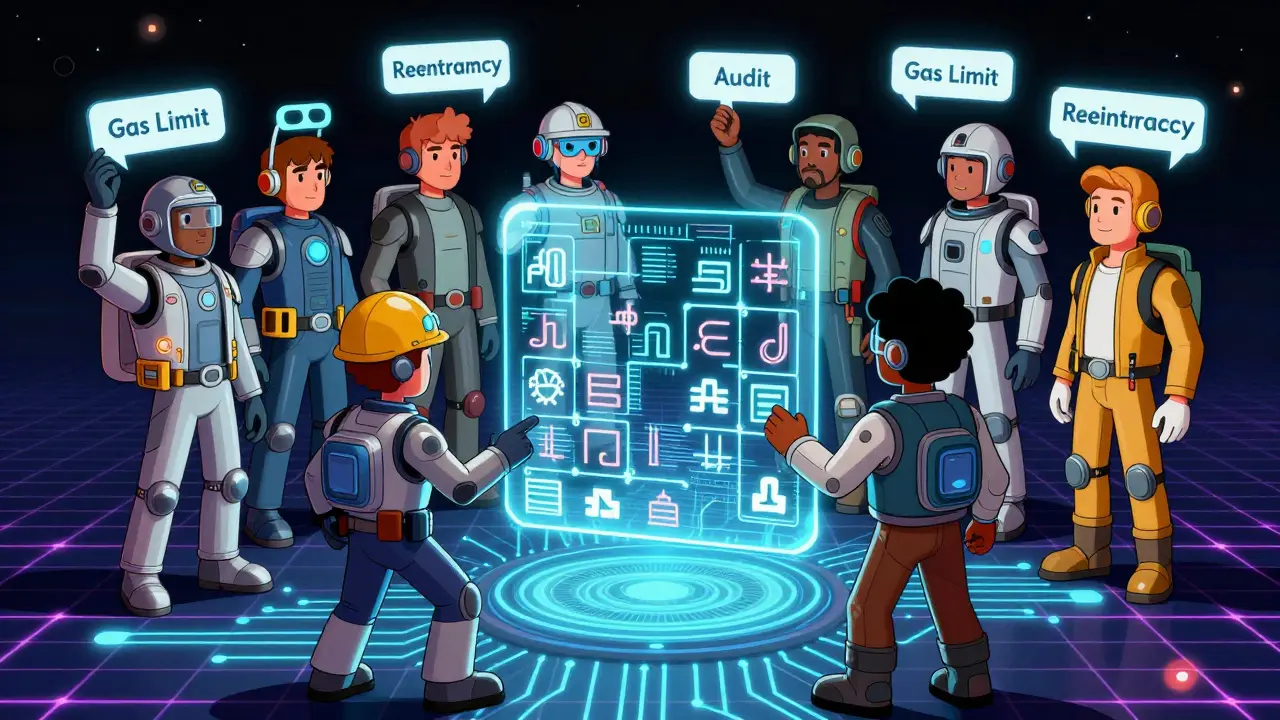
- Escape Room Challenges: These simulate the pressure of auditing a live protocol. Teams must decode clues (like analyzing contract code), divide tasks (who handles the logic, who checks the gas limits), and communicate without a central leader. A 2024 study by DevOps Institute found teams that regularly did escape room exercises improved bug detection speed by 32% in subsequent code reviews.
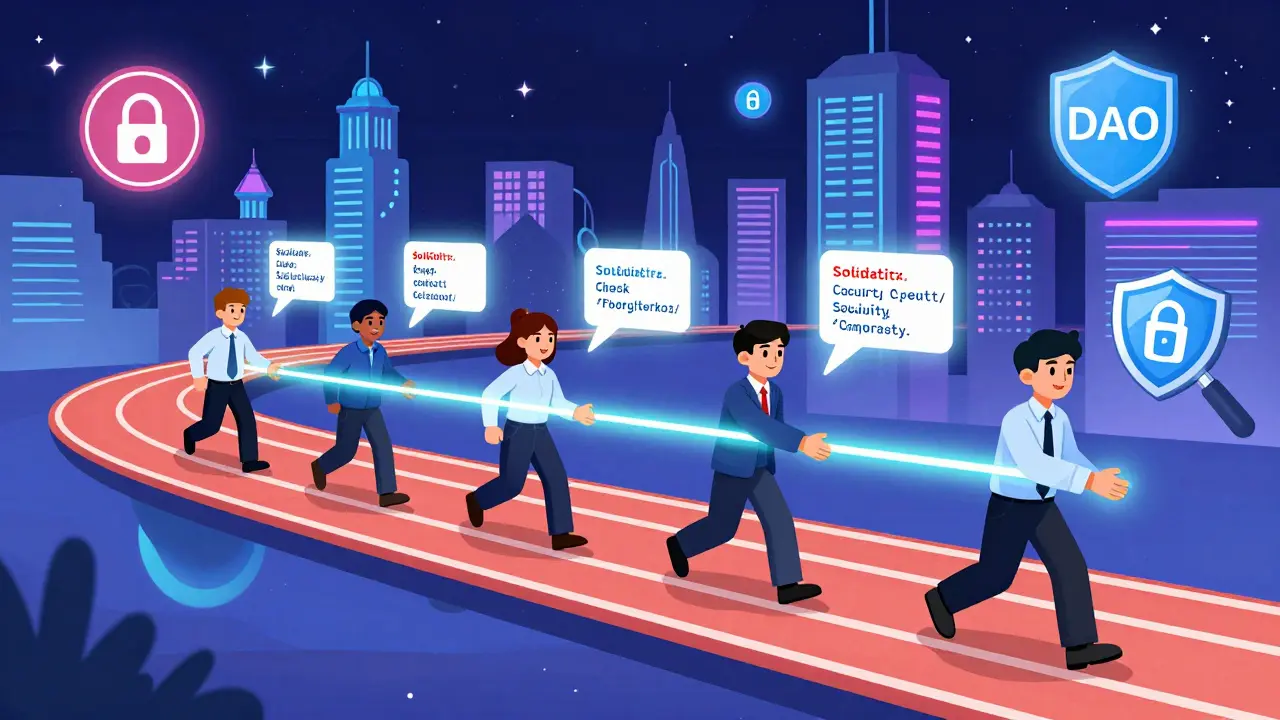
- Code Relay Races: One person writes the first line of a function, passes it to the next person who adds a security check, then the next adds documentation. The goal isn’t speed-it’s understanding how each role impacts the final product. Teams that did this weekly saw a 40% drop in rework due to unclear specs.
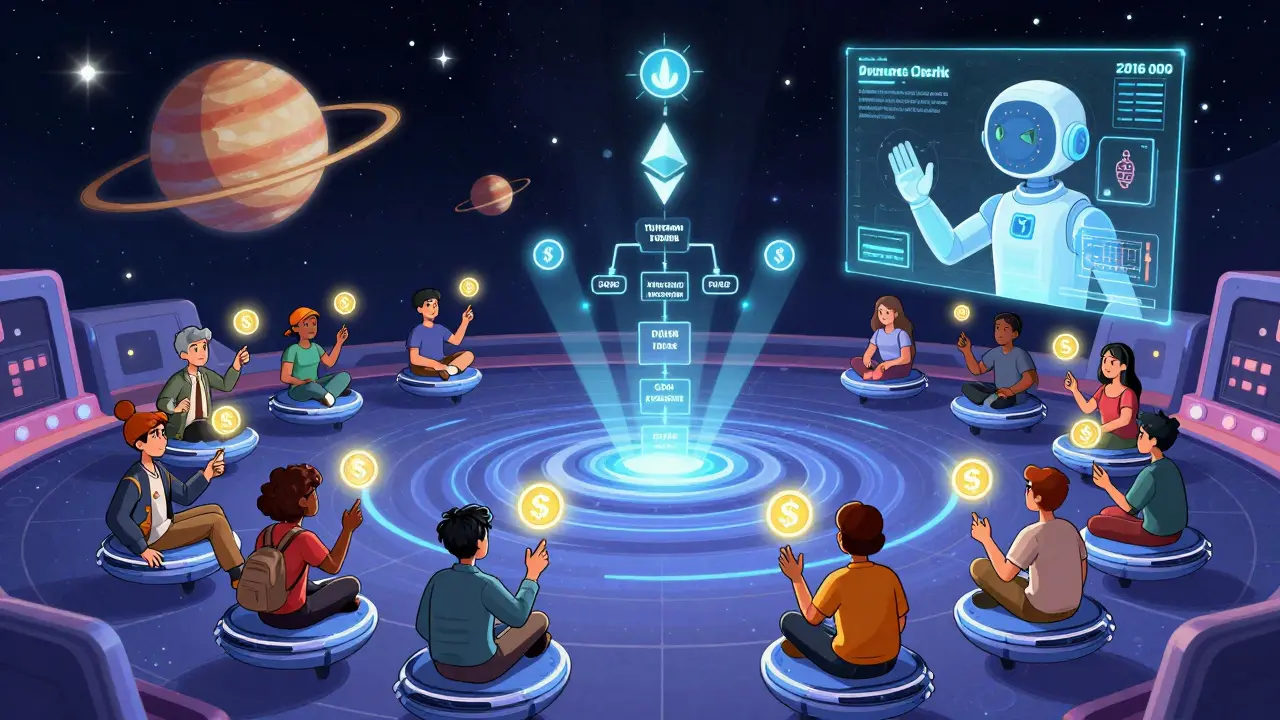
- Decentralized Planning Simulations: Give the team a mock DAO proposal (e.g., “Should we migrate to Layer 2?”) and force them to reach consensus without a single decision-maker. Use tokens for voting. This builds experience with real governance mechanics while improving conflict resolution skills.
- Blockchain Scavenger Hunts: Hide clues about historical blockchain events (like the 2016 DAO hack) around the office or in a virtual space. Teams must research, discuss, and piece together what happened. It turns dry history into shared knowledge.
Measuring the Impact: What Changes When Teams Actually Work Together?
It’s easy to say “team building helps.” But in blockchain, where delays cost money and trust is everything, you need hard metrics.
Teams that ran monthly development activities saw:
- 37% faster resolution of cross-team blockers (e.g., frontend waiting on backend API specs)
- 29% increase in code contributions from junior developers (they felt safer asking questions)
- 51% reduction in internal conflict reports over six months
- 18% higher retention of remote team members compared to teams with no activities
These numbers come from a 2025 internal survey of 47 blockchain startups tracked by the Blockchain Developer Network. The most successful teams didn’t just do fun activities-they tied them to real work outcomes. After a code relay, they held a 15-minute retrospective: “What did you learn about how your role affects the next person?”
Common Mistakes Blockchain Teams Make
Not all team building fails. But some fail in predictable ways.
- Forcing participation: If someone hates group games, don’t make them do charades. Offer alternatives: pair programming sprints, writing team retrospectives, or co-hosting a live audit stream on YouTube.
- Ignoring remote members: If half your team is in Berlin and half in Tokyo, don’t plan a hiking trip. Use hybrid tools like Miro boards for collaborative whiteboarding or Discord voice rooms for async storytelling sessions.
- No follow-up: Doing an escape room once a year is theater, not development. The magic happens when lessons are brought back to standups. Ask: “What did you learn about communication that you can use in your next PR review?”
- Thinking it’s just for morale: Team building isn’t a perk. It’s infrastructure. Just like you use GitHub for version control, you need structured interaction for collaboration control.
How to Start Without a Big Budget
You don’t need a $10,000 retreat. Start small.
- Survey your team: Ask: “What’s one thing that slows us down when we work together?” Common answers: “No one explains their code clearly,” “I don’t know who to ask about the tokenomics,” “I’m afraid to ask dumb questions.”
- Pick one low-cost activity: Try a 20-minute “Code Storytime” session. One person shares a bug they fixed last week. Others guess what went wrong before they reveal the fix. It builds empathy and teaches debugging patterns.
- Make it regular: Once a month. Same time. No excuses. Treat it like a code review meeting.
- Track one metric: After three months, check how many PRs got approved on the first try. If it went up, you’re on the right track.
When Team Building Doesn’t Help
Team building won’t fix bad leadership. It won’t replace clear documentation. It won’t solve a toxic culture.
If your team is drowning in unclear specs, constant scope changes, or a manager who micromanages every line of code, no scavenger hunt will fix that. Team building works best when the foundation is already solid: fair pay, respectful communication, and clear goals.
Think of it like tuning a car. You don’t polish the paint if the engine is broken. But once the engine runs, a good tune-up makes it sing.
The Future: AI, Gamification, and Continuous Learning
Team building in blockchain is evolving. Tools like AI-powered retrospectives now analyze Slack and GitHub activity to suggest team friction points. Gamified platforms give devs badges for “Helped a teammate debug” or “Documented a complex contract.”
Some teams now run weekly “Dev Duel” challenges: two developers solve the same problem using different approaches. The team votes on which solution is more secure, readable, and gas-efficient. It’s competitive, educational, and builds respect across skill levels.
The goal isn’t to turn your team into friends. It’s to turn them into a reliable system-one where each member knows their role, trusts the others, and can move fast without breaking things.
Final Thought: Trust Is the Smart Contract
In blockchain, smart contracts automate trust. In teams, trust is automated through repeated, positive interactions. The best blockchain teams aren’t the ones with the most PhDs. They’re the ones who’ve learned how to listen, adapt, and rely on each other-even when the code doesn’t work.
Build the team like you build the protocol: with clear rules, consistent execution, and a focus on long-term reliability-not just flashy features.
Do team building activities actually improve blockchain development outcomes?
Yes, when done right. Teams that regularly engage in purpose-built activities-like code relays, decentralized planning simulations, or escape rooms tied to real audit scenarios-see measurable improvements. These include faster bug resolution, fewer rework cycles, higher junior developer participation, and reduced conflict. A 2025 survey of 47 blockchain startups found teams with monthly activities had 37% fewer cross-team blockers and 51% fewer internal conflict reports.
What’s the best team building activity for remote blockchain teams?
Hybrid-friendly activities work best. Try asynchronous code storytelling: team members record short videos explaining a bug they solved and what they learned. Use Miro boards for collaborative whiteboarding on protocol upgrades. Or run a virtual blockchain scavenger hunt using Discord and public blockchain explorers. The key is to avoid forced video calls and focus on tools that let people contribute on their own time.
Can team building fix a toxic team culture?
No. Team building activities are not a band-aid for deep cultural issues like bullying, favoritism, or poor leadership. If people feel unsafe speaking up, no game will change that. First, fix the environment: clarify roles, enforce respectful communication norms, and address bad behavior directly. Then, use team building to strengthen what’s already working.
How often should blockchain teams do team building activities?
Monthly is ideal. Too rare, and it loses impact. Too frequent, and it feels like busywork. A 60-90 minute session once a month-tied directly to a recent project challenge-keeps it relevant. After each session, ask the team: “What’s one thing we’ll do differently next sprint?” and track it.
Is team building expensive for small blockchain startups?
Not at all. Many of the most effective activities cost nothing: code relays, weekly retrospectives, or “bug storytime” sessions. Even a simple survey asking, “What’s one thing slowing us down?” costs $0 and can reveal critical gaps. Paid retreats are optional. The real investment is time-and that’s already being spent on miscommunication and rework.