VASP Registration in United Kingdom for Crypto Businesses: What You Need to Know in 2026
 Jan, 8 2026
If you're running a crypto business and want to reach customers in the UK, you can't just set up a website and start marketing. Since September 1, 2023, the Financial Conduct Authority (FCA) has required every virtual asset service provider (VASP) operating in or targeting UK customers to register. This isn't a suggestion. It's a legal requirement. Skip it, and you risk fines, shutdowns, or even criminal charges.
Who Exactly Needs to Register?
The FCA doesn't just want businesses with offices in London. If your company advertises crypto services to UK residents-whether through social media, Google ads, or a .co.uk domain-you need to register. It doesn't matter if your servers are in Estonia or your team is in Singapore. If you're marketing to UK consumers, the FCA considers you doing business in the UK. Here’s what triggers the requirement:- You offer crypto trading, exchange, or custody services to UK customers
- You operate crypto ATMs in the UK
- You have a UK-based office or team managing crypto operations
- You use UK-based payment processors or banking services
- You run ads targeting UK IP addresses or use UK languages
What Does the Registration Process Look Like?
Applying isn’t a form you fill out in 10 minutes. It’s a months-long process requiring serious preparation. You’ll submit everything through the FCA’s Connect portal, and your application will be assigned to a dedicated case officer. You need to provide:- Full corporate documentation (articles of incorporation, ownership structure, shareholder details)
- Proof of financial strength-bank statements, audited financials, and capital reserves showing you can absorb losses
- A detailed AML/CFT policy covering customer due diligence, transaction monitoring, and suspicious activity reporting
- Proof of cybersecurity measures-encryption protocols, access controls, incident response plans
- Organizational charts showing roles, responsibilities, and segregation of duties
- Background checks and Fit and Proper Tests for all directors and senior managers
Compliance Isn’t Optional-It’s Built In
Once registered, you’re not done. You’re now under ongoing supervision. The FCA expects you to:- Keep customer records for at least five years (eight years if the transaction involves higher risk)
- Report suspicious activity immediately to the National Crime Agency
- Continuously monitor transactions for unusual patterns-large transfers, rapid deposits and withdrawals, mixing services
- Separate client assets from your company’s funds at all times
- Update your policies every time regulations change
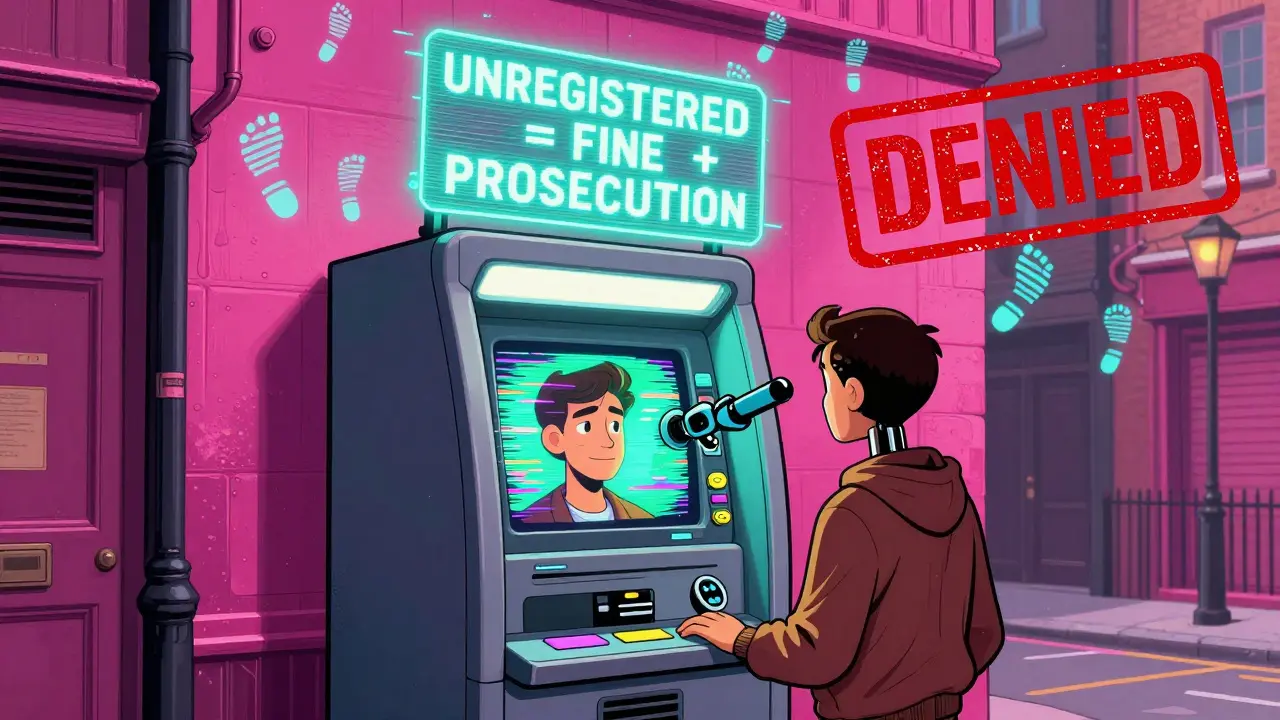
Why Do So Many Applications Get Rejected?
The rejection rate is high. In 2024, over 60% of initial applications were either withdrawn or turned down. Why?- Weak KYC systems: Using basic ID checks without verifying addresses or cross-referencing sanctions lists
- Insufficient capital: Companies applying with £50,000 in reserves when the FCA expects £100,000+ for medium-risk operations
- Missing documentation: Incomplete organizational charts, unsigned policies, outdated risk assessments
- No banking access: Banks still refuse to open accounts for crypto firms. If you can’t prove you have a working banking relationship, the FCA will question your viability
- Unqualified management: Founders with no financial compliance experience, no track record, or past regulatory issues
What Happens If You Don’t Register?
The FCA doesn’t just issue warnings. They take action.- They publish public warnings listing unregistered businesses on their website
- They can issue cease-and-desist orders to payment processors, forcing them to cut off your access
- They can freeze bank accounts linked to unregistered entities
- They can refer cases to the police for criminal prosecution
Can You Still Operate Without Registration?
Technically, yes-if you avoid UK customers entirely. But it’s harder than it sounds. If you block UK IPs, disable GBP payments, and remove all English-language content, you might avoid detection. But:- VPNs make IP blocking unreliable
- UK residents still find ways to access foreign platforms
- Advertising on global platforms like Google or Meta can trigger FCA scrutiny

What Are the Alternatives?
Some businesses try to register in other jurisdictions-Switzerland, Malta, Singapore-thinking that’s enough. But if you’re targeting the UK, that doesn’t protect you. The FCA doesn’t recognize foreign licenses. Only their own registration counts. The only real alternative is to partner with a registered VASP. For example, if you build a crypto wallet app but don’t want to handle compliance, you can white-label a service from an FCA-registered provider. You focus on product and marketing; they handle the legal side. This model is growing fast in the UK.What’s Next for Crypto Regulation in the UK?
The FCA isn’t slowing down. In autumn 2025, they plan to hold information sessions in Edinburgh and Manchester to help businesses understand evolving rules. Expect tighter rules on:- Stablecoins-likely to be treated like electronic money
- DeFi protocols-potential licensing for developers who act as intermediaries
- NFTs-if used for investment or trading, they may fall under VASP rules
How to Prepare for Registration
If you’re serious about entering the UK market, here’s your checklist:- Review the FCA’s official guidance on VASP registration (published September 2023)
- Hire a compliance expert with UK crypto experience-don’t rely on general lawyers
- Build a robust AML system with real-time transaction monitoring
- Secure a banking relationship with a UK bank that accepts crypto firms
- Prepare detailed documentation for every director and key employee
- Test your Travel Rule compliance system with simulated transfers
- Submit your application only when every document is perfect
Do I need to register if I only accept crypto payments for goods?
No, if you’re a merchant accepting crypto as payment for goods or services, you’re not considered a VASP. The FCA’s rules apply to businesses that exchange, trade, or custody crypto assets-not those that use crypto as a payment method. But if you convert crypto to fiat regularly or hold customer funds, you may cross into regulated territory.
How long does the FCA take to approve a VASP application?
There’s no fixed timeline. Simple applications with clean documentation can be approved in 3-6 months. Complex ones, especially those with international ownership or weak compliance systems, can take over a year. The FCA doesn’t guarantee timelines, and delays are common. The key is submitting a flawless application the first time.
Can I operate while my application is under review?
No. You cannot legally offer crypto services to UK customers until your registration is approved. Operating without approval-even with a pending application-is a criminal offense. Many businesses delay marketing until approval is granted to avoid penalties.
What happens if my registration is denied?
You’ll receive a detailed letter explaining why. You can appeal or reapply after six months, but you must fix every issue the FCA raised. Reapplying without addressing the feedback almost always leads to another rejection. Many companies hire regulatory consultants to help rebuild their application.
Are there any fees for VASP registration?
Yes. The FCA charges an application fee of £5,000 for small firms and up to £25,000 for larger or complex operations. There are also annual fees based on revenue and risk level, ranging from £2,000 to over £100,000. These fees are non-refundable, even if your application is denied.