What is Arbidex (ABX) Crypto? Token Utility and Market Reality
 Oct, 30 2026
Imagine finding the same pair of sneakers for $50 on one website and $70 on another. You buy low, sell high, and pocket the difference. That is crypto arbitrage. It sounds like free money, right? But doing it manually is a nightmare. You need accounts on five different exchanges, you have to verify your identity five times, and by the time you click "buy," the price has already moved.
This is exactly the problem Arbidex tried to solve. Launched during the wild west days of 2018, Arbidex wasn't just another coin; it was a platform designed to automate this messy process. The native token, Arbidex (ABX), served as the key to unlock these automated features. But if you are looking at the charts today, you might be wondering: what actually happened? Is ABX still relevant, or is it a relic of a less efficient market?
The Core Concept: Automated Cross-Exchange Arbitrage
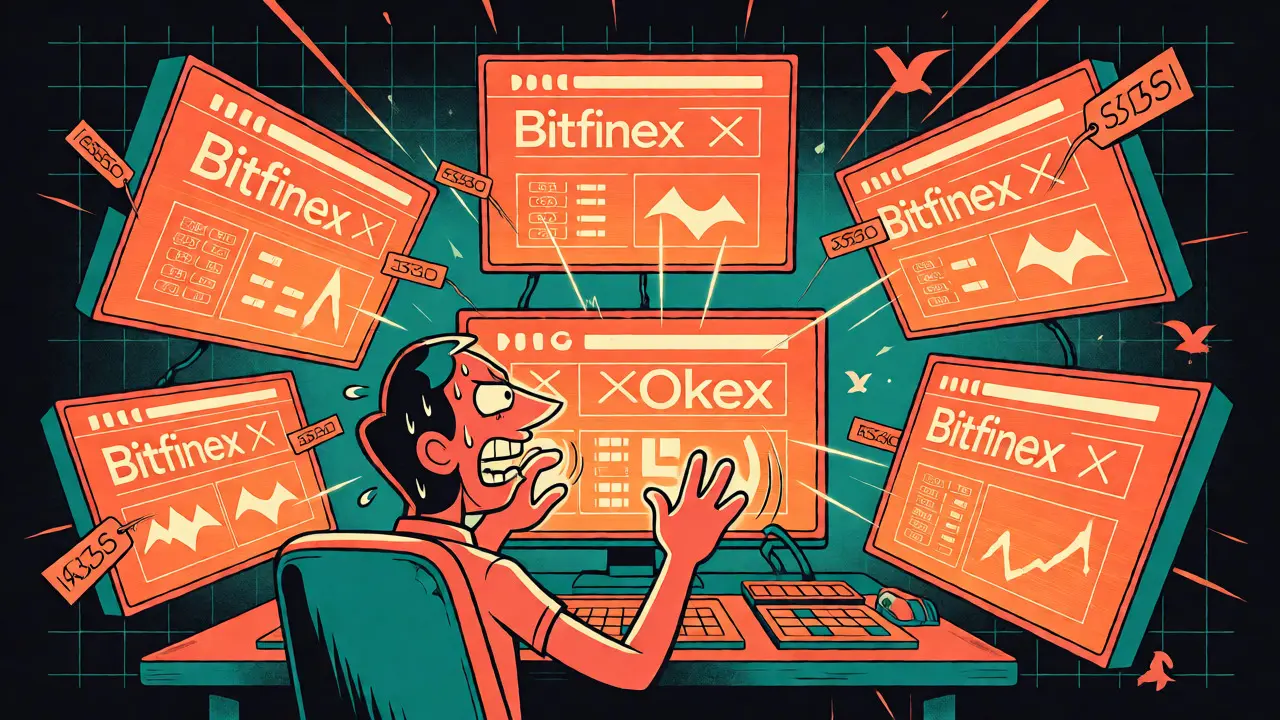
At its heart, Arbidex functioned as an intermediary trading platform. Instead of you logging into Bitfinex, then Okex, then Bittrex separately, Arbidex connected to all of them via API interfaces. Think of it as a central hub that watched prices across multiple exchanges simultaneously.
The system analyzed real-time asset prices at a staggering rate of 1,000 times per second. When it spotted a price discrepancy-say, Bitcoin was slightly cheaper on Exchange A than Exchange B-it automatically executed the trade. This speed advantage over manual trading was the main selling point. For traders, this meant capturing small profits thousands of times a day without staring at screens.
But here is where the utility token comes in. You couldn't just use the platform for free. ABX acts as the fuel for the Arbidex arbitrage engine. Holding ABX gave you specific perks:
- Reduced Commission Rates: Because Arbidex had bilateral agreements with exchanges, they could negotiate lower fees. If you held ABX, you passed those savings onto yourself.
- Higher Trade Limits: More tokens meant higher permissible deposit amounts and monthly trade limits.
- Access to Auto-Arbitrage: The fully automated robot feature was often gated behind token holdings.
This created a tiered service structure. The more ABX you held, the better your economic benefits. It was a classic utility model, but it relied heavily on the assumption that arbitrage opportunities would remain plentiful and profitable.
Technical Architecture and Exchange Partnerships
How did it actually work under the hood? Arbidex didn't hold your funds in a single vault initially; it acted as a bridge. By integrating with major players like Bitfinex, Okex, Bittrex, Poloniex, Huobi, and Quoine, it streamlined the user experience.
One of the biggest pain points for arbitrage traders is KYC (Know Your Customer). Normally, you have to upload your passport and proof of address to every single exchange. Arbidex introduced a consolidated KYC procedure. You verified once on Arbidex, and that verification allowed you to trade across their partner network. This reduced operational friction significantly.
The business model was straightforward: capture the spread, take a small margin, and pass the rest to the user. By securing preferential commission rates from exchanges through volume commitments, Arbidex could offer lower fees than individual exchanges charged directly. For frequent traders, this fee reduction was often more valuable than the arbitrage profit itself.
The ABX Tokenomics: Supply and Utility
Let's look at the numbers. ABX was issued as an ERC-20 token on the Ethereum blockchain. This choice made sense in 2018, as Ethereum was the dominant platform for smart contracts and ICOs.
| Metric | Value | Context |
|---|---|---|
| Total Supply | 25,000,000 ABX | Fixed cap, no inflation. |
| Blockchain | Ethereum (ERC-20) | Standard compatibility. |
| All-Time High | $0.1357 | Reached during the 2018 bull run. |
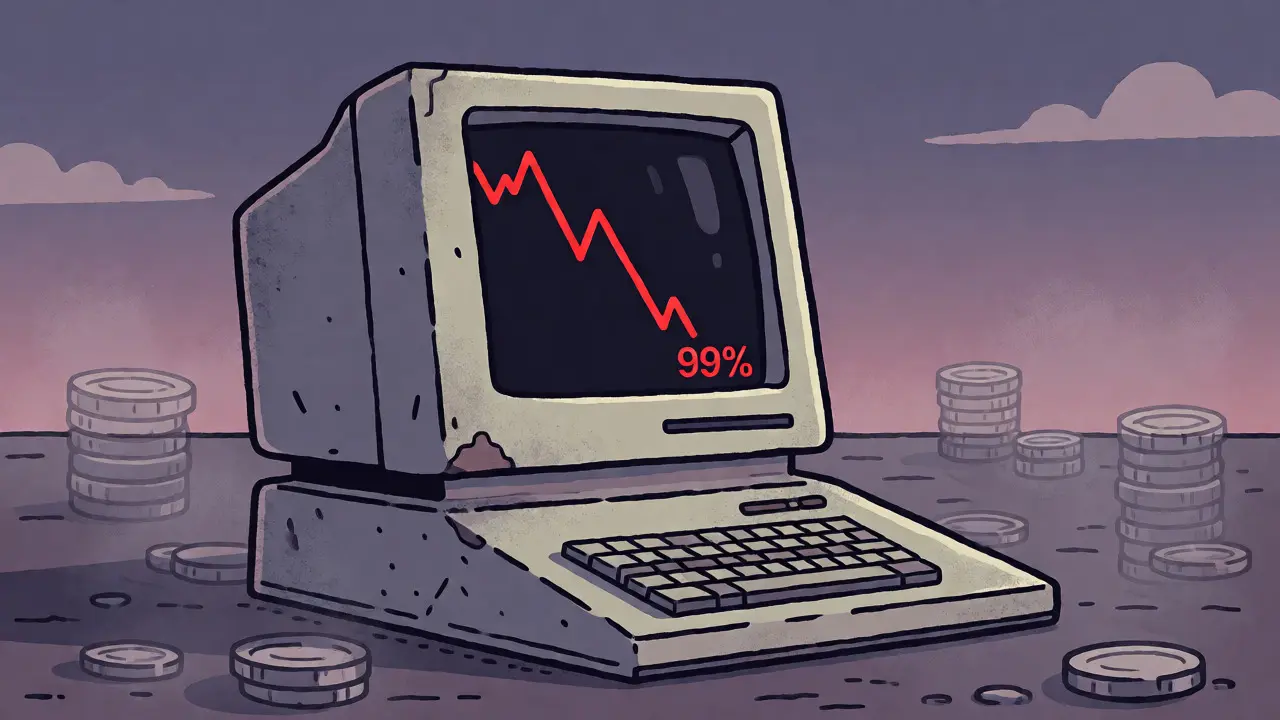
| Recent Price | ~$0.000474 | A drop of over 99% from peak. |
However, there is a strange data point floating around. Some liquidity trackers reported 0 tokens in circulation despite the fixed supply of 25 million. This usually indicates either a reporting error, extreme illiquidity, or that the vast majority of tokens were locked, burned, or held by insiders with no active trading. For a new investor, seeing "zero circulating supply" on a tracker is a red flag that requires digging deeper before buying.

Market Performance: From Boom to Bust
If you bought ABX in late 2018, you likely saw excitement. Coinmarketcap data showed a 120% price increase for the token in October 2018. The hype was real. But fast forward to today, and the picture is grim.
As of recent data, ABX trades at roughly $0.000474. That is a 99.65% decline from its all-time high. Why such a massive crash? Two main reasons:
- Market Efficiency: In 2018, cryptocurrency markets were fragmented. Prices varied wildly between exchanges. Today, institutional bots and high-frequency trading have narrowed these gaps. Pure arbitrage opportunities are rarer and thinner.
- Liquidity Crisis: With extremely low trading volume, ABX became hard to sell. Coinlore analysis noted that only 49.19% of trading days showed positive closing prices. The sentiment is classified as bearish, with resistance levels far above the current price.
Expert analysis cautions that lower liquidity equals higher risk. If you try to sell a large amount of ABX, you might move the price against yourself. The algorithmic predictions suggest potential long-term growth, perhaps reaching $1.12 in ten years, but this projection lacks strong support given the current lack of development news and community activity.
Is Arbidex Still Viable in 2026?
The crypto landscape has changed dramatically since Arbidex launched. Back then, the promise was to "unite all the world's crypto assets from different exchanges in one window." While that vision remains attractive, the competition has evolved.
Today, sophisticated institutional firms have direct connections to exchanges with ultra-low latency infrastructure. They don't need a retail-facing platform like Arbidex to catch spreads. Furthermore, many major exchanges now offer integrated futures and spot trading within their own ecosystems, reducing the need for cross-platform arbitrage tools.
There is also the issue of dormancy. Searches for recent updates, roadmaps, or active development commits yield little information. The last concrete temporal reference for significant activity was the 2018 price movement. Without active development or marketing, the platform risks becoming a zombie project-technically alive, but functionally dead.
Pros and Cons of Investing in ABX
If you are considering adding ABX to your portfolio, weigh these factors carefully:
- Pro - Low Entry Price: Trading fractions of a cent means you can buy a lot of tokens for very little capital.
- Pro - Historical Precedent: It survived the 2018 crash, showing some resilience compared to other altcoins that vanished completely.
- Con - Extreme Volatility Risk: With such low volume, price swings can be violent and unpredictable.
- Con - Lack of Transparency: Conflicting data on circulating supply and a lack of recent developer communication creates uncertainty.
- Con - Obsolete Model?: As markets mature, the gap between exchanges shrinks, potentially eroding the core value proposition of the platform.
Frequently Asked Questions
What is the primary use case for the ABX token?
The ABX token is a utility token used within the Arbidex ecosystem. Its primary functions include granting access to auto-arbitrage features, increasing permissible trade limits, and providing users with reduced commission rates on transactions executed through the platform.
Is Arbidex still actively developed?
Information regarding recent development activity is scarce. Most concrete references to platform activity date back to 2018. The lack of recent roadmap updates or community engagement suggests that the project may be dormant or operating with minimal public visibility.
Why did the price of ABX drop so significantly?
The price dropped due to a combination of factors including the maturation of crypto markets which reduced arbitrage opportunities, increased competition from institutional high-frequency traders, and extremely low liquidity leading to a loss of investor confidence.
Can I still trade ABX on major exchanges?
Trading volume for ABX is extremely low. While it may still be listed on some smaller exchanges or decentralized platforms, liquidity is poor. This means buying or selling large amounts may result in significant slippage.
What is the total supply of Arbidex tokens?
The total fixed supply of Arbidex (ABX) is 25,000,000 tokens. However, data on circulating supply varies, with some sources reporting near-zero circulation, indicating that most tokens may be locked or held by early investors.