What is Circuits of Value (COVAL) Crypto Coin? A Real-World Look at Its Use, Value, and Risks
 Dec, 14 2025
COVAL Transaction Cost Calculator
Calculate Your COVAL Transaction Costs
Based on article data: COVAL price $0.000443, Bitcoin fees $1-2.50, slow network speeds
Most people hear about Bitcoin, Ethereum, or Solana. But what about a coin like Circuits of Value (COVAL)? It’s not on Coinbase. You won’t find it on TikTok influencers’ lists. And yet, it’s been around since 2014 - older than most crypto projects still trading today. So why does it matter? And more importantly, should you care?
What Circuits of Value Actually Does
Circuits of Value isn’t just another altcoin trying to be the next Ethereum. It was built to solve a very specific problem: how do you own and manage digital assets from different blockchains in one place? Think of it like a digital vault that holds Bitcoin, Ethereum tokens, and NFTs - all at once. That’s the core idea behind Emblem Vault, the platform COVAL powers. The system works by letting users create a "vault" that bundles assets from multiple chains. Want to lock up your Ethereum-based NFT and your Bitcoin in one secure container? COVAL makes that possible. You pay a fee in COVAL tokens to create the vault, and then you can exchange or transfer those bundled assets across networks without having to manually move each one separately. It sounds useful, right? Especially if you own NFTs on different chains. But here’s the catch: it’s built on the Counterparty protocol, which runs on top of Bitcoin. That means every transaction has to go through Bitcoin’s slow, expensive network. If Bitcoin is congested, your vault creation or asset transfer can take hours - sometimes days. And you’re paying Bitcoin network fees on top of the COVAL fee. That’s not practical for anyone who moves assets regularly.How COVAL Works Technically
COVAL is a Proof-of-Work token mined using Bitcoin’s SHA-256 algorithm, just like Bitcoin itself. It’s not a standalone blockchain. That gives it security, but it also locks it into Bitcoin’s limitations. The total supply is nearly 1.79 billion COVAL tokens, with almost all of them already in circulation. There’s no hard cap, but new coins aren’t being added at any meaningful rate. The ecosystem uses two tokens: COVAL and FUEL. COVAL is the main token used to pay for vault creation, platform fees, and governance. FUEL is only used inside Emblem Vault for actual asset transfers and transactions. You need COVAL to get FUEL, which means you can’t use the platform without holding COVAL. This dual-token model isn’t unique - but what is unusual is how little liquidity there is. As of late 2023, COVAL trades at around $0.000443. That’s down 99.95% from its all-time high of nearly $1 in 2021. The 24-hour trading volume? Just $22,700. For comparison, even small DeFi tokens with no real use case often trade over $1 million daily. COVAL’s market cap sits at just $880,000, ranking it #1790 out of thousands of cryptocurrencies.Why COVAL Hasn’t Grown
The biggest reason COVAL hasn’t taken off isn’t the tech - it’s the lack of support. The Emblem Vault platform hasn’t had a major update since March 2022. The GitHub repo shows only three code commits in the last 90 days. The Telegram group has under 1,300 members. The official website’s FAQ barely covers edge cases. Users report spending 3 to 5 hours just setting up their first vault, and many end up losing small amounts of COVAL to failed transactions because the documentation is incomplete. On Reddit, users complain about transfers taking days. On Trustpilot, one person lost $0.00025 in fees and waited 11 days for a response. That’s not the kind of experience that builds trust. Compare that to Chainlink or Cosmos, which have enterprise partnerships, developer grants, and active communities with tens of thousands of members. COVAL feels like a project stuck in 2019 - conceptually ahead of its time, but never fully built out.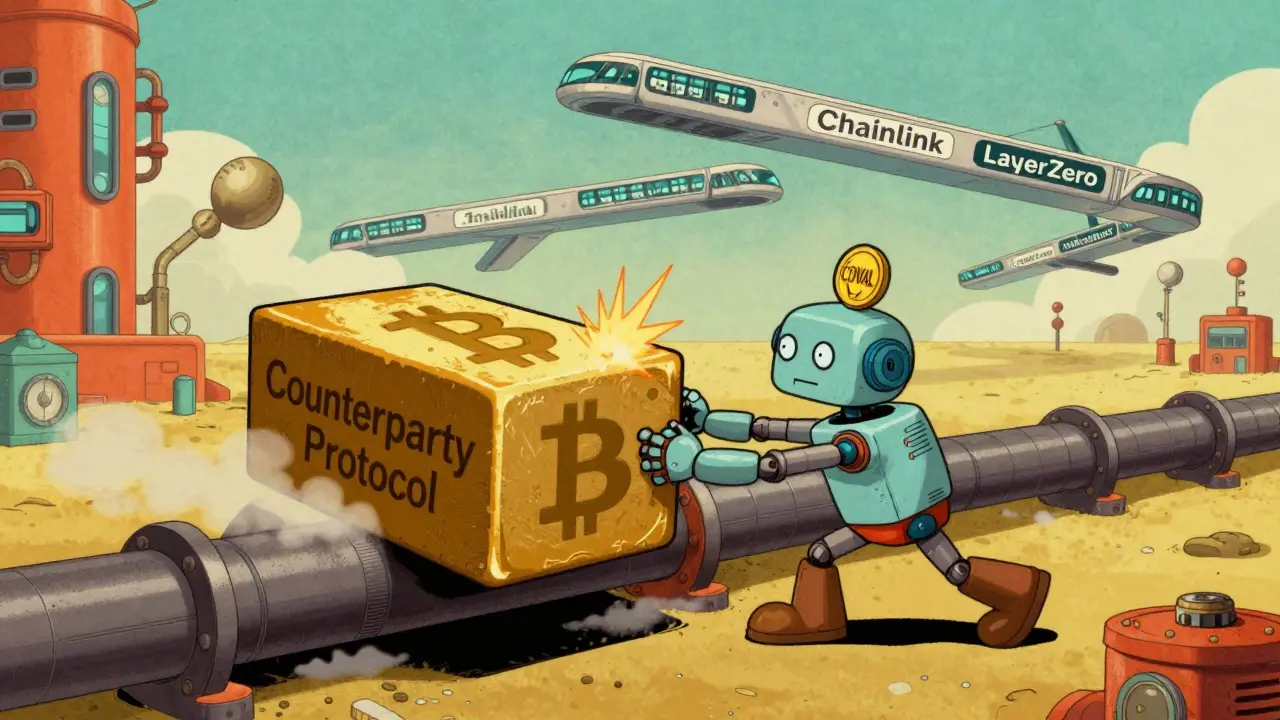
Who Is COVAL For?
Let’s be clear: COVAL is not for traders. It’s not for investors looking to flip coins. And it’s definitely not for beginners. It’s only for one kind of person: someone who owns NFTs or tokens across multiple blockchains and wants to manage them in one place - and who’s willing to accept slow speeds, high fees, and zero support to do it. Even then, there are better alternatives now. Chainlink’s CCIP, LayerZero, and Polygon’s zkEVM offer faster, cheaper, and more reliable cross-chain transfers with real backing from big players. If you’re holding COVAL, it’s likely because you bought it during the 2021 crypto boom and never sold. Or maybe you’re one of the few who still uses Emblem Vault for its unique bundling feature. But if you’re thinking of buying it now, you’re betting on a project that’s been ignored by developers, investors, and the broader crypto community for years.Is COVAL Worth Anything?
The numbers don’t lie. COVAL has lost 78% of its value in the past year. Its price is near its lowest point since 2017. WalletInvestor once predicted it could hit $0.131 in five years. That was in 2022. Today, it’s trading at less than half a cent. That prediction is now impossible to reach without a miracle. There’s no institutional interest. No venture capital. No major exchange listings beyond two small platforms. No media coverage. Even crypto research firms like Messari and Delphi Digital don’t mention it. The only people talking about COVAL are those who already own it - and most of them are frustrated. It’s not dead. But it’s not alive in any meaningful way either. It’s in limbo. A relic of an earlier crypto era, clinging to a niche use case that newer, better tools have mostly replaced.