What is MetaCene (MAK) Crypto? A Guide to the Web3 MMORPG Token
 Sep, 19 2026
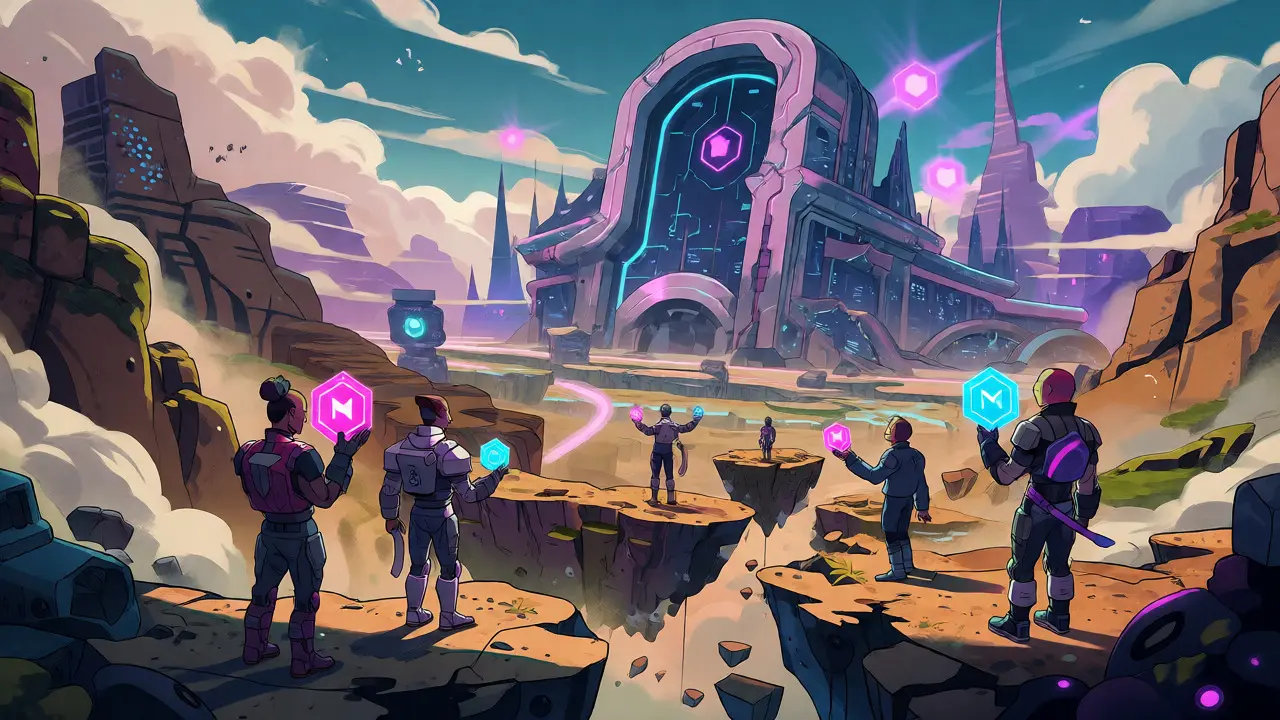
Ever wondered if you could actually own a piece of a virtual apocalypse? That’s the core promise behind MetaCene, a blockchain-based massively multiplayer online role-playing game (MMORPG) that lets players co-create and govern its world. At the heart of this ecosystem sits the MAK token, a governance asset designed to give players real economic power within an apocalyptic open-world setting. If you’re curious about how this works, or if you’re thinking about diving into the GameFi sector, understanding MAK is crucial. It’s not just another speculative coin; it’s the key to unlocking land, synthesizing rare NFTs, and voting on the future of the game.
Quick Summary / Key Takeaways
- Dual-Token System: MetaCene uses MUD for daily in-game utility and MAK for high-value governance and asset acquisition.
- Governance Power: Holding MAK allows you to vote on DAO proposals, elect committees, and influence game development.
- Fixed Supply: The total supply of MAK is capped at 1 billion tokens, with significant portions locked until 2029.
- Buyback Mechanism: The project allocates 30% of revenue to buy back MAK from the market, aiming to support token value.
- Limited Liquidity: As of late 2026, MAK trades primarily on Gate.io and Bitget with relatively low daily volume compared to major gaming tokens.
The Core Concept: More Than Just a Game Token
Most crypto projects try to solve financial problems. MetaCene tries to solve engagement problems. Built as a "next-gen Meta-MMO platform," it combines traditional RPG mechanics with blockchain ownership. You don’t just play the game; you own parts of it. This is where MAK comes in. Unlike typical utility tokens that might be used for small transactions, MAK is positioned as a premium asset. Think of it like buying stock in a digital country. You use it to purchase land parcels, synthesize advanced Non-Fungible Tokens (NFTs), and access VIP features that regular players can’t touch.
The project raised approximately $17 million in funding before its public launch, signaling serious investor interest. It was also selected for BNB Chain’s Incubation Program Season 6, which gave it early credibility within the broader blockchain infrastructure community. But what does that mean for you? It means the developers had capital to build a robust engine, but it also means you need to understand the economics to avoid getting caught in speculative swings.
Understanding the Dual-Token Economy: MUD vs. MAK
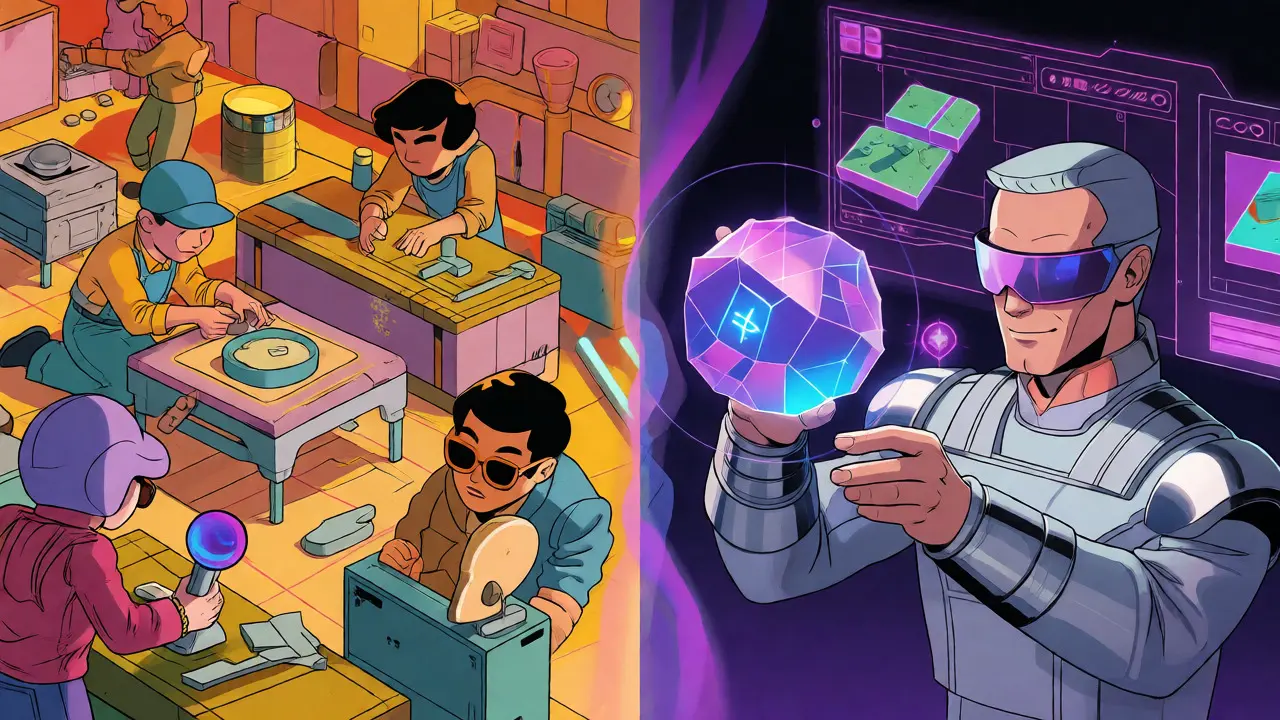
To grasp MAK’s value, you first have to look at its sibling, MUD. MetaCene operates on a dual-token model, a common strategy in GameFi to separate daily spending from long-term investment.
| Feature | MUD Token | MAK Token |
|---|---|---|
| Primary Role | In-game utility currency | Governance and high-value asset |
| Main Use Cases | Crafting, daily quests, basic repairs | Land purchases, NFT synthesis, DAO voting |
| Target Audience | All players (beginners to pros) | Intermediate and advanced players |
| Economic Function | High circulation, low value per unit | Lower circulation, higher value per unit |
This structure prevents inflation from destroying the economy. If everyone bought land using the same currency they use to buy bread, the price of bread would skyrocket. By splitting them, MUD handles the micro-economy, while MAK anchors the macro-economy. When you see news about "synthesizing assets" or "buying Realms," that’s almost always a MAK transaction.
Tokenomics: Supply, Vesting, and Scarcity
Numbers tell the real story here. The maximum supply of MAK is fixed at 1,000,000,000 tokens. No more will ever be minted. This scarcity is intended to protect value over time, assuming demand grows as the player base expands.
However, not all tokens are circulating today. According to vesting schedules tracked by data aggregators like CryptoRank, a large portion of the supply remains locked. Here’s the breakdown of initial allocations:
- Community Allocation: 30% (Designed to reward active players)
- Team & Shareholders: 22.5% (Locked to align incentives with long-term success)
- Treasury: 18% (Reserved for future development and operations)
- Community Airdrops: 12.8% (Distributed to early adopters and testers)
A critical detail for investors: the next major unlock event is scheduled for September 5, 2029. Until then, only a fraction of the team and treasury holdings enter the market gradually. This reduces immediate sell pressure, but it also means that as these locks expire in the late 2020s, there could be increased supply hitting the exchanges. Keep an eye on those dates if you’re holding long-term.
Real-World Utility: What Can You Actually Do With MAK?
Holding a token is one thing; using it is another. MetaCene has designed several specific utilities to ensure MAK stays relevant inside the game loop.
1. Land Ownership and Realms NFTs
In MetaCene, land isn’t just cosmetic. It’s productive. You use MAK to purchase land parcels and "Realms NFTs." These aren’t just digital plots; they represent server-level rights. Owning a Realm gives you allocation rights, tools to invite other players, and a share of rewards generated by activity on that server. It’s essentially becoming a landlord in a virtual world.
2. Advanced NFT Synthesis
Basic items are crafted with MUD. But if you want to create high-tier gear or unique skins, you need MAK. This acts as a sink for the token-every time someone synthesizes a top-tier item, MAK leaves circulation (or gets burned, depending on the specific contract logic at the time). This deflationary pressure helps support the price.
3. Governance and DAO Participation
MetaCene is a Decentralized Autonomous Organization (DAO). MAK holders don’t just watch; they vote. You can participate in committee elections, vote on gameplay changes, and decide how treasury funds are spent. This gives the community direct control over the roadmap, moving away from the traditional "developer decides everything" model.
4. Staking and VIP Benefits
You can stake your MAK to earn more MAK. But beyond yield, staking often unlocks VIP status in-game. This might include faster travel times, exclusive dungeon entries, or priority customer support. It turns passive holding into an active gameplay advantage.
The Buyback Mechanism: Supporting the Price Floor
One of the most interesting features of MetaCene’s economic design is its commitment to buying back its own token. The project pledges to allocate 30% of its total revenue to repurchase MAK from the open market.
Why does this matter? In traditional finance, companies buy back shares to reduce supply and increase earnings per share. MetaCene applies this logic to crypto. By taking 30 cents out of every dollar earned from game sales, NFT mints, or marketplace fees, and using it to buy MAK, the project creates consistent demand. If the game is successful and generates revenue, the buybacks should theoretically stabilize or increase the token’s value, counteracting the natural dilution from new unlocks.

Market Status and Risks in Late 2026
As of September 2026, MetaCene (MAK) is classified as a small-cap cryptocurrency. Data from CoinGecko and CoinMarketCap shows a price hovering around $0.00025-$0.00028 USD. While this is significantly lower than its initial offering prices, it reflects the broader cooling of the GameFi hype cycle since 2021.
Here are the key risks you need to consider:
- Liquidity Constraints: Daily trading volume on major exchanges like Gate.io can be quite low (sometimes under $50 USD). This means large buys or sells can cause significant price slippage. Always use limit orders.
- Contract Address Confusion: There have been discrepancies in reported smart contract addresses across different data providers. Always verify the address directly on the official MetaCene website or GitBook before adding the token to your wallet.
- Adoption Rate: The value of MAK is tied to the number of active players. If the game doesn’t retain users, the demand for land and NFTs drops, and so does the need for MAK.
Despite these challenges, the project has maintained its documentation and updates through 2026, suggesting the team is still actively working on the ecosystem. It’s a niche asset, but for those who believe in the convergence of MMO gaming and blockchain ownership, it offers a tangible way to participate.
How to Get Started with MetaCene (MAK)
If you’re ready to dive in, here’s a simple checklist to get you set up safely.
- Set Up a Web3 Wallet: Download MetaMask or a similar ERC-20 compatible wallet. Ensure it’s backed up securely.
- Acquire USDT: Buy Tether (USDT) on a major exchange like Binance or Coinbase.
- Transfer to Exchange: Send USDT to an exchange that lists MAK, such as Gate.io or Bitget.
- Trade for MAK: Use the MAK/USDT pair to buy your tokens. Start small to test the liquidity.
- Verify Contract Address: Double-check the MAK contract address against the official source. Import it into your wallet if you plan to hold off-exchange.
- Stake or Play: Decide whether you want to stake for yields or move tokens into the game to buy land/NFTs.
Frequently Asked Questions
Is MAK the same as MUD?
No. MUD is the in-game utility currency used for everyday tasks like crafting and repairs. MAK is the governance token used for high-value actions like buying land, synthesizing advanced NFTs, and voting in the DAO. They serve different economic functions within the MetaCene ecosystem.
Where can I buy MetaCene (MAK)?
As of late 2026, MAK is primarily traded on centralized exchanges like Gate.io and Bitget. It is not widely listed on major US-based retail exchanges yet. Due to lower liquidity, it is recommended to use limit orders when trading to avoid excessive slippage.
Does MAK have a maximum supply?
Yes, the maximum and total supply of MAK is fixed at 1 billion tokens. This cap is designed to prevent infinite inflation. However, not all tokens are in circulation immediately; large portions are locked in vesting schedules that extend until 2029.
What is the buyback mechanism for MAK?
MetaCene commits to using 30% of its project revenue to buy back MAK tokens from the open market. This strategy aims to reduce circulating supply and support the token's price floor, similar to share buybacks in traditional equity markets.
Can I use MAK to vote on game decisions?
Yes. MAK holders participate in the MetaCene DAO. You can vote on proposals regarding game mechanics, resource allocation, and committee elections. Your voting power is typically proportional to the amount of MAK you hold or stake.