What is Palette (PLT) crypto coin? A clear breakdown of the token, its purpose, and why data conflicts matter
 Feb, 16 2026
When you hear about Palette (PLT), you might assume it’s just another cryptocurrency trying to ride the NFT wave. But the truth is messier than that. There’s no single, clear story about Palette. Different websites show wildly different prices. Some say it’s not even trading. Others say it’s active on one exchange. The data doesn’t just disagree-it contradicts itself. And that’s the first thing you need to understand before deciding whether Palette means anything at all.
What is Palette (PLT) actually supposed to do?
Palette isn’t trying to be Bitcoin or even Ethereum. It was built for one narrow purpose: managing digital items in entertainment. Think manga, sports highlights, music NFTs, or animated content. The project’s official white paper, published by HashPalette, calls it a blockchain designed specifically for issuing, managing, and distributing these kinds of digital assets. Unlike Ethereum, where every NFT transaction competes for space and spikes gas fees, Palette claims to be a dedicated network built for this exact use case.
The PLT token is the fuel for this system. You need it to:
- Pay fees when creating an NFT on the Palette chain
- Pay for running a node (a server that helps keep the network running)
- Delegate voting power to members of the Palette Consortium (a group of companies or creators involved in the network)
- Buy NFTs directly on the platform
- Unlock rights or benefits just by holding certain NFTs
- Pay for subscriptions to content or services on the network
That’s six clear uses. No vague promises about "decentralized finance" or "community governance." It’s practical, specific, and focused on entertainment creators who are tired of Ethereum’s unpredictable costs.
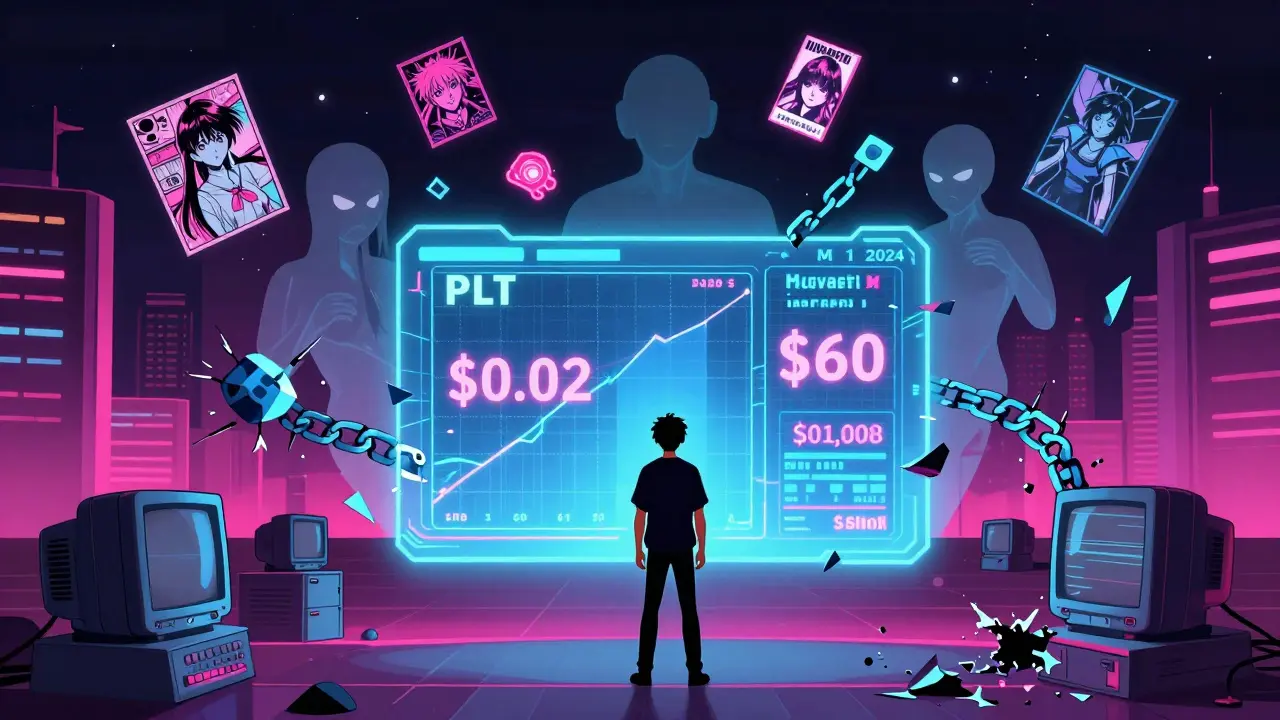
Why does the price jump from $0.02 to $60?
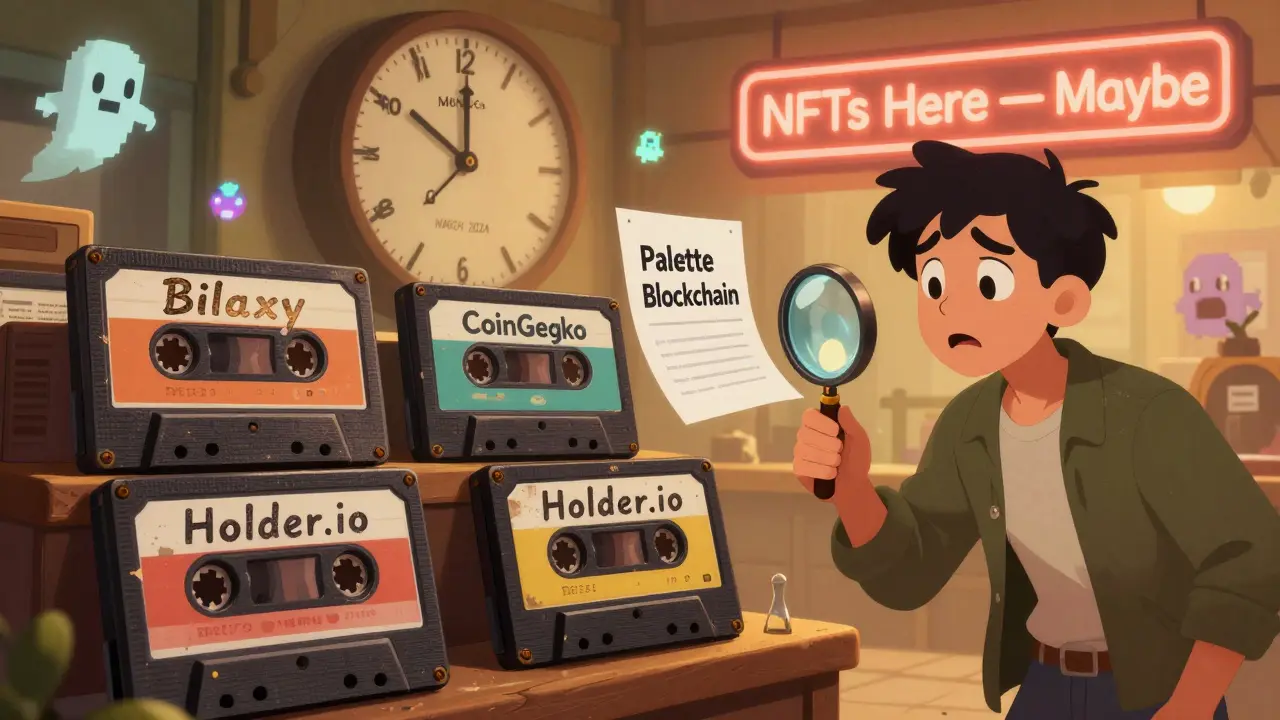
This is where things get strange. If you check Holder.io’s April 2025 report, you’ll see PLT trading between $0.0168 and $0.035, with a fully diluted valuation of $18.3 million. But by September 2025, that same site reports PLT at $61.97, with a trading range of $22.15 to $81.18. CoinGecko, another major tracker, shows a 24-hour range of $51.40 to $60.69 and lists an all-time high of $594.51-dated March 1, 2024. That’s not a typo. That’s a date in the future.
These aren’t just minor differences. They’re impossible to reconcile. One report says PLT has zero tokens in circulation. Another says it’s actively traded on Bilaxy. One says the project is "awaiting listing." Another says it’s already live. This isn’t normal market fluctuation. This is data corruption, conflicting sources, or worse-multiple projects using the same name.
There’s no way to know which data is accurate. If you’re considering buying PLT, you’re not just buying a token. You’re betting on which version of the truth is real.
Is Palette even active?
The evidence is scattered. Some sources say Palette is inactive. Others say it’s only trading on Bilaxy, a small exchange that shut down its fiat services in 2023. CoinGecko lists it as active on "2 exchanges and 2 markets," but doesn’t name them. No major exchange like Binance, Coinbase, or Kraken lists PLT. That’s not a sign of growth-it’s a sign of obscurity.
There’s also no clear developer community. No GitHub repo with active commits. No Discord server with real-time support. No tutorials for creators who want to issue NFTs on Palette. The official website links (hashpalette.com/eng and palette.haus) lead to basic landing pages with no technical documentation. If you’re a developer or a content creator, you’re left with a white paper and no way to build on it.
And here’s the kicker: the project claims to focus on Japan’s entertainment industry. But there are zero public case studies. No Japanese anime studio, music label, or manga publisher has announced a partnership. No press releases. No press coverage. Just a white paper and conflicting price data.
How does Palette compare to other NFT blockchains?
Palette’s biggest claim is that it solves Ethereum’s high gas fees and instability for NFTs. That’s a real problem. But other blockchains already solved it. Polygon, Immutable X, and Flow all offer low-cost, high-speed NFT infrastructure. They have developer tools, documentation, and real adoption. Polygon alone powers over 500 projects, including major brands like Nike and Starbucks.
Palette doesn’t offer any numbers to prove it’s faster, cheaper, or more stable. No transaction per second (TPS) stats. No average gas fee comparisons. No network uptime reports. It just says it’s better. Without data, that’s just marketing.
Worse, some sources claim PLT is an "ERC404" token-a hybrid between ERC-20 and ERC-721 that’s still experimental and not widely supported. If Palette is built on Ethereum anyway, then what’s the point of a separate blockchain?
Why should you be skeptical?
Let’s be blunt: there’s no credible evidence Palette is gaining traction. No user reviews. No community discussions on Reddit or Twitter. No developer feedback. No enterprise partnerships. The only people talking about it are tracking platforms with conflicting data.
And the timing? The "all-time high" of $594.51 is dated March 1, 2024-a date that hasn’t happened yet. That’s not a glitch. That’s a red flag. It suggests someone manually entered fake data, or the tracking system is broken beyond repair.
If you’re looking for a project with a clear roadmap, active development, and real users, Palette doesn’t meet the bar. It’s not necessarily a scam. But it’s not a functioning blockchain either. It’s a ghost. A name with no substance behind it.
What’s the bottom line?
Palette (PLT) has a decent idea: a blockchain built for entertainment NFTs. But execution is missing. The data is broken. The community is silent. The tools don’t exist. And the price? It’s a guessing game.
If you’re curious, you can look at the white paper. But don’t invest based on what you see on CoinGecko or Holder.io. Those numbers are unreliable. If you’re a creator looking to issue NFTs, don’t wait for Palette. Use Polygon or Solana-they’re real, they’re live, and they have support.
Palette might still become something. But right now? It’s a question mark with a ticker symbol.
Is Palette (PLT) a real cryptocurrency?
Yes, PLT exists as a token on blockchain tracking platforms, but its status is unclear. Some sources claim it’s not trading, while others say it’s active on Bilaxy. There’s no consensus on its price, supply, or network activity. The lack of developer tools, real-world use cases, and reliable data makes it difficult to confirm whether Palette functions as a real, operational blockchain.
Where can I buy Palette (PLT)?
According to conflicting reports, PLT may be traded on Bilaxy, but Bilaxy stopped supporting fiat deposits in 2023 and has since faded from prominence. CoinGecko lists it on two exchanges, but doesn’t name them. No major exchanges like Binance, Coinbase, or Kraken list PLT. If you can’t find it on a well-known platform, it’s not safe to assume it’s legitimate or liquid.
Why do price data vary so much between sources?
The price differences suggest data corruption or conflicting projects. One source reports PLT at $0.02, another at $60, and CoinGecko lists an all-time high of $594.51-dated March 1, 2024, which is a future date. This is not normal market behavior. It likely means tracking platforms are pulling from unreliable or fake data sources, or multiple tokens are using the same symbol.
Is Palette built on Ethereum?
The official white paper describes Palette as a standalone blockchain designed to replace Ethereum for entertainment NFTs. However, some sources label PLT as an ERC404 token, which suggests it’s built on Ethereum anyway. This contradiction isn’t resolved anywhere. If it’s truly a separate chain, there’s no public blockchain explorer, node software, or developer documentation to prove it.
Who is behind Palette?
The project is attributed to HashPalette, with websites listed as hashpalette.com/eng and palette.haus. But there’s no team page, no LinkedIn profiles, no public statements from founders, and no press coverage. The only information comes from the white paper and third-party tracking sites. No credible media or industry analyst has verified their claims.
Should I invest in Palette (PLT)?
No-not with the information available. The token’s price is unreliable, there’s no community or developer activity, no partnerships, and no clear path to adoption. Even if the idea is sound, the execution is missing. Investing in PLT is like betting on a product with no website, no reviews, and no way to verify if it even works.