What is Phantasma (SOUL)? A Guide to the Carbon-Negative Blockchain for Gaming and NFTs
 May, 12 2026
Most blockchains burn energy like a furnace. Phantasma is a Layer-1 blockchain protocol that operates as a carbon-negative network designed for gaming, NFTs, and decentralized finance with a unique dual-token economic model. Launched in October 2019, it doesn’t just claim to be green; it actively offsets more carbon than it produces. But what makes it tick? It’s not just about saving trees. It’s about how the network handles digital ownership through its proprietary Smart NFT technology and manages transactions without choking on gas fees.
If you are looking at the crypto space today, you see thousands of chains fighting for attention. Phantasma takes a different route. It focuses on interoperability-letting apps talk to each other across different blockchains-and gives developers tools to build dynamic digital assets. The native governance token, SOUL, sits at the heart of this ecosystem. Understanding SOUL means understanding why this project exists: to bridge traditional finance with decentralized applications while keeping the environment intact.
The Dual-Token Engine: SOUL and KCAL
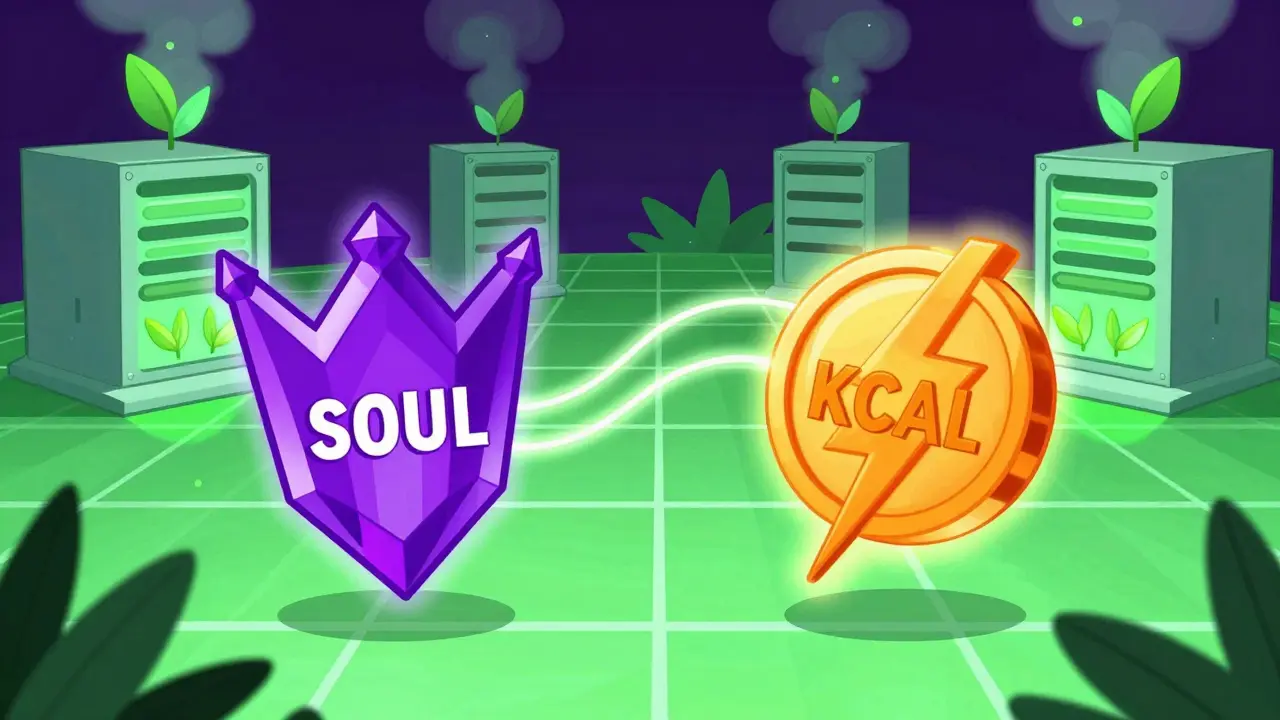
The most confusing part for newcomers is often the two-token structure. You have SOUL and you have KCAL. They don’t compete; they complement each other. Think of SOUL as the vote and KCAL as the fuel.
SOUL is the governance token. When you hold SOUL, you get a say in how the network evolves. You vote on proposals, select validators, and influence resource allocation. It represents your stake in the community’s future. On the flip side, KCAL is the utility token. Every time you send a transaction, mint an NFT, or deploy a smart contract on Phantasma, you pay in KCAL. This separation solves a common problem in crypto: if everyone paid tiny fees in the main governance token, price volatility would make transactions unpredictable and expensive for users.
Here is where the economics get interesting. You don’t need to buy KCAL separately to use the network. Instead, you earn it by staking SOUL. For every SOUL you lock up, the network rewards you with 0.002 KCAL per day. If you stake 50,000 SOUL, you generate 100 KCAL daily, which covers a significant amount of activity. This creates a natural loop: long-term holders provide security and governance, while active users consume the energy generated by those stakes. The minimum requirement to start staking is just 1 SOUL for a 24-hour period, making entry accessible.
| Feature | SOUL Token | KCAL Token |
|---|---|---|
| Primary Role | Governance & Voting | Transaction Fees & Energy |
| Supply Mechanism | Fixed max supply with inflation incentives | Minted via SOUL staking rewards |
| User Action | Stake to earn KCAL | Spend to execute actions |
| Economic Value | Appreciates based on network growth | Deflates as it is consumed |
Smart NFTs: More Than Just Digital Art
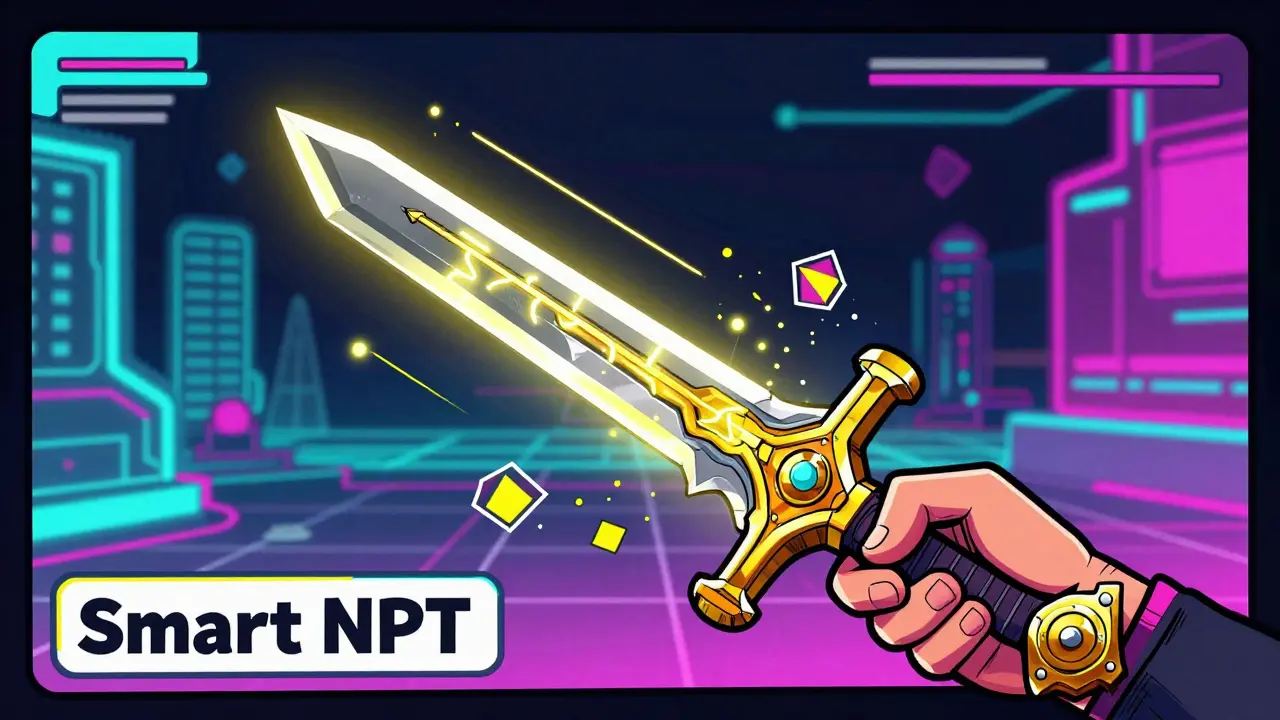
Non-fungible tokens (NFTs) usually mean static images or collectibles. Phantasma changed the game with Smart NFTs. These aren’t just JPEGs; they are dynamic entities that can change based on pre-set conditions. Imagine a sword in a video game that levels up as you use it, or a virtual land parcel that changes appearance depending on the season. That is the power of Smart NFTs.
This technology allows developers to create multilayered assets. You can infuse one NFT into another, nesting them together. This opens up complex gameplay mechanics and interactive storytelling that standard ERC-721 tokens struggle to handle efficiently. Because these features are built directly into the blockchain layer, they run faster and cost less to mint compared to many competitors. For gaming studios and metaverse builders, this means they can manage inventory, upgrades, and trading without relying on heavy off-chain databases.
Interoperability Through Phantasma Link
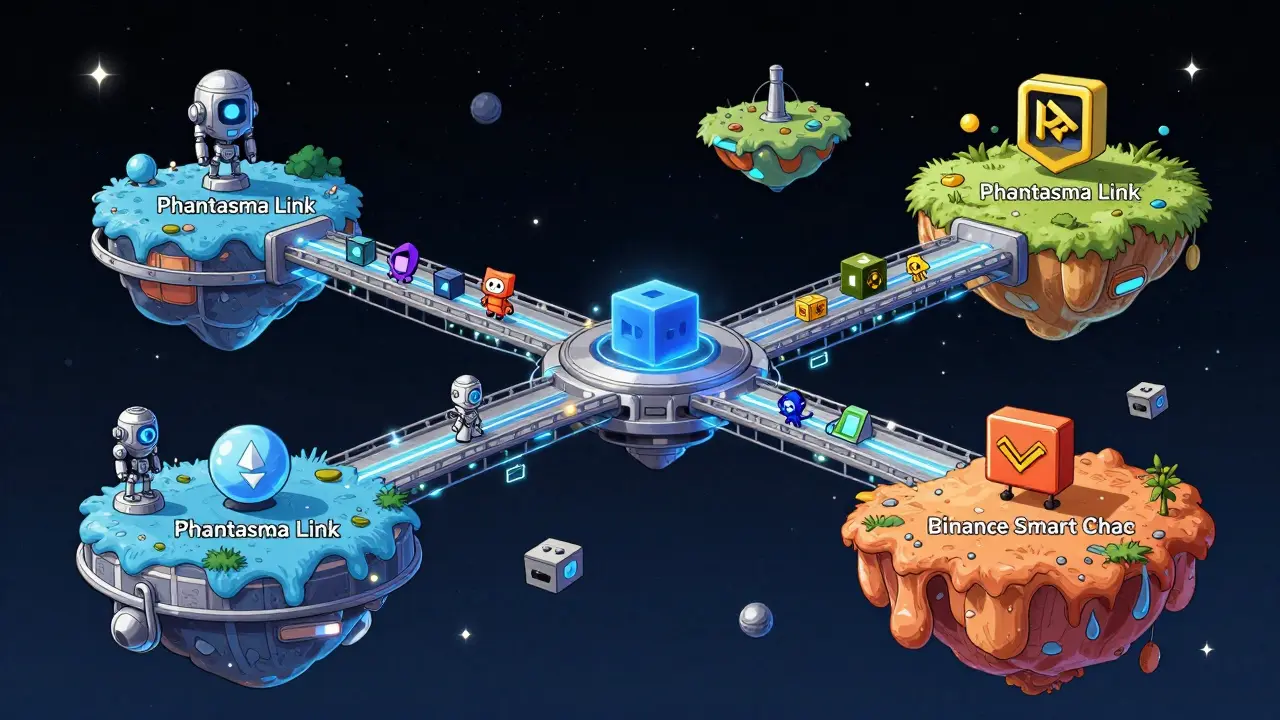
Blockchain silos are a headache. Your assets on Ethereum don’t naturally talk to those on Binance Smart Chain. Phantasma addresses this with Phantasma Link. This isn’t just a bridge; it’s an interoperability protocol that allows decentralized applications (dApps) on separate chains to communicate seamlessly.
Under the hood, Phantasma uses infinite parallel chains. Each dApp gets its own side chain, which prevents one buggy application from crashing the entire network. Phantasma Link acts as an oracle within the center of the network, verifying data and enabling cross-chain transactions. This setup enhances security because the oracles are integrated rather than external, reducing the risk of manipulation. For enterprises, this means they can leverage existing infrastructure on major chains while building new services on Phantasma’s scalable environment.
Carbon-Negative Certification
In an industry often criticized for its environmental footprint, Phantasma stands out as the first certified carbon-negative cryptocurrency. This certification isn’t marketing fluff; it means the project actively removes more CO2 from the atmosphere than it emits. How? By combining lightning-fast, low-energy transactions with offset programs. As climate concerns drive regulatory pressure and consumer preference, this eco-sustainable design becomes a strategic advantage for partners seeking green tech solutions.
Market Position and Supply Dynamics
As of recent data, Phantasma maintains a market capitalization around $4.9 million USD. While modest compared to giants like Bitcoin, it reflects a specialized niche. The maximum supply of SOUL was increased to 94,000,000 tokens to ensure long-term developer incentives. Approximately 125,000 SOUL are distributed monthly to qualified Soul Masters-developers who build quality dApps on the platform. There is also a 3% yearly inflation rate designed to keep the ecosystem vibrant and rewarding for contributors.
The network has operated continuously since its October 2019 mainnet launch, demonstrating stability over several years. This longevity matters in crypto, where many projects fade after their initial hype. Phantasma’s focus on gaming, entertainment, and enterprise storage has carved out a steady user base rather than chasing speculative trends.
Who Is Phantasma For?
You might want to look closer at Phantasma if you are:
- A game developer needing dynamic, upgradeable NFTs without high gas costs.
- An investor interested in sustainable, eco-friendly crypto projects.
- A dApp creator seeking cross-chain interoperability without complex bridges.
- A holder wanting passive income through staking SOUL to earn KCAL.
However, if you need instant liquidity for massive institutional trades or prefer simple, single-token ecosystems, Phantasma’s dual-model might add unnecessary complexity. Always assess whether the specific technical features align with your use case before allocating funds.
Is Phantasma (SOUL) a good investment?
Investment suitability depends on your goals. Phantasma offers strong utility through its dual-token model and Smart NFTs, appealing to developers and gamers. However, its smaller market cap means higher volatility compared to top-tier coins. Consider its carbon-negative status and interoperability features as long-term value drivers, but always conduct your own research and only invest what you can afford to lose.
How do I earn KCAL on Phantasma?
You earn KCAL by staking SOUL tokens. For every SOUL staked, you receive 0.002 KCAL per day. There is a minimum stake of 1 SOUL for a 24-hour period. This mechanism allows holders to generate the energy needed for transactions without buying KCAL separately.
What are Smart NFTs?
Smart NFTs are dynamic non-fungible tokens that can change properties based on predefined conditions. Unlike static NFTs, they support features like leveling up, infusion with other assets, and multilayered structures, making them ideal for gaming and interactive metaverse experiences.
Is Phantasma environmentally friendly?
Yes, Phantasma is certified as the first carbon-negative blockchain. It consumes minimal energy for transactions and actively offsets more carbon emissions than it generates, supporting global sustainability goals.
Can I use Phantasma for cross-chain transactions?
Yes, through Phantasma Link. This interoperability protocol enables communication between dApps on different blockchains like Ethereum and Binance Smart Chain, allowing seamless asset transfers and service interactions across networks.