What is Quidax Token (QDX)? A Guide to the African Crypto Ecosystem
 Sep, 22 2026
Imagine trying to buy Bitcoin with Nigerian Naira or South African Rand without jumping through ten different hoops. That friction is exactly what Quidax Token (QDX) aims to solve for millions of users across Africa and beyond. But what exactly is this coin? Is it just another speculative asset, or does it hold real power within a specific financial ecosystem?
If you've seen QDX trending in lower-cap market discussions, you might be wondering if it's worth your attention. As of September 2026, QDX trades at roughly $0.0087 USD, placing it firmly in the micro-cap category. Yet, its story isn't about chasing moonshots; it's about utility within the Quidax Exchange, a platform designed to bridge traditional fiat currencies with digital assets. This article breaks down exactly what QDX is, how it works, and whether its multi-chain architecture offers any real value to traders outside the usual Western hubs.
The Core Identity: More Than Just an Exchange Coin
Quidax Token (QDX) is the native utility cryptocurrency of the Quidax Exchange, functioning as the economic backbone of a platform focused on African markets while remaining globally accessible. Unlike many exchange tokens that simply offer fee discounts, QDX has evolved into a broader ecosystem tool. It was first launched in May 2021 but underwent a significant upgrade and relaunch on July 26, 2024. This relaunch wasn't just cosmetic; it shifted QDX from a single-chain asset to a multi-chain token compatible with both the Ethereum Network (ERC-20 standard) and Binance Smart Chain (BEP-20 standard).
Why does this matter to you? Because compatibility equals liquidity and ease of use. By supporting BSC, QDX taps into one of the most active decentralized finance (DeFi) networks. You can store it in popular wallets like MetaMask or Trust Wallet without needing specialized software. The token operates under a fixed supply model, capped at 500 million units. Currently, only about 77 million QDX are in circulation, meaning over 80% of the total supply remains locked or reserved for future ecosystem incentives.
How QDX Works: Utility and Use Cases
So, what do you actually do with QDX? If you're a trader on the Quidax platform, holding QDX unlocks tangible benefits. The primary use case is reducing trading fees. When you pay transaction costs in QDX rather than the base currency, you often receive a discount. But the whitepaper hints at something more ambitious: blending centralized finance (CeFi) with decentralized finance (DeFi).
For instance, QDX plays a role in accessing crypto loan products. Imagine wanting to borrow stablecoins against your Bitcoin holdings without selling your assets. On platforms integrating QDX, holding the token might grant you better interest rates or priority access to these lending pools. It’s a strategy to keep users engaged within the Quidax ecosystem rather than letting them drift off to other exchanges.
- Fee Discounts: Lower trading costs when paying fees in QDX.
- Ecosystem Access: Priority entry to new listings or promotional events on Quidax.
- CeFi-DeFi Bridge: Enhanced participation in hybrid financial products like crypto loans.
- Governance Potential: While not fully detailed, long-term holders may influence future platform developments.
It’s crucial to understand that QDX is not a standalone blockchain. It doesn’t process transactions itself like Bitcoin or Ethereum. Instead, it lives on existing chains, leveraging their security and speed. This design choice keeps development costs low and allows the Quidax team to focus on user experience rather than maintaining complex infrastructure.

Market Reality: Price, Supply, and Liquidity
Let’s look at the hard numbers. As of late September 2026, QDX hovers around $0.0086 to $0.0088 per token. Its market capitalization sits near $670,000, ranking it well below major exchange tokens like BNB or CRO. This small size means volatility can be high, but it also means there’s less institutional pressure driving the price. For retail investors, this creates a niche opportunity, but also a risk of illiquidity.
| Metric | Value | Context |
|---|---|---|
| Current Price | $0.0087 USD | Stable micro-cap range |
| Circulating Supply | 77,000,000 QDX | ~15% of total max supply |
| Max Supply | 500,000,000 QDX | Fixed cap prevents infinite inflation |
| Market Cap | ~$670,000 USD | Niche asset, low global share |
| Primary Trading Venue | PancakeSwap (BSC) | Limited centralized exchange support |
You won’t find QDX listed on Coinbase or Binance directly for spot trading yet. Most volume flows through PancakeSwap, a decentralized exchange on the Binance Smart Chain. To buy QDX, you typically need to acquire BNB first, then swap it for QDX via a DEX interface. This step adds a layer of complexity for beginners who prefer simple "buy now" buttons on major apps.
The Evolution: From V1 to the Upgraded Ecosystem Token
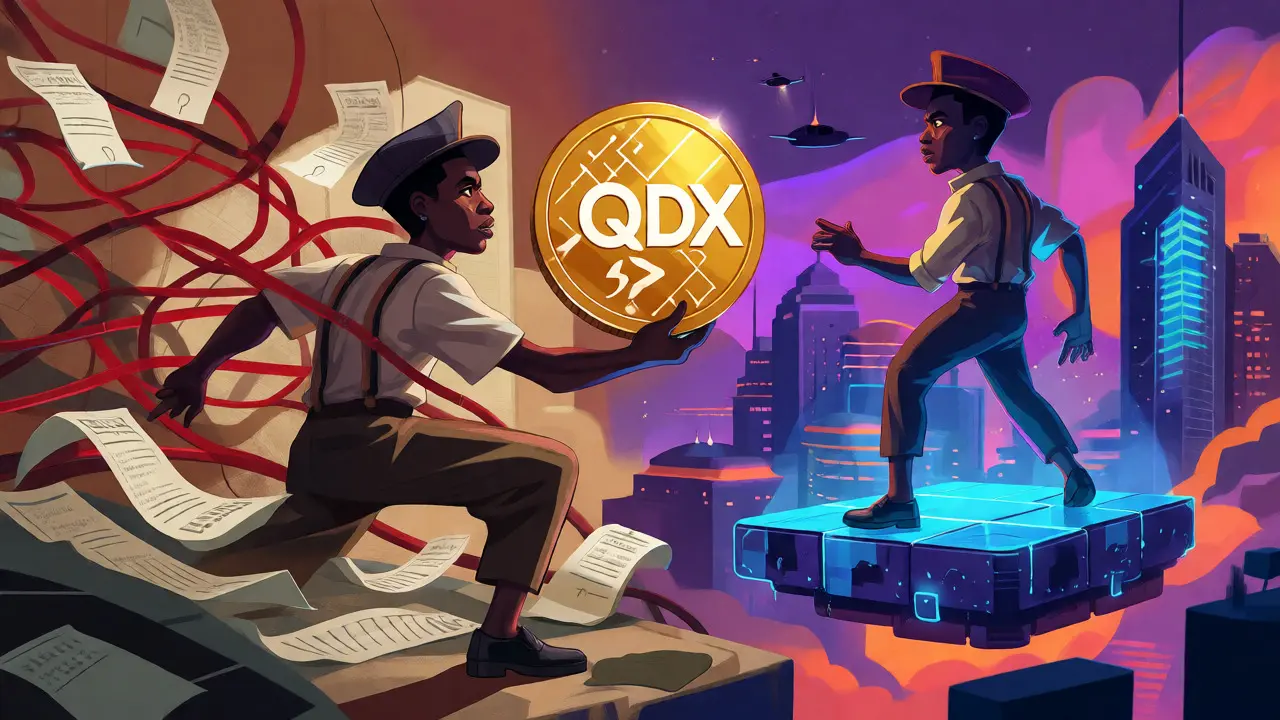
Not all QDX tokens are created equal. There was an original version, often referred to as QDX v1, which suffered from low liquidity and depreciation. In July 2024, Quidax executed a formal relaunch. They introduced a new smart contract address on BSC and expanded compatibility to Ethereum. This upgraded token replaced the legacy version in active marketing and utility functions.
Why did they do this? The old token had become stagnant. By resetting the contract and rebranding it as the "official upgraded ecosystem token," Quidax signaled a fresh start. They tied the new token to a long-term emission schedule. Starting in 2027, 42.3 million QDX will be released annually until 2037. This structured distribution helps prevent sudden supply shocks and aligns token releases with expected growth phases of the platform.
Who Is Quidax For? The African Context
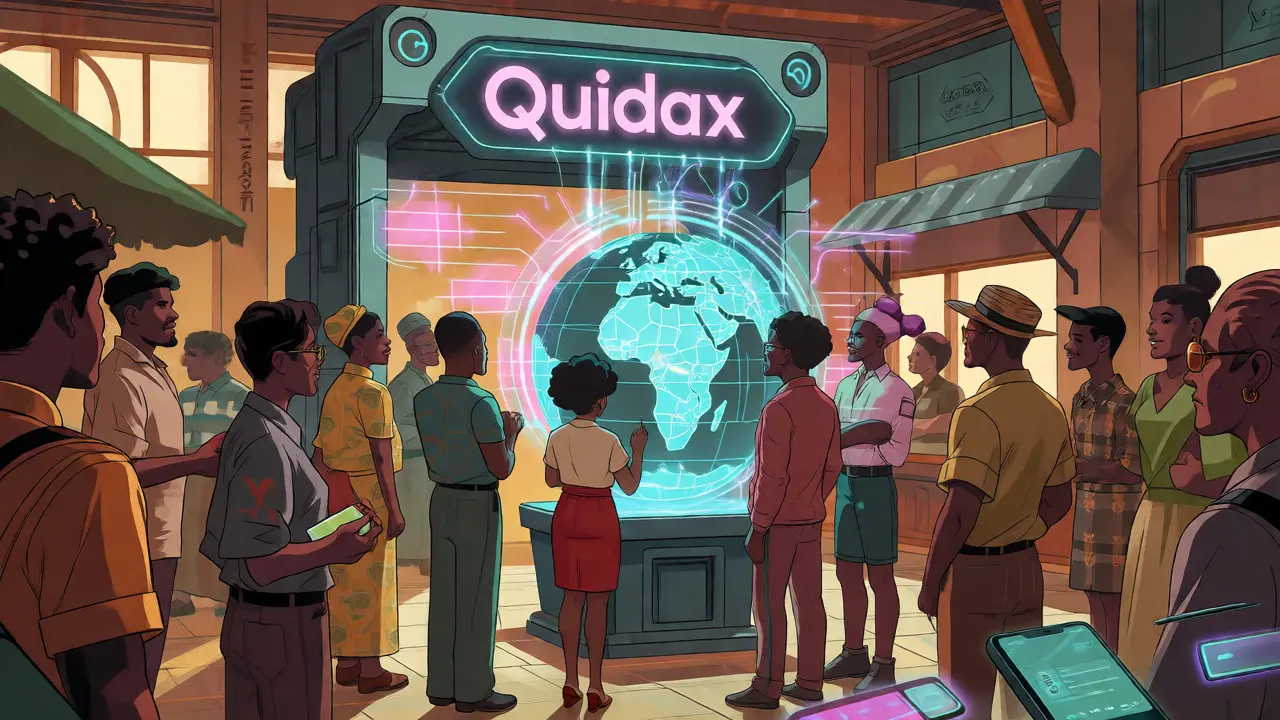
To understand QDX, you must understand its home turf. Quidax Exchange primarily serves African users, operating in over 70 countries. In regions where banking infrastructure is fragmented, crypto offers a lifeline for cross-border payments and savings. QDX acts as the glue holding this community together.
Think of it like loyalty points for a regional airline, but with tradable value. Users in Nigeria, Ghana, or Kenya use Quidax to convert local fiat into crypto. Holding QDX rewards them for staying on the platform. This geographic focus distinguishes QDX from generic global tokens. It’s a community-driven asset with a specific mission: bringing financial inclusion to emerging markets.
Risks and Considerations Before Investing
Is QDX a safe bet? Like any micro-cap crypto, it carries significant risks. The low daily trading volume-sometimes under $1,000 on certain aggregators-means large sell orders could crash the price temporarily. Additionally, reliance on a single exchange (Quidax) for core utility creates centralization risk. If the exchange faces regulatory hurdles in key African nations, demand for QDX could drop sharply.
However, the fixed supply and multi-chain support provide some stability. The token isn’t being printed endlessly, which protects against hyperinflation. And by living on Ethereum and BSC, it avoids the pitfalls of obscure, unsupported blockchains. For those interested in African fintech growth, QDX offers a direct way to participate in that narrative.
Can I buy QDX directly with credit card?
Generally, no. Most purchases require buying BNB first on a centralized exchange, transferring it to a BSC wallet, and swapping it for QDX on PancakeSwap. Some regional payment gateways on Quidax may allow fiat deposits, but direct card-to-QDX swaps are rare.
Is QDX available on Coinbase?
No, QDX is not currently tradable on Coinbase. It is primarily traded on decentralized exchanges like PancakeSwap and potentially on the Quidax platform itself depending on current listing status.
What makes QDX different from other exchange tokens?
QDX focuses specifically on the African market and bridging CeFi and DeFi services like crypto loans. Its multi-chain ERC-20/BEP-20 structure also provides broader wallet compatibility compared to single-chain tokens.
How much QDX is in circulation?
As of September 2026, approximately 77 million QDX are circulating out of a maximum supply of 500 million. The rest is released gradually between 2027 and 2037.
Where should I store my QDX?
Since QDX exists on both Ethereum and BSC, you can store it in any wallet supporting these standards, such as MetaMask, Trust Wallet, or the official Quidax app.