What is Smart MFG (MFG) Token? A Deep Dive into Manufacturing Blockchain
 Apr, 28 2026
Imagine a world where a 3D-printed part sent to a satellite in orbit is tracked, owned, and financed using the same technology that powers digital art. That is the core ambition behind Smart MFG is a specialized ecosystem designed to bring the manufacturing and supply chain industries onto the blockchain. Also known as the MFG token, this project focuses on bridging the gap between physical industrial parts and digital ownership.
If you are looking at the Smart MFG token, you are likely wondering if this is just another speculative coin or a tool with actual industrial utility. The short answer is that it's a utility token built to solve a very old problem: the friction, lack of transparency, and slow payment cycles in global manufacturing supply chains. By using an ERC20 standard on the Ethereum blockchain, MFG aims to turn physical machinery and parts into liquid digital assets.
The Core Purpose of MFG Token
The MFG token isn't meant to be a simple currency for buying coffee. It's a gear in a larger industrial machine. Its primary job is to power "smart contracts" for manufacturing. In plain English, this means that instead of relying on piles of paperwork and trusting a vendor to deliver a part, the payment is locked in a digital vault (escrow) and released only when the blockchain verifies the delivery.
Here are the specific ways the token is used within the ecosystem:
- RFQs (Requests for Quotes): To prevent spam and ensure quality, the system uses MFG to incentivize and secure the process of asking manufacturers for price quotes on custom parts.
- Purchase Orders (POs): MFG is used to secure and pay for smart contract-based orders, reducing the risk for both the buyer and the maker.
- RWA Tokenization: The project focuses on Real-World Assets (RWAs) is the process of converting physical assets, like industrial equipment or inventory, into digital tokens on a blockchain . This allows companies to treat a physical machine as a financial asset that can be traded or used as collateral.
Innovation: The Hardware NFT
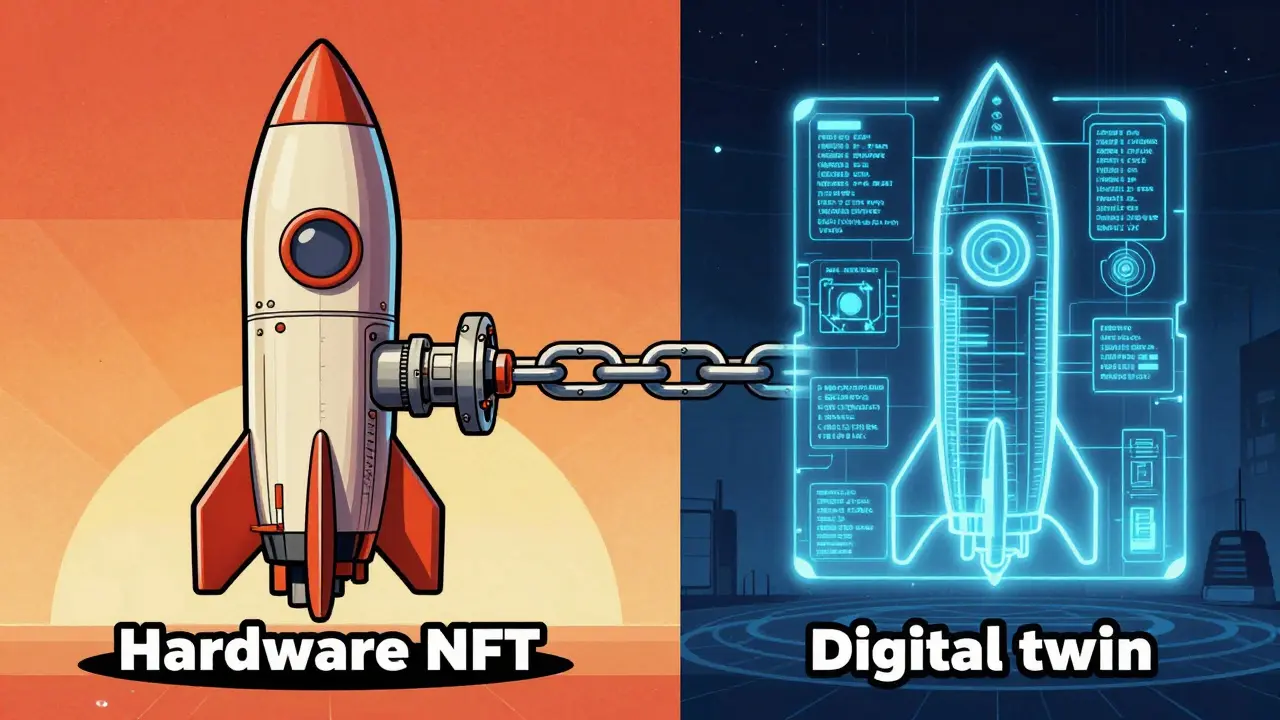
One of the most interesting things Smart MFG did was move beyond the idea of NFTs as just JPEGs. Back in 2018, they introduced the concept of the Hardware NFT is a digital token that represents a specific, unique physical object and its technical design specifications .
Think of it as a digital birth certificate for a machine part. If a company designs a specialized valve for a SpaceX rocket, the Hardware NFT contains the design, the materials used, and the ownership history. When that part is 3D-printed, the physical object is linked to its digital twin. This prevents counterfeiting and makes maintenance much easier because the entire history of the part is permanently recorded on the blockchain.
The "Phigital" Evolution and MakerFi
The project has moved through several phases, most notably the launch of MFG Phigital 1.0 in 2024 and 2.0 in 2025. The term "Phigital" is just a blend of physical and digital. This evolution allows individual "makers"-people with high-end 3D printers and CNC machines-to join a global network.
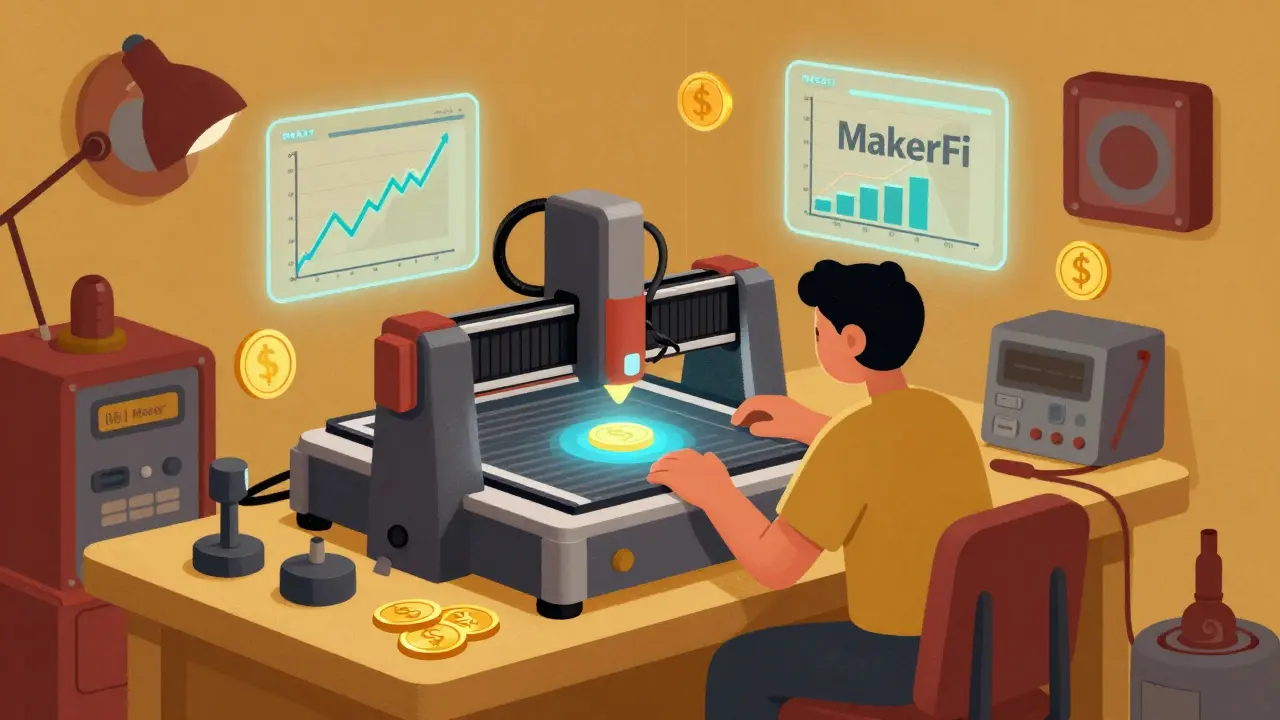
To support these makers, the ecosystem introduced MakerFi is a decentralized finance (DeFi) solution specifically tailored for the manufacturing sector to provide project and invoice financing . This is a huge deal for small shops. Normally, a small manufacturer might wait 60 or 90 days to get paid after delivering a part. Through MakerFi, they can tokenize their invoice and get an immediate loan against it, keeping their business running without waiting for a slow-paying corporate client.
| Feature | Traditional Method | Smart MFG Approach |
|---|---|---|
| Payment | Invoices, 30-90 day wait | Smart Contract Escrow / MakerFi |
| Asset Tracking | Paper logs, spreadsheets | Hardware NFTs / Blockchain |
| Sourcing | Manual emails, trusted networks | Token-incentivized RFQs |
| Liquidity | Fixed assets (hard to sell) | RWA Tokenization |
The Reality Check: Market Data and Liquidity
While the tech sounds futuristic, the market reality for the MFG token is quite volatile and fragmented. If you look at price trackers, you will see a mess of conflicting numbers. For instance, some platforms might show a price around $0.0006, while others list it higher. This happens because the token has very low liquidity, meaning there aren't many people buying and selling it at any given moment.
It is a stark contrast to its peak. In November 2021, MFG hit an all-time high of roughly $0.43. Currently, it is trading at a fraction of that-down over 99%. For a regular investor, this is a major red flag. The token is not listed on the biggest exchanges like Binance, which means getting in and out of a position can be difficult. Most of the trading happens on smaller, less liquid pairs, which leads to the price discrepancies you see across different websites.
How It Compares to Competition
Smart MFG isn't the only player trying to fix the factory floor. A notable competitor is SyncFab is a digital manufacturing platform that connects hardware buyers with a network of manufacturers for POs and RFQs . SyncFab has been around since 2013 and focuses more on the operational side of sourcing and transactions.
The difference is that Smart MFG is betting heavily on the "tokenization" aspect. While SyncFab focuses on the process of buying a part, Smart MFG focuses on the value of the part as a digital asset. By integrating DePin (Decentralized Physical Infrastructure Networks), Smart MFG wants to create a decentralized cloud of manufacturing power rather than just a digital directory of shops.
Potential Pitfalls and Risks
Entering the world of industrial crypto comes with specific dangers. First, there is the Adoption Gap. Big companies like Toyota, Ford, and Lockheed Martin are mentioned as partners, but getting a massive corporation to actually move its entire supply chain onto a public blockchain is an uphill battle. Corporate bureaucracy moves much slower than blockchain development.
Second, there is the Liquidity Trap. Because the token is not on major exchanges, you might find that you can "buy" the token, but selling it without crashing the price is much harder. This is why you see such wild differences in reported trading volumes-some days it looks active, other days it's virtually dead.
Is Smart MFG listed on Binance?
No, Smart MFG is not currently listed on Binance for trading or services. You will need to look for smaller exchanges or decentralized platforms that support ERC20 tokens to trade MFG.
What is the difference between a regular NFT and a Hardware NFT?
A regular NFT is usually a digital file (like an image). A Hardware NFT links a digital token to a physical industrial object, containing its exact design specifications, material data, and provenance, effectively creating a digital twin of a physical part.
Can I use MFG for loans?
Through a tool called MakerFi, the ecosystem allows manufacturers to tokenize their invoices or project NFTs to unlock liquidity, essentially allowing them to borrow against their future payments.
Which blockchain does MFG use?
Smart MFG is an ERC20 token, which means it is built on the Ethereum blockchain. This allows it to be compatible with most standard Ethereum wallets and DeFi tools.
Why is the price of MFG different on different websites?
This is due to low liquidity. Because the token is traded on very few exchanges with low volume, there isn't a single, unified "market price." Small trades can cause big percentage swings on one platform that aren't reflected on another.
What to do next?
If you are a manufacturer or maker, your first step should be exploring the Phigital 2.0 platform to see how your specific parts can be tokenized. Look into MakerFi if you have a problem with invoice wait times and need immediate cash flow.
If you are a crypto investor, be extremely careful. Check multiple data sources and remember that the token is currently in a deep slump compared to its 2021 highs. The technology is promising, but the market liquidity is currently very poor. Always check the trading volume on a decentralized exchange (DEX) before committing significant capital to low-cap tokens like this one.