What is Solchat (CHAT) Crypto? A Guide to Decentralized Messaging on Solana
 Oct, 2 2026
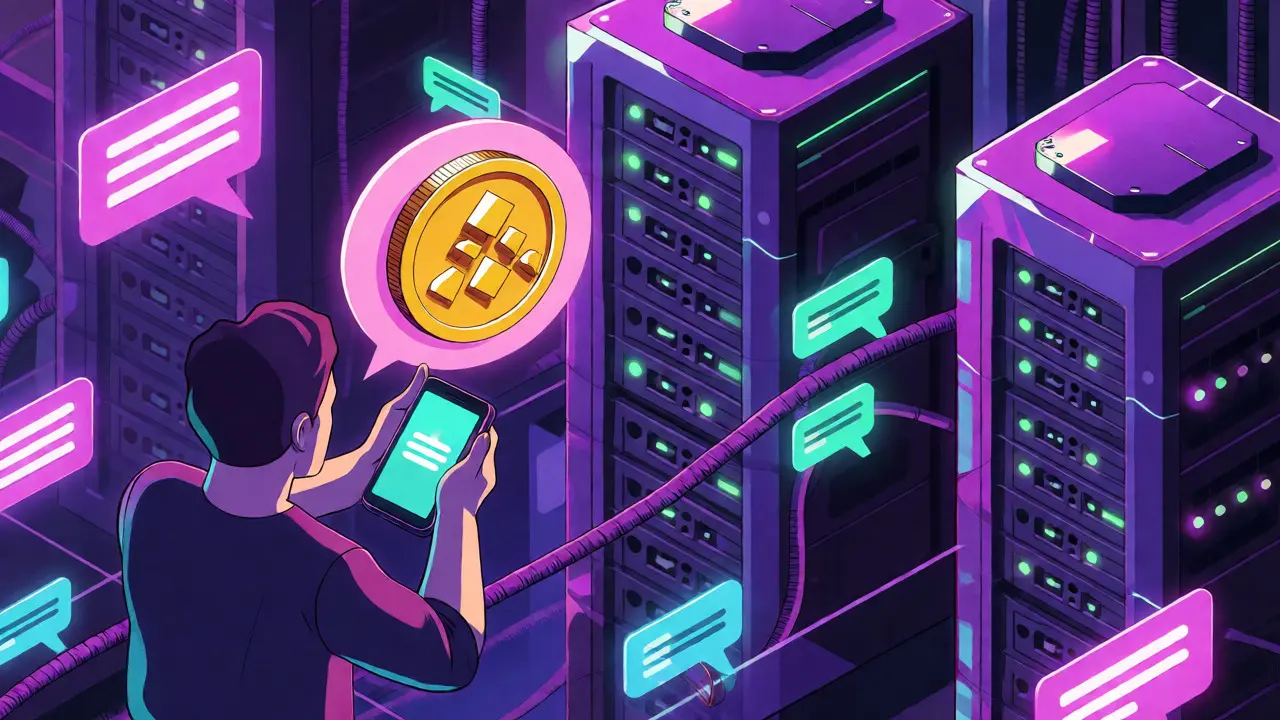
Imagine sending a text message that no corporation can read, sell, or delete. That’s the core promise of Solchat, a decentralized communication protocol built directly on the Solana blockchain. Unlike WhatsApp or Telegram, where your data lives on someone else’s server, Solchat stores your messages and group chats on-chain. This means you own your digital footprint. But what exactly is the CHAT token, and does this tech actually work for regular people?
You might be wondering if it’s worth the hassle. After all, most of us just want to text our friends without managing private keys. The reality is that Solchat sits at an interesting intersection: it offers the privacy of crypto with the interface of a social app. As of late 2025, it has carved out a niche among users who prioritize data sovereignty over convenience. Let’s break down how it works, what the CHAT coin does, and whether you should care.
The Core Concept: Messaging as a Blockchain Transaction
Traditional apps treat your messages as products they monetize. Solchat treats them as assets you control. The platform uses Solana’s high throughput-capable of handling 50,000 to 65,000 transactions per second-to make on-chain messaging feasible. In older blockchains like Ethereum, sending a simple text could cost dollars in gas fees. On Solana, the average transaction fee hovers around $0.00025. This low cost is the only reason a decentralized chat app can exist without bankrupting its users.
When you send a message on Solchat, it isn’t just flying through the air; it’s being recorded on a public ledger. This creates an immutable record. If you’re using it for business contracts or legal evidence, that immutability is powerful. For casual banter, it might feel heavy-handed. But the architecture ensures transparency. You can verify that a message was sent and received, and no admin can quietly alter history.
| Feature | Solchat (Web3) | Telegram/Discord (Web2) |
|---|---|---|
| Data Ownership | User owns data via wallet | Company owns data |
| Censorship Resistance | High (on-chain storage) | Low (server-side bans) |
| Transaction Cost | ~$0.00025 per msg | Free (monetized via ads/data) |
| Setup Complexity | Requires crypto wallet | Email/Phone number |
Understanding the CHAT Token Utility
The heart of the ecosystem is the CHAT utility token. It’s not just there for speculation. Think of CHAT as the fuel that keeps the community running. With a fixed maximum supply of 10 million tokens, scarcity is baked into the design. As of October 2025, roughly 89% of these tokens are in circulation, giving it a market cap of about $1.4 million. It’s small, but it’s stable within its niche.
Why do you need CHAT? It unlocks premium features and governs the network. If you want to create a private group, you typically need to hold a minimum amount, such as 100 CHAT tokens. Want to vote on protocol upgrades? You’ll likely need 500 CHAT. This prevents spam because creating groups or voting costs something real. It also incentivizes good behavior. Users who moderate content or help maintain the network earn CHAT rewards. For example, verified moderation actions can net you 5-10 CHAT. It turns passive users into active stakeholders.

How It Works Technically: Speed and Privacy
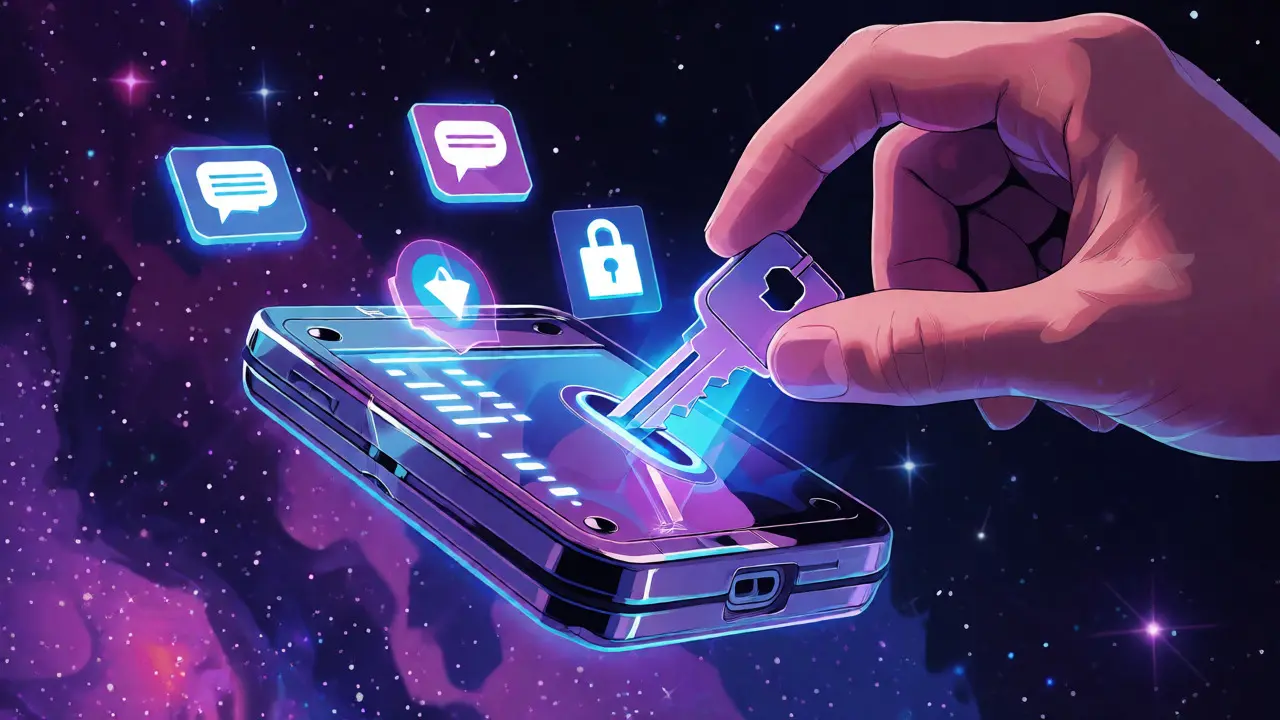
Privacy is often misunderstood in crypto. Just because data is on a public blockchain doesn’t mean everyone can read your DMs. Solchat uses end-to-end encryption for all communications. The blockchain stores the encrypted payload and metadata, ensuring integrity, while the actual content remains readable only by the sender and receiver. For voice and video calls, the app bypasses the blockchain entirely, using peer-to-peer WebRTC connections. This keeps audio streams off the chain, saving space and reducing latency.
This hybrid approach is smart. Storing every voice note on-chain would bloat the network. By keeping heavy media off-chain and text on-chain, Solchat balances performance with security. However, this relies heavily on Solana’s stability. When the Solana network experiences congestion-often during bull market spikes-message delivery can slow down. Early adopters have reported occasional delays, though these are becoming rarer as Solana infrastructure improves.
Getting Started: The User Experience Hurdle
Let’s be honest: setting up Solchat isn’t as easy as downloading Discord. You need a Solana-compatible wallet like Phantom, Trust Wallet, or Solflare. For crypto natives, this takes five minutes. For beginners, it can take an hour. You’ll need to buy some SOL, swap it for CHAT tokens on a decentralized exchange like Raydium, and then connect your wallet to the Solchat dApp.
- Wallet Setup: Install a browser extension or mobile wallet and secure your seed phrase.
- Funding: Buy SOL on an exchange and transfer it to your wallet.
- Swapping: Use Raydium or MEXC to trade SOL for CHAT tokens.
- Connection: Visit the Solchat website and authenticate via your wallet.
About 41% of new users get stuck at the swapping stage. It’s the biggest friction point. Once you’re in, the interface feels familiar-similar to Slack or Telegram-but the underlying mechanics are radically different. You aren’t logging in with a password; you’re signing transactions with your private key.
Market Position and Future Outlook
Solchat operates in the decentralized social media sector, which was valued at approximately $1.2 billion in Q3 2025. It holds a modest 0.08% market share, trailing behind giants like Lens Protocol and Farcaster. Why the gap? Network effects. People go where their friends are. Currently, Solchat has around 17,230 unique wallet holders. It’s a tight-knit community, mostly aged 18-35, deeply embedded in the Solana ecosystem.
Price predictions for CHAT vary. Some analysts forecast growth to between $0.27 and $0.31 by late 2025, driven by increased utility. Others warn that adoption barriers will keep it stagnant. The team is betting on version 2.0, scheduled for early 2026, to fix this. They plan to introduce cross-chain compatibility with Ethereum and Polygon, plus AI-powered moderation tools. If they succeed in lowering the entry barrier, Solchat could see significant user growth. If not, it risks remaining a niche tool for crypto enthusiasts.
Pros and Cons: Is Solchat Right for You?
You should try Solchat if you value data ownership and already use Solana wallets. It’s excellent for communities that want transparent governance and verifiable records. It’s also a way to earn passive income through moderation rewards.
Avoid it if you hate complexity. If you don’t understand what a gas fee is, or if you lose sleep worrying about losing your seed phrase, stick to centralized apps. The learning curve is steep, and the current liquidity is fragmented across exchanges like MEXC and Gate.io. Volatility is high, so don’t expect CHAT to behave like a stablecoin.
Is Solchat completely free to use?
No. While basic usage is possible, you pay tiny transaction fees in SOL for each message sent on-chain. Additionally, accessing premium features or creating certain types of groups requires holding CHAT tokens. There are no subscription fees, but the micro-transactions add up for heavy users.
Can I recover my chats if I lose my wallet?
Yes, because the messages are stored on the blockchain linked to your wallet address. As long as you have your seed phrase, you can restore access to your wallet and view your on-chain history. However, any local cache of decrypted messages on your device will be lost until re-synced.
Where can I buy CHAT tokens?
The primary exchanges for CHAT trading are MEXC, Gate.io, and CoinEx. You can also swap SOL for CHAT on decentralized exchanges like Raydium directly from your Solana wallet.
Does Solchat support video calls?
Yes, Solchat supports voice and video calls. These use peer-to-peer WebRTC technology, meaning the data flows directly between devices and is not stored on the blockchain, ensuring better speed and lower costs.
What is the total supply of CHAT?
The maximum supply of CHAT is capped at 10 million tokens. As of late 2025, approximately 8.04 million tokens are in circulation.