What is Tate Terminal (TATE)? A Realistic Look at the Meme Coin
 Aug, 7 2026
Have you seen the ticker symbol TATE popping up on social media feeds? If you’ve been scrolling through Twitter or Telegram groups lately, you might have encountered Tate Terminal. It’s a cryptocurrency that claims to combine the controversial fame of internet personality Andrew Tate with artificial intelligence tools for business. Sounds like a powerful mix, right? But before you rush to buy in, it helps to understand exactly what this token is, where it stands in the market, and whether those promises hold any water.
In this guide, we’ll break down Tate Terminal (TATE) without the hype. We’ll look at its origins on the Solana blockchain, examine its price history, and discuss the real risks involved with low-cap meme coins. By the end, you’ll know if TATE is worth your attention or just another fleeting trend in the crypto world.
What Is Tate Terminal (TATE)?
Tate Terminal is a meme cryptocurrency launched in late October 2024 that operates on the Solana blockchain and draws its branding from the public persona of Andrew Tate. The project positions itself as more than just a joke coin. According to its official description found on major tracking sites like CoinMarketCap, TATE aims to offer AI-driven solutions for scaling businesses and automating content creation. It also promises mentorship and community elements designed to help users generate income.
However, there is a big gap between marketing copy and reality. As of early 2026, there is no verifiable technical documentation proving these AI capabilities exist. Unlike established AI-focused projects like Fetch.ai or SingularityNET, which have open-source code and enterprise partnerships, Tate Terminal lacks transparent implementation details. The development team behind TATE remains anonymous. You won’t find verified LinkedIn profiles or public identities for the founders. This anonymity is common in the meme coin sector but adds a layer of risk for investors.
The token functions as an SPL token on the Solana blockchain, known for high-speed transactions and low fees compared to Ethereum. This means if you want to hold or trade TATE, you need a compatible wallet like Phantom or Sollet. The total supply is fixed at 999.99 million tokens, with all of them reportedly already in circulation. There are no vesting schedules or future unlocks mentioned, which simplifies the supply dynamics but doesn’t necessarily guarantee value stability.
Price History and Market Performance
If you’re looking at the charts, the story is quite dramatic. Tate Terminal launched around October 24, 2024, hitting an all-time low of roughly $0.00001367. Just four days later, on October 28, 2024, it skyrocketed to an all-time high of $0.03621. That’s a massive surge in less than a week. But here’s the catch: that peak didn’t last.
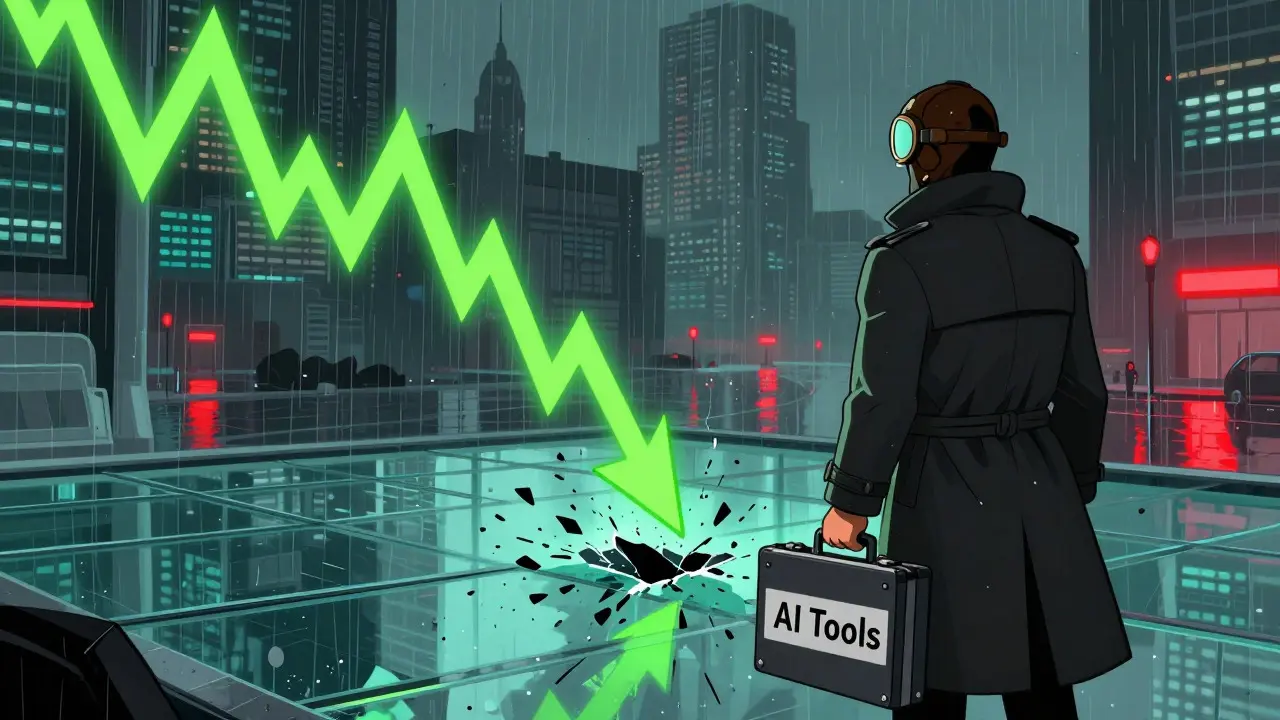
Since that initial pump, the price has fallen sharply. By January 2026, trading data shows prices hovering between $0.0003 and $0.0012 across different exchanges. Some platforms even list the market cap as near zero due to liquidity issues. This represents a decline of over 97% from its peak. Over a one-year period, the token has lost about 86% of its value. These numbers are typical for many meme coins that experience a rapid influx of speculative buyers followed by a long, slow bleed as interest fades.
| Metric | Value / Status |
|---|---|
| All-Time High | $0.03621 (Oct 28, 2024) |
| Current Price Range | $0.0003 - $0.0012 (Highly Volatile) |
| Total Supply | 999.99 Million TATE |
| Blockchain | Solana (SPL Token) |
| Market Cap Rank | #4960+ (Low Tier) |
| Holder Count | ~3,630 (Small Community) |
One thing to watch out for is the discrepancy in data across exchanges. On Binance, for instance, the market cap might show as $0 despite some reported volume. On other smaller platforms, it might show a few hundred thousand dollars. This inconsistency suggests poor liquidity. When liquidity is low, it means you can’t easily sell large amounts without crashing the price further. For a retail investor, this makes exiting a position difficult and risky.
The "AI Business Solution" Claim vs. Reality
The most intriguing part of Tate Terminal’s pitch is its claim to provide AI-driven business tools. In the crypto space, "AI" is a buzzword that attracts capital quickly. But does TATE actually deliver?
Right now, the answer appears to be no. Security researchers and industry analysts note that there are no verifiable API integrations, developer tools, or active software products associated with the token. If you search GitHub or developer forums, you won’t find active repositories linked to TATE’s AI infrastructure. This contrasts sharply with legitimate AI crypto projects that publish whitepapers, release beta software, and partner with tech firms.
Without tangible utility, the token relies entirely on speculation. Investors are buying based on the hope that the brand name will drive demand, not because they are using the product. This is a classic characteristic of meme coins. While some meme coins like Dogecoin have evolved into payment methods with merchant acceptance, TATE has not shown similar progress. Its primary use case remains speculative trading.
Risks and Red Flags
Before putting money into any cryptocurrency, especially one ranked outside the top 5,000, you should consider the risks. Here are the main concerns surrounding Tate Terminal:
- Anonymity: The team is unknown. If things go wrong, there’s no one to hold accountable.
- Liquidity Issues: Low trading volume means slippage. You might sell your tokens but receive significantly less than the displayed price.
- Contract Address Concerns: The contract address listed on some trackers ends with "pump," a suffix often associated with pump-and-dump schemes. While not definitive proof, it raises eyebrows among security experts.
- Regulatory Uncertainty: Marketing unverified financial returns or business solutions can attract scrutiny from regulators like the SEC, especially if the token behaves like an unregistered security.
- Brand Dependency: The token’s value is tied to Andrew Tate’s online presence. As his influence fluctuates, so does the token’s relevance. Recent trends suggest a decline in engagement with Tate-themed assets.
Technical analysis tools like TradingView currently flash "Strong Sell" signals for TATE across daily, weekly, and monthly timeframes. This isn’t financial advice, but it reflects the broader market sentiment: traders are largely moving away from this asset.
How to Buy and Store TATE (If You Still Want To)
If you’ve weighed the risks and still decide to proceed, here is how the process works. Since TATE is on Solana, you don’t need a centralized exchange like Coinbase or Binance for direct purchases in many cases. Instead, you’ll likely use a decentralized exchange (DEX).
- Get a Wallet: Download a Solana-compatible wallet like Phantom or Solflare. Secure your seed phrase offline.
- Buy SOL: Purchase Solana (SOL) on a major exchange and transfer it to your wallet address.
- Connect to a DEX: Use a platform like Raydium or Jupiter. Connect your wallet.
- Swap for TATE: Paste the correct contract address for Tate Terminal. Double-check it against reliable sources like CoinMarketCap to avoid scams.
- Execute Trade: Set your slippage tolerance appropriately (often higher for volatile tokens) and confirm the swap.
Be aware that gas fees on Solana are generally low, but the cost of impermanent loss or slippage on a low-liquidity token can be high. Always start with an amount you can afford to lose completely.
Conclusion: Is TATE Worth It?
Tate Terminal is a high-risk, speculative asset. It sits in the lower echelons of the cryptocurrency market with minimal utility, an anonymous team, and a steep price decline since its launch. While the association with Andrew Tate provides initial curiosity, it hasn’t translated into sustained value or technological innovation.
For most investors, sticking to established cryptocurrencies with clear use cases, transparent teams, and strong liquidity is a safer bet. If you do choose to explore TATE, treat it as entertainment rather than investment. Keep your exposure small, stay informed about liquidity conditions, and never invest money you need for living expenses.
Is Tate Terminal (TATE) a scam?
While not officially labeled a scam by authorities, Tate Terminal exhibits many red flags common in fraudulent schemes, such as an anonymous team, lack of verifiable utility, and extreme price volatility. Security researchers caution that its characteristics align with high-risk meme coins prone to manipulation.
Does Andrew Tate own Tate Terminal?
There is no public evidence that Andrew Tate officially endorses or owns Tate Terminal. The token uses his brand imagery and name inspiration, but the connection appears thematic rather than legal or operational. This lack of official partnership increases the risk for buyers.
What blockchain is TATE on?
Tate Terminal operates on the Solana blockchain as an SPL token. This means it benefits from Solana’s fast transaction speeds and low fees, but requires a Solana-compatible wallet like Phantom to store and manage.
Why is the TATE price so low?
The price dropped significantly after its initial launch surge due to a lack of sustainable demand, low liquidity, and the absence of real-world utility. With thousands of holders selling off and few new buyers entering, the market value has decreased by over 97% from its peak.
Can I make money with Tate Terminal?
It is possible to make money if you buy low and sell high, but the risk of losing your entire investment is very high. Given the current downward trend and low liquidity, most analysts view it as a poor investment opportunity compared to more established assets.