What Is the Blockchain Metaverse? Explained Simply
 Mar, 6 2026
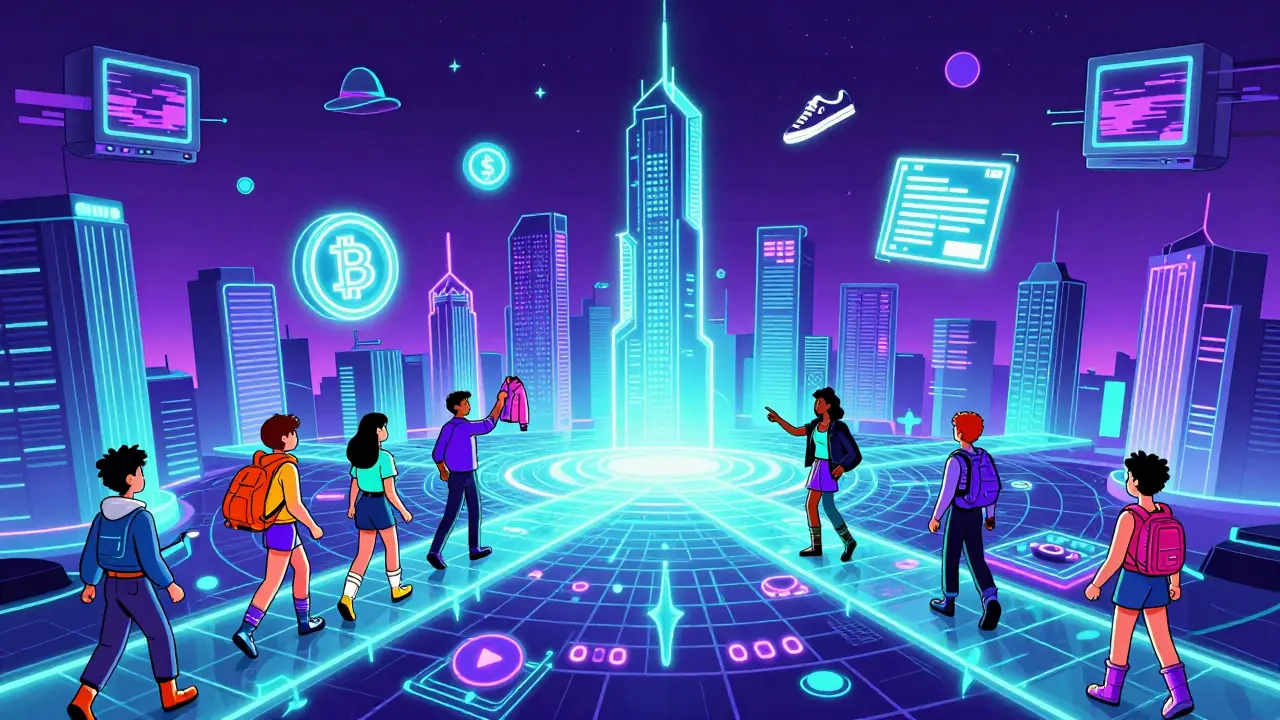
When you hear "metaverse," you might picture people in VR headsets walking around digital cities, buying virtual sneakers, or attending concerts in 3D. But what makes the blockchain metaverse different from games like Roblox or Meta’s Horizon Worlds? The answer is simple: ownership.
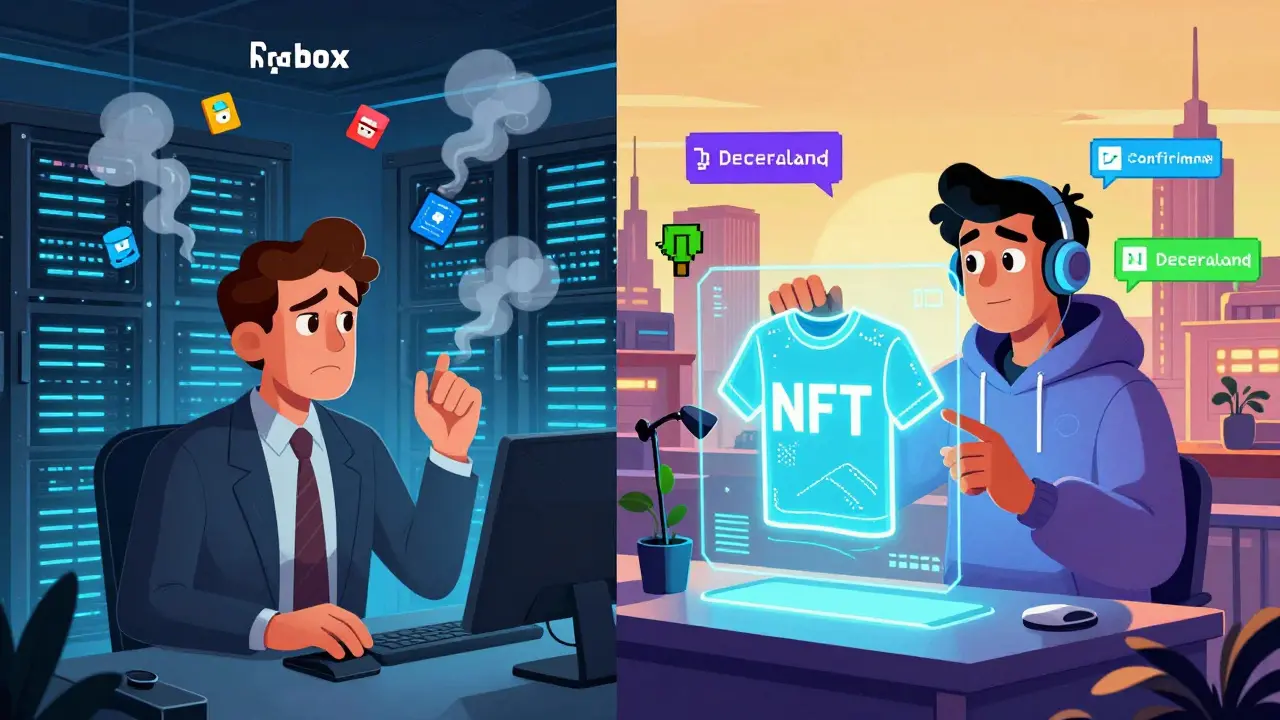
In most virtual worlds, everything you buy - a hat, a plot of land, a weapon - belongs to the company that runs the game. If they shut down the server, your stuff vanishes. In the blockchain metaverse, your digital items are yours, permanently. No company can take them away. Not even if they go bankrupt.
How Blockchain Makes the Metaverse Real
The blockchain metaverse isn’t just a 3D world. It’s a digital economy built on blockchain technology - the same system behind Bitcoin and Ethereum. Instead of relying on a single company to manage your account and your assets, the blockchain records every transaction in a public, unchangeable ledger. This means:
- Your virtual land is stored as a unique digital token (an NFT) that you control with a private key.
- If you sell your digital jacket to someone else, the sale is recorded on the blockchain and can’t be reversed or erased.
- Anyone can verify who owns what, without asking a company for permission.
This isn’t theory. In Decentraland, over 93,000 pieces of virtual land have been bought and sold. One plot in The Fashion District sold for $2.43 million in 2022. That’s not a game score - that’s real money, tracked on the blockchain.
Key Players in the Blockchain Metaverse
Not all blockchain metaverses are the same. Three platforms dominate the space:
| Platform | Founded | Token | Key Feature | Market Share (Q2 2024) |
|---|---|---|---|---|
| Decentraland | 2017 | MANA | Full DAO governance - users vote on rules | 12.3% |
| The Sandbox | 2012 | SAND | User-built games and experiences | 10.7% |
| Somnium Space | 2017 | CUBES | VR-first experience with real-time physics | 4.2% |
Decentraland is run by its users. Anyone who holds LAND tokens can vote on changes - like what kinds of ads are allowed or how taxes are collected. The Sandbox lets creators build games and charge others to play them, keeping 37% of sales as royalties. Somnium Space is built for VR users who want the most realistic feel, with motion tracking and spatial audio.
Why It’s Not Just Another Game
Traditional virtual worlds like Roblox or Fortnite let you buy items, but you can’t take them out of the game. You can’t sell your Roblox hat on eBay. You can’t use it in another game. The blockchain metaverse changes that.
Imagine buying a digital shirt in The Sandbox. You own it as an NFT. You can wear it in Somnium Space - if the platforms allow it. You can sell it on a marketplace. You can even rent it out to someone else. That’s interoperability - the dream of the blockchain metaverse.
Brands are already testing this. Atari opened a virtual arcade in The Sandbox and made $2.1 million in Q1 2024. Nike and Adidas have launched digital sneakers. Even JPMorgan has a lounge in Decentraland where clients can meet in VR.
The Real Problems
But here’s the truth: the blockchain metaverse is still messy.
First, it’s hard to use. You need a crypto wallet (like MetaMask), you need to buy cryptocurrency, you need to understand gas fees - the small cost to process each transaction. On Ethereum, gas can spike to $15 during busy times. On Polygon (used by Decentraland), it’s usually under $1. Still, most people give up before they even get started.
Second, performance is laggy. Decentraland runs at 30-45 frames per second on a good PC. Modern games like Cyberpunk 2077 run at 120+. The graphics look dated because blockchain systems aren’t built for high-end visuals - they’re built for ownership.
Third, the market is wild. In 2021, virtual land prices exploded. A plot bought for $50,000 in November 2021 was worth $600 in 2023. Many buyers lost money. The hype faded. The people still active now are mostly creators, developers, and crypto-native users - not casual gamers.
Who’s Using It - And Why
According to Chainalysis, 78% of blockchain metaverse users are male. 61% are between 25 and 44. Only 13% are complete beginners to crypto. This isn’t a mass-market product yet.
But enterprise adoption is growing fast. 63 of the Fortune 100 companies are running pilots. Siemens uses blockchain metaverses to simulate factory layouts before building them. JPMorgan uses it for client meetings. IBM helps companies integrate metaverse tools with their existing CRM systems.
Why? Because it saves money. Training employees in VR is cheaper than flying them to a physical location. Testing product designs in a digital twin reduces material waste. These aren’t gimmicks - they’re efficiency tools.
The Future: What Comes Next
Experts predict a "metaverse winter" between 2025 and 2027 - a cooling-off period as speculative prices drop and unrealistic expectations fade. But that doesn’t mean the end. It means cleanup.
By 2027, Forrester predicts 30% of Fortune 500 companies will earn revenue from blockchain metaverse experiences. That’s up from just 8% in 2024.
Key upgrades are already coming:
- Atlas 2.0 (Decentraland): Full 3D avatars with facial expressions and motion capture.
- HyperCity (The Sandbox): 10,000 branded districts by 2025 - think Disney World, but built by users.
- Layer-2 Scaling: Networks like Immutable X can process 9,000 transactions per second - close to Visa’s speed.
But the biggest hurdle isn’t tech - it’s access. Until you can join the blockchain metaverse without a wallet, without crypto, without understanding gas fees - it won’t go mainstream.
For now, it’s a space for builders, investors, and early adopters. The people who are making money aren’t just buying land. They’re building galleries, hosting concerts, creating games, and selling digital fashion. They’re not waiting for the future - they’re building it.
Is the blockchain metaverse just crypto speculation?
Partly, yes - early prices were driven by hype. But real value is now being created through user-built economies, brand experiences, and enterprise tools. Companies like JPMorgan and Siemens aren’t investing because they think land prices will rise. They’re investing because it works better than traditional methods for training, collaboration, and prototyping.
Can I really make money in the blockchain metaverse?
Yes - but not by buying land hoping to flip it. People earn money by creating content: designing virtual fashion, hosting events, building games, or renting out digital spaces. One user on Reddit earns $1,200 a month from commissions for art galleries in Somnium Space. It’s a job - not a lottery ticket.
Do I need a VR headset to use the blockchain metaverse?
No. You can access Decentraland and The Sandbox through a regular web browser. VR headsets give a more immersive experience, but they’re optional. Most users still interact via desktop or mobile.
What’s the difference between Decentraland and The Sandbox?
Decentraland is more like a digital city where users own the land and vote on rules. The Sandbox is more like a game-making platform - users build experiences on top of the land, and creators earn royalties when others play their games. Decentraland is governance-first; The Sandbox is creation-first.
Is the blockchain metaverse safe?
The blockchain itself is secure - transactions can’t be altered. But scams are common. Fake marketplaces, phishing wallets, and rug pulls happen. Always verify URLs, use trusted wallets, and never share your private key. If it sounds too good to be true - it is.
The blockchain metaverse isn’t a fantasy. It’s a new kind of digital economy - one where you own what you create. It’s not perfect. It’s not easy. But it’s real. And it’s growing - slowly, steadily, and without permission from anyone.