What is Ultiverse (ULTI)? A Guide to the AI-Powered GameFi Metaverse
 Oct, 3 2026
Imagine logging into a single game where you can trade items from five different blockchain games, vote on new features with your own money, and chat with NPCs that actually remember what you said yesterday. That’s the promise of Ultiverse, a Web3 platform trying to stitch together fragmented crypto games into one cohesive digital society. If you’ve seen the ticker ULTI popping up in your portfolio or heard buzz about "AI-driven GameFi," you’re probably wondering if this is just another hype cycle or something with real staying power. As of October 2026, the project has raised over $15 million from heavy hitters like Binance Labs, but does that backing translate to utility for you?
The Core Concept: More Than Just Another Token
Most crypto projects give you a coin and hope you hold it. Ultiverse takes a different approach by building an ecosystem where the token is the fuel for everything. It’s not just a speculative asset; it’s the currency used for transactions inside their micro-worlds, for governance voting, and for staking rewards. The team describes it as a "digital society" inspired by movies like *Ready Player One* and *Free Guy*, but let’s be real-how many projects have claimed that vision without delivering?
The platform integrates GameFi, NFTs, DeFi, and a marketplace into one interface. Instead of juggling five different wallets and bridges just to move assets between games, Ultiverse aims to be the unified entrance. For developers, they offer tools to build these digital realms using AI and blockchain tech. For gamers, it means fewer headaches and more playtime. But the real hook here is the integration of artificial intelligence into the gameplay mechanics, specifically through their Bodhi AI protocol.
How the ULTI Token Works
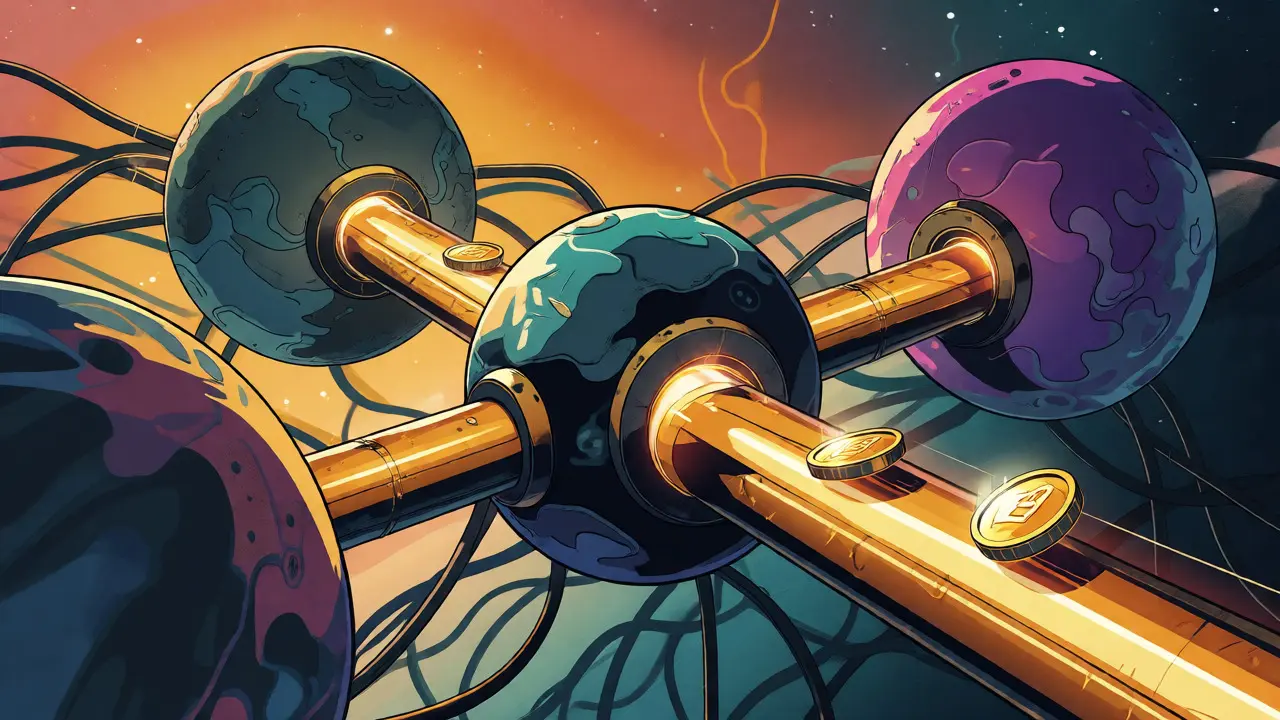
You can’t understand Ultiverse without understanding its economics. The ULTI token is an ERC-20 token, but it recently upgraded to support cross-chain functionality via the Omnichain Fungible Token (OFT) standard. This is a big deal because it allows frictionless transfers across Ethereum, BNB Chain, and Polygon without needing clunky bridges. You just send it, and it arrives. No waiting three hours for a bridge transaction to confirm.
Let’s look at the numbers. The total supply is capped at 10 billion tokens. Here’s how that pie is sliced:
| Category | Percentage | Amount (ULTI) |
|---|---|---|
| Community/Ecosystem | 46% | 4,600,000,000 |
| Investors | 20% | 2,000,000,000 |
| Core Contributors | 17% | 1,700,000,000 |
| Airdrop | 8% | 800,000,000 |
| Jumpstart/Liquidity/Advisory | 9% (Combined) | 900,000,000 |
Nearly half the supply goes to the community and ecosystem, which is a good sign for decentralization. However, keep an eye on the investor and core contributor unlocks. These groups often sell during price spikes, creating downward pressure. The airdrop portion was distributed early to bootstrap the user base, meaning many holders got their tokens for free. This can lead to quick profit-taking if the project doesn’t deliver immediate value.
The Tech Stack: AI and Cross-Chain Magic
What sets Ultiverse apart from other GameFi platforms? It’s the Bodhi AI protocol. Traditional blockchain games use static scripts for NPCs. You talk to a merchant, he says the same line every time, and you leave. Bodhi AI changes that by enabling customizable non-playable characters that can react dynamically to player actions. This isn’t just cool tech demo stuff; it creates deeper immersion and potentially higher retention rates for players who are tired of repetitive quest lines.
On the infrastructure side, the adoption of the OFT standard in August 2024 was a critical upgrade. Before this, moving ULTI between chains was a nightmare of gas fees and smart contract risks. Now, it’s seamless. This interoperability is crucial for a metaverse concept. If you can’t easily move your currency or assets between worlds, you don’t really have a metaverse-you just have separate apps pretending to be connected.
Staking and Governance: Putting Your Money Where Your Mouth Is
Holding ULTI isn’t passive anymore. The platform introduced a staking system in mid-2024 that lets users lock up their tokens to support network security and earn rewards. While specific APY figures fluctuate based on participation rates, staking serves two purposes: it reduces circulating supply (potentially helping price stability) and gives you voting power.
Governance is handled through the Ultiverse DAO. If you stake ULTI, you get a say in future updates, treasury allocations, and partnerships. This moves the project away from centralized decision-making, though critics might argue that large holders still dominate votes. Still, having a clear governance framework adds legitimacy compared to projects where the dev team makes all calls behind closed doors.
Market Performance and Risks
Let’s talk dollars and cents. As of late 2026, ULTI trades around $0.0015. Market cap estimates vary slightly depending on whether you trust CoinGecko ($8.7M) or CoinCarp ($15.2M), likely due to differing calculations of circulating supply. The trading volume is surprisingly high relative to the market cap, suggesting active speculation rather than long-term holding.
Price predictions are mixed. Some algorithms see ULTI dipping to $0.0013 by late 2025, while others predict a rise to $0.0034 by 2030. Volatility is guaranteed. The broader GameFi sector struggled post-2021 hype, with many projects losing 90% of their value. Ultiverse’s survival depends on actual user engagement, not just token speculation. Are people playing the games? Are developers building on the platform? These metrics matter more than candlestick charts in the long run.
Is Ultiverse Worth Your Attention?
If you’re a gamer looking for a unified experience across multiple blockchain titles, Ultiverse offers a compelling technical foundation. The AI integration and cross-chain compatibility solve real pain points. However, if you’re purely an investor looking for the next 100x gem, proceed with caution. The competition is fierce, and execution risk remains high. The $15 million funding provides runway, but burning cash without growing the user base is a common failure mode in this space.
What blockchains does Ultiverse support?
Ultiverse primarily operates on Ethereum, BNB Chain, and Polygon. Thanks to the Omnichain Fungible Token (OFT) standard adopted in 2024, ULTI tokens can move freely between these networks without traditional bridging delays or high costs.
Can I stake ULTI tokens?
Yes, the platform launched a staking system in July 2024. Users can stake ULTI to earn rewards and gain voting rights within the Ultiverse DAO. Staking helps secure the ecosystem and reduces the immediate selling pressure on the token.
Who invested in Ultiverse?
The project raised over $15 million from prominent investors including Binance Labs and DeFiance Capital. This institutional backing suggests confidence in the team's ability to execute their vision, though it does not guarantee financial returns for retail investors.
What is the Bodhi AI protocol?
Bodhi AI is Ultiverse's proprietary technology for creating dynamic, customizable non-playable characters (NPCs). Unlike static script-based NPCs in traditional games, Bodhi-powered characters can adapt to player interactions, enhancing immersion and replayability in Web3 games.
Where can I buy ULTI?
ULTI is available on major exchanges such as Gate.io, Binance, and OKX. Always verify the contract address before purchasing to avoid counterfeit tokens, especially given the multi-chain nature of the asset.