Why Your Bank Account Might Freeze Over Crypto Activity in 2025
 Dec, 3 2025
Crypto Transaction Risk Checker
Enter details about your crypto transaction to see if it could trigger a bank account freeze. Based on blockchain analysis and the GENIUS Act regulations effective in 2025.
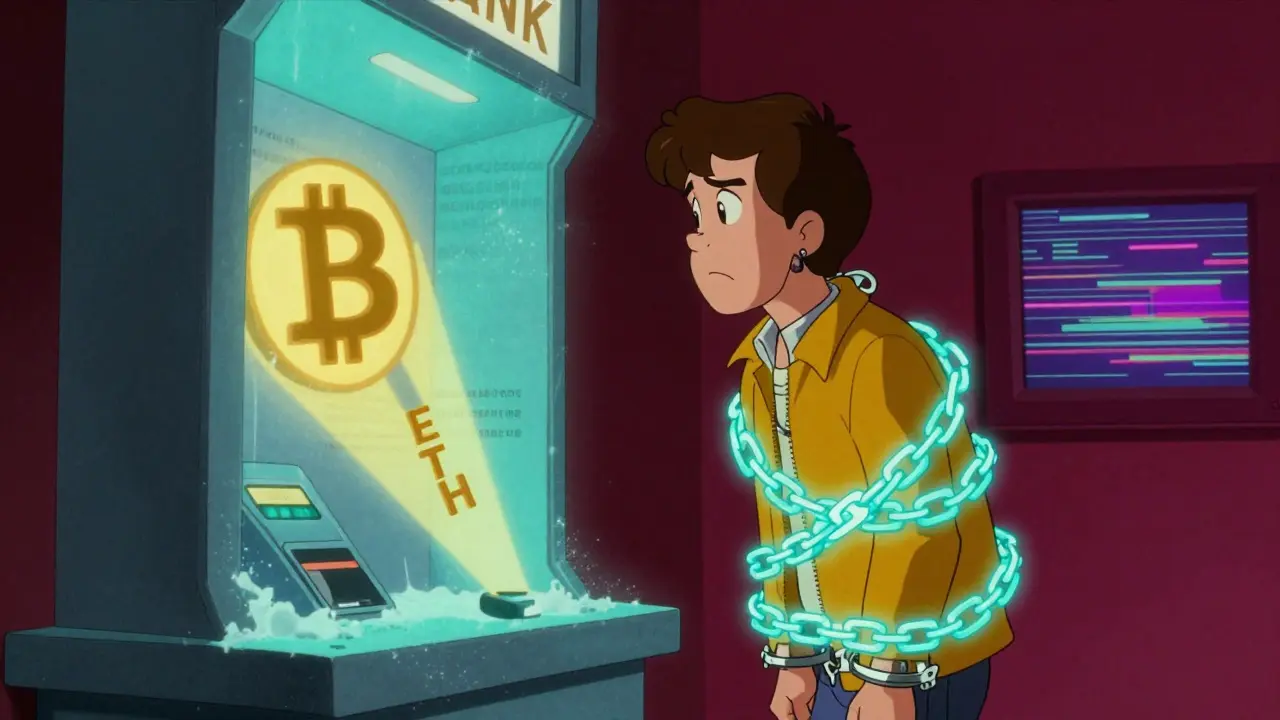
Imagine waking up to find your bank account locked. No access. No transfers. No withdrawals. You didn’t do anything illegal. You just bought Bitcoin last month. Or got paid in Ethereum for freelance work. Or even received a refund from a crypto-based service. Suddenly, your life is on hold. This isn’t rare anymore. In 2025, bank account freezing for crypto activity is happening to thousands of regular people - not criminals, not hackers, just everyday users.
How a Simple Crypto Transaction Can Trigger a Freeze
Banks don’t freeze accounts because you bought crypto. They freeze them because of where that crypto came from. Blockchain is public. Every transaction leaves a trace. If your wallet received even a single satoshi from an address tied to a darknet market, a sanctioned entity, or a mixing service - your account could be flagged. You didn’t know. You didn’t care. But the bank’s system did. And it didn’t ask you. It just locked everything.This isn’t guesswork. Banks now use advanced blockchain analysis tools like Chainalysis, Elliptic, and TRM Labs. These tools map out the entire history of any cryptocurrency address. They don’t care if you’re innocent. They care if the money passed through a risky address. One bad link in the chain, and your account gets tagged. It’s like being blamed for someone else’s crime because you borrowed their car.
The GENIUS Act Changed Everything in 2025
Before June 2025, banks were unsure how to handle crypto. Now, they have clear rules - and they’re playing it safe. The GENIUS Act is a federal law signed in mid-2025 that gives banks legal authority to freeze accounts linked to cryptocurrency transactions tied to illicit activity, even without proof the account holder did anything wrong. It created a new category called "lawful order," which lets regulators demand banks freeze assets based on blockchain analysis alone.What this means: banks no longer need to prove you’re involved in crime. They just need to show your transaction history connects - however indirectly - to a flagged address. And once flagged, the burden shifts to you. You have to prove your innocence. That’s not how the system used to work.
Why Banks Are Overreacting
Banks aren’t trying to punish you. They’re scared. The Federal Deposit Insurance Corporation (FDIC) issued new guidance in April 2025 saying banks can work with crypto - but only if they have rock-solid controls. That means:- Robust Know Your Transaction (KYT) systems
- Strong cryptographic key management
- Third-party vendor oversight
- Full AML compliance
Many banks don’t have the tech or staff to do this well. So they take the easy route: freeze first, ask questions later. It’s cheaper than hiring blockchain forensics teams. It’s faster than waiting for regulators to clarify gray areas. And it protects them from fines - which can run into millions if they miss a flagged transaction.
Even big banks like JPMorgan Chase and Bank of America are launching stablecoin services. But that’s for institutions. For you? The rules are tighter than ever.

Who Gets Hit the Hardest?
You might think only people buying Bitcoin on shady exchanges get frozen. Not true. Here’s who’s most at risk:- Freelancers paid in crypto - If your client received crypto from a mixing service, your payment gets flagged.
- Merchants accepting crypto - Your payment processor sends funds to your bank. If those funds came from a tainted source, your account gets locked.
- People receiving gifts or refunds - Someone sends you ETH as a birthday gift. That ETH once passed through a ransomware wallet. Freeze.
- DeFi users - Even if you never touched a centralized exchange, your wallet interaction with a protocol that had a hack can trigger a freeze.
There’s no way to know if a transaction is "clean." Blockchain history is public, but it’s not labeled. You can’t see the red flags. Only the banks’ software can.
What Happens After Your Account Is Frozen?
You’ll get an email or letter. Usually vague. Something like: "Your account is under review due to regulatory requirements." No details. No timeline. No contact person.Then comes the paperwork. Banks will demand:
- Proof of where you bought your crypto (exchange statements)
- Wallet addresses you’ve ever used
- Transaction IDs for every crypto deposit in the last 12 months
- Identification documents, sometimes re-verified
- A signed affidavit saying you didn’t engage in illegal activity
Some people wait weeks. Others wait months. Some never get their money back. If the bank can’t verify the source, they may close the account entirely - and hold the funds until the issue is resolved, or until they’re legally allowed to return them.
And if you’re unlucky? You might get reported to FinCEN. That’s the Financial Crimes Enforcement Network. That’s when things start looking like a criminal investigation - even if you did nothing wrong.

How to Protect Yourself in 2025
You can’t control blockchain history. But you can reduce your risk:- Use only regulated exchanges - Stick to platforms like Coinbase, Kraken, or Gemini. They do KYC and monitor sources. Avoid peer-to-peer trades unless you know the seller.
- Never reuse wallet addresses - Each time you receive crypto, generate a new address. This limits exposure if one address gets flagged.
- Keep detailed records - Save every transaction ID, timestamp, and exchange receipt. If your account freezes, you’ll need proof.
- Avoid mixing services - Even if you think they’re "privacy tools," they’re red flags to banks.
- Don’t accept crypto from strangers - If someone sends you crypto out of the blue, decline it. It’s not worth the risk.
Also, consider using a separate bank account just for crypto. That way, if it freezes, your rent money and paycheck are still safe.
What’s Next? The Big Picture
The GENIUS Act isn’t the end. It’s the beginning. The Senate is still debating the CLARITY Act and the CBDC Anti-Surveillance State Act. More rules are coming. More banks will follow suit. The message is clear: if you want to use crypto and keep your bank account, you need to play by their rules.But here’s the irony: the same banks that freeze your account are launching their own stablecoins. They’re betting on crypto. They just don’t want you to have the same access.
That’s why more people are turning to decentralized finance (DeFi) - wallets, smart contracts, no bank in between. But DeFi comes with its own risks: no customer support, no chargebacks, no legal recourse if you lose funds.
Is There Any Hope for Fairness?
Some legal experts say the current system violates basic fairness. If you didn’t commit a crime, why should you be punished? Why should your entire financial life be held hostage because someone else used a wallet before you?There are lawsuits brewing. Some users are challenging freezes in court. But progress is slow. Banks have deep pockets. Regulators have the law on their side. And blockchain analysis tools? They’re getting smarter every day.
For now, the safest path is simple: treat crypto like cash. Know where it came from. Know where it’s going. And assume every transaction could be traced back to something dangerous - even if you didn’t know it.
Can a bank freeze my account just because I use crypto?
Yes. Banks don’t freeze accounts for using crypto itself. They freeze them when the crypto you received or sent is linked - even indirectly - to high-risk or illegal activity on the blockchain. Your personal intent doesn’t matter. Only the transaction history does.
How long does it take to get a frozen crypto account unfrozen?
It varies. Some accounts are unfrozen in 2-4 weeks if you provide complete documentation. Others take 3-6 months. Some never get unfrozen if the bank can’t verify the source of funds. There’s no legal deadline for resolution.
Do all banks freeze crypto accounts the same way?
No. Big banks like Chase and Wells Fargo have dedicated crypto compliance teams and use advanced blockchain tools. Smaller banks and credit unions may not have the tech - so they either refuse crypto entirely or freeze accounts more aggressively to avoid risk. Neobanks like Chime or Revolut are often the strictest - they have no legacy systems and move fast.
Can I sue my bank for freezing my account over crypto?
You can try, but it’s difficult. Banks have broad legal authority under the GENIUS Act and BSA/AML rules to freeze accounts based on suspicion. Courts usually side with banks unless you can prove gross negligence or discrimination. Most cases settle quietly - if they go anywhere at all.
Will using a hardware wallet protect me from account freezes?
No. A hardware wallet keeps your keys secure, but it doesn’t change blockchain history. If you send crypto from your hardware wallet to your bank account, and that crypto has a tainted past, the bank will still freeze your account. The wallet type doesn’t matter - the transaction history does.
Are there banks that don’t freeze crypto accounts?
Very few. Most major U.S. banks now have crypto compliance policies. Some credit unions and regional banks may still allow crypto deposits - but they’re rare. Even those banks are tightening rules as 2025 progresses. The trend is universal: stricter controls, more freezes.
Can I avoid bank freezes by using only DeFi?
You can avoid bank freezes by never touching a traditional bank. But that comes with trade-offs: no FDIC insurance, no customer support, no legal recourse if you lose funds, and no way to pay rent or bills directly. DeFi keeps you out of the banking system - but it also cuts you off from the financial mainstream.
What should I do if my account is frozen?
Don’t panic. Don’t withdraw funds from other accounts. Don’t open new accounts to hide money - that could make things worse. Gather all transaction records, wallet addresses, and exchange statements. Contact your bank’s compliance department in writing. Be polite, factual, and patient. Most freezes are resolved if you provide clear, complete documentation.