Australian Crypto Regulations and Licensing by AUSTRAC: 2026 Guide
 Jul, 25 2026
Running a crypto business in Australia used to be a bit of a gray area. You knew you had to watch out for money laundering, but the rules were fuzzy. That changed fast. If you are running an exchange, a wallet service, or even facilitating peer-to-peer transfers, AUSTRAC is now watching closely. As we hit mid-2026, the clock has run out on the grace period. The deadline for full compliance with the expanded Anti-Money Laundering and Counter-Terrorism Financing (AML/CTF) regime was March 31, 2026. Are you ready?
The landscape isn't just about filling out forms anymore. It’s about integrating deep-tech monitoring into your daily operations. With the market size hitting AUD 4.7 billion in 2025 and over 3 million active users, the stakes are high. But here is the catch: only about half of domestic exchanges were fully compliant as recently as August 2025. The gap between operating and being licensed is where most businesses stumble today.
Who Actually Needs to Register?
You might think you’re safe because you don’t touch fiat currency. Think again. The definition of who needs a license has widened significantly under the AML/CTF Amendment Act 2024. It’s no longer just for those swapping Bitcoin for Australian Dollars.
If you provide any of these five services, you are likely a Virtual Asset Service Provider (VASP) in the eyes of the law:
- Exchanging virtual assets for fiat currencies: This is the classic crypto-to-cash swap.
- Exchanging one virtual asset for another: Swapping Ethereum for Solana? You need to register.
- Transferring virtual assets: Moving funds on behalf of a client counts.
- Safekeeping and administration: Running a custody wallet service puts you in the regulatory net.
- Participating in issuance: If you help issue tokens, you fall under the perimeter.
Note that this explicitly excludes things like digital game currencies (think Candy Crush tokens) or customer loyalty points (like FlyBuys). But if you are dealing with transferable digital value, AUSTRAC wants your name on their registry. By March 2026, every single one of these entities needed to be registered and running a full AML program.
The Travel Rule: No More Anonymous Transfers
This is probably the biggest headache for operators right now. The Travel Rule requires you to pass along identity information with every transaction above a certain threshold. In Australia, that threshold is AUD 1,000.
Here is how it works in practice. When a user sends more than AUD 1,000 worth of crypto to another wallet, you must attach the originator’s name, account number, and address (or national ID/passport number) to the transaction data. The receiving institution then does the same for the beneficiary. It doesn’t matter if the transfer happens via blockchain, SWIFT, or any other rail. The requirement is technology-neutral.
Why does this matter? Because until recently, crypto transfers were largely opaque. Now, they look a lot more like traditional bank wires. For smaller startups, building the tech stack to parse and store this data without bloating the blockchain or violating privacy laws has been costly. One Reddit user reported spending AUD 185,000 just on compliance software to meet these Customer Due Diligence (CDD) standards. That’s a steep price tag for a small operation.
Customer Due Diligence (CDD) Standards
Knowing your customer isn’t a one-time checkbox anymore. Under the new rules, Enhanced Due Diligence (EDD) is mandatory for high-risk customers. Who falls into this bucket? Politically Exposed Persons (PEPs), individuals from FATF blacklisted jurisdictions, and anyone showing unusual transaction patterns.
You can’t just verify them at sign-up and forget about it. Ongoing monitoring is required throughout the entire relationship. This means your system needs to flag suspicious behavior in real-time. If a low-risk user suddenly starts moving large sums through multiple wallets in different countries, your system should trigger an alert before the money disappears.
The average cost for setting up this infrastructure ranges from AUD 120,000 to AUD 350,000. It includes hiring AML experts who understand digital asset typologies and buying blockchain analytics tools. These tools help you trace funds across chains, which is crucial when you have to report Suspicious Matter Reports (SMRs) to AUSTRAC.

Crypto ATMs: A Tightening Grip
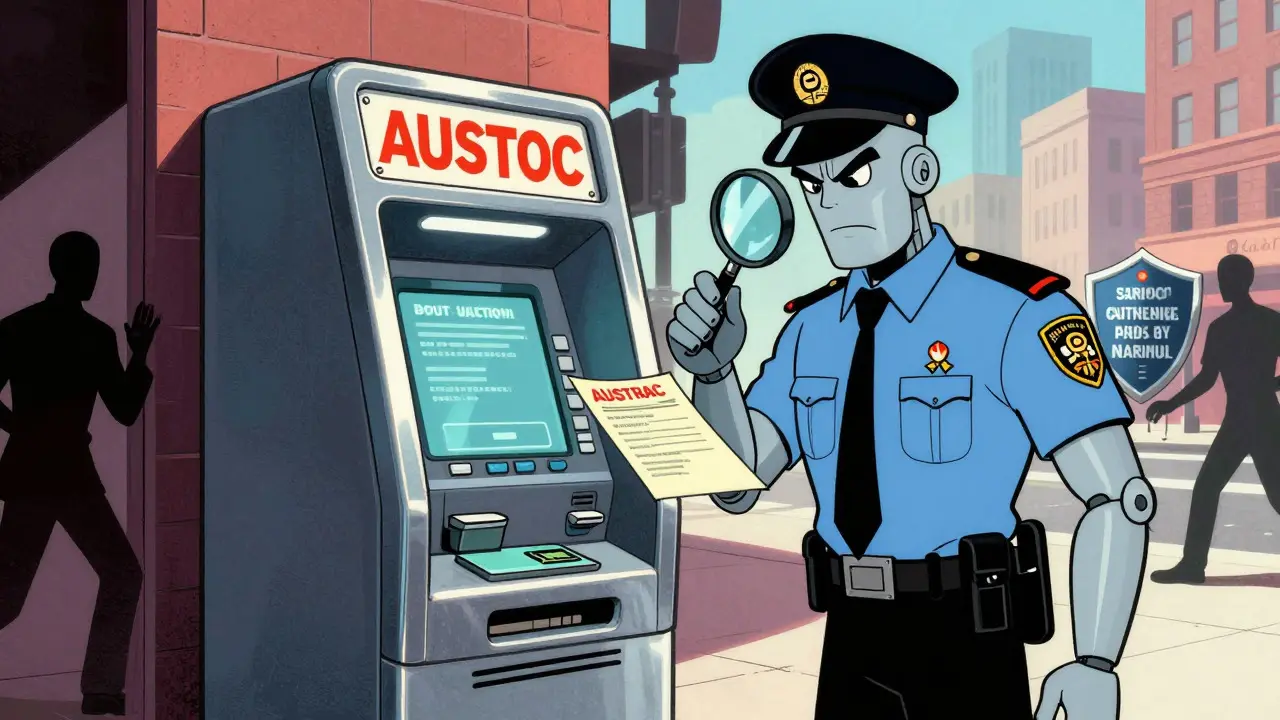
If you operate physical machines, pay attention. Australia has seen a massive surge in crypto ATM density, jumping from 23 units in 2019 to 1,800 operational machines by September 2025. This makes us the highest density region in Asia Pacific. But that growth came with risks.
In July 2025, a joint law enforcement operation identified 90 victims of scams targeting older Australians using these machines. In response, AUSTRAC introduced minimum standards for crypto ATMs. Operators now face stricter requirements, including a bonding requirement of AUD 50,000. Some operators complain this is too high compared to US states like Texas, which only require USD 25,000. Still, the regulator argues it’s necessary to protect consumers from fraud.
The result? Several providers paused operations or withdrew voluntarily after AUSTRAC refused to renew one provider’s registration. The message is clear: convenience cannot come at the cost of consumer protection.
| Requirement | Old Framework (Pre-2025) | Current Framework (2026+) |
|---|---|---|
| Regulatory Perimeter | Fiat-to-Crypto exchanges only | All VASPs (Crypto-to-Crypto, Custody, Issuance) |
| Travel Rule Threshold | Varied/Unenforced | AUD 1,000 (Mandatory Originator/Beneficiary Info) |
| Customer Monitoring | Point-in-time verification | Ongoing monitoring throughout relationship |
| DeFi Guidance | Non-existent | Limited; largely unaddressed in current regs |
The DeFi Gap and Future Outlook
Here is where things get tricky. Decentralized Finance (DeFi) platforms remain a blind spot. A survey by the Australian Digital Commerce Association found that 68% of crypto businesses are worried about the lack of guidance for DeFi. How do you apply KYC to a smart contract? Who do you report to when there is no central entity?
Currently, the regulations focus on the conduct of service providers, not the technology itself. This creates flexibility but also uncertainty. While the US and UAE have moved faster on stablecoin regulation and sandbox environments, Australia is still catching up. Professor Ross Buckley from UNSW Law Center noted that Australia’s implementation lags behind global peers by 18-24 months.
However, the government is working on it. The 'Statement on Developing an Innovative Australian Digital Asset Industry' released in March 2025 outlined plans for a specific licensing framework for Digital Asset Platforms (DAPs) and a regime for payment stablecoins under the Stored Value Facility (SVF) rules. We expect final AML/CTF Rules to drop in Q4 2025, with clearer guidance following soon after.
How to Get Compliant Today
If you are starting fresh or cleaning up your act, follow this path:
- Register with AUSTRAC: Use their online portal. This is step one. Without registration, you are operating illegally.
- Risk Assessment: Conduct a comprehensive risk assessment of your products and customers. Identify where money laundering could happen.
- Implement Tech Stack: Invest in blockchain analytics tools. Integrate them with your legacy systems. This is where 63% of businesses struggle, so start early.
- Train Staff: Your team needs to understand digital asset typologies. Standard banking AML training won’t cut it anymore.
- Report SMRs: Set up a system to file Suspicious Matter Reports promptly. Delays here can lead to heavy fines.
AUSTRAC has set up a dedicated crypto helpdesk that handles around 1,200 queries monthly. If you are stuck, call them. Their average response time is about three business days. Don’t guess-ask.
Market Reality Check
Compliance costs money, but it also builds trust. Independent Reserve, for example, achieved full compliance in early 2025 and saw a 22% increase in institutional clients. Institutional investors want safety. They want to know their money isn’t sitting next to illicit funds.
On the flip side, CoinSpot temporarily suspended its P2P service in August 2025 because they couldn’t meet the new transaction monitoring requirements fast enough. Being non-compliant hurts your reputation and your bottom line. With 12,345 crypto-related suspicious matter reports filed in 2024 alone-a 147% year-over-year increase-the regulator is serious about cracking down.
The future looks bright for those who adapt. KPMG projects the market will grow to AUD 7.3 billion by 2027. But this growth depends on regulatory clarity. If Australia misses its deadlines, we risk falling behind Singapore and Hong Kong in fintech competitiveness. The window is open, but it’s closing fast.
Do I need an AUSTRAC license if I only trade crypto-to-crypto?
Yes. Since the expansion of the regulatory perimeter, any platform facilitating exchanges between virtual assets (e.g., swapping ETH for BTC) must register with AUSTRAC and comply with AML/CTF requirements. This change took full effect by March 2026.
What is the penalty for non-compliance with AUSTRAC crypto rules?
Penalties can be severe, including substantial fines and criminal charges for directors. Additionally, AUSTRAC can refuse to renew your registration, effectively shutting down your business operations in Australia. Recent actions against crypto ATM providers show the regulator is willing to enforce strict penalties.
How much does it cost to become compliant?
The typical cost for technology infrastructure and compliance setup ranges from AUD 120,000 to AUD 350,000. Smaller firms may spend less, while larger platforms with complex needs often exceed this range. Costs include software, legal advice, and specialized staff training.
Does the Travel Rule apply to all transactions?
No, it applies specifically to value transfers above AUD 1,000. For these transactions, you must collect and transmit complete originator and beneficiary information. Transactions below this threshold have lower reporting requirements but still need basic monitoring.
Are DeFi platforms regulated by AUSTRAC currently?
Currently, there is limited specific guidance for decentralized finance (DeFi) applications. However, if a centralized interface or service provider facilitates access to DeFi protocols, that provider likely falls under the VASP definition. The government is reviewing this area for future reforms.