Benefits of Decentralized Identity: Privacy, Security & Control
 Aug, 27 2026
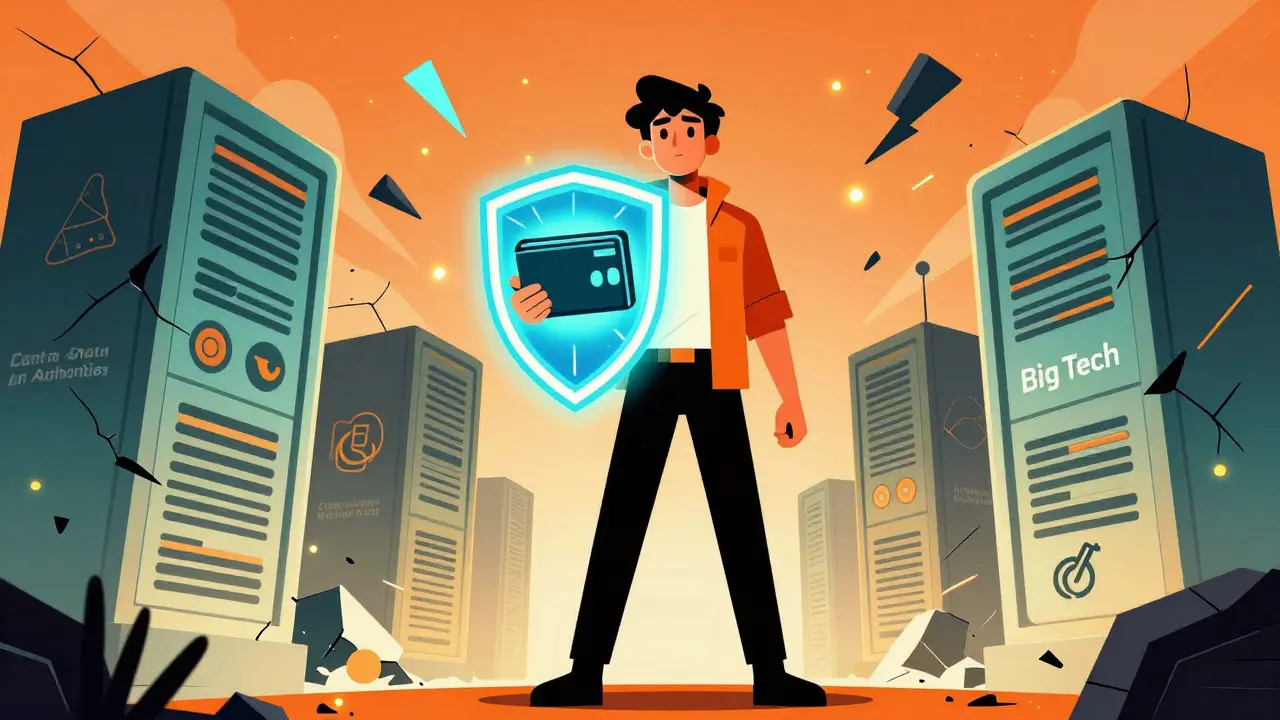
Imagine handing over your passport, driver’s license, and credit card details every time you want to buy a coffee or log into a new app. That is the reality for most people in centralized digital systems. You are constantly renting out your identity to big tech companies and government databases, hoping they don’t get hacked. Decentralized Identity is a system where you own and control your digital data using cryptographic keys and distributed ledgers, eliminating the need for central authorities. It flips the script by putting the power back in your hands, literally in your pocket.
This isn't just theoretical hype. As data breaches become more frequent and privacy laws like GDPR tighten their grip, the old model of storing all your info in one giant database is cracking. Decentralized identity offers a robust alternative that promises better security, lower costs, and true user autonomy. But what does it actually mean for your daily life? And how does it work under the hood?
Key Takeaways
- You keep control: Your data lives in your digital wallet, not on a company's server.
- Breaches become harder: Distributed storage means no single point of failure for hackers to target.
- Privacy by design: Zero-knowledge proofs let you prove facts (like being over 18) without revealing everything (like your exact birth date).
- Interoperability matters: Built on W3C standards, these credentials work across different platforms and services.
- Costs drop: Eliminating middlemen reduces administrative overhead for businesses and friction for users.
How Decentralized Identity Actually Works
To understand why this matters, you have to look at the machinery. At its core, decentralized identity relies on two main components: Decentralized Identifiers (DIDs) and unique identifiers that can be resolved to a DID Document containing public keys and service endpoints.
Think of a DID as your digital address. Unlike a username tied to a specific website, a DID belongs to you. It works anywhere. Paired with this is the concept of Verifiable Credentials, which are digital certificates issued by trusted entities that can be cryptographically verified by any party. These credentials live in a secure digital wallet on your phone.
The magic happens through cryptography. When you need to prove something-say, that you have a valid driver's license-you don't send the whole document to the verifier. Instead, you use a cryptographic signature to prove the credential is real and hasn't been tampered with. This process is fast, secure, and doesn't require the verifier to store your data. They just check the math. If the math checks out, you're good.
Reclaiming Privacy with Selective Disclosure
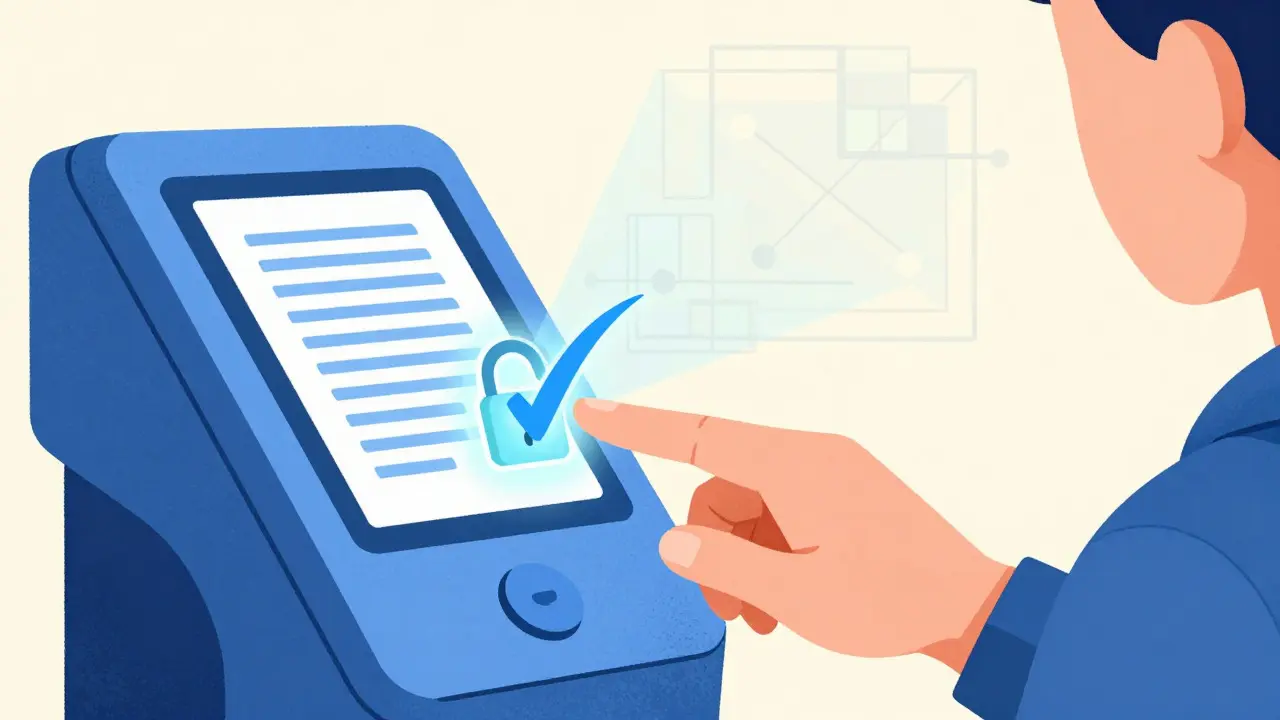
The biggest pain point with current systems is over-sharing. To buy alcohol, you show your ID, which reveals your name, photo, address, and birthday. The bartender doesn't need all that; they just need to know you're an adult. Decentralized identity solves this using Zero-Knowledge Proofs (ZKPs), a cryptographic method that allows one party to prove to another that a statement is true without conveying any additional information.
With ZKPs, you can prove you are over 18 without revealing your actual age. You can verify you hold a university degree without showing your GPA or transcript. This is called selective disclosure. It aligns perfectly with the principle of data minimization, which suggests you should only collect the absolute minimum amount of personal data needed for a transaction.
For organizations, this is a game-changer. Under regulations like the General Data Protection Regulation (GDPR), companies face massive fines if they store too much unnecessary personal data. By using decentralized identity, they stop collecting that data in the first place. If they don't have it, they can't leak it. This shifts the liability from the company back to the individual, who chooses exactly what to share and when.
Security Beyond the Central Database
Cybersecurity experts often say that centralized databases are honeypots. Why? Because holding billions of user records makes a company a prime target. When a major breach hits, millions of identities are exposed at once. In a decentralized model, there is no central database to hack.
Your credentials are stored locally on your device. Even if a service provider gets compromised, they only lose access to their own service logic, not your identity data. This compartmentalization is crucial. If one credential is lost or stolen, it doesn't automatically expose your entire digital life. You can revoke that specific credential and issue a new one without changing your email, social media handles, or other accounts.
Furthermore, because DIDs are anchored to distributed ledgers like Hedera or Ethereum, the integrity of the identifier itself is maintained by thousands of nodes worldwide. There is no single point of failure. If one node goes down, the network keeps running. This resilience is something traditional identity providers struggle to match, especially during high-traffic events or cyberattacks.
Interoperability and Open Standards
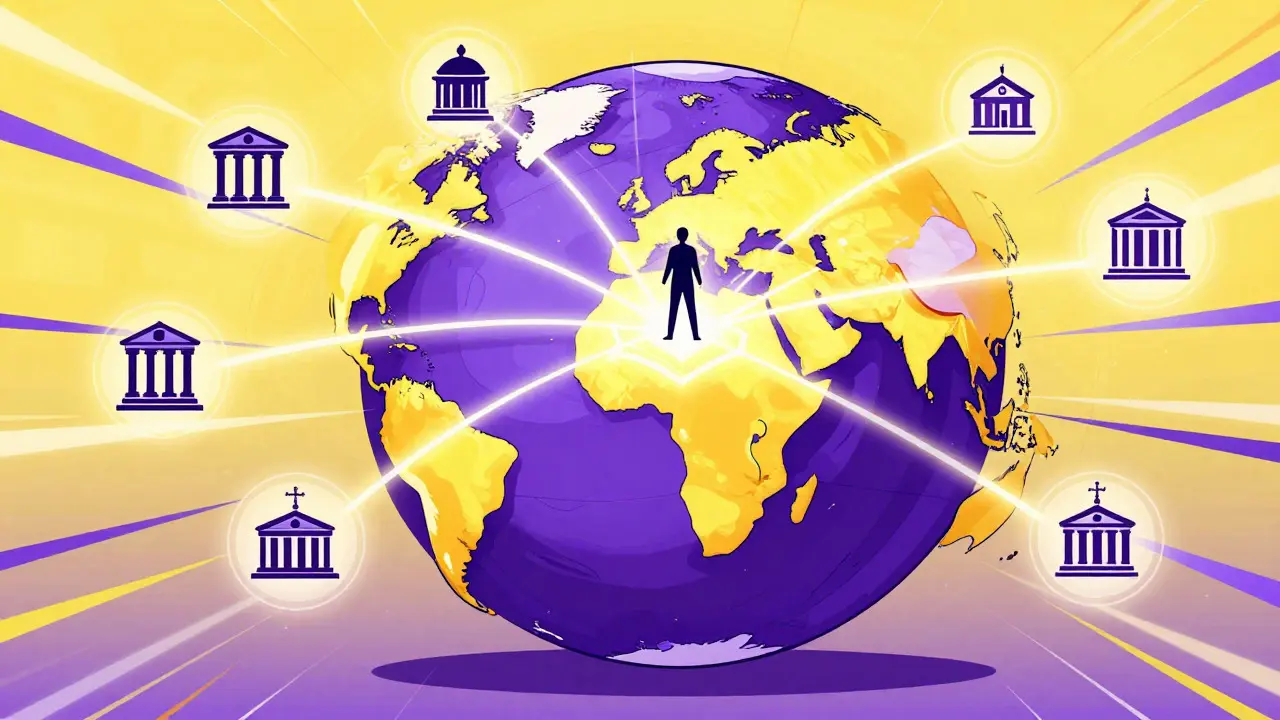
One of the criticisms of early web technologies was fragmentation. You had different login systems for every site. Decentralized identity aims to fix this by leaning heavily on open standards set by the World Wide Web Consortium (W3C). These standards ensure that a Verifiable Credential issued by a bank in New Zealand can be verified by a landlord in London.
This interoperability breaks down silos. Imagine verifying your employment history once with your employer. That credential goes into your wallet. Later, when applying for a loan, you present that same credential to the bank. No need to request a letter from your HR department again. No need to create a new account with a new password. This seamless experience reduces friction for users and speeds up processes for businesses.
| Feature | Centralized Identity | Decentralized Identity |
|---|---|---|
| Data Storage | Company Server / Cloud | User Device / Wallet |
| Control | Provider holds authority | User holds authority |
| Breach Risk | High (Single point of failure) | Low (Distributed architecture) |
| Privacy Mechanism | Access controls / Encryption | Zero-Knowledge Proofs / Selective Disclosure |
| Portability | Locked to platform | Universal via W3C standards |
Business Benefits and Cost Reduction
It’s not just about privacy for the sake of privacy. Businesses are starting to see the bottom-line benefits. Storing and securing personally identifiable information (PII) is expensive. You need firewalls, encryption, compliance audits, and legal teams to handle data requests. With decentralized identity, much of this burden disappears.
Companies report reduced operational risks because they aren't holding the crown jewels. Onboarding becomes faster. Instead of manual verification steps involving scanned documents and email confirmations, a user can present a Verifiable Credential instantly. This improves the customer experience and reduces drop-off rates during sign-up processes.
Additionally, trust increases. When customers know their data isn't being sold or hoarded by a third party, brand loyalty tends to rise. For enterprises, this means less liability exposure. If you don't have the data, you don't have to defend it in court or pay ransomware fees to get it back.
The User Experience Challenge
Let’s be honest: technology only works if people use it. The current challenge with decentralized identity is the learning curve. Managing cryptographic keys sounds intimidating. What happens if you lose your phone? What if you forget your seed phrase? These are valid concerns.
Early adopters report that once they get past the initial setup, the experience is smoother than dealing with endless CAPTCHAs and password resets. However, mass adoption requires intuitive interfaces. Digital wallets need to feel as simple as opening a banking app. Industry leaders are working on abstracting the complex cryptography behind the scenes so users just see "Share Credential" buttons rather than raw code.
Education is also key. Users need to understand that they are now responsible for their own security. This shift from passive reliance on IT departments to active personal management is a cultural change. But as digital literacy grows and tools improve, this barrier is shrinking.
Future Outlook and Adoption Trends
The trend is clearly moving toward decentralization. Major tech companies are exploring these solutions to reduce their own liability. Governments are piloting national digital identity programs that incorporate SSI principles. The market value of personal data has skyrocketed, making the status quo increasingly unsustainable.
We can expect to see more integration of advanced cryptographic techniques. As hardware improves, devices will handle heavier cryptographic loads seamlessly. The goal is a world where your identity is as portable and private as cash, but with the convenience of digital speed. Whether you are a developer building the next dApp or a regular user tired of data breaches, decentralized identity offers a path forward that prioritizes human rights in the digital age.
Is decentralized identity completely anonymous?
Not necessarily. While it offers pseudonymity and selective disclosure, you still choose what to reveal. You can remain anonymous to a verifier by proving attributes without revealing your identity, but if you share your full name and DOB, you are identified. The key difference is that you control the disclosure, rather than having it forced upon you by a central registry.
What happens if I lose my digital wallet?
This depends on the implementation. Most modern wallets allow you to back up your recovery seed phrase or use multi-factor authentication methods. If you lose your device, you can restore your wallet on a new device using your backup. However, unlike a forgotten password, there is usually no "forgot password" button provided by a central admin. You must manage your backups securely.
Do I need to know blockchain coding to use it?
No. The blockchain and cryptography operate in the background. As a user, you interact with a mobile app or web interface. You scan QR codes, tap buttons to share credentials, and manage your profile. The technical complexity is handled by the software, similar to how you use a bank app without understanding ledger accounting.
Which standards does decentralized identity follow?
The primary standards are developed by the W3C, specifically Decentralized Identifiers (DIDs) and Verifiable Credentials. These open standards ensure that different platforms and issuers can communicate with each other, preventing vendor lock-in and promoting a universal ecosystem.
Is decentralized identity ready for mass adoption right now?
It is emerging. Several pilot programs in healthcare, education, and finance are already using it. While not yet ubiquitous like passwords, the infrastructure is maturing rapidly. With improving user interfaces and growing regulatory support for privacy, widespread adoption is expected to accelerate over the next few years.