BetaEX Crypto Exchange Review: Is It Safe or a Scam in 2026?
 Jul, 2 2026
You see an ad for BetaEX is a cryptocurrency trading platform that has recently appeared in online promotions and social media feeds. The promises are loud: zero fees, guaranteed profits, and instant withdrawals. It sounds too good to be true. In the world of digital assets, if it sounds too good to be true, it usually is. You might be wondering if this is the next big thing like Binance or Coinbase, or if you are walking into a trap. This review cuts through the noise to tell you exactly what BetaEX is, whether it holds any real licenses, and why your money might be at risk.
The Red Flags: Why BetaEX Raises Alarm Bells
When we look at established exchanges like Kraken or Bitstamp, we find years of public financial audits, clear regulatory filings, and transparent leadership teams. With BetaEX, we find silence. As of mid-2026, there is no verifiable information about who owns BetaEX. There is no registered corporate address listed on major business registries. The website often lacks a physical location, offering only a generic contact form or a Telegram group.
This anonymity is the first major red flag. Legitimate financial institutions are required by law in most jurisdictions to disclose their ownership and regulatory status. If you cannot find out who runs the company, you have no recourse if things go wrong. Furthermore, BetaEX does not appear on any major regulatory watchlists from bodies like the SEC (Securities and Exchange Commission) in the US, the FCA (Financial Conduct Authority) in the UK, or FinCEN in New Zealand. Being unregulated means there is no government body protecting your funds if the platform disappears.
How the "Guaranteed Profit" Trap Works
BetaEX marketing materials often feature influencers promising high returns with little effort. They might show screenshots of dashboards where accounts grow by 10% or 20% daily. These images are easily faked. The model they use is typically a Ponzi scheme structure. Early users might actually withdraw small amounts to build trust. This is bait. Once you deposit a larger sum-say, $5,000 or $10,000-the game changes.
Suddenly, you can’t withdraw. The support team will tell you need to pay a "tax," a "verification fee," or upgrade your VIP status to unlock your funds. This is a classic advance-fee fraud. Every time you pay, they invent a new reason to withhold your money. Eventually, the site goes dark, and the operators vanish. Unlike reputable platforms like Crypto.com or OKX, which hold user funds in cold storage and provide proof of reserves, BetaEX likely keeps your money in hot wallets ready for flight.
Technical Analysis: The Platform’s Flaws
If you sign up for BetaEX, you’ll notice the interface feels generic. Many scam sites clone the design of legitimate exchanges like Bybit or KuCoin to look professional. However, under the hood, the technology is often outdated. The API connections are unstable, leading to slippage where your trade executes at a worse price than shown. More importantly, the security protocols are weak.
Legitimate exchanges offer two-factor authentication (2FA) via authenticator apps, hardware key support (like YubiKey), and anti-phishing codes. BetaEX often relies on simple SMS verification, which is vulnerable to SIM-swapping attacks. There is also no evidence of regular third-party security audits from firms like CertiK or Hacken. Without these audits, vulnerabilities in their smart contracts or backend code remain hidden, making them easy targets for hackers-or for the admins themselves to exploit.
User Reports and Community Sentiment
What do real users say? On forums like Reddit and Trustpilot, the pattern for platforms like BetaEX is consistent. Initial reviews are often five stars, posted by bots or paid affiliates. But dig deeper, and you find threads titled "Can't withdraw my Bitcoin" or "BetaEX stole my ETH." Users report that customer support becomes unresponsive once a large withdrawal is requested. Some users share stories of being pressured by "account managers" to deposit more money to fix technical errors. These account managers are often part of the scam operation, using psychological manipulation to keep victims invested.
In contrast, communities around trusted exchanges discuss market trends, new features, and legitimate grievances about fee structures. The discourse around BetaEX is almost entirely focused on recovery efforts and warnings. This disparity in community sentiment is a strong indicator of the platform's legitimacy-or lack thereof.
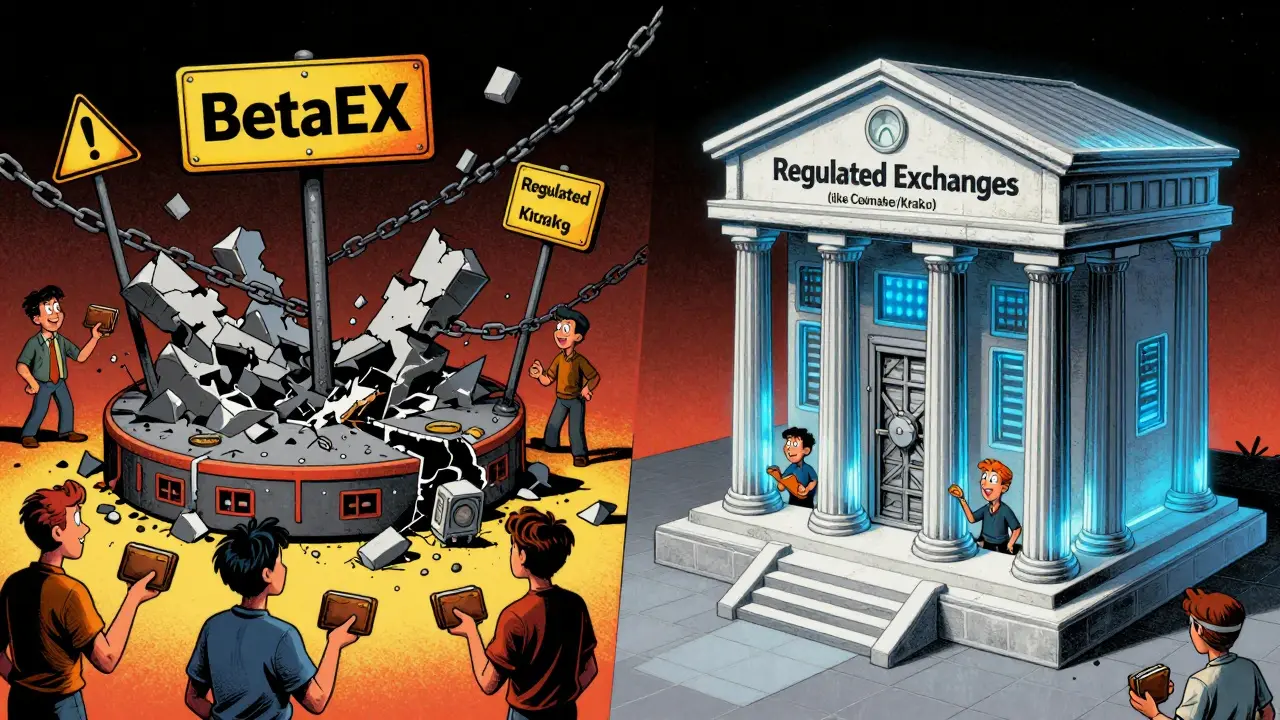
| Feature | BetaEX | Regulated Exchanges (e.g., Coinbase, Kraken) |
|---|---|---|
| Regulatory Status | Unregistered / Unknown | Licensed in multiple jurisdictions (US, EU, NZ) |
| Proof of Reserves | None provided | Regular Merkle Tree audits |
| Withdrawal Policy | Often blocked after initial small payout | Standard processing times, transparent fees |
| Security Audits | No public audit reports | Annual third-party security assessments |
| Customer Support | Telegram/Chat only, often slow | 24/7 Ticket system, phone, email |
Safe Alternatives for Trading in 2026
If you are looking for a place to trade cryptocurrencies safely, stick to platforms with a proven track record. Here are some alternatives that prioritize security and compliance:
- Coinbase: Publicly traded on NASDAQ, fully regulated in the US and many other countries. Ideal for beginners due to its simple interface and strong insurance coverage for digital assets.
- Kraken: Known for its robust security and transparency. They publish monthly Proof of Reserves and have never been hacked since launching in 2011.
- Binance: The largest exchange by volume. While it has faced regulatory hurdles, it offers deep liquidity and a wide range of coins. Ensure you are using the correct regional entity (e.g., Binance.US or Binance Europe).
- Bitfinex: A favorite among professional traders for its advanced charting tools and margin trading options. Owned by iFinex, it has a long history in the industry.
- Zenith (New Zealand): For users in New Zealand, Zenith is a locally regulated option that integrates well with local banking systems.
What To Do If You’ve Already Deposited Funds
If you have already sent money to BetaEX and are having trouble withdrawing, act quickly. First, stop sending any more money. Do not pay any "fees" to release your funds. Second, gather all evidence: screenshots of transactions, chat logs with support, and deposit confirmations. Third, contact your bank or credit card provider immediately to dispute the charge. If you used a wire transfer or cryptocurrency, the window for recovery is very small, but reporting the incident to local authorities and cybercrime units is still crucial. In New Zealand, you can report scams to the Police Cyber Crime Unit.
Conclusion: Protect Your Capital
The cryptocurrency space is full of innovation, but it is also rife with opportunistic scams. BetaEX exhibits nearly every characteristic of a fraudulent platform: anonymous ownership, unrealistic profit claims, lack of regulation, and poor security practices. The risk of losing your entire investment is extremely high. By choosing established, regulated exchanges, you protect yourself from these threats and can focus on what matters: growing your portfolio through informed trading decisions.
Is BetaEX a licensed crypto exchange?
No. As of 2026, BetaEX does not hold any visible licenses from major financial regulators such as the SEC, FCA, or Financial Markets Authority (FMA) in New Zealand. Operating without a license is illegal in many jurisdictions and leaves users unprotected.
Can I withdraw my money from BetaEX?
Many users report significant difficulties withdrawing funds. While small initial withdrawals may succeed to build trust, larger requests are often blocked behind fake fees or technical errors. This is a common tactic in investment scams.
Who owns BetaEX?
The ownership of BetaEX is not publicly disclosed. Legitimate companies list their directors and registered office addresses. The anonymity surrounding BetaEX suggests it is operated by individuals seeking to avoid legal accountability.
Is BetaEX available in New Zealand?
While anyone with internet access can visit the site, BetaEX is not recognized or regulated by New Zealand authorities. Using unregulated offshore platforms carries high risks, including no consumer protection under New Zealand law.
What are safe alternatives to BetaEX?
Safe alternatives include regulated exchanges like Coinbase, Kraken, Binance (regional entities), and local options like Zenith in New Zealand. These platforms undergo regular audits and comply with financial regulations.