Cannumo (CANU) Airdrop Guide: How to Qualify and Avoid Scams in 2026
 Jul, 10 2026
Have you seen the buzz around Cannumo and its ticker symbol CANU? If you are scrolling through crypto Twitter or checking Discord channels right now, you might be wondering if there is free money waiting for you. The short answer? It depends entirely on whether you have been interacting with the protocol before it launched. In the world of decentralized finance (DeFi), "airdrops" are rarely random giveaways. They are strategic marketing tools designed to reward early adopters.
As we move through mid-2026, the landscape for projects like Cannumo has shifted significantly. Gone are the days when simply creating a wallet was enough. Today, protocols use complex point systems, snapshot dates, and interaction metrics to determine who gets tokens. This guide breaks down exactly what we know about the Cannumo launch, how these mechanisms typically work based on industry standards from 2025-2026, and most importantly, how to protect yourself from scams that prey on this hype.
What Is the Cannumo (CANU) Project?
To understand the airdrop, you first need to understand the project. Cannumo is a decentralized finance protocol focused on providing liquidity solutions and yield optimization within the broader blockchain ecosystem. While specific technical whitepapers can be dense, the core value proposition usually revolves around making capital more efficient for users and protocols alike.
In the context of 2026, projects like Cannumo often sit alongside other major DeFi players. You might compare them to established giants like Uniswap or newer contenders in the Layer 2 space. The goal is to attract users who provide liquidity or borrow assets, creating a vibrant marketplace. When a project launches its native token-in this case, CANU-it needs a distribution method that aligns incentives. That is where the airdrop comes in. It isn't just charity; it's a way to bootstrap network effects by rewarding those who took an early risk on the platform.
How Crypto Airdrops Actually Work in 2026
If you are expecting an email saying "Click here to claim your free CANU," stop right there. Legitimate airdrops do not work that way. Based on data from platforms like CoinGecko and Koinly, the modern airdrop process involves three critical phases:
- The Snapshot Phase: The project team takes a record of all wallet addresses that interacted with their protocol at a specific block height. This could mean swapping tokens, providing liquidity, or borrowing funds.
- The Eligibility Check: Not every user qualifies. Projects often filter out Sybil attackers (people using multiple fake wallets). They look for genuine usage patterns-consistent trading volume, long-term holding, or significant liquidity provision.
- The Claim Window: Once eligible wallets are identified, a smart contract is deployed. Users must connect their specific wallet to a designated website to claim their tokens. There is almost always a deadline. If you miss it, the tokens are burned or returned to the treasury.
For Cannumo specifically, details regarding exact snapshot dates or multiplier rates were not publicly confirmed in widespread official announcements during the initial search phase. However, looking at the trend set by projects like zkSync, LayerZero, and Ambient in 2025, we can infer the likely structure. These projects heavily favored users who engaged with testnets or mainnet beta versions. If Cannumo followed suit, your eligibility hinges on your historical on-chain activity.
Signs You Might Be Eligible for the CANU Drop
Since official documentation may be sparse, how do you gauge your chances? Look at your own wallet history. Did you perform any of the following actions on the Cannumo platform prior to the token generation event (TGE)?
- Liquidity Provision: Did you add pairs to their pools? Liquidity providers are often the highest priority for rewards because they keep the market functioning.
- Protocol Interaction: Did you use their bridge, swap feature, or lending module? Even small transactions count if they occurred before the snapshot.
- Governance Participation: Some projects require voting on proposals or joining their DAO. Check if you signed any governance transactions related to Cannumo.
- Social Engagement: While less common for direct token allocation, some projects use social tasks (like following on X/Twitter or joining Discord) as a prerequisite to unlock the claim page.
If you answered yes to any of these, you are in the potential pool. If you never touched the protocol, it is highly unlikely you will receive tokens. Remember, airdrops are for users, not spectators.
| Criteria Type | Typical Requirement (2025-2026 Standard) | Relevance to Cannumo (CANU) |
|---|---|---|
| On-Chain Activity | Swaps, LP deposits, borrows before snapshot | High - Core metric for DeFi protocols |
| Wallet Age | Created before a certain date to avoid bots | Medium - Used to filter Sybil attacks |
| Social Tasks | Follow, Retweet, Join Discord | Low-Medium - Often gating mechanism only |
| Testnet Usage | Interacting with pre-mainnet versions | Variable - Depends on Cannumo's development stage |

The Dark Side: Identifying Cannumo Airdrop Scams
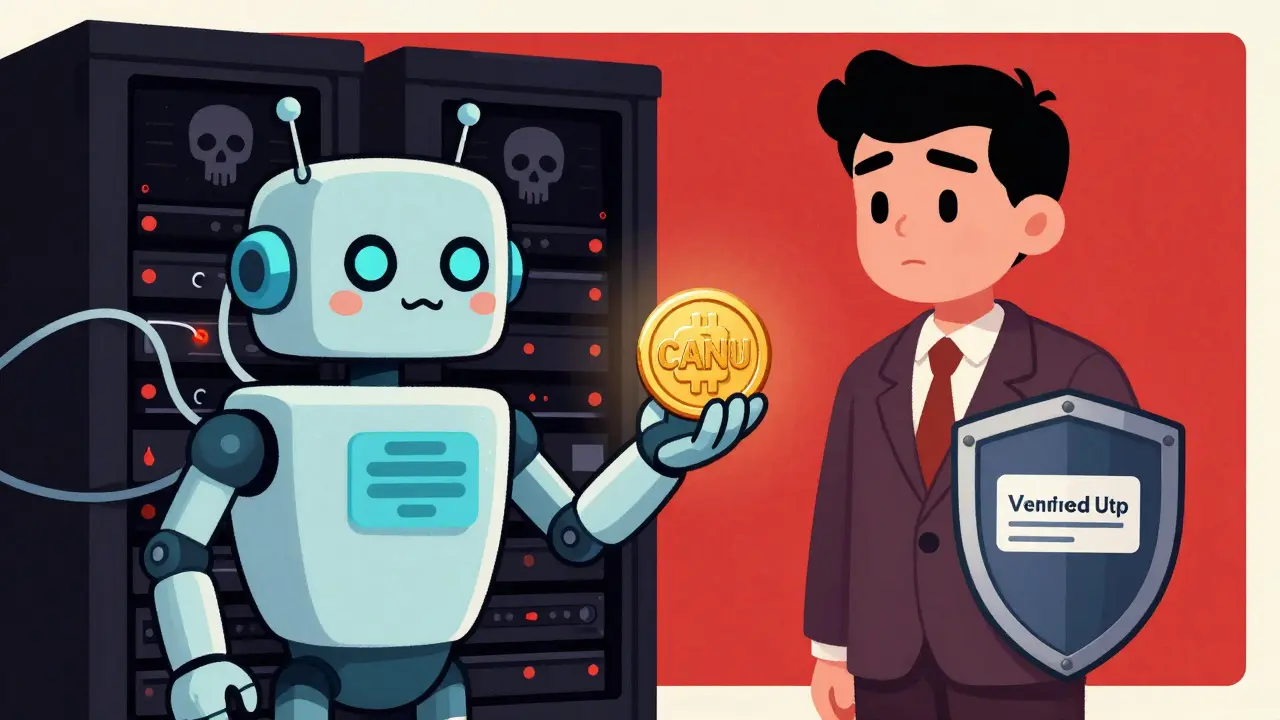
This is the most important section of this article. For every legitimate airdrop, there are hundreds of scams. Hackers monitor social media for trending tickers like CANU. They create fake websites that look identical to the real thing, hoping you will connect your wallet and drain your funds.
Here is how to spot a scam immediately:
- Unsolicited DMs: If someone messages you on Telegram, Discord, or X claiming to be "Cannumo Support" and offering help with your claim, block them. Official teams never DM users first.
- Wrong URLs: Always verify the domain. Use trusted aggregators like CoinMarketCap or CoinGecko to find the official link. Do not click links from Google Ads or random tweets.
- Private Key Requests: No legitimate dApp will ever ask for your seed phrase or private key. If a site asks for this, disconnect your wallet immediately.
- Urgency Tactics: Scammers use phrases like "Claim ends in 1 hour!" to panic you into acting without thinking. Real airdrops have weeks-long claim windows.
In 2026, phishing kits are sophisticated. They can mimic the UI of MetaMask or Phantom perfectly. Always check the contract address of the token you are about to approve. If you are unsure, use a burner wallet-a separate wallet with minimal funds-for testing new protocols.
How to Claim Your Tokens Safely (If Eligible)
If you believe you are eligible and want to proceed, follow this strict protocol to minimize risk:
- Verify the Source: Go to the official Cannumo website via a bookmarked link or a verified listing on CoinMooner or CoinMarketCap. Look for the "Airdrop" or "Claim" button in the navigation bar.
- Use a Dedicated Wallet: Connect a wallet that holds only the amount of gas fees needed for the transaction. Do not connect your main savings wallet.
- Check Gas Fees: Ensure you have enough ETH (or the native chain token) to pay for the transaction. Airdrop claims require gas.
- Review the Transaction: Before signing, read the details. Does it say "Approve"? Does it request unlimited spending access? Legitimate claims usually just require a signature to transfer tokens to your wallet. If it asks for approvals, revoke them afterward using a tool like Revoke.cash.
- Wait for Confirmation: Once signed, wait for the blockchain confirmation. You should see the CANU balance appear in your portfolio tracker shortly after.
What To Do If You Missed It
Did you check and realize you didn't qualify? Don't despair. Missing an airdrop is part of the game. Instead of chasing past rewards, focus on future opportunities. The DeFi space moves fast. New protocols launch weekly. By engaging with emerging projects now-providing liquidity, testing features, and participating in governance-you position yourself for the next big drop. Keep an eye on aggregators like Airdrops.io which track upcoming opportunities in real-time.
Additionally, consider buying CANU on the open market if it lists on exchanges like Binance or Coinbase. Sometimes, buying the dip after an airdrop sell-off offers better returns than the free tokens themselves, especially if the project has strong fundamentals.
Frequently Asked Questions About Cannumo Airdrop
Is the Cannumo (CANU) airdrop still active in 2026?
The status depends on the specific campaign timeline. Most airdrops have a limited claim window, often lasting between two to four weeks after announcement. Check the official Cannumo Discord or website for the current deadline. If the window has closed, no further claims can be made.
Do I need to pay taxes on my Cannumo airdrop?
In many jurisdictions, including the US and parts of Europe, receiving an airdrop is considered taxable income at the fair market value of the tokens at the time of receipt. Selling them later triggers capital gains tax. Always consult with a local tax professional or use software like Koinly to track your crypto tax liabilities accurately.
Why did my wallet show zero CANU tokens?
There are three likely reasons: 1) You were not eligible based on the snapshot criteria (e.g., insufficient on-chain activity). 2) You connected the wrong wallet address-the one that performed the actions must be the one claiming. 3) The claim period has ended. Double-check your transaction history against the project's eligibility requirements.
Can I increase my chances of getting more CANU tokens?
Once the snapshot is taken, you cannot change your allocation. However, for future drops, increasing your "weight" in the protocol helps. This means providing larger amounts of liquidity, trading higher volumes, or holding tokens longer. Some projects also offer multipliers for referrals or community contributions.
Is Cannumo a legitimate project or a scam?
Cannumo appears on reputable trackers like CoinMarketCap, suggesting it is a recognized entity. However, legitimacy does not guarantee safety. Always DYOR (Do Your Own Research). Verify contracts, check team doxxing status, and review audit reports from firms like CertiK or OpenZeppelin before investing significant capital.