Catalyx Crypto Exchange Review: Bankruptcy, Fraud Allegations, and What Happened
 Jun, 20 2026
Imagine logging into your favorite crypto exchange to check your portfolio, only to find the website is gone. No trades, no withdrawals, just a blank screen or a notice that operations have ceased. For thousands of users in Canada, this wasn't a hypothetical nightmare-it was their reality with Catalyx.
If you are searching for a "Catalyx crypto exchange review" today, you aren't looking for deposit instructions or fee comparisons. You are likely trying to understand what happened to your funds, whether the platform is safe, or if it will ever reopen. The short answer is stark: Catalyx declared bankruptcy in January 2024 following allegations of massive internal fraud. It is no longer an active trading platform.
This article breaks down exactly how Catalyx went from being one of Canada's fastest-growing exchanges to a cautionary tale of regulatory failure and embezzlement. We will look at the technology they used, the fees they charged, and most importantly, the legal timeline that led to its collapse.
The Rise of Catalyx: A Promising Start
To understand the fall, we have to look at the rise. Catalyx was a Canadian cryptocurrency exchange developed by CatalX CTS Ltd. that aimed to be a user-friendly gateway for digital assets. Registered with FINTRAC (Financial Transactions and Reports Analysis Centre of Canada), it positioned itself as a compliant, secure option for Canadians wanting to trade Bitcoin, Ethereum, and other major tokens.
In early 2021, Catalyx was on fire. The numbers were impressive:
- Trading Volume Surge: In Q1 2021, volume jumped 1,542% quarter-over-quarter.
- Monthly Growth: From February to March 2021 alone, trading volume nearly doubled from C$14.88 million to C$28.44 million.
- Revenue Spike: Monthly revenue climbed 76% to over C$275,000 in March 2021.
They supported around 40 cryptocurrencies, including BTC, ETH, USDT, ADA, and HBAR. The platform allowed both fiat-to-crypto (buying crypto with CAD) and crypto-to-crypto swaps. For a time, it seemed like a serious competitor to established names in the Canadian market.
Technology and User Experience
Before the legal troubles, Catalyx invested heavily in modern infrastructure. They didn't just slap together a basic site; they built a robust backend using Elixir and the Phoenix framework. This choice was strategic-Elixir is known for handling high concurrency, which is crucial for an exchange processing thousands of transactions per second without crashing.
Here is how their tech stack worked:
| Component | Technology Used | Purpose |
|---|---|---|
| Backend Language | Elixir | High-performance, fault-tolerant server logic |
| Web Framework | Phoenix | Real-time capabilities and scalable architecture |
| API Protocol | GraphQL | Efficient data fetching between frontend and backend |
| Database | PostgreSQL & TimescaleDB | Storing transaction history and time-series market data |
| Frontend Communication | SignalR | Real-time updates for price charts and order books |
For users, this meant fast load times and live price tracking. The interface was designed to be simple-one-click exchanges for beginners-but it also offered advanced tools like order books and charting for pros. However, sophisticated code doesn't protect you from bad actors inside the company. That was Catalyx's fatal flaw.
Fees and Trading Costs
One area where Catalyx was transparent was pricing. Many exchanges hide costs in wide spreads (the difference between buy and sell prices). Catalyx advertised a flat 0.75% trading fee with no hidden spread. If you traded $1,000 worth of Bitcoin, you paid $7.50. Simple enough.
They also had a referral program that let users earn up to 20% of their referee's trading fees. There was no lifetime cap, which incentivized community growth. But again, these features became irrelevant once the platform shut down.
The Collapse: Fraud and Bankruptcy
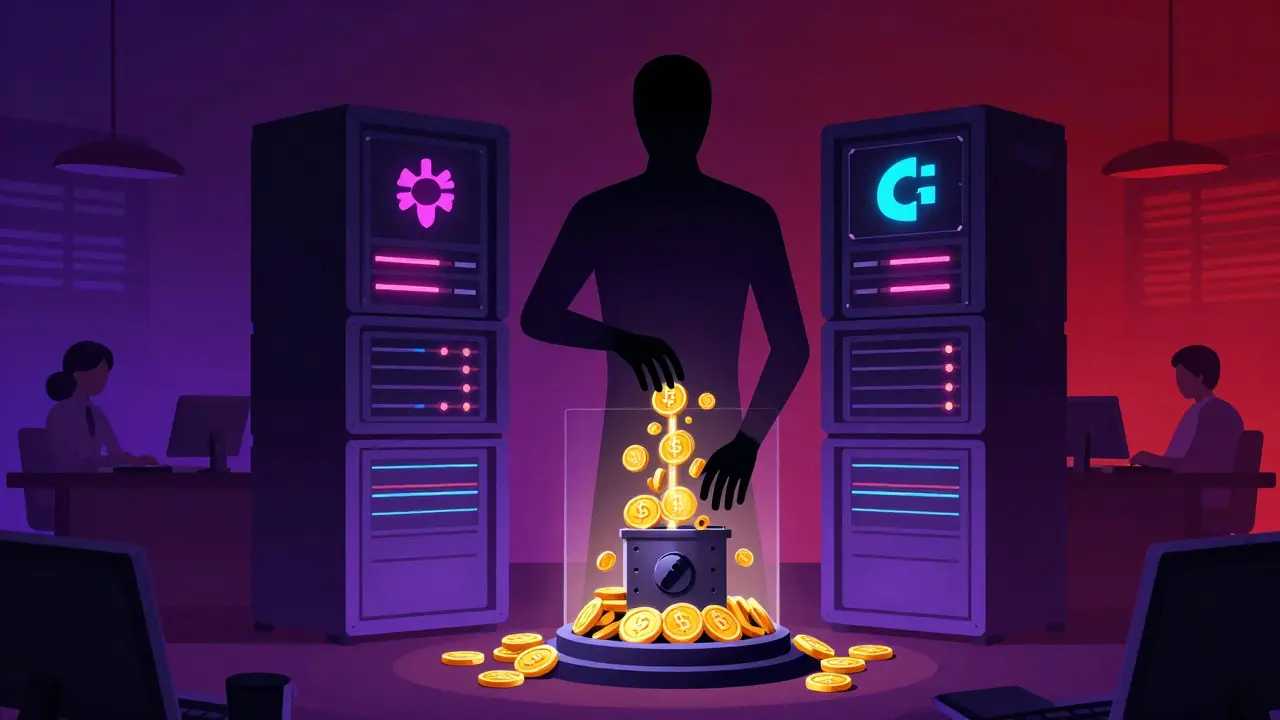
Now, let’s address the elephant in the room. Why did Catalyx close? It wasn't poor business strategy or low volume. It was alleged criminal activity by top executives.
Starting in 2019, Jae Ho Lee, the Chief Financial Officer (CFO), allegedly began misappropriating client funds. Over time, he withdrew more than $14 million worth of crypto assets from the platform. These weren't his funds-they belonged to users who trusted the exchange to hold their assets in trust.
Here is the timeline of the unraveling:
- November 2023: CEO Hyuk Jae Park reportedly discovered the extent of Lee's fraud.
- December 2023: Lee stopped performing his duties and ignored requests for access to wallets and bank accounts. Operations froze.
- December 28, 2023: Catalyx officially ceased all operations.
- January 2024: The company declared bankruptcy and entered receivership.
The CEO claimed in a sworn affidavit that continuing operations was impossible without liquidity support from Bittrex Global (a major shareholder) and due to the financial hole left by the alleged theft.
Regulatory Action: Alberta Securities Commission
The fallout didn't end with bankruptcy. Regulators stepped in hard. The Alberta Securities Commission (ASC) issued a Notice of Hearing in July 2025 against CatalX CTS Ltd., CEO Hyuk Jae Park, and CFO Jae Ho Lee.
The ASC alleged several critical failures:
- Failure to Report: The company knew about the breach in November 2023 but didn't inform the ASC until late December.
- Breach of Undertaking: Catalyx failed to maintain proper policies to prevent employee misappropriation of client funds.
- Lack of Internal Controls: One person (the CFO) had unchecked access to millions in client assets.
A hearing date was set for September 2025 in Calgary. This case has become a textbook example of why centralized exchanges need strict segregation of duties and regular audits.

Is Catalyx Safe? Current Status
No. Catalyx is not safe because it does not exist as an operating entity. As of June 2026, the platform is defunct. Any website claiming to be "Catalyx" offering new sign-ups is likely a scam attempting to phish credentials from former users.
If you were a user before the shutdown:
- Your account is frozen.
- You are part of the bankruptcy proceedings.
- Recovery of funds depends on the outcome of the ASC investigation and the liquidation of remaining assets by receivers.
Historically, recovering funds from bankrupt crypto exchanges is difficult and slow. Clients often receive pennies on the dollar, if anything at all, after years of legal process.
Lessons Learned: Choosing a Crypto Exchange in Canada
The Catalyx saga teaches us valuable lessons about risk management in crypto. Here is what you should look for when choosing an exchange today:
- Proof of Reserves: Does the exchange publish regular, auditable proof that they actually hold your assets? Catalyx failed here.
- Internal Controls: Look for exchanges that mention multi-signature wallets and separation of duties. No single employee should control all keys.
- Regulatory Compliance: Ensure the exchange is registered with FINTRAC and actively complies with provincial securities laws.
- Insurance: Some platforms offer insurance for cold storage assets. Check if yours does.
Alternatives in the Canadian market include larger, more established players like Coinbase Canada, Kraken, or local banks that now offer crypto custody services. While no platform is immune to risk, diversified leadership and transparent auditing significantly reduce the chance of a "Catalyx-style" collapse.
Conclusion
Catalyx started with promise-great tech, low fees, and rapid growth. But it ended in disaster due to gross negligence and alleged fraud by its CFO. For current investors, the lesson is clear: don't just look at the app's design or fee structure. Dig into their security practices, regulatory standing, and corporate governance. Your crypto is only as safe as the people holding the keys.
Can I still log in to Catalyx?
No. Catalyx ceased operations on December 28, 2023, and declared bankruptcy in January 2024. The platform is no longer accessible for trading or withdrawals. Any site claiming otherwise is likely fraudulent.
Will I get my money back from Catalyx?
It is uncertain. Funds recovery depends on the bankruptcy proceedings and the outcome of the Alberta Securities Commission's investigation into the alleged $14 million fraud. Historically, recoveries in such cases are partial and take years.
Who was responsible for the Catalyx collapse?
The Alberta Securities Commission alleges that CFO Jae Ho Lee misappropriated over $14 million in client assets starting in 2019. CEO Hyuk Jae Park is also facing charges for failing to report the breach and maintaining inadequate internal controls.
Was Catalyx regulated in Canada?
Yes, Catalyx was registered with FINTRAC as a Money Services Business. However, registration with FINTRAC does not guarantee the safety of your funds or protect against internal fraud, as seen in this case.
What technology did Catalyx use?
Catalyx used a modern stack including Elixir and Phoenix for the backend, GraphQL for API communication, PostgreSQL/TimescaleDB for databases, and SignalR for real-time frontend updates. This allowed for high performance and scalability before its closure.
Are there safer alternatives to Catalyx in Canada?
Yes. Established platforms like Coinbase Canada, Kraken, and Bitbuy offer robust security measures, regular proof of reserves, and strong regulatory compliance. Always verify an exchange's audit history and insurance coverage before depositing funds.