CoinSwap.com (BSC) Review: Supernodes, Risks, and Better Alternatives in 2026
 Jun, 17 2026
Have you ever stumbled upon a crypto platform that promises something completely different from the usual swap-and-hold routine? That’s exactly what happens when you land on CoinSwap.com. It markets itself not just as another decentralized exchange, but as the world’s first "decentralized cloud" trading protocol. The pitch sounds futuristic: a system where you don’t just trade tokens, but own nodes, earn referral fees, and participate in a deflationary economy all on the Binance Smart Chain (BSC). But here is the hard truth you won’t find in their marketing emails: CoinSwap.com is a niche experiment with significant red flags regarding security, liquidity, and mainstream adoption. If you are looking for a safe place to park your funds or execute large trades without slippage, this might not be it.
By June 2026, the decentralized finance (DeFi) landscape has matured significantly. We have moved past the era where every new token model gets a free pass. Users now demand transparency, audited code, and deep liquidity. CoinSwap.com, which gained some attention around 2025, struggles to meet these modern standards. This review cuts through the hype to look at the actual mechanics, the risks, and whether there is any real value left in this ecosystem today.
What Is CoinSwap.com Really?
To understand if CoinSwap.com is worth your time, we first need to strip away the buzzwords. At its core, CoinSwap.com is a decentralized exchange operating exclusively on the Binance Smart Chain (BSC). Unlike Uniswap or PancakeSwap, which focus purely on providing liquidity pools for swapping tokens, CoinSwap introduces a complex layer of ownership called "supernodes."
The platform operates using its native utility token, COINS. This token isn't just currency; it is the fuel for the entire network. You use COINS to pay for transaction fees, create supernodes, and access the platform's two-tier referral system. The developers claim this creates a "DeCloud" environment-a hybrid model trying to blend the ease of centralized exchanges with the self-custody of decentralized ones. In reality, it remains a non-custodial DEX, meaning you connect your wallet (like MetaMask) and manage your own keys. There is no customer support team to call if you make a mistake, and no fiat on-ramp to buy crypto directly with dollars or euros.
The unique selling point here is the architecture. Instead of a simple automated market maker (AMM), transactions are processed through a network of these supernodes. Each supernode is essentially an NFT that represents a piece of the network's infrastructure. By holding one, you theoretically help process trades and earn rewards. It sounds innovative on paper, but innovation often comes with hidden costs in the crypto world.
The Supernode Model and Tokenomics Explained
The heart of CoinSwap.com’s strategy lies in its tokenomics and the supernode system. Let’s break down how this actually works for a user.
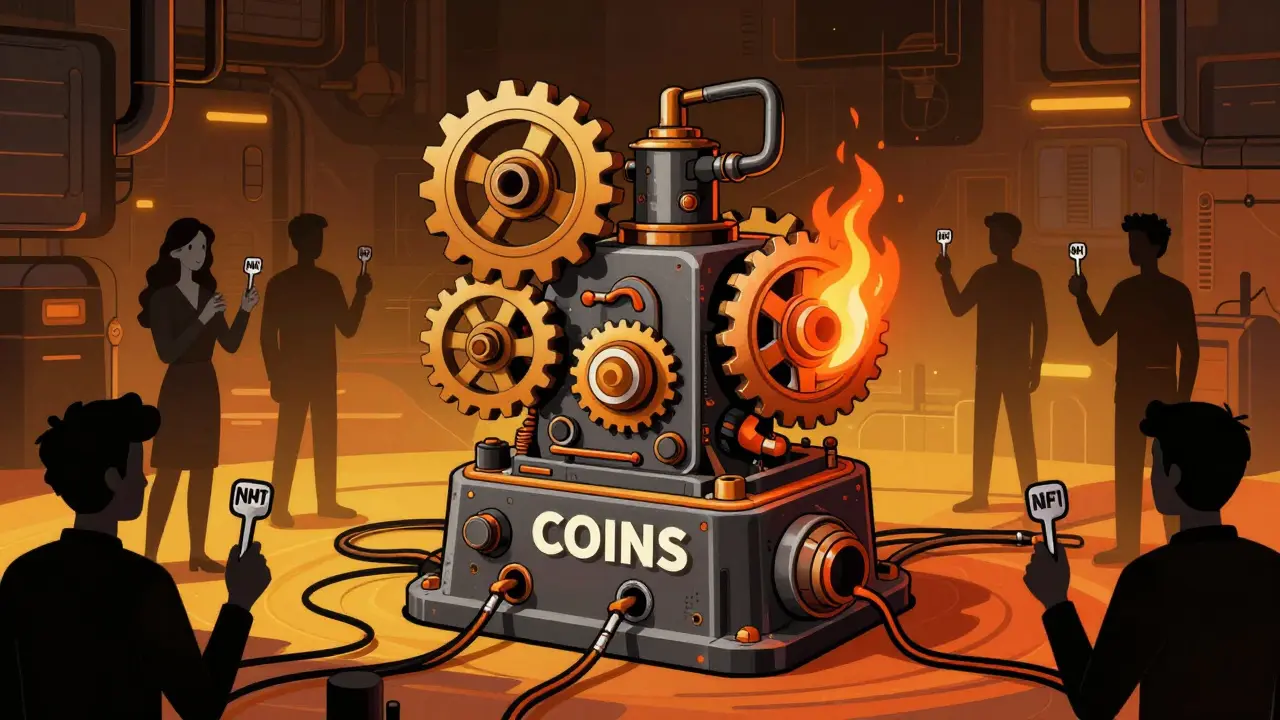
- Deflationary Mechanism: Every time you trade on the platform, a portion of the COINS used for fees is burned permanently. The goal is to reduce the total supply over time, theoretically increasing the value of remaining tokens. However, this only works if trading volume is high. If few people trade, the burn rate slows down, and the deflationary promise becomes irrelevant.
- Supernode Creation: To become a supernode operator, you must lock up a specific amount of COINS tokens. This node then functions as an NFT within the ecosystem. Operators earn fees from the trades processed by their node.
- Two-Tier Referral System: This is perhaps the most controversial feature. CoinSwap allows users to earn commissions not just from direct referrals, but also from second-tier referrals. While multi-level marketing (MLM) structures are common in traditional business, they are viewed with extreme skepticism in DeFi. Critics argue this incentivizes recruiting traders rather than building genuine liquidity or product utility.
This structure creates a dependency loop. For the supernodes to generate revenue, there must be massive trading volume. For there to be volume, there must be liquidity. Currently, CoinSwap.com lacks the deep liquidity pools found on major competitors. This means that even if you want to trade, you might face high slippage-where the price you see is not the price you get because there aren't enough tokens in the pool to fill your order at that rate.
Security Concerns and Audit Status
In the world of smart contracts, trust is earned through verification. As of mid-2026, one of the biggest red flags surrounding CoinSwap.com is the lack of publicly available, independent smart contract audits from reputable firms like CertiK, SlowMist, or PeckShield.
Major platforms like Uniswap and PancakeSwap undergo regular security reviews and publish these reports for anyone to read. They do this because a single bug can lead to millions of dollars being drained from the protocol. CoinSwap.com, however, has not provided clear evidence of such rigorous testing. While the platform does not appear on major scam databases like those maintained by Crypto Legal, absence from a blacklist is not proof of safety. It simply means no major hack has been widely reported yet-or that the project is too small to attract the attention of sophisticated exploiters.
Furthermore, the complexity of the supernode NFT system adds layers of risk. More complex code usually means more potential entry points for hackers. Without transparent audit trails, users are essentially gambling with their capital. If you are considering connecting your wallet, ask yourself: would you leave your house door unlocked because no one has broken in yet? Probably not. Apply the same logic to your crypto portfolio.
Liquidity and Trading Experience
Liquidity is king in decentralized exchanges. It determines how smoothly you can buy and sell assets. Here is where CoinSwap.com falls short compared to industry giants.
| Feature | CoinSwap.com | PancakeSwap | Uniswap (via bridges) |
|---|---|---|---|
| Chain Support | BSC Only | BSC, Ethereum, Arbitrum, etc. | Ethereum, Polygon, Arbitrum, Optimism, Base |
| Liquidity Depth | Low (Niche) | Very High | Highest in Industry |
| Audits | Unclear / Missing | Regular Third-Party Audits | Regular Third-Party Audits |
| Referral System | Two-Tier MLM Style | Syrup Pools / Yield Farming | Standard LP Rewards |
| User Interface | Complex (Node Management) | User-Friendly | Clean & Minimalist |
When you trade on PancakeSwap, you are tapping into billions of dollars in locked value. On CoinSwap.com, the liquidity is fragmented across individual supernodes. This fragmentation leads to higher volatility in pricing. If you try to swap a large amount of USDT for COINS, you might move the market significantly against yourself. For casual traders or those moving serious capital, this makes CoinSwap.com impractical.
Additionally, the user experience is clunky. You aren't just clicking "Swap." You are managing nodes, checking referral tiers, and monitoring token burns. This adds friction to what should be a simple transaction. In 2026, users expect seamless experiences. Platforms that require a manual to operate struggle to retain users who can easily switch to a competitor with one click.
Is CoinSwap.com Safe for Beginners?
If you are new to cryptocurrency, the answer is a definitive no. CoinSwap.com requires a level of technical understanding that goes beyond basic wallet setup. You need to know how to configure MetaMask for the Binance Smart Chain, how to approve token allowances safely, and how to navigate the risks of interacting with unaudited smart contracts.
For experienced DeFi degens who enjoy hunting for low-cap gems and experimenting with novel tokenomics, CoinSwap.com might offer speculative opportunities. The potential upside comes from the deflationary pressure on the COINS token if the network gains unexpected traction. However, this is high-risk speculation, not investing. You should never allocate more than you can afford to lose entirely.
Consider the opportunity cost. The time and gas fees spent navigating CoinSwap.com could be better utilized on established platforms that offer yield farming, staking, or lending with proven track records. The "first mover" advantage claimed by CoinSwap.com in 2025 has largely evaporated as the market consolidated around safer, more liquid protocols.
Better Alternatives for BSC Traders
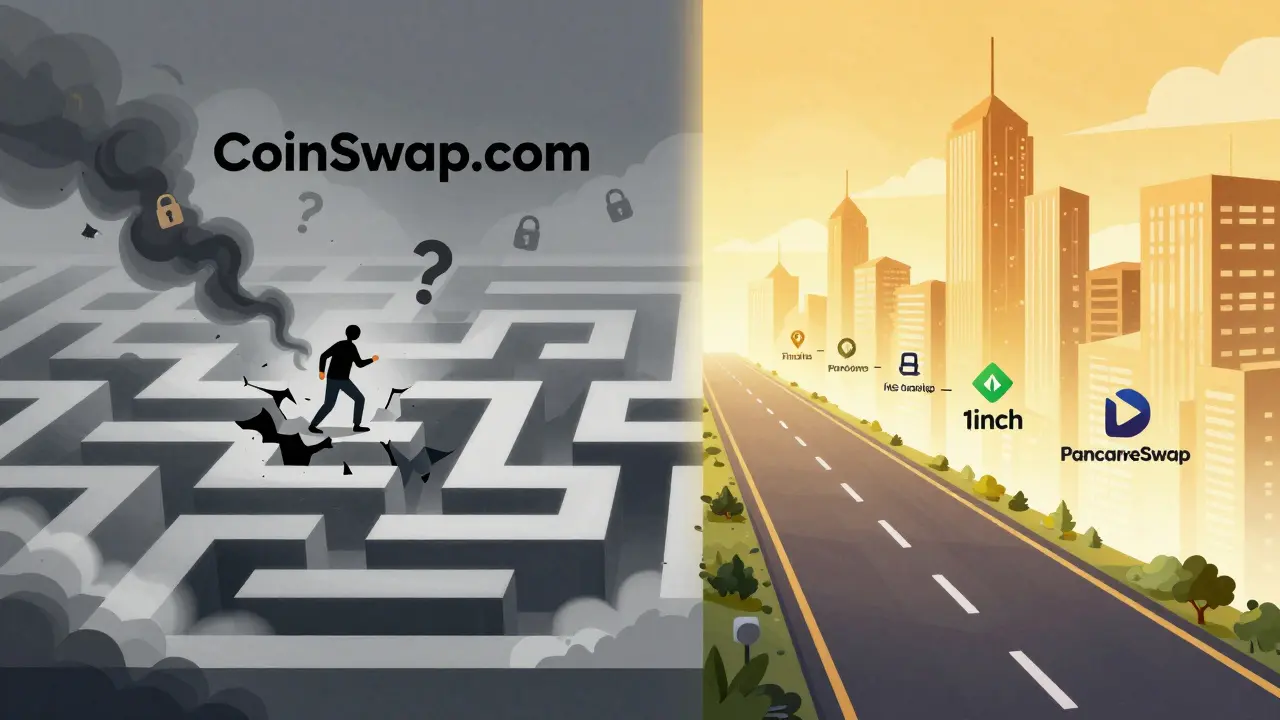
If you are looking to trade on the Binance Smart Chain, there are far superior options that balance innovation with security.
- PancakeSwap: The undisputed leader on BSC. It offers deep liquidity, a wide variety of tokens, and additional features like Syrup Pools for staking and prediction games. It is regularly audited and has a massive community.
- Venus Protocol: If you are interested in earning interest, Venus allows you to lend your crypto assets and borrow against them. It provides a stable income stream without the complexity of managing supernodes.
- 1inch Network: This is a DEX aggregator. It scans multiple exchanges (including PancakeSwap and others) to find you the best possible price for your trade. It saves you money on slippage and ensures you are getting the most efficient route.
These platforms have survived multiple market cycles. They have faced regulatory scrutiny, security challenges, and competition, yet they remain robust. CoinSwap.com, by contrast, exists in a shadowy niche with little public development activity or roadmap updates as of 2026.
Final Verdict: Proceed with Extreme Caution
CoinSwap.com presents an interesting theoretical model with its supernode NFTs and deflationary tokenomics. However, theory rarely matches practice in the volatile world of crypto. The lack of security audits, low liquidity, and complex MLM-style referral structure raise serious concerns about its long-term viability and safety.
Unless you are specifically interested in the speculative aspect of the COINS token and fully understand the risks of interacting with unaudited smart contracts, it is wise to avoid this platform. For 99% of users, sticking to established, audited, and highly liquid DEXs like PancakeSwap or using aggregators like 1inch will provide a safer, more efficient, and ultimately more profitable trading experience. Don't let the promise of "decentralized cloud" technology distract you from the fundamental requirements of secure trading: transparency, liquidity, and verified code.
Is CoinSwap.com a scam?
While CoinSwap.com is not currently listed on major scam databases, it exhibits several high-risk characteristics. These include a lack of independent smart contract audits, low liquidity, and a multi-level referral structure that resembles pyramid schemes. It may not be an outright scam, but it is extremely risky and lacks the transparency required for safe trading.
How do I connect my wallet to CoinSwap.com?
You need a Web3 wallet compatible with the Binance Smart Chain, such as MetaMask or Trust Wallet. Ensure your wallet is configured to the BSC network. Then, visit the CoinSwap.com website and click "Connect Wallet." Be cautious when granting approvals, as interacting with unaudited contracts can expose your funds to risk.
What are CoinSwap.com supernodes?
Supernodes are NFTs within the CoinSwap ecosystem that represent parts of the network's infrastructure. Users must lock up COINS tokens to create a supernode. These nodes supposedly help process transactions and earn fees for their holders. However, due to low overall trading volume, the earnings from these nodes may be negligible.
Does CoinSwap.com support Ethereum?
No, CoinSwap.com operates exclusively on the Binance Smart Chain (BSC). It does not support Ethereum, Polygon, or other blockchains. This limits its interoperability compared to multi-chain DEXs like Uniswap or PancakeSwap.
Are there any security audits for CoinSwap.com?
As of mid-2026, there are no publicly available, independent security audits from reputable firms like CertiK or SlowMist. This is a significant red flag for any decentralized finance platform, as it means the smart contract code has not been professionally verified for vulnerabilities.