Crypto Banking Restrictions Rescinded in US: 2025 Changes Explained
 Jul, 20 2026
For years, traditional banks in the United States walked on eggshells when it came to cryptocurrency. They wanted to offer digital asset services, but every step required permission from regulators who seemed more interested in saying "no" than asking "how." That era ended abruptly in early 2025. The three major federal banking regulators-the Federal Reserve, the central bank of the United States responsible for monetary policy and supervising large banks, the Office of the Comptroller of the Currency (OCC), a bureau within the U.S. Department of the Treasury that charters, regulates, and supervises national banks, and the Federal Deposit Insurance Corporation (FDIC), an independent agency created by the U.S. Congress to maintain stability and public confidence in the nation's financial system-coordinated a massive rollback of restrictive policies.
If you are a banker, a fintech founder, or just someone waiting for your local bank to support Bitcoin, this is the news you have been waiting for. The regulatory walls that kept crypto out of mainstream banking have largely crumbled. But what exactly changed? And does this mean your bank will start trading crypto tomorrow? Let’s break down the specifics of these 2025 changes.
The Three Pillars of Regulatory Rollback
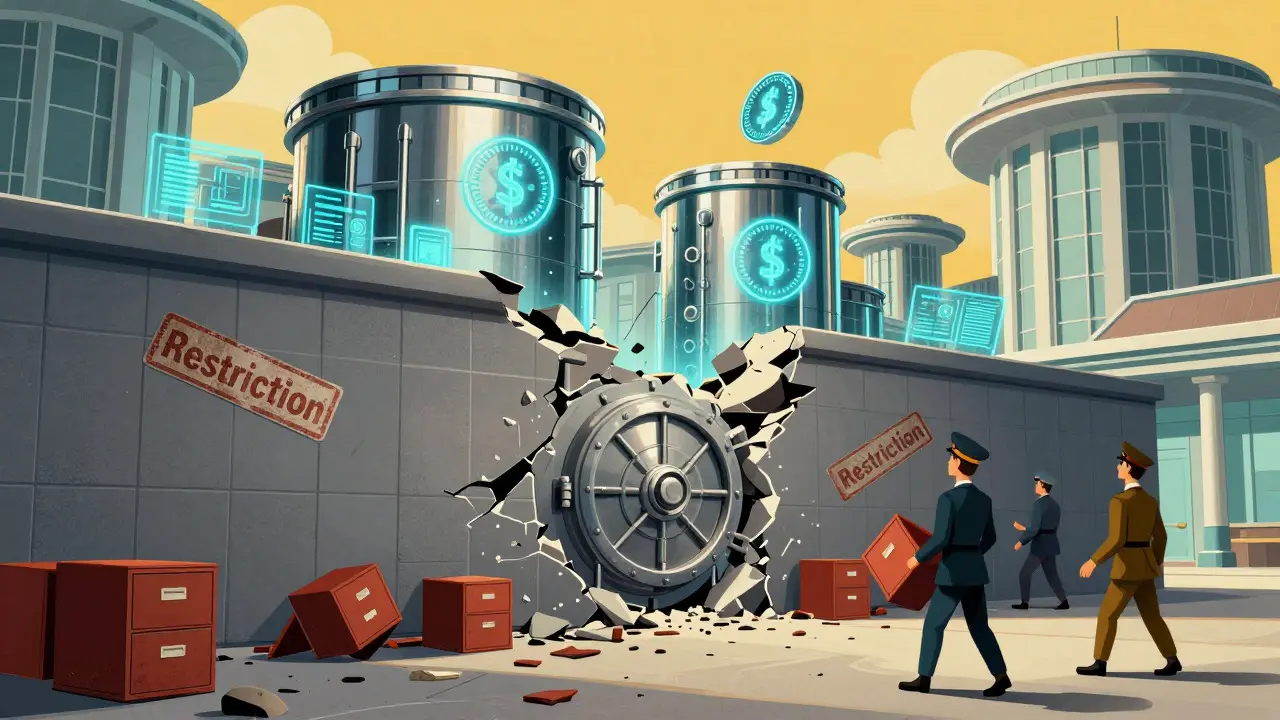
To understand the magnitude of this shift, you need to look at how each regulator removed its specific barriers. These weren’t minor tweaks; they were fundamental reversals of the "cautious" approach that defined the previous administration’s stance on digital assets.
The process began with the OCC. On March 7, 2025, they issued Interpretive Letter 1183, a regulatory document rescinding prior restrictions on national bank involvement in crypto activities. This letter officially killed Interpretive Letter 1179, which had been issued back in November 2021. Under the old rules, national banks needed special approval to handle crypto custody or stablecoin reserves. The new letter states that this supervisory non-objection process is "no longer necessary." The OCC argued that their staff now has enough expertise to oversee these activities through normal supervision rather than gatekeeping every move.
Next, the FDIC joined the party on March 28, 2025. They rescinded Financial Institution Letter FIL-16-2022. Previously, any FDIC-supervised institution wanting to touch crypto had to notify the FDIC first and wait for a response. Now, those institutions can engage in permissible crypto-related activities without prior approval, as long as they manage the risks properly. It shifts the burden from "ask for permission" to "prove you’re safe and sound."">
Finally, the Federal Reserve made its move on April 24, 2025. This was perhaps the most symbolic action because the Fed often sets the tone for the entire industry. They withdrew two critical supervisory letters: SR 22-6 and SR 23-8. SR 22-6 required state member banks to give advance notice of any crypto activities. SR 23-8 required formal approval for dollar-denominated token activities. By rescinding both, the Fed removed the final major hurdle for large, state-chartered banks.
| Regulator | Date of Action | Rescinded Document | Previous Requirement |
|---|---|---|---|
| OCC | March 7, 2025 | Interpretive Letter 1179 | Supervisory non-objection required for crypto custody and stablecoin activities |
| FDIC | March 28, 2025 | FIL-16-2022 | Prior notification required for all crypto-related activities |
| Federal Reserve | April 24, 2025 | SR 22-6 and SR 23-8 | Advance notice and formal approval required for crypto and token activities |
What Banks Can Do Now
With the red tape cut, what actually opens up for banks? The answer is broader participation in the infrastructure layer of the crypto economy. National banks and federal savings associations can now provide cryptocurrency custody services, secure storage solutions for digital assets on behalf of clients without jumping through hoops. They can also hold reserves for stablecoins and participate in independent node verification networks. Essentially, banks can act as trusted intermediaries and infrastructure providers.
This is a big deal for trust. Many institutional investors have been hesitant to use crypto-only custodians because they lack the same level of government backing and regulatory scrutiny as traditional banks. Now, a JPMorgan or a Bank of America could theoretically offer secure custody for Bitcoin or Ethereum tokens as part of their standard wealth management suite. They don’t need to ask the OCC if they *can* do it anymore; they just need to show they are doing it safely.
However, there is a catch. The deregulation focuses heavily on custody, stablecoin reserves, and node operations. It does not explicitly greenlight banks to hold volatile cryptocurrencies like Bitcoin directly on their balance sheets as investments. Nor does it clearly define the rules for crypto lending. If a bank wants to lend out Bitcoin it holds, the current guidance is still murky. The regulators have opened the door for service provision, but they haven’t fully invited banks to play casino with digital assets.

The End of the "Joint Statements" Era
Another subtle but powerful change happened alongside the rescissions. In 2023, the three agencies issued joint statements warning about the risks of crypto-assets to banking organizations. These statements were used by regulators to push back against banks trying to innovate. They framed crypto as a systemic risk that needed extreme caution.
In 2025, the OCC, Fed, and FDIC formally withdrew from these joint statements. This signals a complete philosophical shift. Instead of viewing crypto primarily as a threat to financial stability, the regulators are now treating it as another business line that needs standard oversight. This removes the "presumption of danger" that bankers faced during meetings with supervisors. A compliance officer no longer has to argue why crypto isn’t risky; they just have to demonstrate their risk management framework is solid.
Impact on State-Chartered Banks
You might wonder, "I bank with a regional credit union or a state-chartered community bank. Does this affect me?" Yes, indirectly but significantly. State-chartered banks are generally prohibited from engaging in activities that aren’t permissible for national banks. Since the OCC lifted restrictions for national banks via Interpretive Letter 1183, state regulators lose a key argument for blocking their own banks from entering the space. While state laws vary, the federal floor has risen. It becomes much harder for a state regulator to say "no" when the federal government says "yes" to the same activity for national peers.

What Hasn't Changed: Risk Management
Don’t mistake deregulation for abandonment. The regulators emphasized that safety and soundness standards remain intact. Banks must still comply with anti-money laundering (AML) rules, consumer protection laws, and capital adequacy requirements. The difference is the timing. Before, you asked for permission before starting. Now, you start, but you better have your house in order because the regulators will check during normal exams.
This puts pressure on banks to upgrade their tech stacks and compliance teams quickly. They can’t just slap a crypto label on an existing product. They need robust systems to track digital asset flows, verify identities across blockchain networks, and manage volatility risks. The barrier to entry is no longer regulatory approval; it’s operational competence.
Future Outlook: What Comes Next?
The agencies stated they will work with the President's Working Group on Digital Asset Markets to develop additional guidance. This suggests the story isn’t over. We may see new rules emerging later in 2025 or 2026 that clarify balance sheet holdings, lending practices, and cross-border crypto transactions. But for now, the immediate friction has been removed. Expect a wave of announcements from major banks launching crypto custody desks and stablecoin partnerships in the coming months.
Did the Federal Reserve ban crypto for banks in 2025?
No, the opposite happened. In April 2025, the Federal Reserve rescinded restrictive guidance (SR 22-6 and SR 23-8) that previously required banks to get advance notice or approval for crypto activities. This allows banks to engage in crypto services with fewer regulatory hurdles.
Can my local bank now trade Bitcoin for me?
Not necessarily. The 2025 changes primarily allow banks to offer custody services, hold stablecoin reserves, and operate node verification networks. There is still ambiguity around whether banks can hold volatile cryptocurrencies like Bitcoin directly on their balance sheets or offer direct trading services without further specific guidance.
What is Interpretive Letter 1183?
Interpretive Letter 1183 is a document issued by the OCC in March 2025. It rescinds the previous Interpretive Letter 1179, effectively removing the requirement for national banks to obtain supervisory non-objection before engaging in crypto custody and stablecoin activities.
Do state-chartered banks benefit from these changes?
Yes. Because state-chartered banks are often limited to activities permitted for national banks, the OCC's liberalization of rules for national banks makes it easier for state regulators to allow similar activities for state-chartered institutions.
Are there still risks for banks offering crypto services?
Yes. While prior approval is no longer needed, banks must still manage risks related to security, liquidity, and compliance. Regulators will monitor these activities through standard supervisory processes, and banks can still face penalties if they fail to maintain safety and soundness.
When did the FDIC change its crypto policy?
The FDIC rescinded its restrictive Financial Institution Letter FIL-16-2022 on March 28, 2025. This allowed FDIC-supervised institutions to engage in permissible crypto activities without prior notification or approval.
Will banks start accepting crypto deposits soon?
It is possible, but not guaranteed immediately. The regulations focus on custody and infrastructure. Accepting direct crypto deposits involves complex accounting and balance sheet questions that are not fully resolved by the 2025 rescissions. Banks will likely proceed cautiously until more specific guidance on balance sheet treatment is issued.