(CTT) CryptoTycoon Airdrop: Status, Scam Warning & Real Alternatives for 2026
 Aug, 15 2026
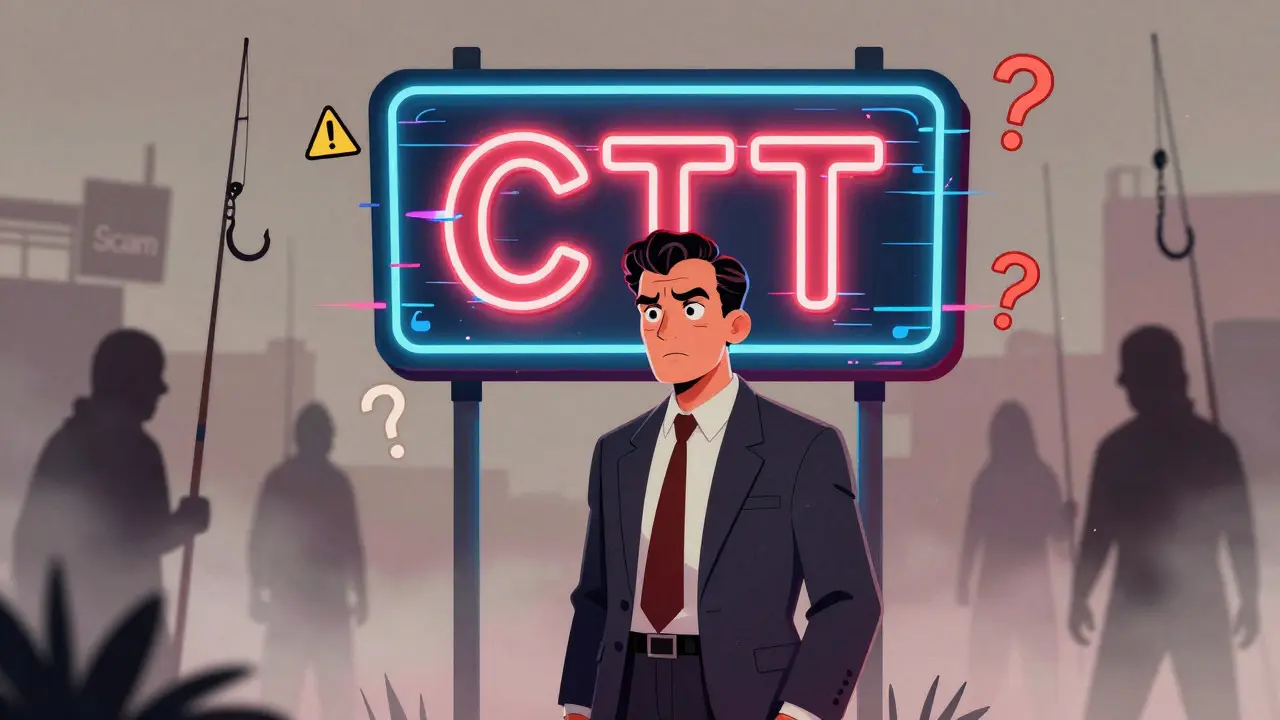
You’ve seen the buzz. You’ve heard the whispers about the CryptoTycoon a potential cryptocurrency project promising free tokens via an airdrop mechanism. The promise is simple: connect your wallet, complete some tasks, and get rich with the mysterious CTT token. But here is the hard truth that most hype-filled Telegram groups won’t tell you: as of mid-2026, there is no verified, legitimate "CryptoTycoon" project distributing CTT tokens on major blockchains.
If you are looking for the (CTT) CryptoTycoon airdrop details, you might be chasing a ghost-or worse, walking into a trap. In the world of decentralized finance (DeFi), silence from major data aggregators like CoinGecko or CoinMarketCap is often louder than any marketing claim. This article cuts through the noise to explain what is actually happening with this name, why it matters, and how you can find real opportunities without losing your savings to scams.
The Reality Check: Does CryptoTycoon Exist?
Let’s get straight to the point. If you search for "CryptoTycoon" or "CTT token" on reputable tracking platforms, you will likely find nothing substantial. There is no official whitepaper indexed by major exchanges, no audited smart contract on Etherscan or Solscan, and no community presence on established forums like Reddit or Bitcointalk.
This absence is a massive red flag. Legitimate projects, even small ones, leave digital footprints. They list their tokenomics. They announce partnerships. They get listed on explorers. When a project claims to be huge but leaves zero trace in public records, it usually means one of two things:
- It is a brand-new micro-cap: The project just launched yesterday, has no liquidity, and high risk of being a "rug pull" (where developers steal funds).
- It is a phishing scam: Fake websites mimic popular names to trick users into connecting wallets and draining funds.
Do not confuse this with the older project simply called Tycoon a social trading platform that issued TYC tokens. That project existed, had a rating on ICObench, and distributed TYC tokens, not CTT. The Tycoon airdrop was tiered, giving top participants roughly $5,000 worth of TYC and smaller amounts to others. However, that campaign is long closed. Mixing up "Tycoon" with "CryptoTycoon" is a common mistake that leads people down rabbit holes of misinformation.
Why "Ghost Projects" Like CryptoTycoon Are Dangerous
In 2026, the airdrop landscape is mature. Users know better than to click every link. Yet, scammers adapt. They use names that sound authoritative-like "CryptoTycoon"-to borrow credibility from successful predecessors. Here is how these fake airdrops typically operate:
- The Hook: A Twitter bot or Telegram group announces a "guaranteed" CTT airdrop.
- The Bait: You are directed to a website that looks professional but uses a generic template.
- The Trap: You connect your wallet to "claim" your rewards. The site asks for a small gas fee or, more dangerously, requests approval to spend unlimited tokens from your wallet.
- The Drain: Once approved, the smart contract drains your ETH, SOL, or USDT. The CTT token never arrives because it doesn’t exist.
Always remember: legitimate airdrops rarely ask you to pay upfront fees to receive them. If a project needs your money to give you money, it is likely a scam. Never share your private key or seed phrase. Ever.
What Makes an Airdrop Legitimate in 2026?
To protect yourself, you need to understand what real airdrops look like today. The days of random, free-for-all distributions are mostly over. Projects now use sophisticated mechanisms to reward active users and deter bots. Here are the hallmarks of a genuine opportunity:
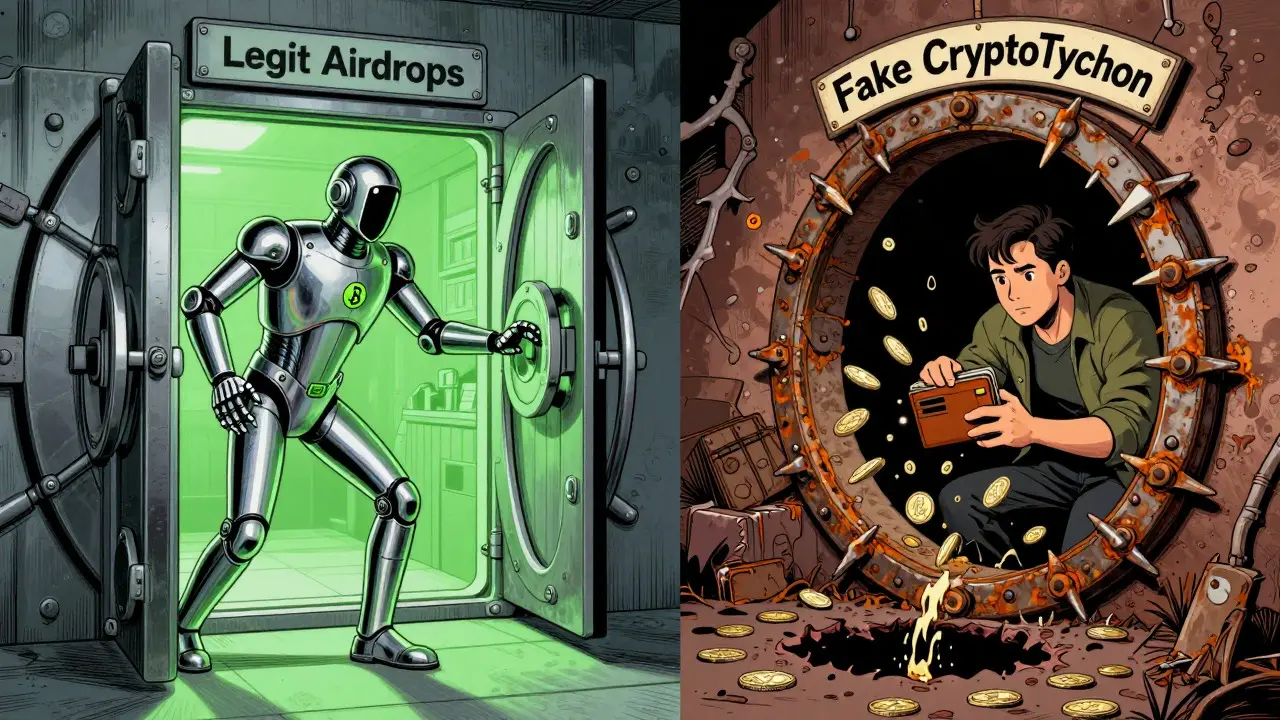
| Feature | Legitimate Project (e.g., LayerZero, MetaMask) | Suspicious/Ghost Project (e.g., Fake CryptoTycoon) |
|---|---|---|
| Visibility | Listed on CoinGecko, CoinMarketCap, or DeBank | No listing on major trackers; only found via shady links |
| Token Contract | Audited contract on blockchain explorer (Etherscan/Solscan) | No contract address provided or contract is unaudited/newly created |
| Requirements | Historical usage of protocol, holding specific NFTs, or staking | Just connect wallet and pay a "gas fee" or join a Telegram channel |
| Community | Active Discord/Telegram with verified devs and real discussion | Bots spamming messages; admins ban critical questions |
| Cost | Free to qualify; only standard network gas fees apply | Asks for direct payment in ETH/USDT to "unlock" rewards |
For example, the rumored MetaMask token launch requires users to have an active wallet with a minimum balance (like 0.1 ETH). It rewards actual utility, not just clicking buttons. Similarly, projects like LayerZero and zkSync rewarded users who bridged assets or used their testnets extensively. These are verifiable actions recorded on-chain.
Real Opportunities: Where to Look Instead of CryptoTycoon
If you want to participate in the airdrop economy in 2026, stop chasing ghosts and start interacting with protocols that are building real infrastructure. The trend right now is "play-to-airdrop" and "use-to-airdrop." Here are sectors and projects showing genuine activity:
1. Gaming and Metaverse
The gaming sector continues to be a hotbed for airdrops. Projects are incentivizing players to earn rewards through gameplay rather than just speculation. For instance, Off the Grid, built on Avalanche and backed by Gunzilla Games and Delphi Ventures, has been preparing its mainnet launch. Players engage in the game, and early adopters may be rewarded with governance tokens. This model ensures that recipients are actual users, not bots.
2. Layer 2 and Interoperability Solutions
Networks that help different blockchains talk to each other are still rolling out rewards. Keep an eye on ecosystems like Monad and Abstract. These projects often run testnets where users can deploy contracts or bridge assets. While not guaranteed, historical patterns suggest that active testnet users are frequently whitelisted for future token distributions.
3. DeFi Protocols with Point Systems
A growing trend is the adoption of point systems. Platforms like Hyperliquid and Pump.fun have used points to track user engagement. By providing liquidity or trading volume, users accumulate points that later convert to tokens. This method allows projects to control inflation and reward loyalty. Check if new DeFi apps you are using have a "Points" dashboard.
How to Verify Any Airdrop Before You Connect Your Wallet
Before you ever think about claiming a token, whether it’s CTT or something else, run this quick checklist. It takes two minutes and could save you thousands.
- Check the Domain Age: Use tools like Whois Lookup. If the website for "CryptoTycoon" was registered last week, walk away. Legitimate projects have older domains.
- Verify the Smart Contract: Go to the blockchain explorer (Etherscan for Ethereum, Solscan for Solana). Paste the token address. Is there liquidity? Is the contract verified? If the code is hidden, do not buy or claim it.
- Search for Negative News: Google "[Project Name] scam" or "[Project Name] rug pull." If nothing comes up, that’s suspicious. Real projects have critics and discussions.
- Use a Burner Wallet: Never connect your main wallet, which holds your life savings, to unverified sites. Use a secondary wallet with minimal funds for testing new protocols.

Understanding the Mechanics: Why Do Projects Airdrop?
It helps to understand the "why" behind airdrops. Projects don’t give away free money out of kindness. They have strategic goals:
- Distribution Decentralization: By spreading tokens to many holders, projects avoid centralization where a few whales control the price.
- Community Building: Tokens act as governance votes. More holders mean a more democratic decision-making process for the protocol’s future.
- Liquidity Bootstrapping: Early holders provide initial trading volume, making the token easier to buy and sell later.
- User Acquisition: It is a marketing cost. Giving away $50 worth of tokens might bring in a user who stays and generates $500 in fees over time.
When a project like CryptoTycoon claims to offer an airdrop but lacks these structural elements-no clear roadmap, no governance plan, no liquidity pool-it fails the logic test. It’s just a number on a screen designed to make you feel lucky while emptying your wallet.
Next Steps: Staying Safe and Smart
So, what should you do now? First, forget about the CTT token unless you see it listed on a Tier-1 exchange like Binance or Coinbase, or tracked by CoinGecko with a verified badge. Second, redirect your energy toward protocols that are actively developing. Join their Discords, use their testnets, and provide feedback. This "work-to-earn" approach is safer and more rewarding than gambling on anonymous giveaways.
The crypto space moves fast. New projects emerge daily. But the principles of security remain constant. Verify before you trust. Question everything that sounds too good to be true. And remember, in 2026, your attention and your capital are valuable. Don’t waste them on ghosts.
Is the CryptoTycoon (CTT) airdrop real?
As of August 2026, there is no credible evidence of a legitimate "CryptoTycoon" project distributing CTT tokens. It is likely a scam or a confusion with the older "Tycoon" project that issued TYC tokens. Always verify projects on CoinGecko or CoinMarketCap before participating.
What is the difference between Tycoon and CryptoTycoon?
Tycoon is a known social trading platform that previously conducted an airdrop for TYC tokens. CryptoTycoon appears to be a separate, unverified entity using a similar name. There is no official connection between the two, and CryptoTycoon lacks the public verification records that Tycoon had.
How can I spot a fake crypto airdrop?
Look for red flags such as: no listing on major trackers like CoinGecko, unaudited smart contracts, requests for upfront payments to claim rewards, and newly registered domain names. Legitimate airdrops reward past usage of a protocol, not just wallet connections.
Are there any legitimate airdrops available in 2026?
Yes, the airdrop ecosystem is active. Look for projects in gaming (like Off the Grid), Layer 2 solutions (like Monad or Abstract), and DeFi protocols using point systems (like Hyperliquid). Always research the project's history and community engagement before investing time.
Should I connect my main wallet to unknown airdrop sites?
Never connect your main wallet containing significant funds to unverified sites. Use a "burner" wallet with minimal assets for testing new protocols. This limits your exposure if the site turns out to be malicious or if you accidentally approve a bad smart contract.