DAOs in 2026: Real Benefits, Hidden Limitations & What You Need to Know
 Sep, 1 2026
Imagine trying to buy a rare historical document with $47 million raised in just seven days. That’s exactly what ConstitutionDAO did. They raised the money fast, but when it came time to actually close the deal, the decentralized structure fell apart. The auction ended, and they didn't get the Constitution. This story isn't just a funny anecdote from crypto Twitter; it is a perfect example of why we need to talk about the real state of Decentralized Autonomous Organizations (DAOs) in 2026. Are they the future of work, or are they just expensive committees that move too slowly? The answer lies somewhere in the messy middle.
The Core Promise: Why People Still Join DAOs
Let's be honest. If you're joining a DAO today, you aren't doing it because you love reading whitepapers. You're likely there for three specific reasons: transparency, access, and automation. Traditional companies are black boxes. You don't know where your salary goes, how decisions are made, or if the CEO is buying another yacht. A DAO flips this on its head. Every transaction is recorded on the blockchain. If the treasury spends $10,000 on marketing, you can see it instantly. According to a Harvard Business Review study from early 2025, 100% of financial transactions in DAOs are publicly verifiable, compared to just 12-18% in traditional corporations. That level of visibility builds trust in a way that quarterly earnings reports never could.
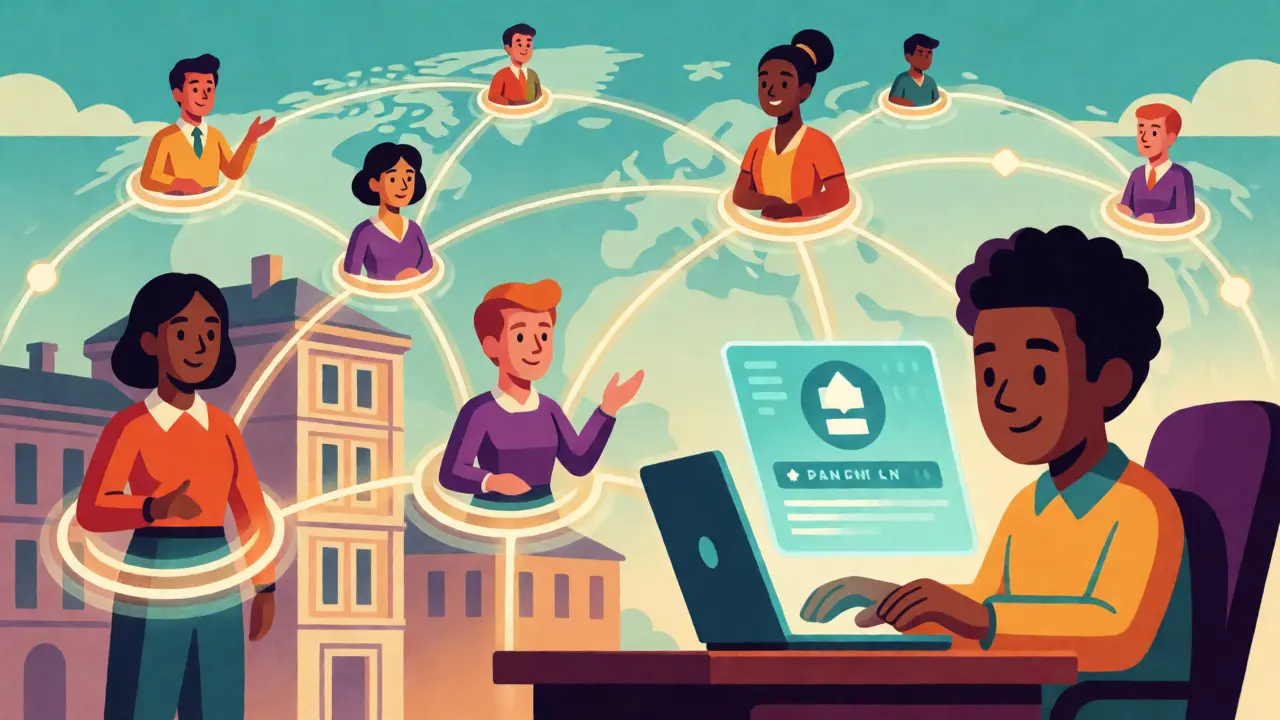
Beyond transparency, DAOs offer global access without the bureaucratic nightmare of international hiring. Take 'CryptoNinja', a 19-year-old developer from Nigeria who earned $120,000 annually contributing to Gitcoin DAO. He didn't need a visa, he didn't need to commute to San Francisco, and he didn't need a manager's approval to start working. He just contributed code and got paid via smart contract. This permissionless participation is the killer feature. It allows talent from anywhere to compete on merit alone. For many people in regions with limited local tech jobs, this is life-changing. It removes the geographical tax on ambition.
Then there is the automation aspect. In a traditional startup, paying out contractors involves invoices, bank transfers, and weeks of delays. In a well-designed DAO, payment triggers automatically when a task is marked complete on-chain. This eliminates human error and the friction of accounts payable departments. It sounds utopian, and for simple tasks like releasing funds after a vote passes, it works beautifully. But as we'll see, the complexity kicks in when humans have to agree on *what* to do before the robots can execute it.
The Speed Bump: Decision-Making Lag
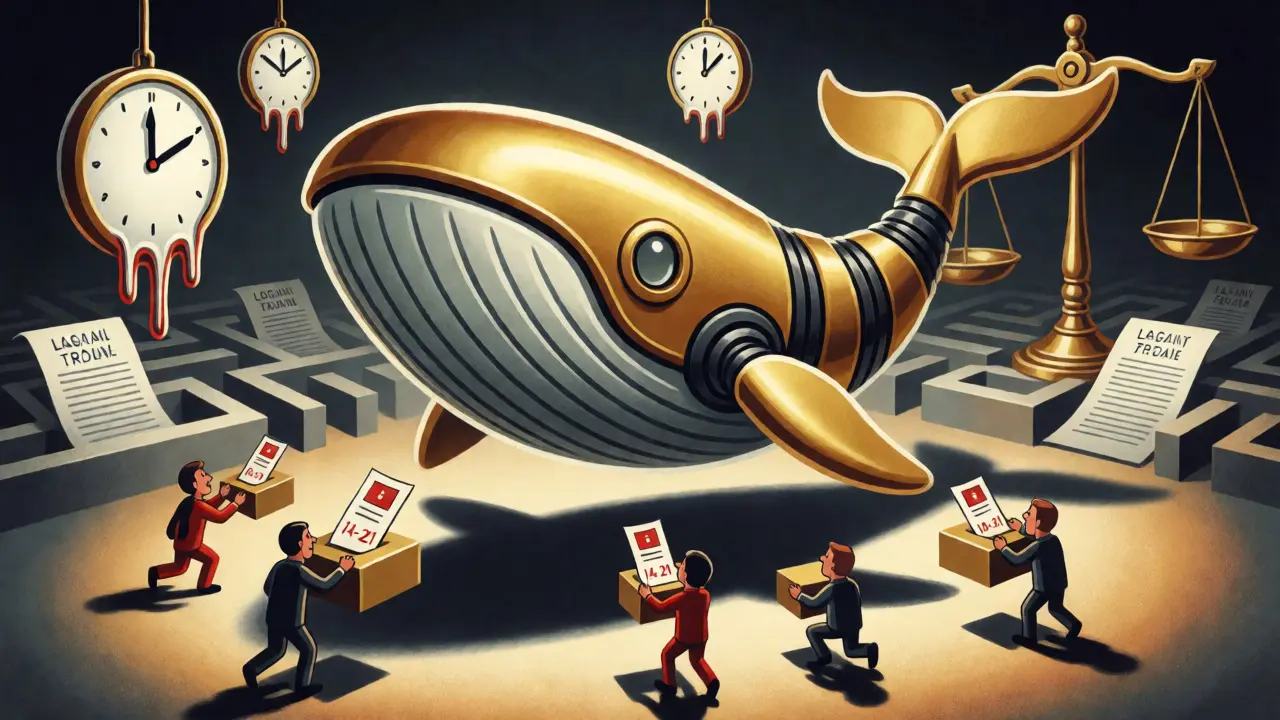
Here is the hard truth: DAOs are slow. Really slow. While a traditional corporate executive can make a pivot decision in an afternoon, the average DAO takes between 14 and 21 days to implement a proposal. Top performers like MakerDAO manage to cut this down to 72 hours, but they are the exception, not the rule. This lag creates a massive disadvantage in crisis situations. Remember the Nouns DAO incident in 2023? Hackers exploited a vulnerability, and while the community debated whether to pause trading or change parameters, $1.2 million was stolen. By the time the vote passed and the smart contract updated, the money was gone. Speed matters in finance, and decentralization often comes at the cost of agility.
| Metric | Traditional Corporation | Average DAO |
|---|---|---|
| Decision Implementation Time | 2-3 Days | 14-21 Days |
| Crisis Response Capability | High (Centralized Command) | Low (Consensus Required) |
| Transparency Level | Low (Internal Only) | High (Public Ledger) |
| Global Talent Access | Limited by Visa/Legal | Unrestricted |
This slowness isn't just a technical bug; it's a structural feature. To reach consensus among thousands of token holders, you need discussion periods, voting windows, and execution delays. Vitalik Buterin himself acknowledged in April 2025 that current token-based voting models are fundamentally flawed for fast-moving environments. If your project requires rapid iteration-like fixing a live software bug or responding to a market crash-a pure DAO structure might kill you before the vote even finishes counting.
The Plutocracy Problem: Who Actually Rules?
We love the idea of "one person, one vote," but most DAOs operate on "one token, one vote." This sounds democratic until you look at the distribution. Data from Uniswap’s Q2 2025 governance analysis shows that 78% of governance tokens are held by the top 15-20% of holders. This creates a de facto plutocracy. The whales-the large holders-effectively decide the outcome of every major proposal. Small contributors like CryptoNinja might spend months drafting a brilliant proposal, only to watch it get crushed because a few large wallets voted against it. Dr. Primavera De Filippi from Harvard noted that the myth of perfect decentralization has been debunked by empirical data showing whale dominance in 89% of major DAOs.
This concentration of power leads to voter apathy. Why bother researching complex proposals if your single token doesn't matter? Most DAOs report participation rates below 18%. When only a tiny fraction of the community votes, those who do vote become disproportionately powerful. It turns governance into a game for insiders rather than a tool for the community. Some newer DAOs are experimenting with Soulbound Tokens (SBTs) to create reputation-based voting systems, trying to give more weight to active contributors rather than just rich ones. But these solutions are still experimental and haven't solved the core issue yet.
Legal Limbo and Liability Risks
If you think the tech is complicated, wait until you try to figure out the law. As of mid-2025, only 12 US states and three countries had specific legal frameworks for DAOs. Wyoming is the leader here, allowing DAOs to form as LLCs, which provides some liability protection. But for the vast majority of DAOs globally, legal status is murky. Are they partnerships? Corporations? Unincorporated associations? Nobody knows for sure.
This ambiguity creates real risk. SEC Commissioner Hester Peirce warned in late 2024 that DAO participants may face unexpected personal liability as regulators catch up. If a DAO makes a bad investment and loses money, can members be sued individually? In a traditional LLC, your liability is usually capped at your investment. In a general partnership model, which some unstructured DAOs resemble, you could theoretically be liable for the whole debt. Legal scholar Rebecca Rettig argues that DAOs create regulatory arbitrage opportunities that threaten investor protections. Until jurisdictions like the EU (with MiCA regulations) or more US states provide clear answers, operating a DAO carries a hidden legal tax that traditional businesses don't pay.
Coordination Costs and Burnout
Running a DAO is exhausting. A 2025 workforce survey found that 57% of DAO contributors reported burnout from constant governance demands. Unlike a job where you clock out at 5 PM, DAO governance happens 24/7 across time zones. Proposals drop on Discord, discussions rage on Discourse, and votes happen on Snapshot. Keeping up is a full-time job, but most people do it part-time alongside other responsibilities.
Setup costs also remain high. Launching a serious DAO isn't free. Average setup costs hit $50,000 in 2025, covering smart contract development ($15k), legal structuring ($12k), and community tools ($23k). And that's just to start. Maintaining engagement requires continuous effort. Many DAOs dissolve within two years because the initial excitement fades, leaving behind a zombie treasury and silent chat channels. The coordination overhead becomes unsustainable once a DAO exceeds about 5,000 active members. At that scale, getting anyone to read the proposal, let alone vote on it, becomes nearly impossible without sophisticated delegation mechanisms.
Where DAOs Actually Work Best
So, should you abandon the idea? Not necessarily. DAOs excel in specific niches where transparency and global coordination outweigh speed. Protocol parameter adjustments are a great use case. Chainlink successfully used DAO governance to upgrade its oracle network with a 98% success rate because the changes were technical and predictable. Similarly, funding allocation works well. Gitcoin’s quadratic funding distributions rely on community input to direct resources, and the transparent ledger ensures no one skims off the top.
Investment clubs are another sweet spot. Pooling capital to buy assets like NFTs or real estate benefits from shared ownership and clear rules. However, operational businesses that need to hire staff, negotiate contracts, and react to competitors often struggle. Hybrid models seem to be winning. These structures keep the treasury and major strategic votes on-chain but delegate day-to-day operations to a small, elected council or management team. This balances the democratic ideal with the practical need for speed.
Frequently Asked Questions
Are DAOs completely anonymous?
No. While wallet addresses are pseudonymous, many DAOs require KYC (Know Your Customer) verification for legal compliance, especially those forming as LLCs. Additionally, public activity on platforms like GitHub or Discord often reveals identities over time.
What happens if a smart contract in a DAO gets hacked?
It depends on the DAO's design. Some have emergency pause functions controlled by multisig wallets. Others rely on community votes to approve upgrades or fund insurance pools. In severe cases, like the original The DAO hack, a hard fork of the underlying blockchain may be required to recover funds.
Do I need to own a lot of tokens to join a DAO?
Not necessarily. Many DAOs allow anyone to participate in discussions and submit proposals. However, voting power is usually tied to token holdings. Some DAOs use non-transferable "Soulbound Tokens" to grant voting rights based on contribution history rather than wealth.
How are DAO members taxed?
Tax laws vary wildly by country. In the US, income received from DAOs is generally taxable as ordinary income or capital gains. Since legal structures are unclear, many members consult specialized crypto tax professionals to avoid penalties. There is no universal "DAO tax" yet.
Can a DAO sue someone?
Yes, but it's difficult. A DAO must first establish legal personhood, often by registering as an LLC in a jurisdiction like Wyoming or the Marshall Islands. Once registered, the entity can enter contracts and sue in court. Without this legal wrapper, suing is legally ambiguous and costly.