DYORSwap (Ink) Crypto Exchange Review: Is It Worth Your Time?
 Sep, 6 2026
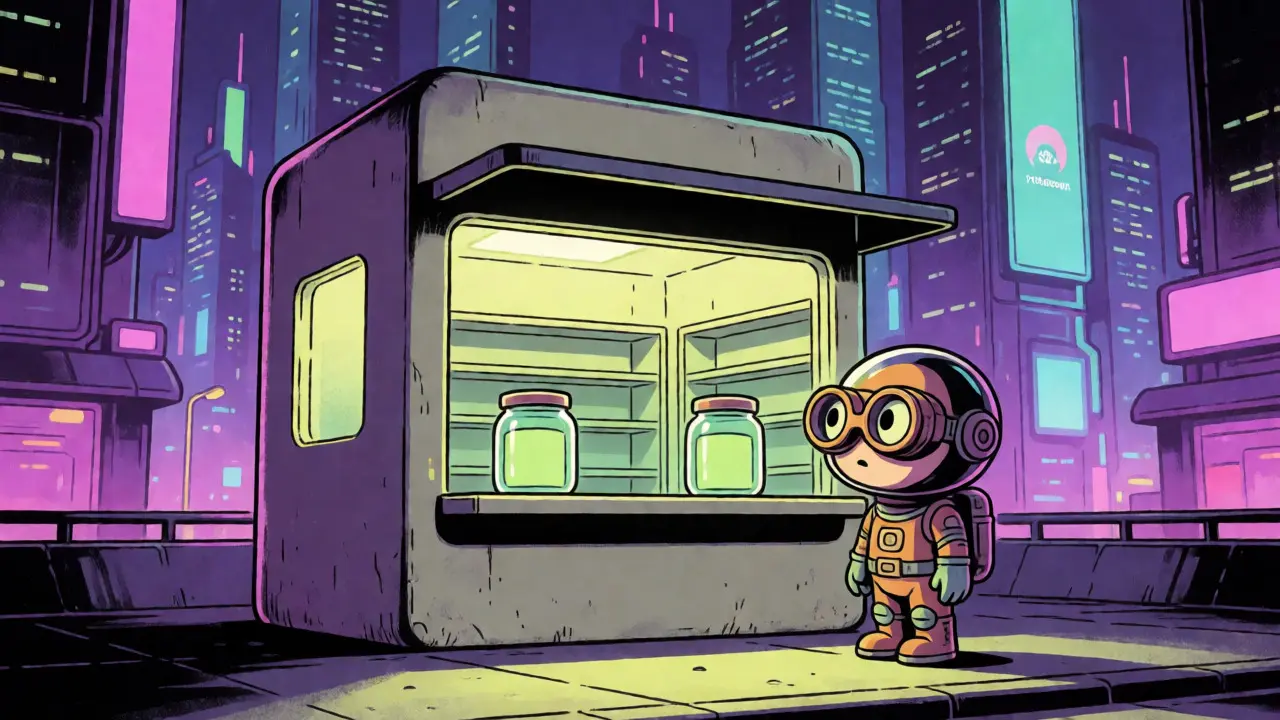
Imagine walking into a store that only sells two items. That’s essentially what DYORSwap is like in the world of cryptocurrency exchanges. If you’ve been hunting for obscure tokens or stumbled upon this platform while scrolling through CoinGecko, you might be wondering if it’s the next big thing or just digital noise. Spoiler alert: it’s mostly noise.
The name itself, derived from the community mantra "Do Your Own Research" (DYOR), hints at its niche appeal. But does DYOR actually deliver on that promise? As of late 2025 and early 2026, the data tells a stark story. With only two cryptocurrencies listed and five trading pairs, DYORSwap operates more like an experimental sandbox than a serious trading venue. If you are looking to diversify your portfolio or execute large trades without massive slippage, this platform likely isn't it. However, understanding why such a minimalistic exchange exists helps us grasp the broader landscape of decentralized finance (DeFi).
What Exactly Is DYORSwap?
DYORSwap, also known as Ink, is a decentralized cryptocurrency exchange (DEX) operating on blockchain technology. Unlike centralized giants where you trust a company with your funds, DYORSwap uses smart contracts to facilitate peer-to-peer trades. The specific blockchain it runs on isn’t always clearly documented in public sources, which is already a red flag for transparency-focused traders.
The platform’s core value proposition seems to be simplicity-or perhaps, extreme limitation. While major exchanges like Kraken support over 350 assets and Coinbase offers around 235, DYORSwap sticks to just two. This ultra-niche focus means you aren’t going to find Bitcoin, Ethereum, or Solana here unless one of those two coins happens to be them. For most users, this lack of variety makes the platform functionally unusable for standard investment strategies.
Liquidity and Trading Volume: The Big Hurdle
If you’ve ever tried to sell a small-cap coin on a quiet exchange, you know the pain of slippage. You place an order, and the price moves against you before the trade executes. On DYORSwap, this risk is amplified significantly. According to CoinGecko metrics, the exchange holds a Volume Percentile ranking of 48th and a Combined Orderbook Percentile of 26th. What does that mean in plain English? It means there is very little money flowing through this platform compared to established competitors.
Low liquidity leads directly to higher costs. While DYORSwap claims no explicit trading fees, the average bid-ask spread sits at 0.614%. Compare that to Kraken, where spreads on major pairs are often under 0.1%, and you see the hidden cost immediately. Every time you buy or sell, you’re paying nearly six times more in spread than you would on a top-tier centralized exchange. For a $1,000 trade, that difference adds up quickly, especially if you’re active.
| Feature | DYORSwap (Ink) | Kraken | Coinbase |
|---|---|---|---|
| Listed Assets | 2 | 350+ | 235 |
| Avg Bid-Ask Spread | 0.614% | <0.1% (Major Pairs) | Variable (Spot) |
| Margin Trading | No | Yes (Up to 5X) | Yes (Limited) |
| Trust Score/Liquidity | Low (26th Percentile) | High | High |
Fees and Hidden Costs
One of the main reasons people flock to decentralized exchanges is the potential for lower fees. DYORSwap markets itself on having no explicit trading fees. Sounds great, right? Not so fast. In crypto, if something looks too good to be true, check the spread. As mentioned earlier, the 0.614% spread acts as a hidden fee. Plus, you still pay gas fees for every transaction on the underlying blockchain. Since the liquidity is thin, your trade might not even fill at the quoted price, leading to further unexpected costs.
Contrast this with Robinhood, which offers commission-free trading on select assets, or Binance US, which has transparent maker-taker models. Even mid-tier exchanges like Bitstamp provide clearer cost structures. On DYORSwap, you’re essentially gambling on execution quality because the order book depth is so shallow. If you try to move more than a few hundred dollars, you’ll likely eat through multiple price levels, driving your effective entry or exit price much worse than advertised.
Security and Trustworthiness
Security is non-negotiable in crypto. When you use a centralized exchange, you worry about hacks and regulatory freezes. With a DEX like DYORSwap, the risks shift to smart contract vulnerabilities and rug pulls. Unfortunately, there is virtually no verifiable information about DYORSwap’s security audits. Does it have a history of exploits? Who developed the smart contracts? These questions remain unanswered in public databases.
Platforms like Kraken boast "top-tier security measures including cold storage and two-factor authentication." DYORSwap lacks this kind of documentation. The absence of DYORSwap from major fraud databases like Crypto Legal doesn’t prove innocence-it just means it hasn’t been flagged yet. Given its tiny footprint, it could easily slip under the radar. Always remember: just because a scam hasn’t happened yet doesn’t mean the platform is safe. Without third-party audits or a long track record, you’re taking on significant technical risk.
User Experience and Support
How easy is it to use DYORSwap? Honestly, we don’t know. There’s almost no user feedback on Reddit, Trustpilot, or specialized crypto forums. This silence is telling. Established platforms generate thousands of discussions daily about UI glitches, withdrawal delays, or customer service interactions. DYORSwap generates crickets.
This lack of community engagement suggests negligible adoption. If you run into an issue-say, a stuck transaction or a confusing interface element-who do you call? Most DEXs rely on Discord communities or Telegram groups for support. If DYORSwap doesn’t have an active channel, you’re on your own. Compare this to Coinbase, which provides structured educational resources and responsive support channels. For a beginner, DYORSwap feels less like a tool and more like a puzzle with missing pieces.

Who Should Use DYORSwap?
So, who actually benefits from this platform? Probably not the average investor. If you’re building a diversified portfolio, you need access to dozens, if not hundreds, of assets. DYORSwap’s two-coin limit makes that impossible. It might suit a very specific type of trader: someone experimenting with DeFi mechanics who wants to test smart contract interactions with minimal capital exposure. Or perhaps a developer testing integration with these specific two tokens.
For everyone else, better options exist. If you want low fees and high liquidity, stick to Kraken or Coinbase. If you prefer decentralization but want robust features, look at larger DEXs like Uniswap or PancakeSwap, which offer thousands of pairs and deep liquidity pools. DYORSwap occupies a strange middle ground: too complex for casual users due to wallet management requirements, yet too limited for serious traders due to asset scarcity.
Final Verdict: A Niche Experiment
DYORSwap serves as a cautionary tale about the sheer volume of crypto projects flooding the market. Just because a token exists and a swap interface works doesn’t mean it’s viable for real-world trading. Its extremely low liquidity, wide spreads, and lack of transparency make it risky for anything beyond trivial amounts. Before connecting your wallet, ask yourself: am I solving a problem here, or creating new ones? For most, the answer will be the latter.
Is DYORSwap safe to use?
Safety is hard to verify. There are no widely published security audits for DYORSwap's smart contracts. While it hasn't been flagged as a major scam in global databases, the lack of transparency and low liquidity increases risk. Only invest money you can afford to lose.
Why does DYORSwap have such high spreads?
High spreads are caused by low liquidity. With only two assets and five trading pairs, there aren't enough buyers and sellers to keep prices tight. This results in a 0.614% average spread, which is much higher than major exchanges.
Does DYORSwap charge trading fees?
DYORSwap reportedly charges no explicit trading fees. However, the cost is embedded in the bid-ask spread. Additionally, you must pay network gas fees for transactions, which can vary depending on blockchain congestion.
Can I trade Bitcoin on DYORSwap?
It depends on which two cryptocurrencies are currently listed. As of recent data, the platform supports only two specific assets. Unless Bitcoin is one of them, you cannot trade it. Check the current pair list before depositing funds.
Is DYORSwap regulated?
There is no evidence of regulatory compliance in major jurisdictions like the US or EU. Unlike Coinbase or Kraken, DYORSwap does not appear on lists of regulated exchanges, meaning consumer protections may be minimal or nonexistent.