Fairdesk Crypto Exchange Review: Shutdown, Features, and What Happened
 Jun, 12 2026
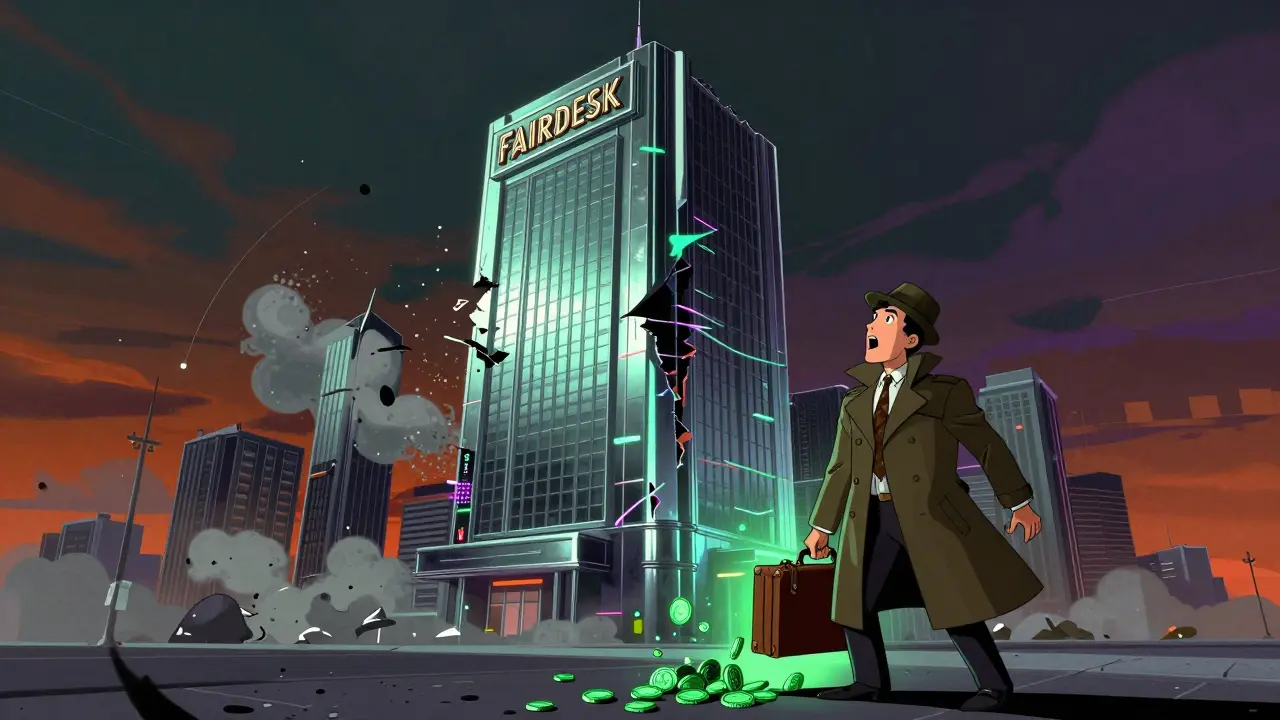
It is rare for a cryptocurrency exchange to vanish completely. Usually, they get acquired, rebranded, or struggle in obscurity. Fairdesk, however, chose a different path. As of November 30, 2024, the platform is officially dead. If you are reading this hoping to deposit funds or open an account, stop right now. The doors are closed.
But if you are here because you had an account, missed the withdrawal deadline, or want to understand why another major player disappeared, this review covers everything you need to know. We will look at what Fairdesk offered when it was alive, why regulators forced its hand, and what this means for your money.
The End of an Era: Why Fairdesk Shut Down
Fairdesk didn’t crash due to a hack or a sudden liquidity crisis. It died from regulatory pressure. Founded in 2021 by former Binance employees and software architects from Morgan Stanley, Fairdesk positioned itself as a high-performance derivatives hub. They offered optional KYC (Know Your Customer) procedures, which meant you could trade without proving who you were.
In 2021, that sounded like freedom. By late 2024, it looked like a liability.
Singapore’s Monetary Authority tightened its Payment Services Act amendments significantly after January 2023. Global scrutiny on anonymous trading intensified following the FTX collapse in 2022. Fairdesk found itself squeezed between wanting to offer privacy and needing to comply with laws that demanded transparency. On October 17, 2024, the company announced a forced closure of all futures and spot positions. Users had until November 30, 2024, to withdraw remaining assets. After that date, the site went dark.
| Date | Event |
|---|---|
| October 17, 2024 | All trading positions forcibly closed; withdrawals only enabled. |
| November 30, 2024 | Final shutdown date; platform ceased all operations. |
| January 2025 | Chainalysis reports $14.7 million in unclaimed assets. |
What Fairdesk Actually Offered
Before the lights went out, Fairdesk was a serious contender in the derivatives market. It wasn’t trying to be Coinbase. It didn’t care about casual Bitcoin buyers. It was built for traders who wanted leverage, speed, and anonymity.
The core product was perpetual contracts. You could trade Bitcoin, Ethereum, and dozens of altcoins with leverage up to 125x. That is massive risk, but also massive potential reward. For experienced traders, this was the main draw. While competitors like Bybit required strict KYC for high leverage tiers, Fairdesk let you access these tools anonymously.
They also popularized "Copy Trading" and a feature called "Arena." Arena allowed simulated trading, letting users practice strategies without risking real capital. This lowered the barrier to entry for beginners who wanted to learn derivatives mechanics before going live.
- Trading Pairs: Over 180 perpetual contracts.
- Leverage: Up to 125x on major pairs.
- Identity Verification: Optional KYC for basic trading; required only for higher withdrawal limits.
- Infrastructure: Cloud-based mobile and web platforms optimized for low latency.
Security and Trust: A Divided Opinion
Was Fairdesk safe? The answer depends on who you asked and when you asked them.
In early 2023, reviews from RankFi and CoinCodeCap were glowing. They cited Fairdesk’s "proof of reserves" implementation and cold storage architecture (reportedly holding 95% of user funds offline) as strong security indicators. There were no major hacks reported during its operational life. The platform even had a policy of compensating clients for losses caused by system outages, a rare promise in the industry.
However, by early 2024, the narrative shifted. Traders Union published a report claiming Fairdesk was "not a safe and trusted company," though they did not disclose specific technical vulnerabilities. Industry analyst John Wu noted that the lack of regulatory licensing in major jurisdictions created "inherent operational risks." In hindsight, Wu was correct. The absence of a license became the fatal flaw.
User experiences were mixed. SourceForge reviews praised the ease of use and the Arena simulator. Reddit users highlighted the benefits of anonymous trading. But Trustpilot and CryptoSlate studies revealed significant pain points: withdrawal times averaging 72 hours (compared to the industry standard of 24) and customer support response times exceeding 48 hours during volatile markets.
Fees and Costs
Fairdesk competed on price. Their trading fees were generally lower than established giants like Binance or Kraken, especially for high-volume derivatives traders. However, the hidden costs lay in withdrawals.
Withdrawal fees varied wildly depending on the blockchain network used. Sending USDT via Binance Smart Chain cost around $0.80. Other cryptocurrencies could incur fees as high as $60 per transaction. For small-scale traders, these fees could eat into profits quickly. Always check the network-specific fee schedule before initiating a transfer.
Where Did All the Money Go?
This is the question haunting anyone who missed the deadline. According to blockchain analysis by Chainalysis in January 2025, approximately 0.8% of total platform assets-estimated at $14.7 million-remain unclaimed. These funds sit in wallets that are no longer accessible through the Fairdesk interface.
There is no official asset recovery mechanism. The domain fairdesk.com redirects to a placeholder page confirming the shutdown. There are no indications of revival plans. If you had funds there and did not withdraw them by November 30, 2024, they are effectively lost. This serves as a harsh reminder: in crypto, you are your own bank. When the bank closes, you don’t get insurance.
Alternatives to Fairdesk in 2026
If you were a Fairdesk user, you likely valued high leverage, derivatives focus, or anonymous trading. Here is how current alternatives compare.
| Exchange | KYC Requirement | Max Leverage | Best For |
|---|---|---|---|
| Bybit | Required for high limits | 100x | Regulated derivatives trading |
| Binance | Strict KYC | 125x | Liquidity and variety |
| dYdX | No KYC (Decentralized) | Varies (up to 20x+) | Anonymous decentralized trading |
| Kraken | Strict KYC | 50x | Security and fiat on-ramps |
Bybit is the closest spiritual successor in terms of derivatives focus, but it enforces stricter identity checks. dYdX offers the anonymity Fairdesk users loved, but as a decentralized exchange, it lacks the customer support structure and requires self-custody of keys. Binance remains the giant, offering similar leverage but with heavy regulatory oversight.
Lessons from the Fairdesk Collapse
Fairdesk’s story is a case study in regulatory risk. It operated in a gray area that existed in 2021 but vanished by 2024. The key takeaways for any trader are clear:
- Never leave large sums on exchanges. Treat exchanges as trading venues, not savings accounts.
- Understand the KYC trade-off. Anonymous trading offers privacy but reduces legal recourse if things go wrong.
- Watch the headlines. Regulatory changes in Singapore, the EU, and the US directly impact exchange viability.
- Verify proof of reserves critically. A claim of "100% backed" means little if the auditor is not independent or transparent.
The crypto market matures every year. Platforms that refuse to adapt to compliance standards eventually face extinction. Fairdesk was a capable tool for its time, but it could not survive the new reality.
Is Fairdesk still operational in 2026?
No. Fairdesk permanently ceased all operations on November 30, 2024. The website is defunct, and no new accounts can be created.
Can I recover my funds from Fairdesk if I missed the deadline?
Unfortunately, no. The withdrawal window closed on November 30, 2024. Blockchain analysis shows approximately $14.7 million in unclaimed assets, but there is no official recovery mechanism available to users.
Why did Fairdesk shut down?
Fairdesk shut down due to increasing regulatory pressures, particularly regarding its optional KYC policies and lack of comprehensive licensing in major jurisdictions like Singapore and the EU.
Was Fairdesk a scam?
There is no evidence that Fairdesk was a fraudulent scheme. It operated legitimately from 2021 to 2024. Its closure was driven by regulatory non-compliance rather than malicious intent or theft by the founders.
What are the best alternatives to Fairdesk for derivatives trading?
For regulated trading, Bybit and Binance are top choices. For anonymous trading, decentralized exchanges like dYdX offer similar functionality without KYC, though they require greater technical knowledge.
Did Fairdesk have any major security breaches?
No public records indicate that Fairdesk suffered a major hack or security breach during its operational period. Its shutdown was administrative and regulatory, not security-related.